Abuzneid Yousef S, Rabee Abdelrahman, Alzeerelhouseini Hussam I A, Ghattass Deema W S, Shiebat Nermeen, Abukarsh Radwan
Al-Quds University, Faculty of Medicine, Jerusalem, State of Palestine.
Al-Quds University, Faculty of Medicine, Jerusalem, State of Palestine.
Int J Surg Case Rep. 2021 Dec;89:106587. doi: 10.1016/j.ijscr.2021.106587. Epub 2021 Nov 10.
Toxic shock syndrome (TSS) is a rare but serious, life-threatening medical condition and potentially lethal if not detected and treated early. It is mainly caused by a toxin called toxin-1 produced by Staphylococcus aureus, and characterized by fever, hypotension, rash, skin desquamation and multisystem involvement.
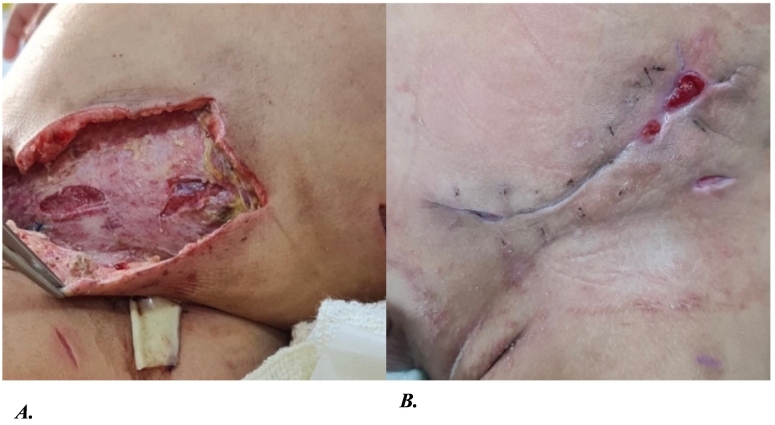
Herein, we describe a nine-month-old male patient who presented to the hospital complaining of fever, vomiting and hypoactivity on day one post-orchidopexy. During hospitalization, his condition began to deteriorate with signs and symptoms of multisystemic failure. Laboratory tests and radiological images were done, leading to the decision to reopen and drain the surgical wound. Wound and nasal swabs were cultured and showed S. aureus infection, and the diagnosis of toxic shock syndrome was confirmed.
TSS is a systemic illness resulting from overwhelming host response to bacterial exotoxins, that cause T cells activation and the release of pro-inflammatory cytokines (IL-1 and TNF-α causing fever, hypotension, and tissue injury). Also, it can present with CNS signs that may be misdiagnosed with meningitis in pediatrics. It requires early identification and treatment despite its rarity with mortality rate of 81% even with treatment. The patient's presentation, examination and laboratories tests with the blood and wound cultures were highly suggestive for this condition.
Physicians must maintain a high index of suspicion for TSS, as early diagnosis and treatment make a difference. This condition shouldn't be excluded even in young age patients or after simple procedure as in our case in which TSS occurred after orchidopexy.
中毒性休克综合征(TSS)是一种罕见但严重的、危及生命的医学病症,如果不及早发现和治疗,可能会致命。它主要由金黄色葡萄球菌产生的一种名为毒素-1的毒素引起,其特征为发热、低血压、皮疹、皮肤脱屑以及多系统受累。
在此,我们描述一名9个月大的男性患者,他在睾丸固定术后第一天因发热、呕吐和活动减少而入院。住院期间,他的病情开始恶化,出现多系统功能衰竭的症状和体征。进行了实验室检查和影像学检查,随后决定重新打开并引流手术伤口。伤口和鼻腔拭子培养显示为金黄色葡萄球菌感染,中毒性休克综合征的诊断得以确诊。
TSS是一种全身性疾病,由宿主对细菌外毒素的过度反应引起,这些外毒素会导致T细胞活化并释放促炎细胞因子(IL-1和TNF-α导致发热、低血压和组织损伤)。此外,它可能表现出中枢神经系统症状,在儿科可能会被误诊为脑膜炎。尽管其罕见,但即使进行治疗,死亡率仍为81%,因此需要早期识别和治疗。患者的临床表现、检查以及血液和伤口培养的实验室检查结果都高度提示了这种病症。
医生必须对TSS保持高度的怀疑指数,因为早期诊断和治疗至关重要。即使在年轻患者或像我们病例中在睾丸固定术后发生TSS这样的简单手术后,也不应排除这种病症。