McManus Caitilín, Hicks Jamie, Cui Xianlu, Zhao Lili, Frenking Gernot, Goicoechea Jose M, Aldridge Simon
Inorganic Chemistry Laboratory, Department of Chemistry, University of Oxford South Parks Road Oxford OX1 3QR UK
Institute of Advanced Synthesis, School of Chemistry and Molecular Engineering, Jiangsu National Synergetic Innovation Center for Advanced Materials, Nanjing Tech University Nanjing 211816 P. R. China.
Chem Sci. 2021 Sep 16;12(40):13458-13468. doi: 10.1039/d1sc04676d. eCollection 2021 Oct 20.
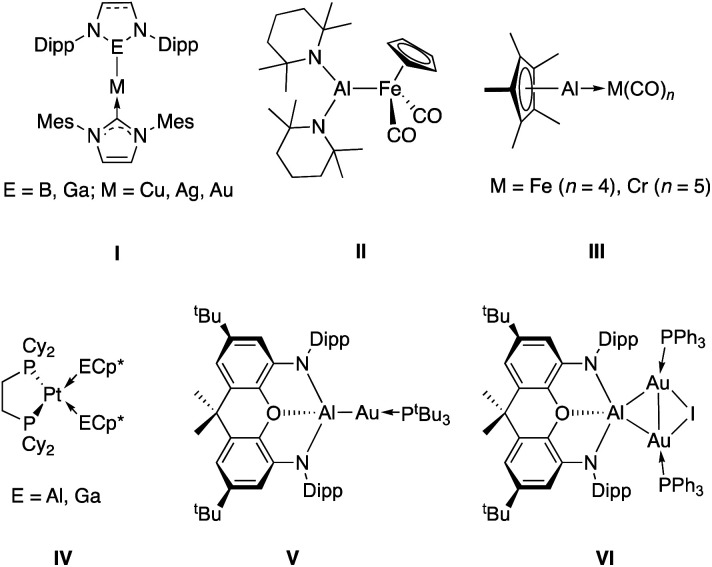
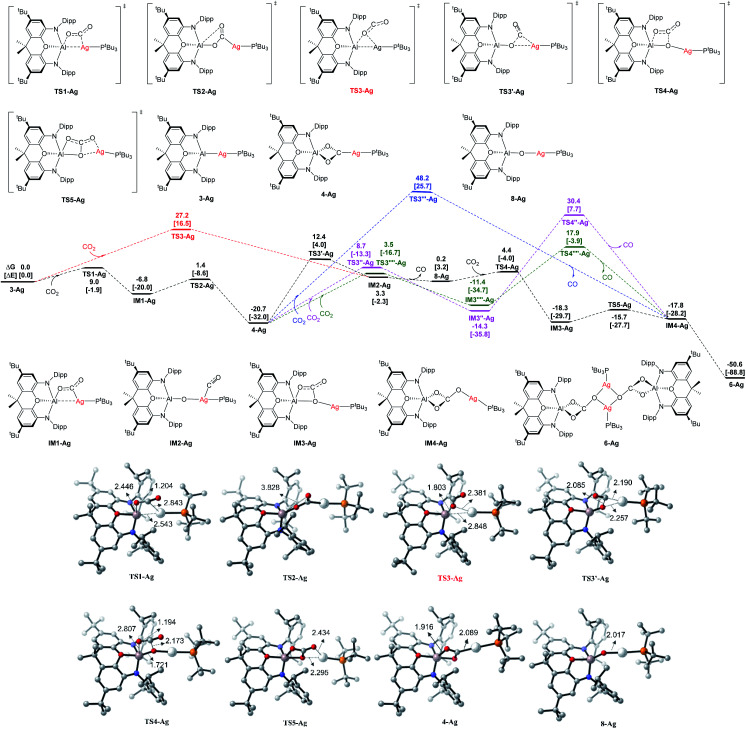
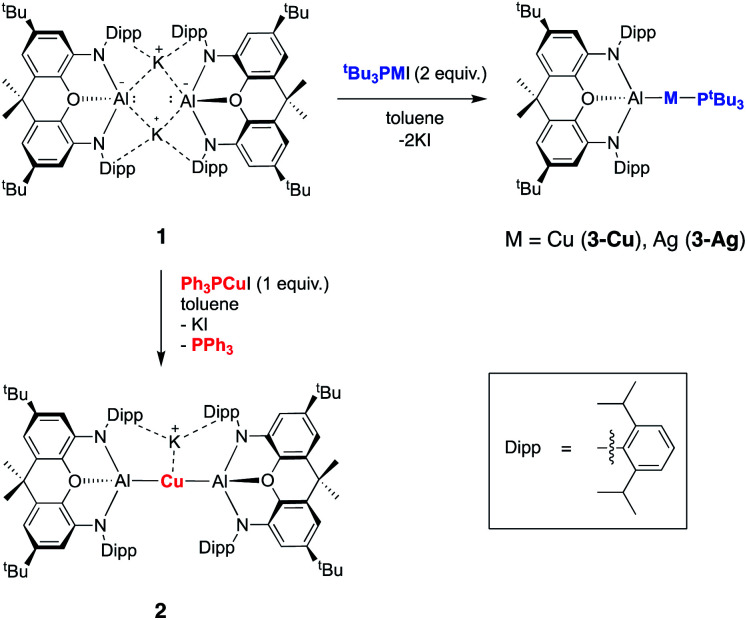
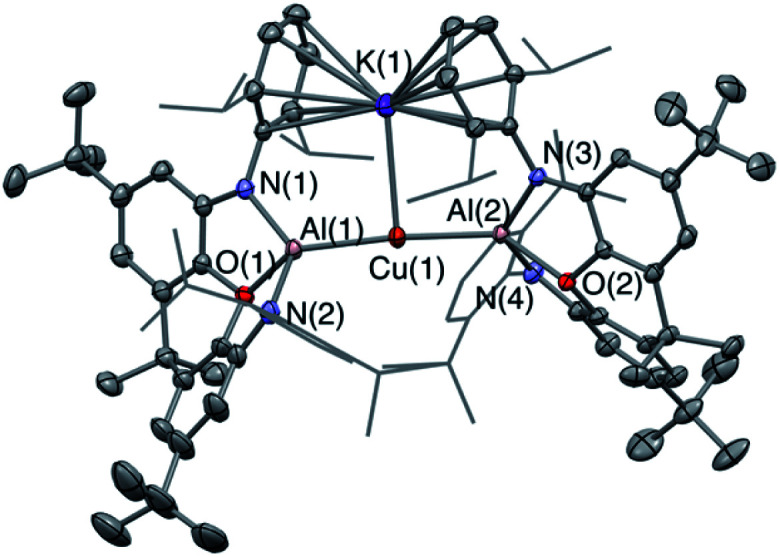
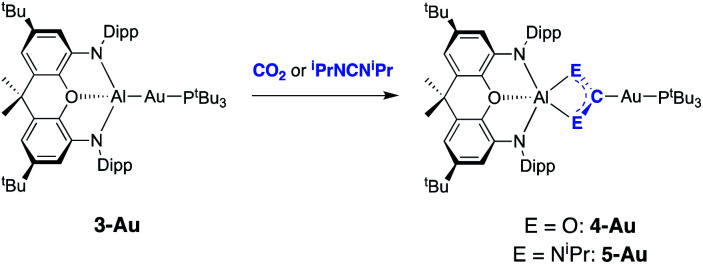
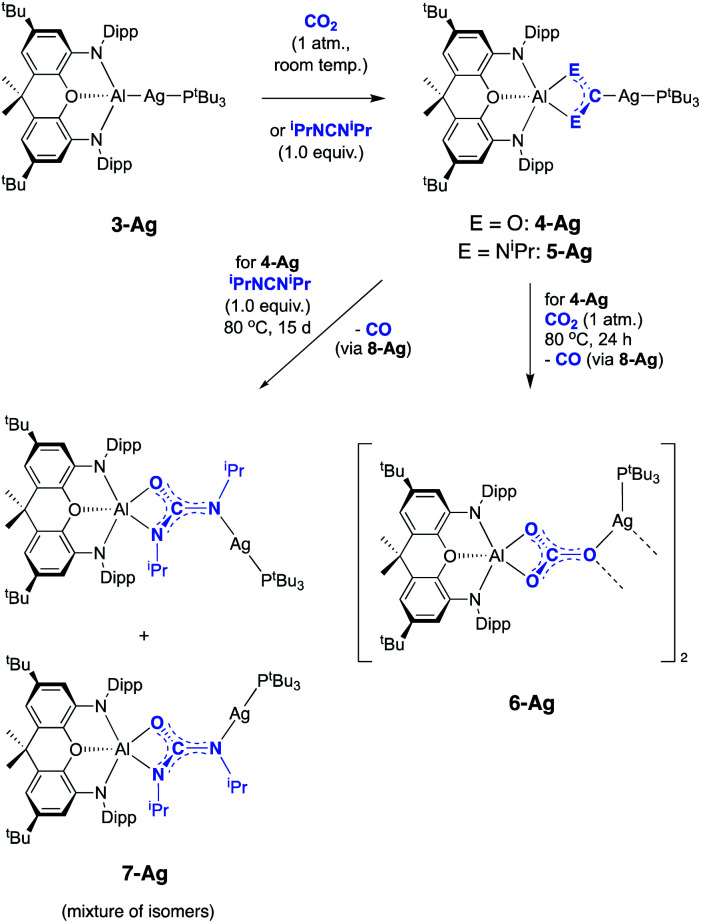
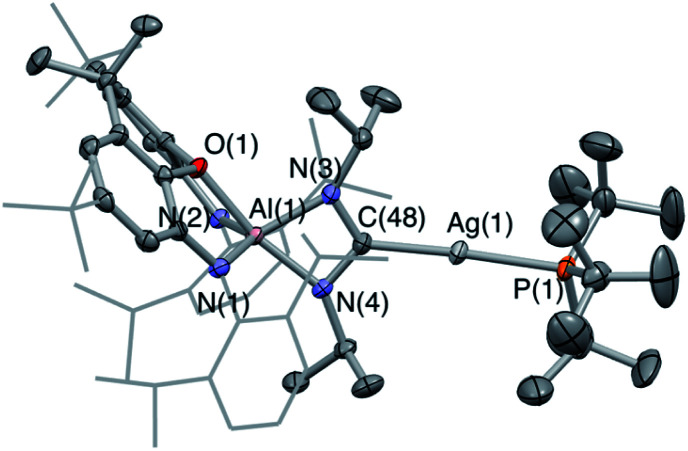
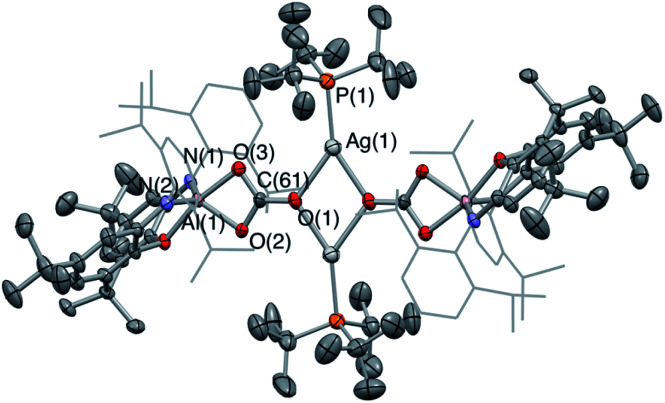
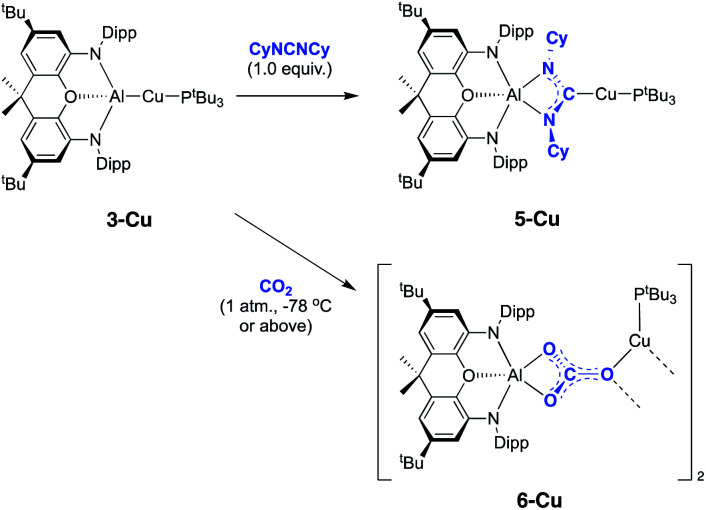
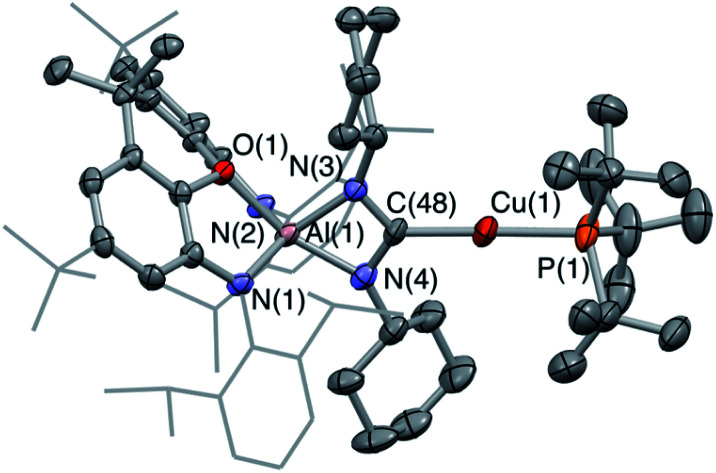
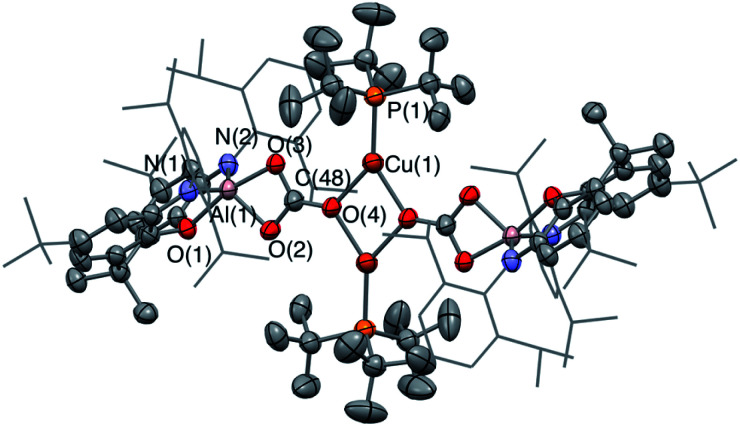
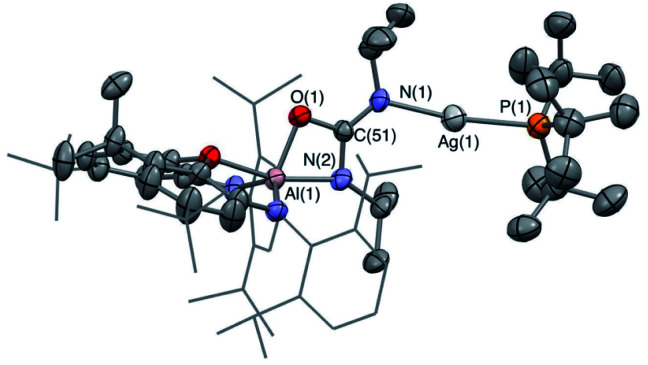
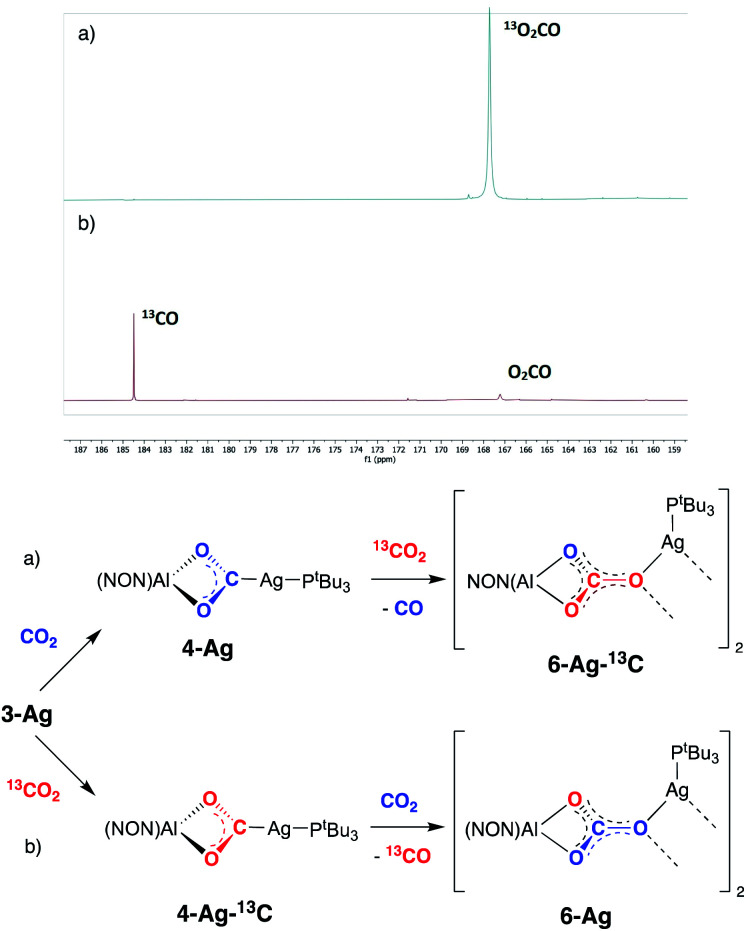
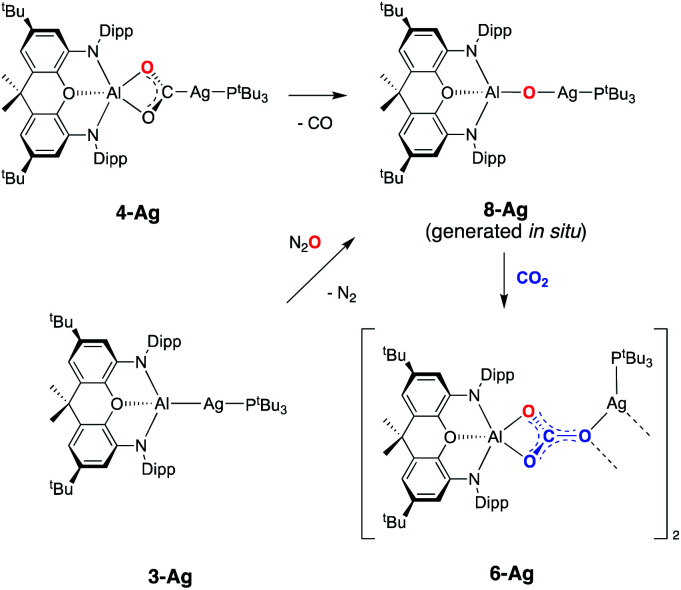
The synthesis of coinage metal aluminyl complexes, featuring M-Al covalent bonds, is reported a salt metathesis approach employing an anionic Al(i) ('aluminyl') nucleophile and group 11 electrophiles. This approach allows access to both bimetallic (1 : 1) systems of the type ( BuP)MAl(NON) (M = Cu, Ag, Au; NON = 4,5-bis(2,6-diisopropylanilido)-2,7-di--butyl-9,9-dimethylxanthene) and a 2 : 1 di(aluminyl)cuprate system, K[Cu{Al(NON)}]. The bimetallic complexes readily insert heteroallenes (CO, carbodiimides) into the unsupported M-Al bonds to give systems containing a M(CE)Al bridging unit (E = O, NR), with the μ-κ(C):κ(E,E') mode of heteroallene binding being demonstrated crystallographically for carbodiimide insertion in the cases of all three metals, Cu, Ag and Au. The regiochemistry of these processes, leading to the formation of M-C bonds, is rationalized computationally, and is consistent with addition of CO across the M-Al covalent bond with the group 11 metal acting as the nucleophilic partner and Al as the electrophile. While the products of carbodiimide insertion are stable to further reaction, their CO analogues have the potential to react further, depending on the identity of the group 11 metal. ( BuP)Au(CO)Al(NON) is inert to further reaction, but its silver counterpart reacts slowly with CO to give the corresponding carbonate complex (and CO), and the copper system proceeds rapidly to the carbonate even at low temperatures. Experimental and quantum chemical investigations of the mechanism of the CO to CO/carbonate transformation are consistent with rate-determining extrusion of CO from the initially-formed M(CO)Al fragment to give a bimetallic oxide that rapidly assimilates a second molecule of CO. The calculated energetic barriers for the most feasible CO extrusion step (Δ = 26.6, 33.1, 44.5 kcal mol for M = Cu, Ag and Au, respectively) are consistent not only with the observed experimental labilities of the respective M(CO)Al motifs, but also with the opposing trends in M-C (increasing) and M-O bond strengths (decreasing) on transitioning from Cu to Au.
报道了具有M - Al共价键的硬币金属铝基配合物的合成,采用了一种盐复分解方法,该方法使用阴离子Al(i)(“铝基”)亲核试剂和第11族亲电试剂。这种方法能够得到双金属(1∶1)体系,如( BuP)MAl(NON)(M = Cu、Ag、Au;NON = 4,5 - 双(2,6 - 二异丙基苯胺基)-2,7 - 二 - 丁基 - 9,9 - 二甲基呫吨),以及一种2∶1的二(铝基)铜酸盐体系K[Cu{Al(NON)}]。双金属配合物能轻易地将杂异烯(CO、碳二亚胺)插入到无支撑的M - Al键中,生成含有M(CE)Al桥连单元(E = O、NR)的体系,在Cu、Ag和Au这三种金属的情况下,通过晶体学证明了碳二亚胺插入时杂异烯以μ - κ(C):κ(E,E')模式结合。这些导致形成M - C键的过程的区域化学通过计算得到合理解释,并且与CO跨M - Al共价键加成一致,其中第11族金属作为亲核伙伴,Al作为亲电试剂。虽然碳二亚胺插入产物对进一步反应稳定,但它们的CO类似物有可能进一步反应,这取决于第11族金属的种类。( BuP)Au(CO)Al(NON)对进一步反应惰性,但它的银对应物与CO缓慢反应生成相应的碳酸盐配合物(和CO),而铜体系即使在低温下也能迅速生成碳酸盐。对CO到CO/碳酸盐转化机理的实验和量子化学研究与从最初形成的M(CO)Al片段中速率决定的CO挤出一致,从而得到一种能迅速吸收第二个CO分子的双金属氧化物。计算得到的最可行的CO挤出步骤的能量势垒(对于M = Cu、Ag和Au,分别为Δ = 26.6、33.1、44.5 kcal mol)不仅与观察到的相应M(CO)Al基序的实验活性一致,而且与从Cu到Au转变时M - C键强度(增加)和M - O键强度(降低)的相反趋势一致。