KITE Research Institute, Toronto Rehabilitation Institute - University Health Network, Toronto, Ontario, Canada.
Rehabilitation Sciences Institute, University of Toronto, Toronto, Ontario, Canada.
J Spinal Cord Med. 2021;44(sup1):S134-S146. doi: 10.1080/10790268.2021.1961052.
To describe the development of structure, process, and outcome indicators aimed to advance the quality of Reaching, Grasping & Manipulation (RG&M) rehabilitation for Canadians living with spinal cord injury or disease (SCID).
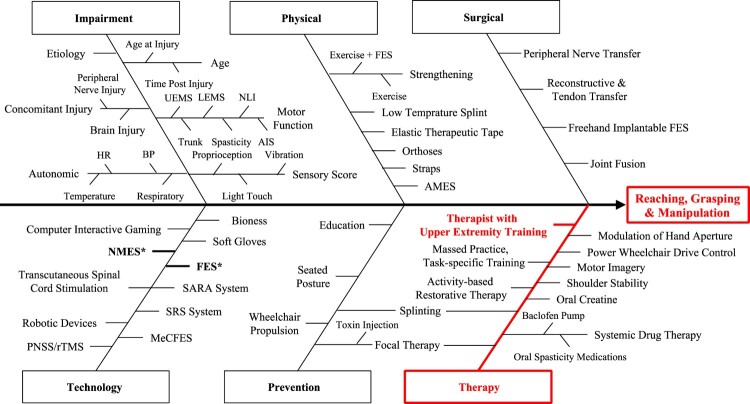
Upper extremity rehabilitation experts developed a framework of indicators for evaluation of RG&M rehabilitation quality. A systematic search of the literature identified potential upper extremity indicators that influence RG&M outcomes. A Driver diagram summarized factors influencing upper extremity outcomes to inform the selection of and indicators. Psychometric properties, clinical utility, and feasibility of potential upper extremity measures were considered when selecting indicators.
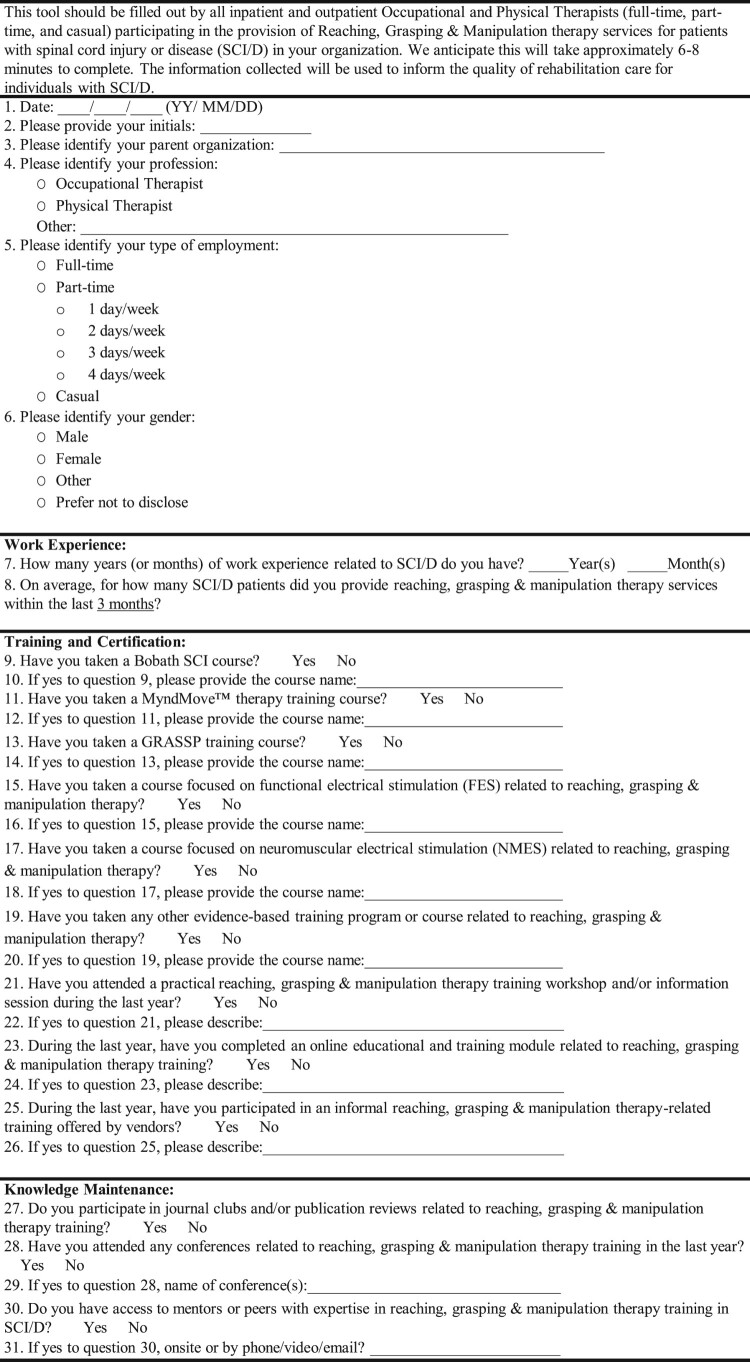
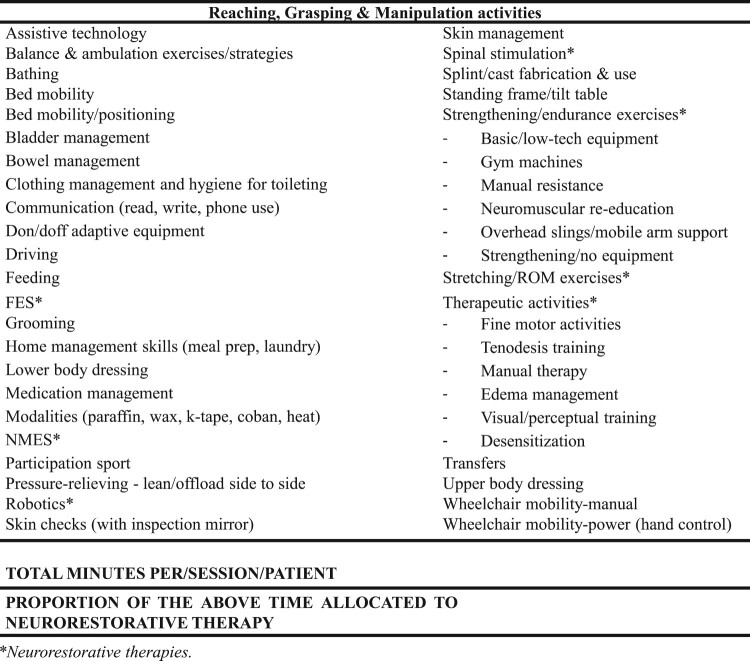
The selected structure indicator is the number of occupational and physical therapists with specialized certification, education, training and/or work experience in upper extremity therapy related to RG&M at a given SCI/D rehabilitation center. The process indicator is the total hours of upper extremity therapies related to RG&M and the proportion of this time allocated to neurorestorative therapy for each individual with tetraplegia receiving therapy. The outcome indicators are the Graded Redefined Assessment of Strength, Sensation and Prehension (GRASSP) strength and Spinal Cord Independence Measure III (SCIM III) Self-Care subscores implemented at rehabilitation admission and discharge, and SCIM III Self-Care subscore only at 18 months post-admission.
The selected indicators align with current practice, will direct the timing of routine assessments, and enhance the volume and quality of RG&M therapy delivered, with the aim to ultimately increase the proportion of individuals with tetraplegia achieving improved upper extremity function by 18 months post-rehabilitation.
描述旨在提高加拿大脊髓损伤或疾病(SCID)患者的 Reach、Grasp & Manipulation(RG&M)康复质量的结构、过程和结果指标的发展。
上肢康复专家制定了一个评估 RG&M 康复质量的指标框架。系统检索文献确定了影响 RG&M 结果的潜在上肢指标。驾驶员图总结了影响上肢结果的因素,为选择和指标提供信息。在选择指标时,考虑了潜在上肢措施的心理测量学特性、临床实用性和可行性。
选择的结构指标是特定 SCI/D 康复中心中具有与 RG&M 相关的上肢治疗专业认证、教育、培训和/或工作经验的职业治疗师和物理治疗师的数量。过程指标是与 RG&M 相关的上肢治疗的总时间以及接受治疗的四肢瘫痪患者中分配给神经修复治疗的时间比例。结果指标是康复入院和出院时实施的分级重新定义的力量、感觉和抓握评估(GRASSP)力量和脊髓独立性测量 III(SCIM III)自理子评分,以及仅在入院后 18 个月时的 SCIM III 自理子评分。
所选指标符合当前实践,将指导常规评估的时间,并增加 RG&M 治疗的数量和质量,旨在最终增加四肢瘫痪患者在康复后 18 个月内上肢功能改善的比例。