School of Medicine, University of Colorado Anschutz Medical Campus, Aurora, Colorado, United States of America.
Hemophilia and Thrombosis Center, University of Colorado Anschutz Medical Campus, Aurora, Colorado, United States of America.
PLoS One. 2021 Nov 15;16(11):e0260094. doi: 10.1371/journal.pone.0260094. eCollection 2021.
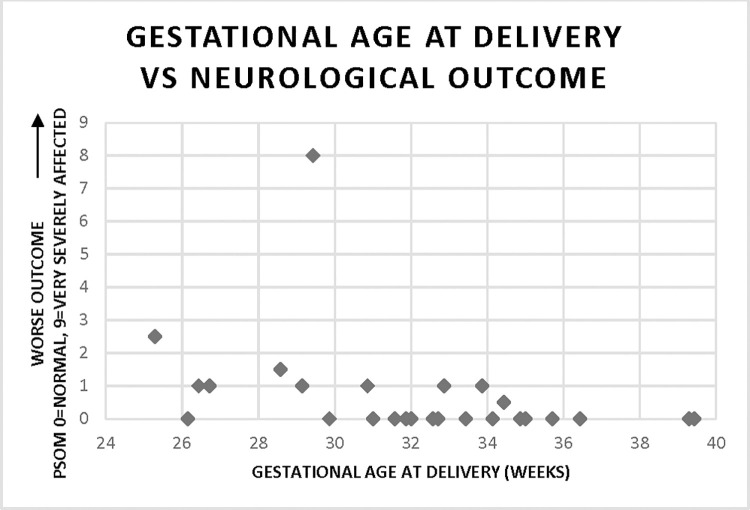
Preeclampsia is both a vascular and inflammatory disorder. Since the placenta is a conduit for fetal development, preeclampsia should be a presumed cause of adverse infant outcomes. Yet, the relationship of placental pathology, inflammation and neurological outcomes after preeclampsia are understudied. We prospectively examined a cohort of maternal-infant dyads with preeclampsia for maternal inflammatory cytokines at time of preeclampsia diagnosis and delivery, and fetal cord blood cytokines (IL-1β, IL-6, IL-8, and TNF-α). Placentas were analyzed for inflammatory and vascular pathologies. Neurodevelopmental assessment of infants utilizing the Pediatric Stroke Outcome Measure (PSOM) was conducted at 6-month corrected gestational age. Eighty-one maternal-newborn dyads were examined. Worse neurological outcomes were not associated with elevated maternal / fetal cytokines. Early preterm birth (gestational age ≤ 32 weeks) was associated with worse neurological outcomes at 6-months regardless of maternal/ fetal cytokine levels, placental pathology, or cranial ultrasound findings (OR 1.70, [1.16-2.48], p = 0.006). When correcting for gestational age, elevated IL-6 approached significance as a predictor for worse developmental outcome (OR 1.025 [0.985-1.066], p = 0.221). Pathological evidence of maternal malperfusion and worse outcomes were noted in early preterm, although our sample size was small. Our study did not demonstrate an obvious association of inflammation and placental pathology in preeclampsia and adverse neurodevelopmental outcome at 6-month corrected age but does suggest maternal malperfusion at earlier gestational age may be a risk factor for worse outcome.
子痫前期既是一种血管性疾病,也是一种炎症性疾病。由于胎盘是胎儿发育的通道,子痫前期应该是导致婴儿不良结局的一个假定原因。然而,子痫前期后的胎盘病理、炎症和神经结局之间的关系还研究得不够充分。我们前瞻性地研究了一组患有子痫前期的母婴对子,在子痫前期诊断和分娩时检测了母体炎症细胞因子,以及胎儿脐血细胞因子(IL-1β、IL-6、IL-8 和 TNF-α)。分析了胎盘的炎症和血管病变。利用儿科中风结局量表(PSOM)对婴儿进行神经发育评估,在纠正胎龄 6 个月时进行。共检查了 81 对母婴对子。神经发育不良的结果与母体/胎儿细胞因子升高无关。无论母体/胎儿细胞因子水平、胎盘病理或颅超声结果如何,早产(胎龄≤32 周)与 6 个月时的神经发育不良结局较差相关(OR 1.70,[1.16-2.48],p=0.006)。当校正胎龄时,升高的 IL-6 接近成为预测不良发育结果的因素(OR 1.025 [0.985-1.066],p=0.221)。尽管我们的样本量较小,但在早产时观察到母体灌注不良的病理证据和较差的结局。我们的研究没有表明子痫前期中的炎症和胎盘病理与 6 个月纠正胎龄时的不良神经发育结局有明显的关联,但确实表明早期妊娠时的母体灌注不良可能是不良结局的一个危险因素。