Department of Epidemiology, School of Public Health, Southern Medical Universitygrid.284723.8, Guangzhou, China.
Guangdong Provincial Institute of Public Health, Guangdong Center for Diseases Control and Prevention, Guangzhou, China.
Microbiol Spectr. 2021 Dec 22;9(3):e0101721. doi: 10.1128/Spectrum.01017-21. Epub 2021 Nov 17.
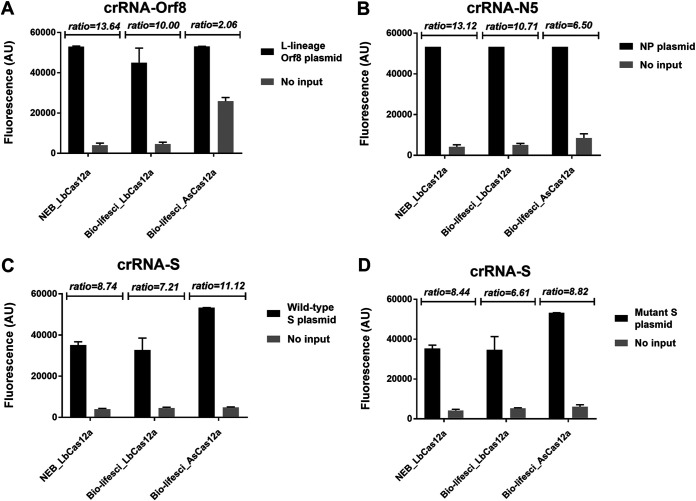
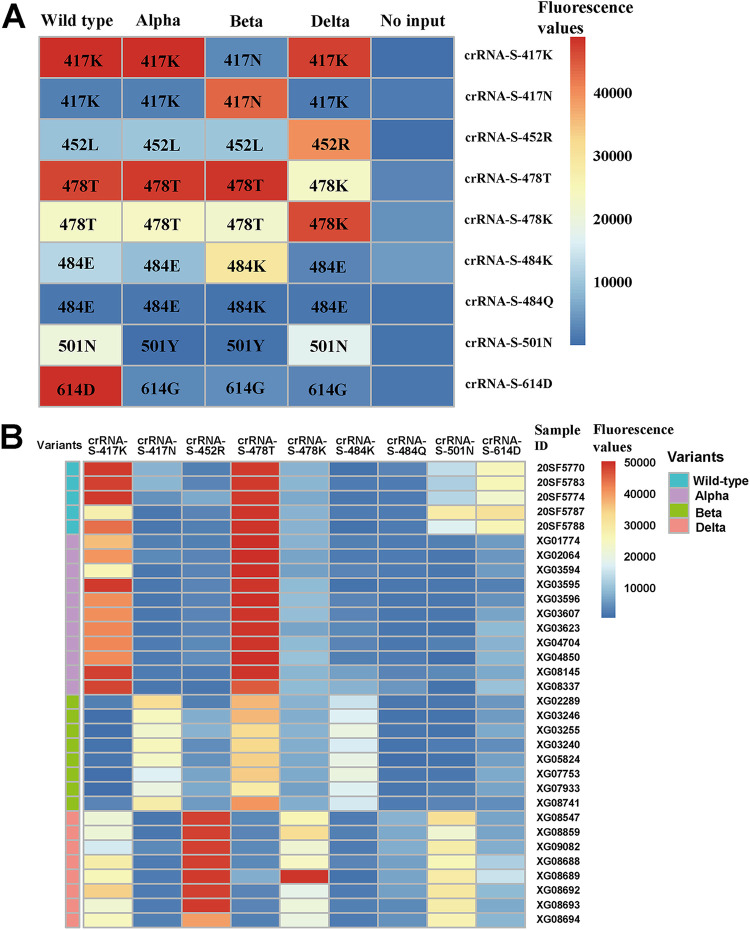
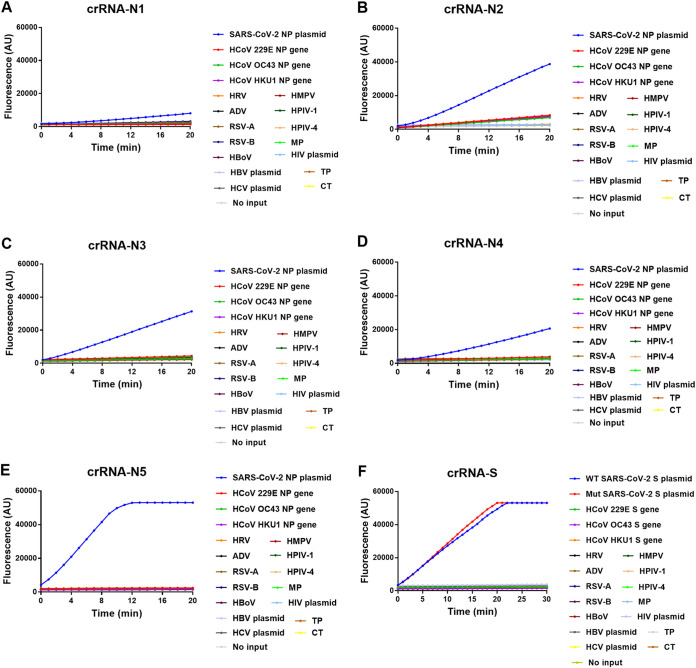
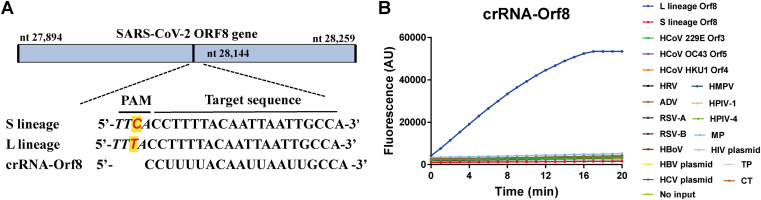
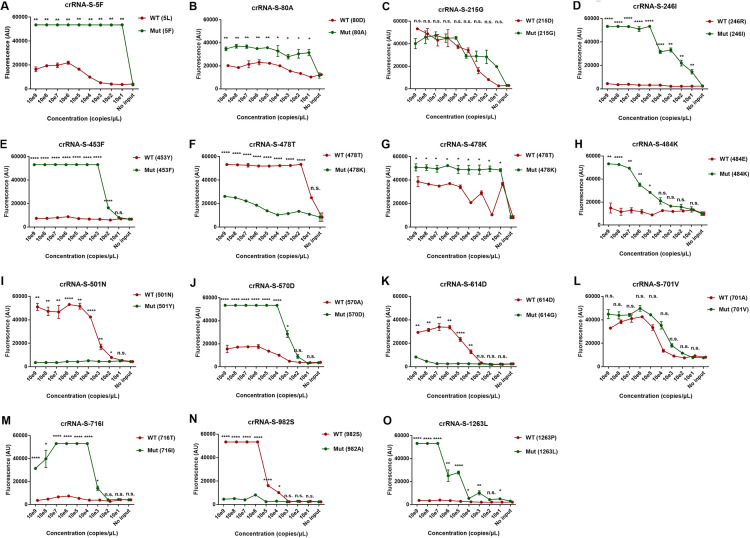
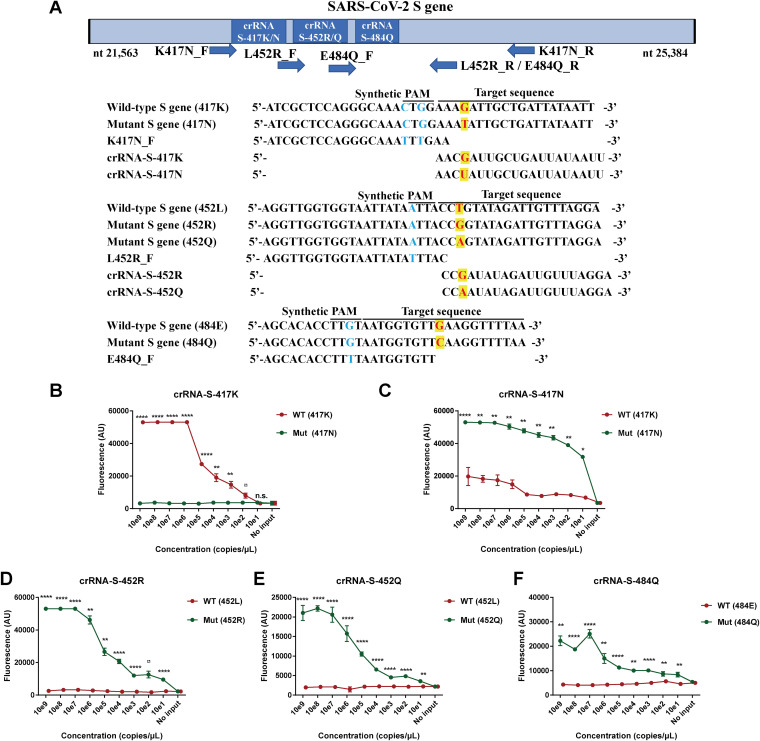
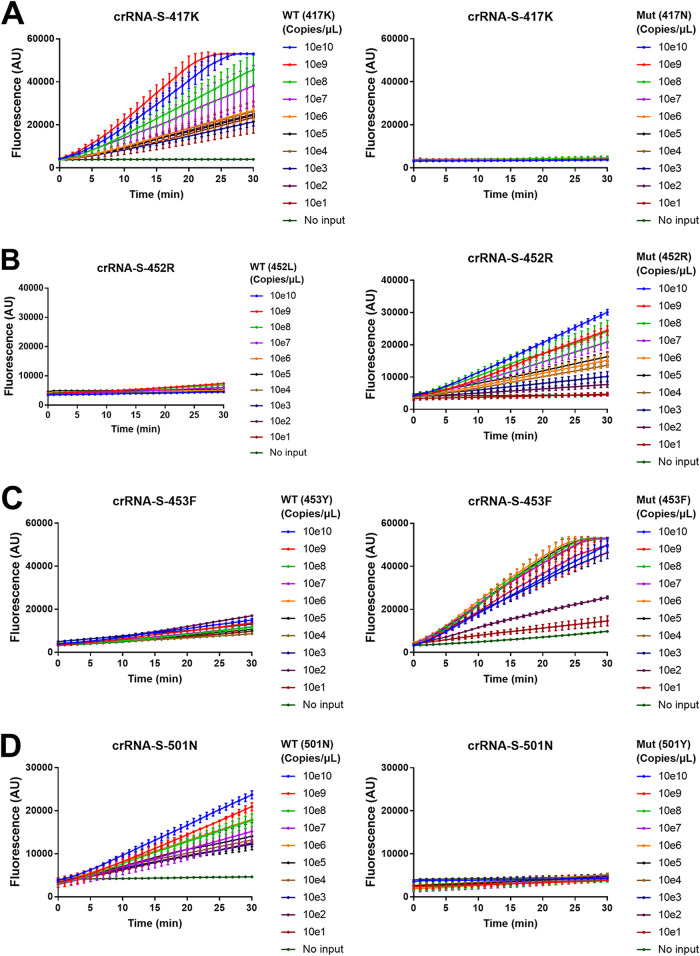
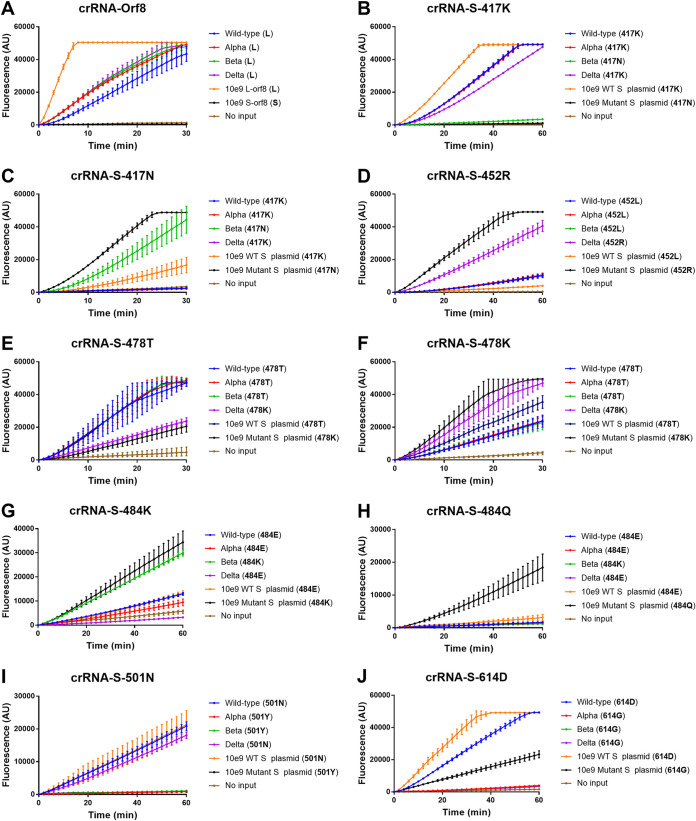
A big challenge for the control of COVID-19 pandemic is the emergence of variants of concern (VOCs) or variants of interest (VOIs) of severe acute respiratory syndrome coronavirus 2 (SARS-CoV-2), which may be more transmissible and/or more virulent and could escape immunity obtained through infection or vaccination. A simple and rapid test for SARS-CoV-2 variants is an unmet need and is of great public health importance. In this study, we designed and analytically validated a CRISPR-Cas12a system for direct detection of SARS-CoV-2 VOCs. We further evaluated the combination of ordinary reverse transcription-PCR (RT-PCR) and CRISPR-Cas12a to improve the detection sensitivity and developed a universal system by introducing a protospacer adjacent motif (PAM) near the target mutation sites through PCR primer design to detect mutations without PAM. Our results indicated that the CRISPR-Cas12a assay could readily detect the signature spike protein mutations (K417N/T, L452R/Q, T478K, E484K/Q, N501Y, and D614G) to distinguish alpha, beta, gamma, delta, kappa, lambda, and epsilon variants of SARS-CoV-2. In addition, the open reading frame 8 (ORF8) mutations (T/C substitution at nt28144 and the corresponding change of amino acid L/S) could differentiate L and S lineages of SARS-CoV-2. The low limit of detection could reach 10 copies/reaction. Our assay successfully distinguished 4 SARS-CoV-2 strains of wild type and alpha (B.1.1.7), beta (B.1.351), and delta (B.1.617.2) variants. By testing 32 SARS-CoV-2-positive clinical samples infected with the wild type ( = 5) and alpha ( = 11), beta ( = 8), and delta variants ( = 8), the concordance between our assay and sequencing was 100%. The CRISPR-based approach is rapid and robust and can be adapted for screening the emerging mutations and immediately implemented in laboratories already performing nucleic acid amplification tests or in resource-limited settings. We described CRISPR-Cas12-based multiplex allele-specific assay for rapid SARS-CoV-2 variant genotyping. The new system has the potential to be quickly developed, continuously updated, and easily implemented for screening of SARS-CoV-2 variants in resource-limited settings. This approach can be adapted for emerging mutations and implemented in laboratories already conducting SARS-CoV-2 nucleic acid amplification tests using existing resources and extracted nucleic acid.
新冠病毒(SARS-CoV-2)变异株的出现,是新冠疫情防控的一大挑战。这些变异株可能具有更强的传染性和/或更高的毒力,并且可能逃避通过感染或接种疫苗获得的免疫力。一种用于直接检测 SARS-CoV-2 变异株的简单、快速检测方法是未满足的需求,对公共卫生具有重要意义。在本研究中,我们设计并分析验证了一种用于直接检测 SARS-CoV-2 变异株的 CRISPR-Cas12a 系统。我们进一步评估了将普通逆转录-PCR(RT-PCR)与 CRISPR-Cas12a 相结合,以提高检测灵敏度,并通过 PCR 引物设计在目标突变位点附近引入前间隔基序(PAM),开发了一种通用系统,从而可以检测没有 PAM 的突变。我们的结果表明,CRISPR-Cas12a 检测方法能够快速检测到刺突蛋白特征性突变(K417N/T、L452R/Q、T478K、E484K/Q、N501Y 和 D614G),以区分 SARS-CoV-2 的 alpha、beta、gamma、delta、kappa、lambda 和 epsilon 变异株。此外,开放阅读框 8(ORF8)突变(nt28144 处的 T/C 取代以及相应的氨基酸 L/S 变化)可区分 SARS-CoV-2 的 L 和 S 谱系。最低检测限可达到 10 拷贝/反应。我们的检测方法成功区分了野生型和 alpha(B.1.1.7)、beta(B.1.351)和 delta(B.1.617.2)变异株的 4 种 SARS-CoV-2 株。通过检测 32 份感染野生型( = 5)和 alpha( = 11)、beta( = 8)和 delta 变异株( = 8)的 SARS-CoV-2 阳性临床样本,我们的检测方法与测序的一致性为 100%。基于 CRISPR 的方法快速且稳健,可适用于筛查新出现的突变,并可立即在已经进行核酸扩增检测的实验室或资源有限的环境中实施。我们描述了一种基于 CRISPR-Cas12 的快速 SARS-CoV-2 变异基因分型多重等位基因特异性检测方法。该新系统具有快速开发、持续更新和易于在资源有限的环境中实施 SARS-CoV-2 变异筛查的潜力。该方法可适用于新兴突变,并可在使用现有资源和提取的核酸进行 SARS-CoV-2 核酸扩增检测的实验室中实施。