Department of Electronic Engineering, National Kaohsiung University of Science and Technology, Kaohsiung 80778, Taiwan.
Program in Biomedical Engineering, Kaohsiung Medical University, Kaohsiung 80708, Taiwan.
Comput Intell Neurosci. 2021 Nov 8;2021:9409508. doi: 10.1155/2021/9409508. eCollection 2021.
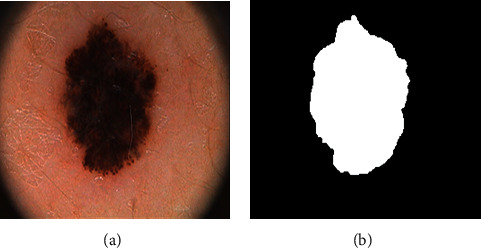
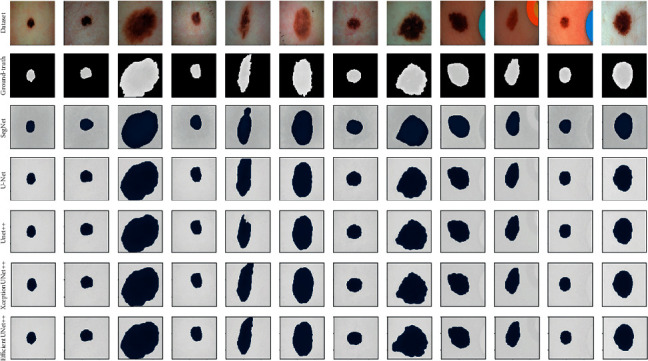
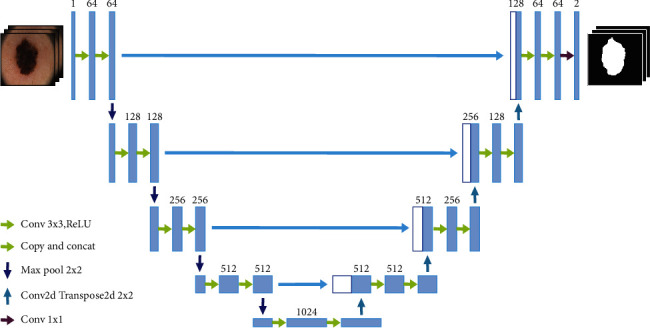
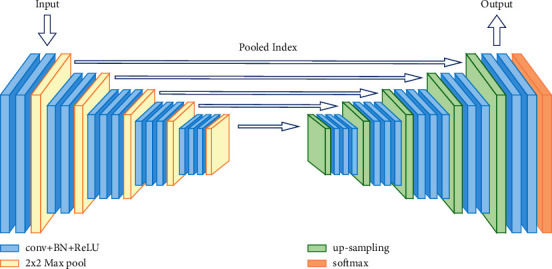
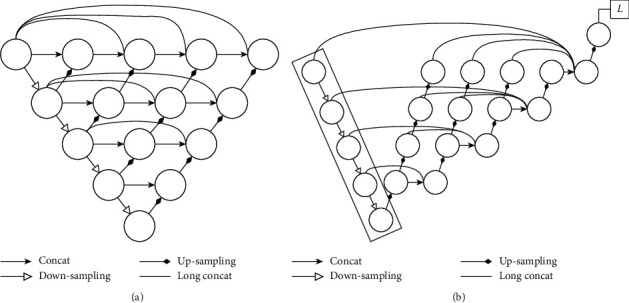
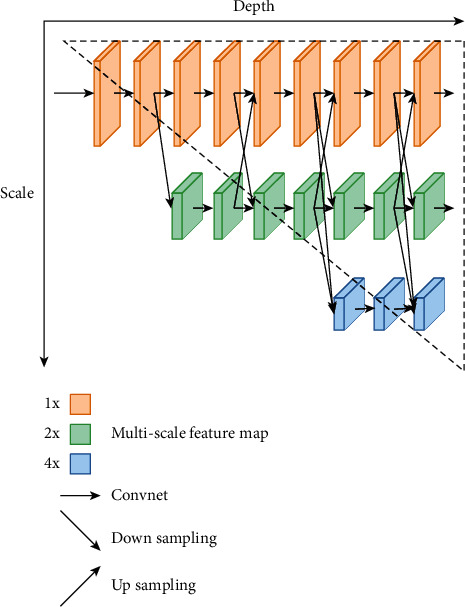
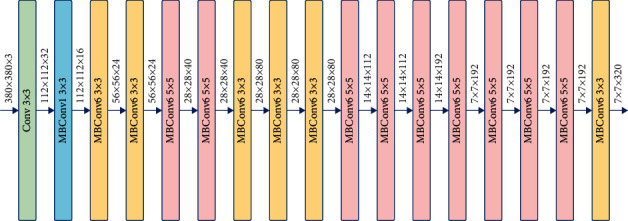
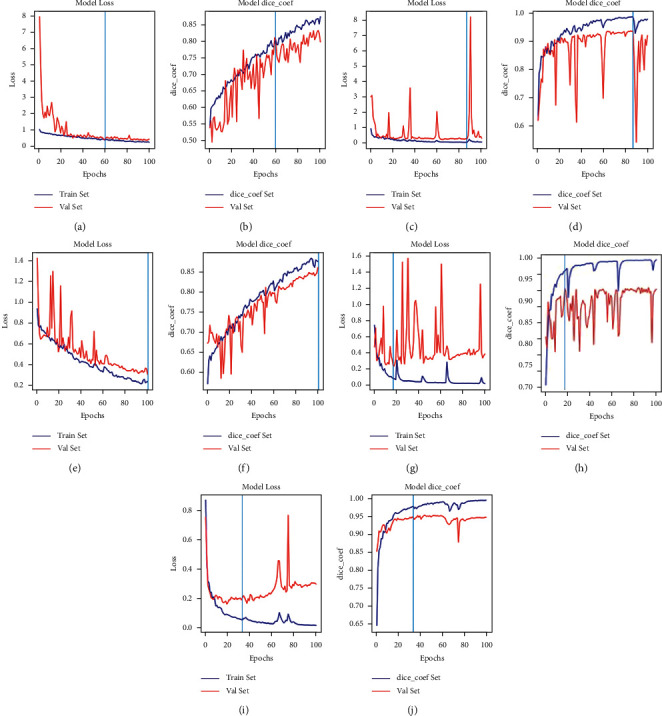
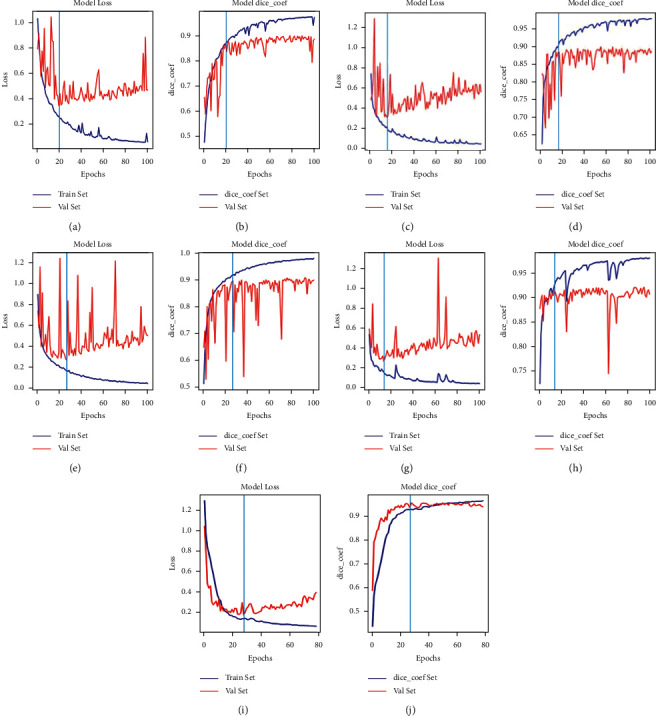
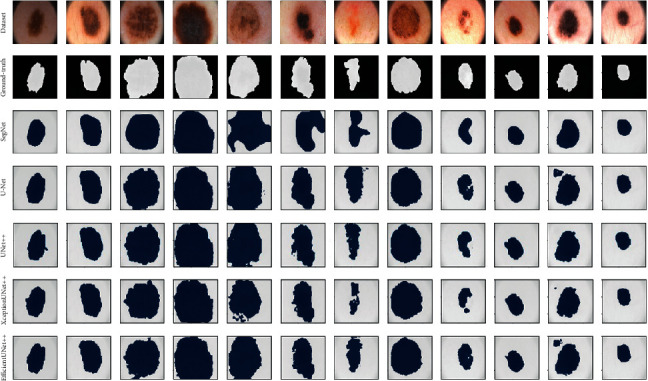
Melanoma is a type of skin cancer that often leads to poor prognostic responses and survival rates. Melanoma usually develops in the limbs, including in fingers, palms, and the margins of the nails. When melanoma is detected early, surgical treatment may achieve a higher cure rate. The early diagnosis of melanoma depends on the manual segmentation of suspected lesions. However, manual segmentation can lead to problems, including misclassification and low efficiency. Therefore, it is essential to devise a method for automatic image segmentation that overcomes the aforementioned issues. In this study, an improved algorithm is proposed, termed EfficientUNet++, which is developed from the U-Net model. In EfficientUNet++, the pretrained EfficientNet model is added to the UNet++ model to accelerate segmentation process, leading to more reliable and precise results in skin cancer image segmentation. Two skin lesion datasets were used to compare the performance of the proposed EfficientUNet++ algorithm with other common models. In the PH2 dataset, EfficientUNet++ achieved a better Dice coefficient (93% vs. 76%-91%), Intersection over Union (IoU, 96% vs. 74%-95%), and loss value (30% vs. 44%-32%) compared with other models. In the International Skin Imaging Collaboration dataset, EfficientUNet++ obtained a similar Dice coefficient (96% vs. 94%-96%) but a better IoU (94% vs. 89%-93%) and loss value (11% vs. 13%-11%) than other models. In conclusion, the EfficientUNet++ model efficiently detects skin lesions by improving composite coefficients and structurally expanding the size of the convolution network. Moreover, the use of residual units deepens the network to further improve performance.
黑色素瘤是一种皮肤癌,通常导致预后不良和生存率低。黑色素瘤通常在四肢发展,包括手指、手掌和指甲边缘。当黑色素瘤早期被发现时,手术治疗可能会达到更高的治愈率。黑色素瘤的早期诊断依赖于可疑病变的手动分割。然而,手动分割可能会导致分类错误和效率低下等问题。因此,需要设计一种能够克服上述问题的自动图像分割方法。在这项研究中,提出了一种改进的算法,称为 EfficientUNet++,它是从 U-Net 模型发展而来的。在 EfficientUNet++中,将预训练的 EfficientNet 模型添加到 UNet++模型中,以加速分割过程,从而在皮肤癌图像分割中获得更可靠和更精确的结果。使用两个皮肤病变数据集来比较所提出的 EfficientUNet++算法与其他常见模型的性能。在 PH2 数据集上,EfficientUNet++在 Dice 系数(93%对 76%-91%)、交并比(IoU,96%对 74%-95%)和损失值(30%对 44%-32%)方面优于其他模型。在国际皮肤成像协作数据集上,EfficientUNet++获得了相似的 Dice 系数(96%对 94%-96%),但更好的 IoU(94%对 89%-93%)和损失值(11%对 13%-11%)优于其他模型。总之,EfficientUNet++模型通过提高复合系数和结构扩展卷积网络的大小来有效地检测皮肤病变。此外,使用残差单元加深网络,进一步提高了性能。