Center for Virology and Vaccine Research, Beth Israel Deaconess Medical Center, Boston, Massachusetts, USA.
Harvard Medical School, Boston, Massachusetts, USA.
J Infect Dis. 2022 Apr 1;225(7):1124-1128. doi: 10.1093/infdis/jiab569.
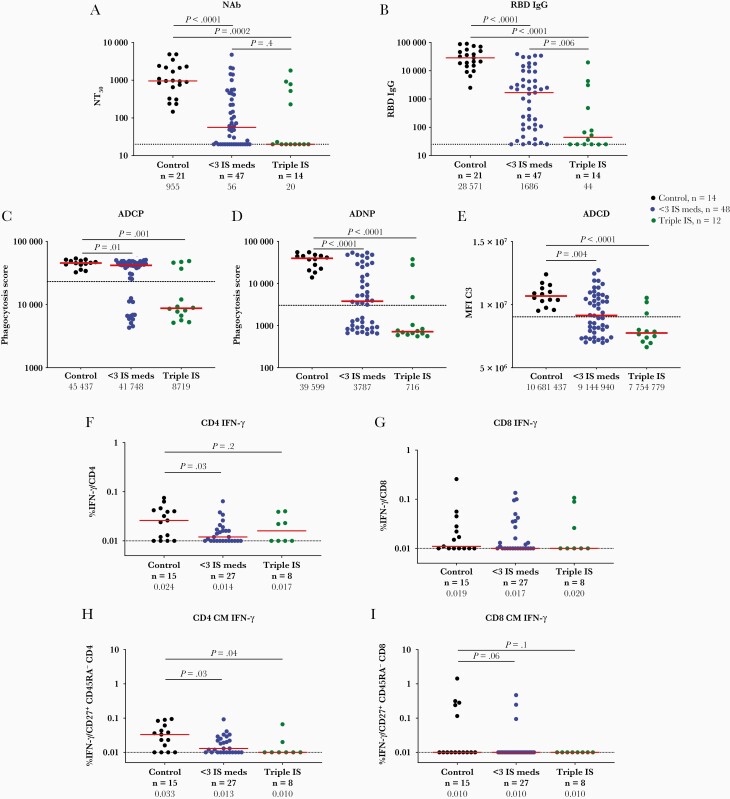
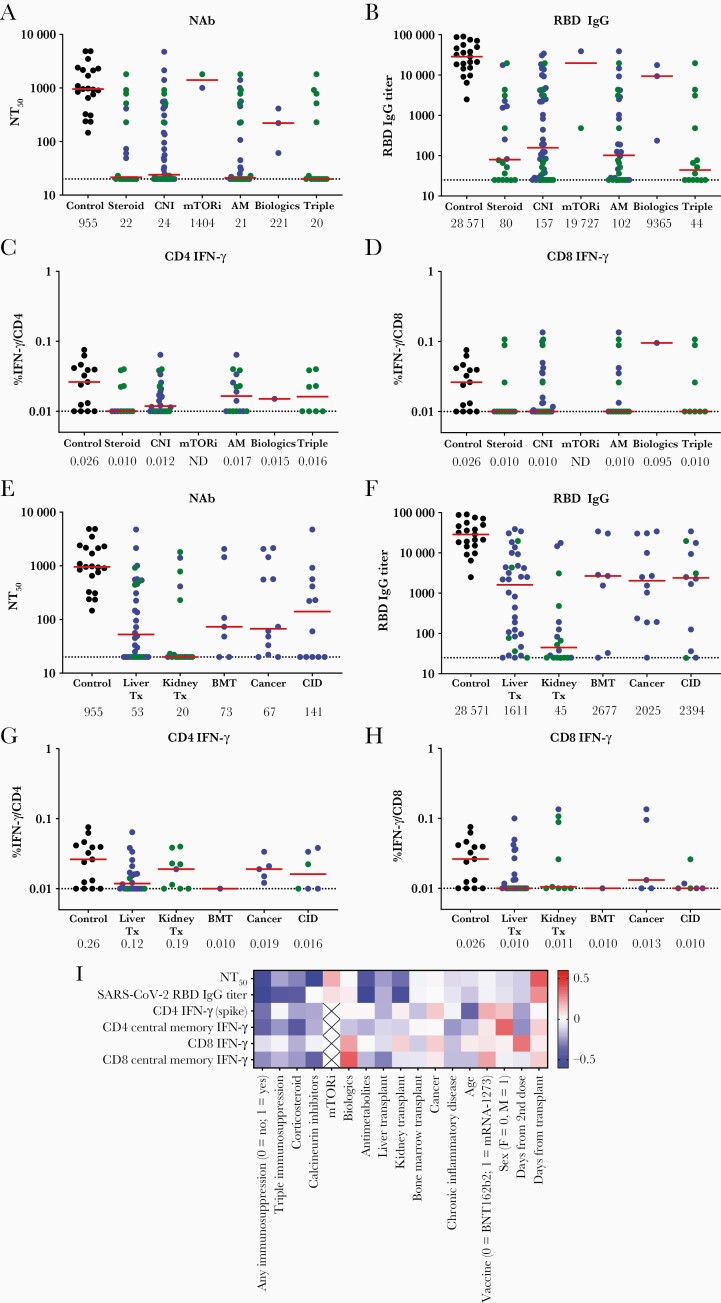
Individuals on immunosuppressive (IS) therapy have increased mortality from severe acute respiratory syndrome coronavirus 2 (SARS-CoV-2) infection, and delayed viral clearance may lead to new viral variants. IS therapy reduces antibody responses following coronavirus disease 2019 (COVID-19) messenger RNA (mRNA) vaccination; however, a comprehensive assessment of vaccine immunogenicity is lacking. Here we show that IS therapy reduced neutralizing, binding, and nonneutralizing antibody functions in addition to CD4 and CD8 T-cell interferon-γ responses following COVID-19 mRNA vaccination compared to immunocompetent individuals. Moreover, IS therapy reduced cross-reactivity against SARS-CoV-2 variants. These data suggest that the standard COVID-19 mRNA vaccine regimens will likely not provide optimal protection in immunocompromised individuals.
接受免疫抑制治疗的个体因严重急性呼吸综合征冠状病毒 2(SARS-CoV-2)感染而导致死亡率增加,且病毒清除延迟可能导致新的病毒变异。免疫抑制治疗会降低 2019 冠状病毒病(COVID-19)信使 RNA(mRNA)疫苗接种后的抗体反应;然而,目前缺乏对疫苗免疫原性的全面评估。在这里,我们发现与免疫功能正常的个体相比,接受免疫抑制治疗的个体在 COVID-19 mRNA 疫苗接种后,除了 CD4 和 CD8 T 细胞干扰素-γ反应外,中和、结合和非中和抗体功能均受到抑制,而且对 SARS-CoV-2 变异体的交叉反应性也降低。这些数据表明,标准的 COVID-19 mRNA 疫苗方案可能无法为免疫功能低下的个体提供最佳保护。