Department of Biosciences and Bioengineering, IIT Roorkee, Roorkee, India.
Department of Microbiology & Immunology, Life Sciences Institute, The University of British Columbia, Vancouver, Canada.
J Biol Chem. 2021 Dec;297(6):101416. doi: 10.1016/j.jbc.2021.101416. Epub 2021 Nov 17.
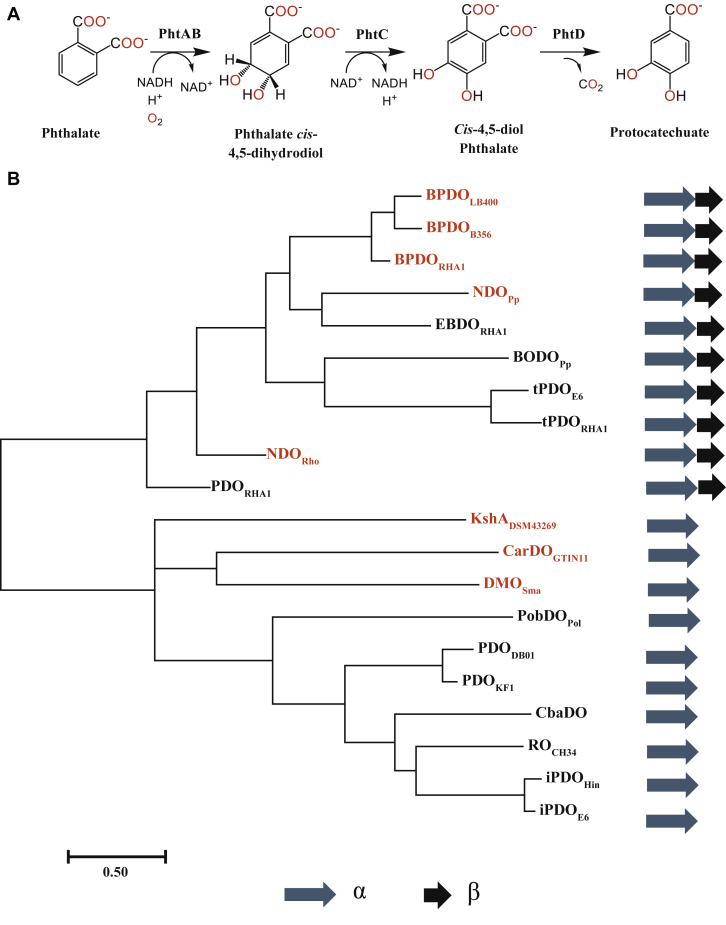
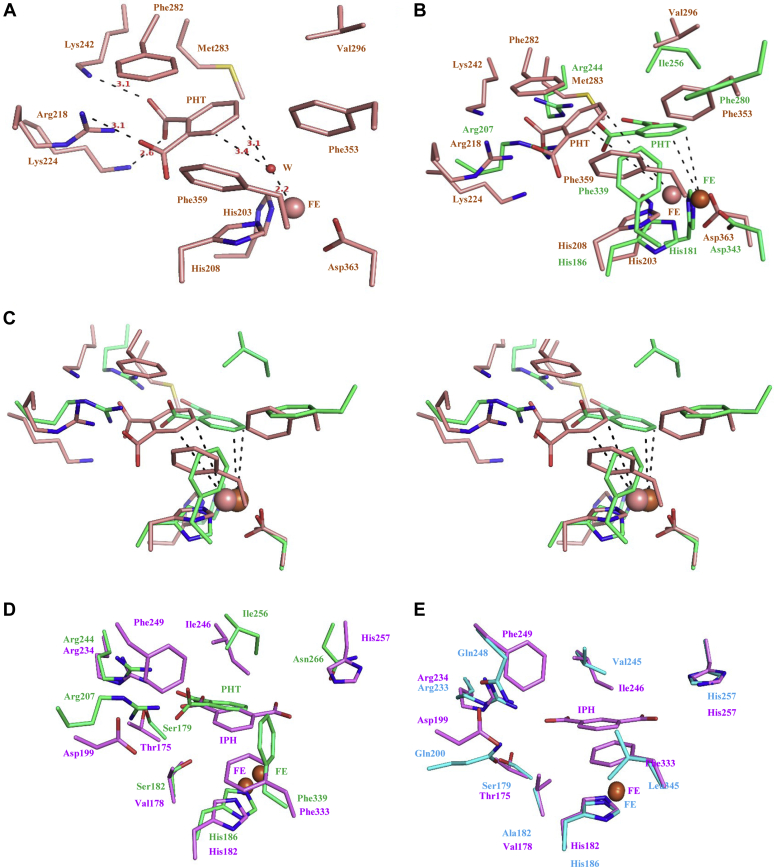
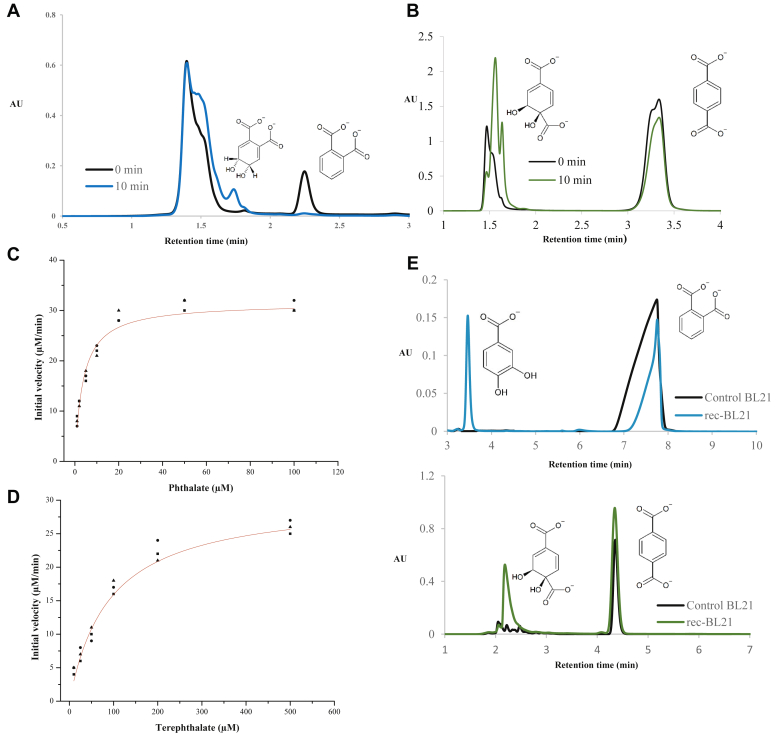
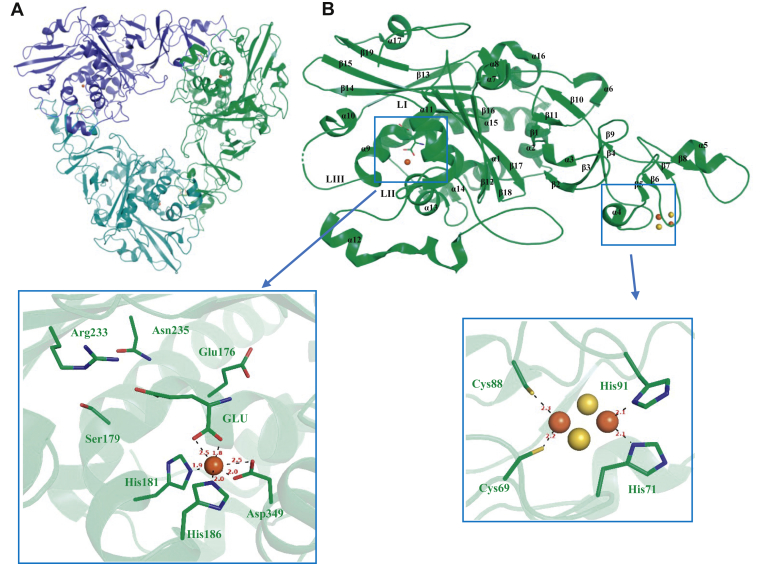
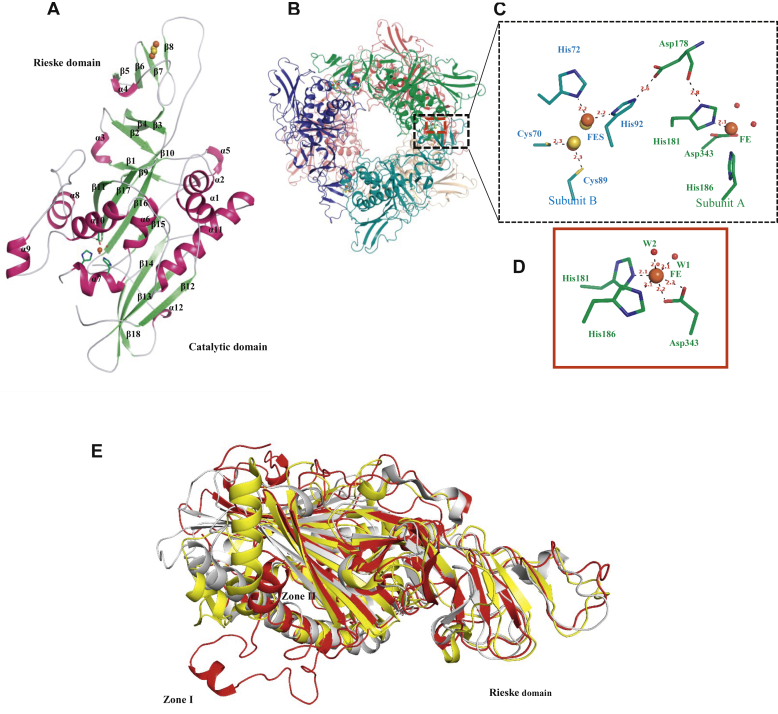
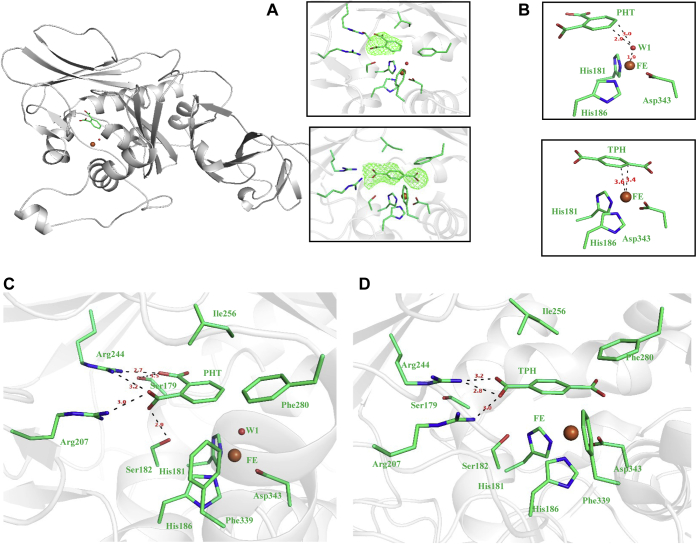
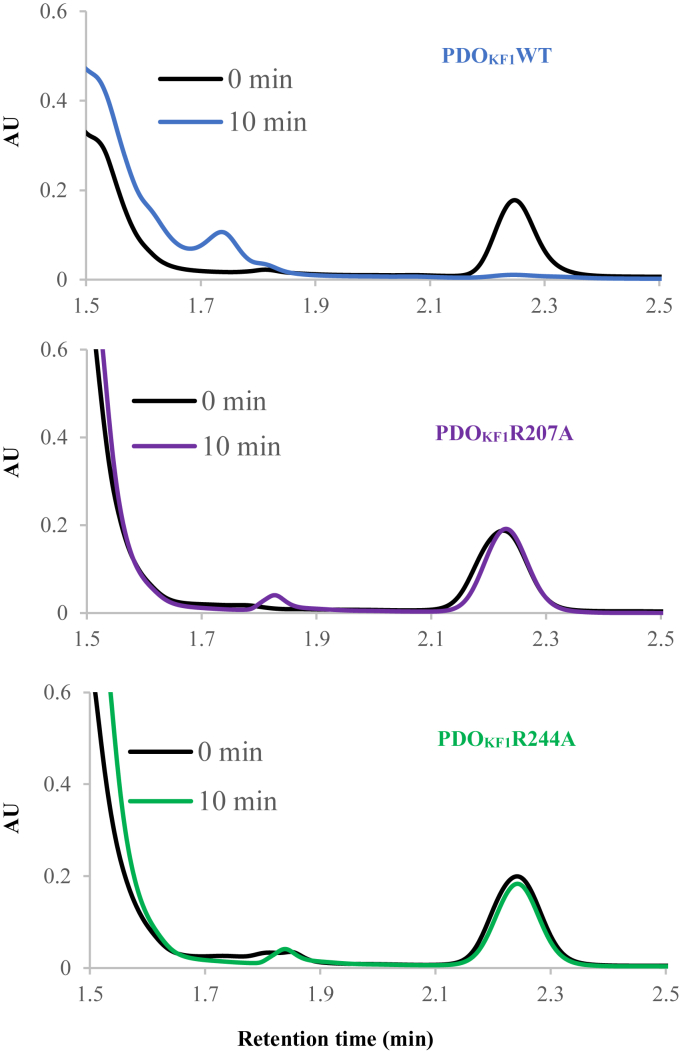
Phthalate, a plasticizer, endocrine disruptor, and potential carcinogen, is degraded by a variety of bacteria. This degradation is initiated by phthalate dioxygenase (PDO), a Rieske oxygenase (RO) that catalyzes the dihydroxylation of phthalate to a dihydrodiol. PDO has long served as a model for understanding ROs despite a lack of structural data. Here we purified PDO from Comamonas testosteroni KF1 and found that it had an apparent k/K for phthalate of 0.58 ± 0.09 μMs, over 25-fold greater than for terephthalate. The crystal structure of the enzyme at 2.1 Å resolution revealed that it is a hexamer comprising two stacked α trimers, a configuration not previously observed in RO crystal structures. We show that within each trimer, the protomers adopt a head-to-tail configuration typical of ROs. The stacking of the trimers is stabilized by two extended helices, which make the catalytic domain of PDO larger than that of other characterized ROs. Complexes of PDO with phthalate and terephthalate revealed that Arg207 and Arg244, two residues on one face of the active site, position these substrates for regiospecific hydroxylation. Consistent with their roles as determinants of substrate specificity, substitution of either residue with alanine yielded variants that did not detectably turnover phthalate. Together, these results provide critical insights into a pollutant-degrading enzyme that has served as a paradigm for ROs and facilitate the engineering of this enzyme for bioremediation and biocatalytic applications.
邻苯二甲酸酯是一种增塑剂、内分泌干扰物和潜在的致癌物质,可被多种细菌降解。这种降解是由邻苯二甲酸二加氧酶(PDO)启动的,PDO 是一种 Rieske 氧合酶(RO),可催化邻苯二甲酸的二羟基化生成二氢二醇。尽管缺乏结构数据,但 PDO 长期以来一直被用作理解 RO 的模型。在这里,我们从 Comamonas testosteroni KF1 中纯化了 PDO,并发现它对邻苯二甲酸的表观 k/K 值为 0.58±0.09μMs,比对苯二甲酸高 25 倍以上。该酶在 2.1Å分辨率下的晶体结构表明,它是一个由两个堆叠的α三聚体组成的六聚体,这种构象在 RO 晶体结构中尚未观察到。我们表明,在每个三聚体中,前体采用 RO 典型的头到尾构象。三聚体的堆叠由两个扩展的螺旋稳定,这使得 PDO 的催化结构域比其他表征的 RO 更大。PDO 与邻苯二甲酸和对苯二甲酸的复合物表明,活性位点一侧的两个残基 Arg207 和 Arg244 定位这些底物进行区域特异性羟化。与它们作为决定底物特异性的作用一致,用丙氨酸取代这两个残基中的任何一个都会产生不能明显转化邻苯二甲酸的变体。这些结果为降解污染物的酶提供了重要的见解,该酶一直是 RO 的典范,并为该酶在生物修复和生物催化应用中的工程化提供了便利。