School of Chinese Medicine, The University of Hong Kong.
Centre for Chinese Herbal Medicine Drug Development, School of Chinese Medicine, Hong Kong Baptist University.
Int J Biol Sci. 2021 Oct 20;17(15):4316-4326. doi: 10.7150/ijbs.62868. eCollection 2021.
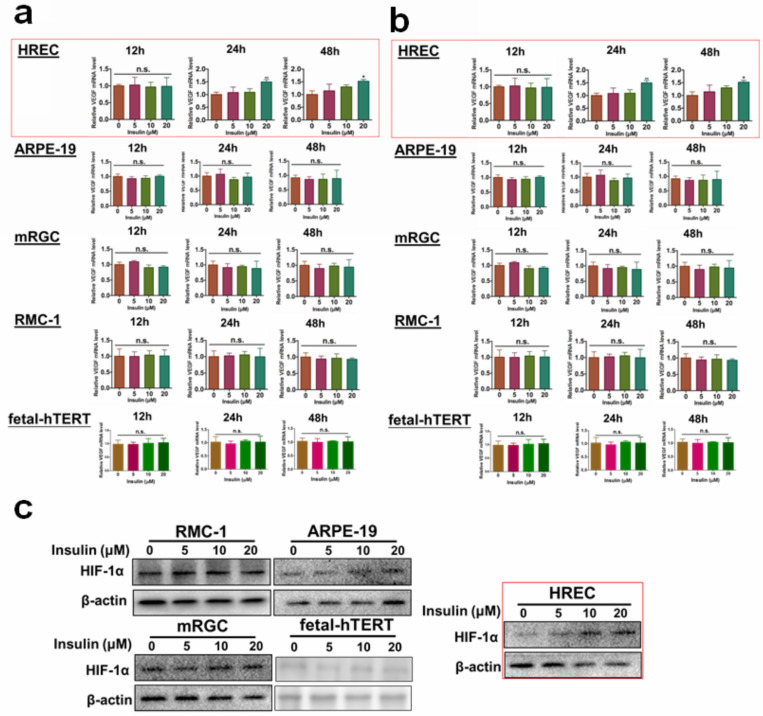
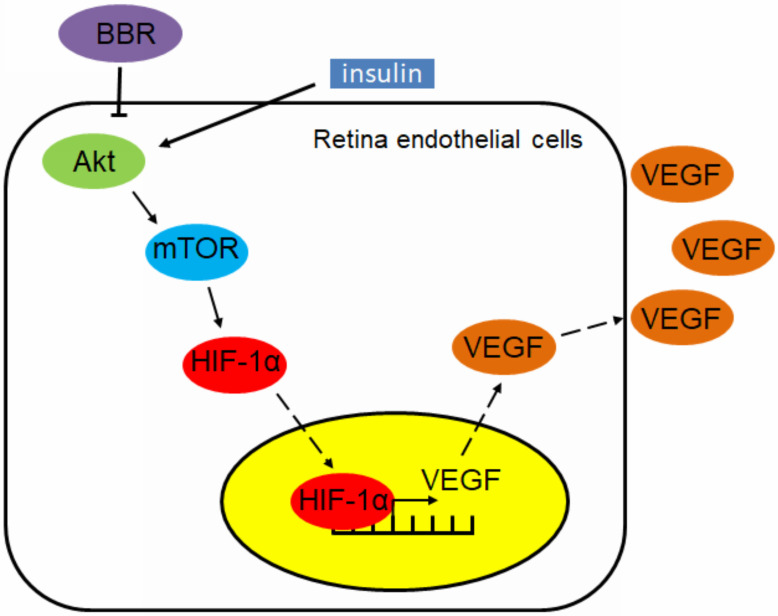
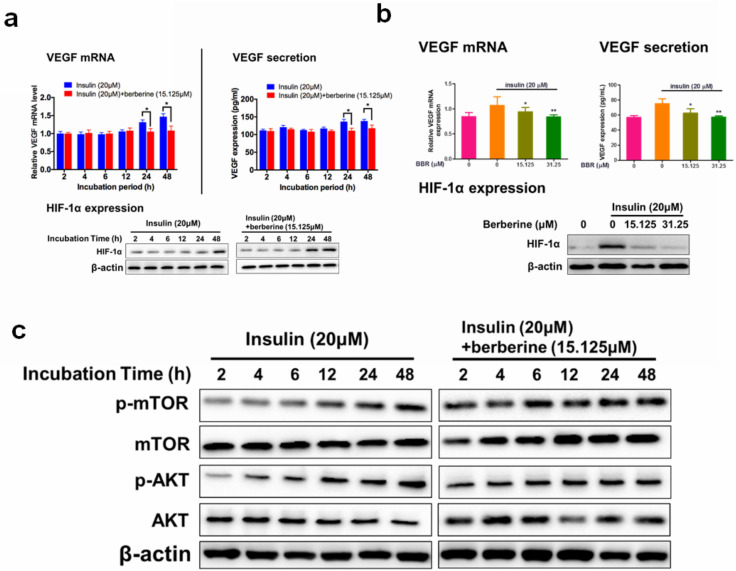
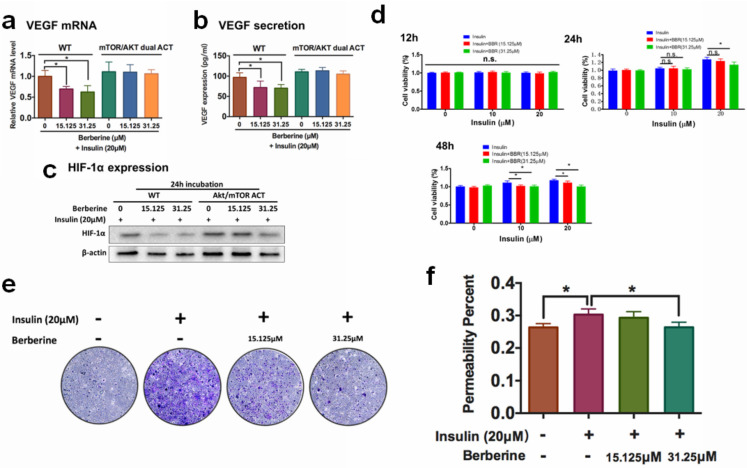
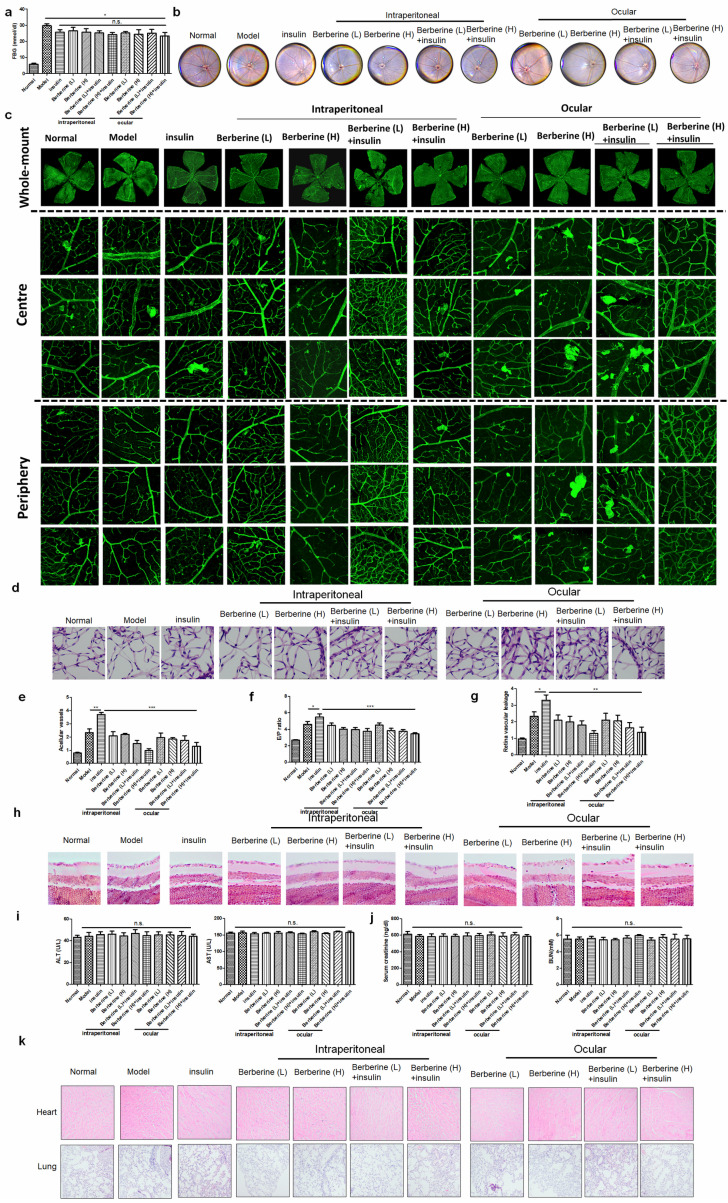
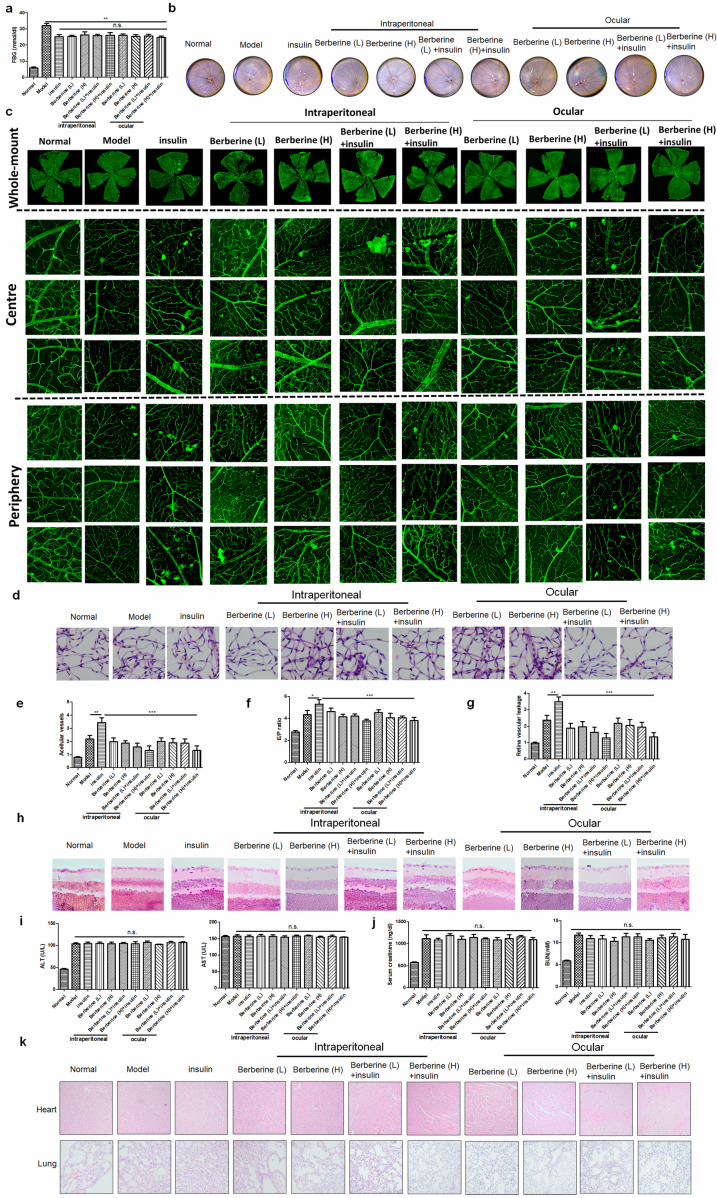
Insulin therapy is the major treatment of glycaemic control in type I diabetes mellitus (DM) and advanced type II DM patients who fail to respond to oral hypoglycemic agents. Nonetheless, insulin therapy is deemed unsuccessful in controlling the incidence of diabetic retinopathy (DR) and is likely a risk factor. Berberine, an isoquinoline alkaloid, has caught great attention towards its anti-diabetic mechanisms. This study aims to investigate the effect of berberine in decelerating DR progression in insulin-treated DM. To better understand the therapeutic potential of berberine in the presence of insulin, we elaborated the action of mechanism whether berberine inhibited retinal expression of HIF-1α and VEGF through regulating AKT/mTOR pathway. Suppression of insulin-induced neovasculature of retina endothelial cells by berberine was also studied. Lastly, the efficacy and safety of berberine as adjuvant therapy for the treatment of DR were systemically investigated in experimental type I and type II DM mice with insulin treatment. Among various types of retinal cells, the activity of HIF-1α and VEGF in retinal endothelial cells could be particularly and exclusively stimulated by insulin intervention, which could be inhibited by berberine treatment in a dose- and time-dependent manner. Berberine suppressed Akt/mTOR activity in these cells, and restoration of Akt/mTOR signalling attenuated berberine's inhibition on HIF-1α and VEGF expression. Berberine suppressed the progression of DR in experimental type I and type II diabetic mice receiving insulin therapy. Berberine improves insulin-induced diabetic retinopathy in type I and II diabetes through inhibiting insulin-induced activation of retinal endotheliocytes via Akt/mTOR/ HIF-1α/VEGF pathway.
胰岛素治疗是 1 型糖尿病(DM)和口服降糖药治疗失败的晚期 2 型 DM 患者血糖控制的主要治疗方法。然而,胰岛素治疗被认为不能控制糖尿病视网膜病变(DR)的发病率,并且可能是一个危险因素。小檗碱是一种异喹啉生物碱,因其抗糖尿病机制而备受关注。本研究旨在探讨小檗碱在减缓胰岛素治疗的糖尿病患者 DR 进展中的作用。为了更好地了解胰岛素存在时小檗碱的治疗潜力,我们详细阐述了其作用机制,即小檗碱是否通过调节 AKT/mTOR 通路抑制 HIF-1α 和 VEGF 在视网膜中的表达。还研究了小檗碱抑制胰岛素诱导的视网膜内皮细胞新生血管形成的作用。最后,系统研究了小檗碱作为胰岛素治疗的 1 型和 2 型糖尿病实验小鼠 DR 辅助治疗的疗效和安全性。在各种类型的视网膜细胞中,胰岛素干预可特别且专门地刺激视网膜内皮细胞中 HIF-1α 和 VEGF 的活性,而小檗碱处理可剂量和时间依赖性地抑制其活性。小檗碱抑制了这些细胞中的 Akt/mTOR 活性,而 Akt/mTOR 信号的恢复减弱了小檗碱对 HIF-1α 和 VEGF 表达的抑制作用。小檗碱抑制了接受胰岛素治疗的实验性 1 型和 2 型糖尿病小鼠 DR 的进展。小檗碱通过抑制 Akt/mTOR/HIF-1α/VEGF 通路抑制胰岛素诱导的视网膜内皮细胞激活,改善 1 型和 2 型糖尿病患者的胰岛素诱导性糖尿病视网膜病变。