Department of Anatomy, Faculty of Medicine, Khon Kaen University, Khon Kaen, Thailand.
Neurogenesis Research Group, Department of Anatomy, Faculty of Medicine, Khon Kaen University, Khon Kaen 40002, Thailand.
Oxid Med Cell Longev. 2021 Nov 12;2021:9997582. doi: 10.1155/2021/9997582. eCollection 2021.
Valproic acid (anticonvulsant medication) has been found to inhibit histone deacetylase activity and suppress hippocampal neurogenesis, which causes memory impairment in both humans and rodents. The neurohormone melatonin, which regulates mammalian seasonal and circadian physiology, has recently been shown to have neuroprotective properties, counteracting memory impairment associated with VPA-caused hippocampal neurogenesis reduction. This study is aimed at investigating the molecular mechanisms of melatonin associated with VPA-induced hippocampal neurogenesis and memory impairment.
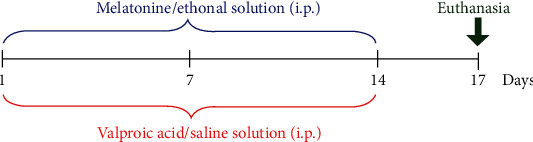
Male Spraque-Dawley rats received VPA (300 mg/kg) twice daily or melatonin (8 mg/kg/day) or some rats were given melatonin for 14 days during VPA administration.
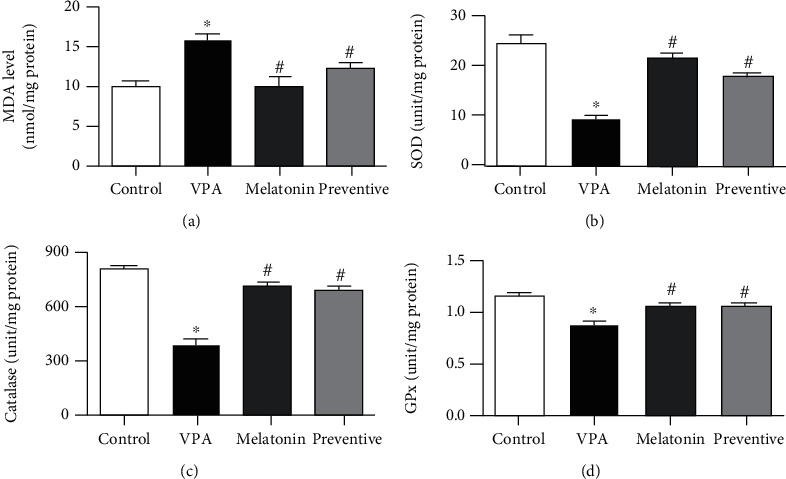
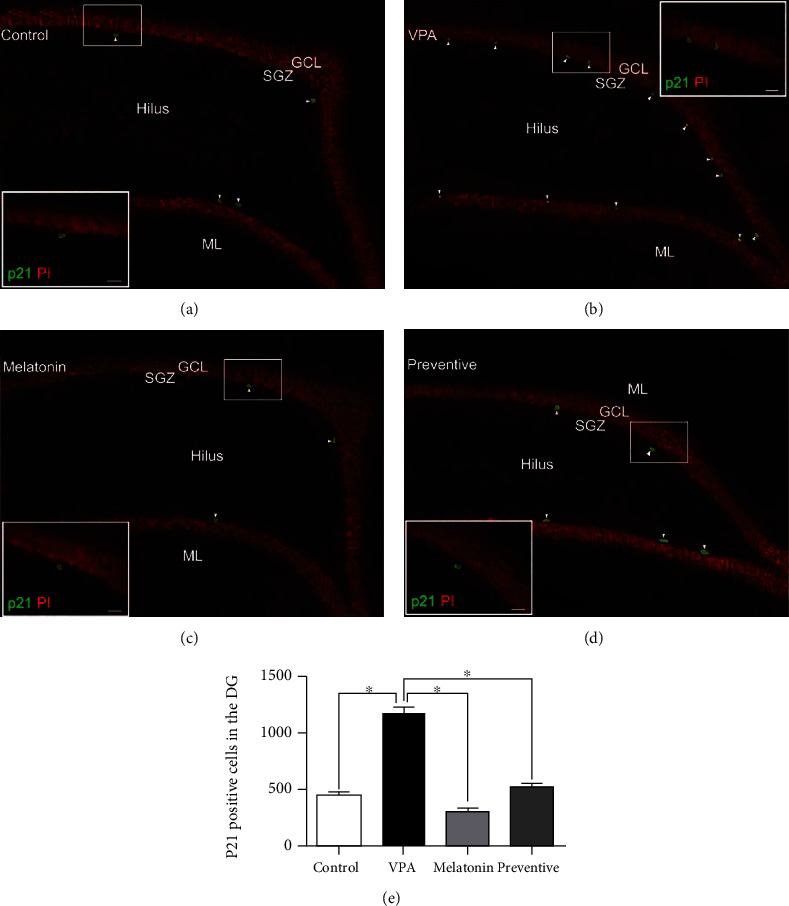
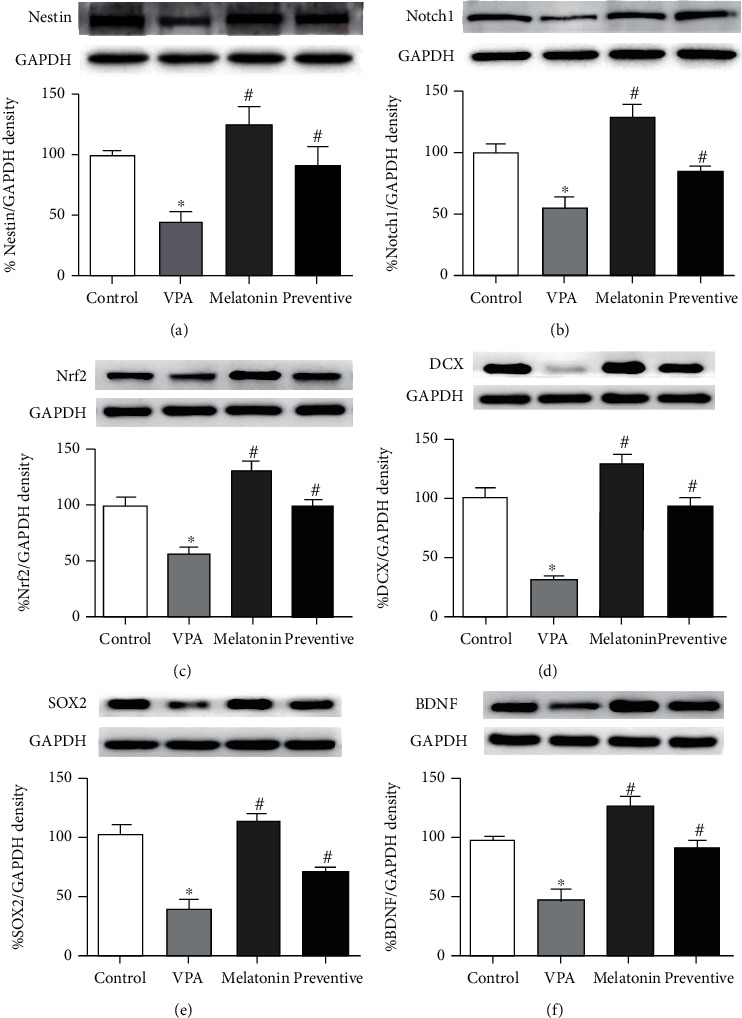
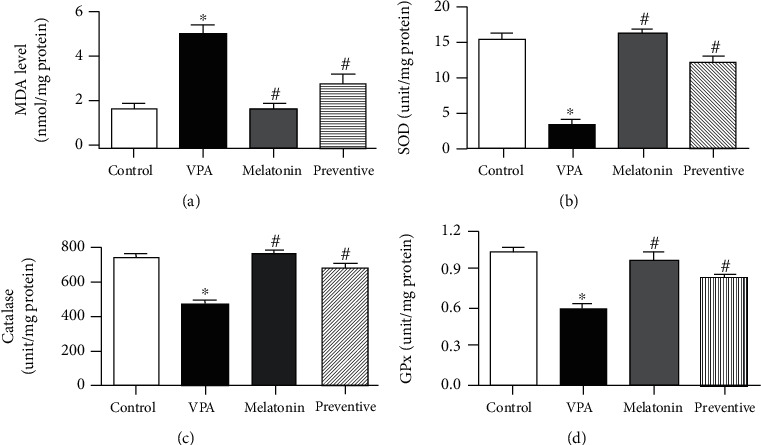
The VPA-treated rats showed a significant increase in malondialdehyde (MDA) levels in the hippocampus and p21-positive cells in the subgranular zone (SGZ) of the dentate gyrus (DG) but decreased superoxide dismutase (SOD), catalase, and glutathione peroxidase (GPx) activities. Moreover, VPA significantly decreased levels of nestin, Notchl, nuclear factor erythroid 2-related factor 2 (Nrf2), doublecortin (DCX), sex determining region Y-box 2 (SOX2), and brain-derived neurotrophic factor (BDNF).
We found that melatonin was able to counteract these neurotoxic effects, acting as a neuroprotectant in VPA-induced memory hippocampal neurogenesis impairment by preventing intracellular oxidative stress and increasing antioxidant activity.
已发现丙戊酸(抗惊厥药物)可抑制组蛋白去乙酰化酶活性并抑制海马神经发生,从而导致人类和啮齿动物的记忆损伤。神经激素褪黑素调节哺乳动物的季节性和昼夜生理,最近已显示出具有神经保护特性,可抵抗丙戊酸引起的海马神经发生减少所致的记忆损伤。本研究旨在研究褪黑素与丙戊酸诱导的海马神经发生和记忆损伤相关的分子机制。
雄性 Spraque-Dawley 大鼠每天两次接受丙戊酸(300mg/kg)或褪黑素(8mg/kg/天)治疗,或有些大鼠在丙戊酸给药期间连续 14 天给予褪黑素。
丙戊酸处理的大鼠海马丙二醛(MDA)水平显著升高,齿状回(DG)颗粒下区(SGZ)p21 阳性细胞增多,但超氧化物歧化酶(SOD)、过氧化氢酶和谷胱甘肽过氧化物酶(GPx)活性降低。此外,丙戊酸显著降低了巢蛋白、Notchl、核因子红细胞 2 相关因子 2(Nrf2)、双皮质素(DCX)、性别决定区 Y 盒 2(SOX2)和脑源性神经营养因子(BDNF)的水平。
我们发现褪黑素能够抵抗这些神经毒性作用,通过防止细胞内氧化应激和增加抗氧化活性,作为丙戊酸诱导的记忆海马神经发生损伤的神经保护剂发挥作用。