Yue Yuanxun, Ren Zhizhong, Liu Ying, Zhang Yuewei
Zhongshan Clinical College of Dalian University, Dalian, Liaoning Province, People's Republic of China.
Hepatobiliary Interventional Department, Beijing Tsinghua Chang Gung Hospital Affiliated to Tsinghua University, Beijing, People's Republic of China.
J Interv Med. 2019 Jun 27;2(1):21-26. doi: 10.1016/j.jimed.2019.05.006. eCollection 2019 Feb.
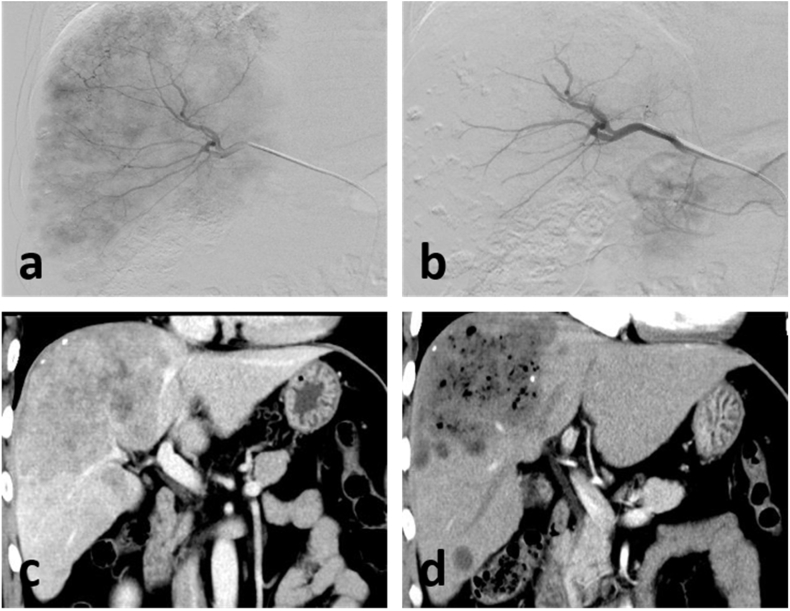
A series of clinical studies have established the safety and efficacy of transcatheter arterial chemoembolization (TACE) with gelatin sponge microparticles (GSMs) in treating hepatocellular carcinoma (HCC). HCC can lead to obvious necrosis inside tumors, especially larger ones, although it is unclear whether such necrotic tumor tissue can induce favorable immune reactions against the tumor. Myeloid-derived suppressor cells (MDSCs) have immunosuppressive functions and are currently considered a very important cell type affecting tumor immunity. This study observed changes in MDSC frequency in peripheral blood before and after GSM-TACE to evaluate the effect on the immune function of HCC patients.
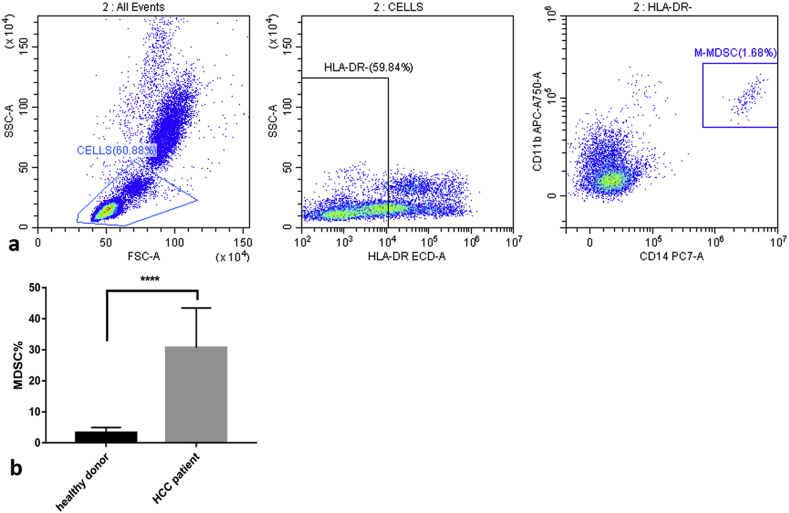
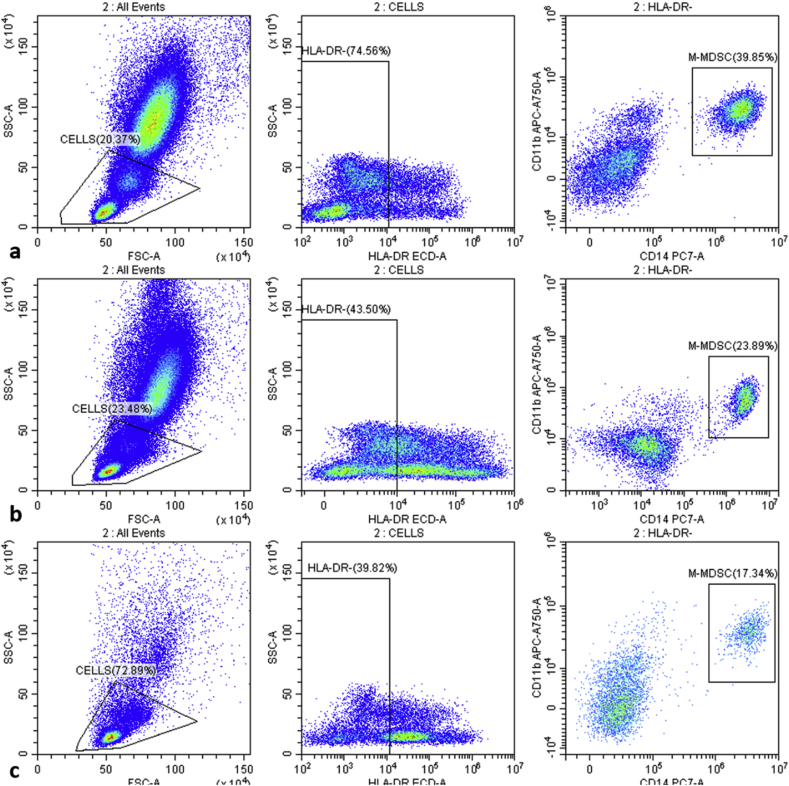
Eight patients diagnosed with HCC underwent GSM-TACE treatment in the Hepatobiliary Interventional Department of Beijing Tsinghua Chang Gung Hospital, Beijing, China; we followed up with the patients over a period of 30 days post-surgery. We used flow cytometry (FCM) to quantify the frequency of MDSCs in peripheral blood before TACE, 10 days after surgery and 30 days after surgery.
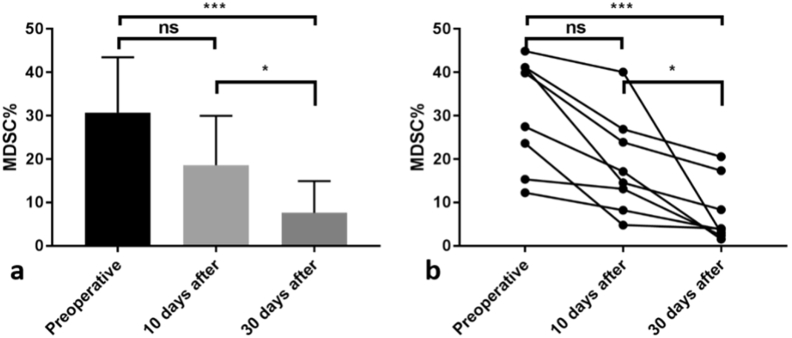
MDSC frequency after GSM-TACE had a significant downward trend. Pre-TACE, it was 30.73% ± 11.93%, decreasing to 18.60% ± 11.37% at 10 days after operation. This decrease was not statistically significant ( > 0.05). MDSC frequency was even lower 30 days after TACE (7.63% ± 7.32%) than at 10 days after TACE ( < 0.05), and there was a significant difference compared with pre-TACE ( < 0.001). We evaluated tumor response at 30 days after GSM-TACE according to the Modified Response Evaluation Criteria in Solid Tumors (mRECIST), and all eight patients showed partial response (PR).
Our results confirmed that GSM-TACE was beneficial for improving anti-tumor immunity in the treatment of HCC.
一系列临床研究已证实经导管动脉化疗栓塞术(TACE)联合明胶海绵微粒(GSMs)治疗肝细胞癌(HCC)的安全性和有效性。HCC可导致肿瘤内部出现明显坏死,尤其是较大的肿瘤,尽管尚不清楚这种坏死的肿瘤组织是否能诱导产生有利的抗肿瘤免疫反应。髓源性抑制细胞(MDSCs)具有免疫抑制功能,目前被认为是影响肿瘤免疫的一种非常重要的细胞类型。本研究观察了GSM-TACE前后外周血中MDSC频率的变化,以评估其对HCC患者免疫功能的影响。
8例确诊为HCC的患者在中国北京清华长庚医院肝胆介入科接受了GSM-TACE治疗;我们在术后30天对患者进行了随访。我们采用流式细胞术(FCM)对TACE前、术后10天和术后30天外周血中MDSCs的频率进行了定量分析。
GSM-TACE后MDSC频率呈显著下降趋势。TACE前为30.73%±11.93%,术后10天降至18.60%±11.37%。这种下降无统计学意义(>0.05)。TACE后30天MDSC频率(7.63%±7.32%)甚至低于TACE后10天(<0.05),与TACE前相比有显著差异(<0.001)。我们根据实体瘤改良反应评估标准(mRECIST)在GSM-TACE后30天评估肿瘤反应,所有8例患者均显示部分缓解(PR)。
我们的结果证实,GSM-TACE在HCC治疗中有利于提高抗肿瘤免疫力。