Human Health Therapeutics Research Centre, National Research Council Canada, Ottawa, Ontario, Canada.
Human Health Therapeutics Research Centre, National Research Council Canada, Montreal, Quebec, Canada.
MAbs. 2021 Jan-Dec;13(1):1997072. doi: 10.1080/19420862.2021.1997072.
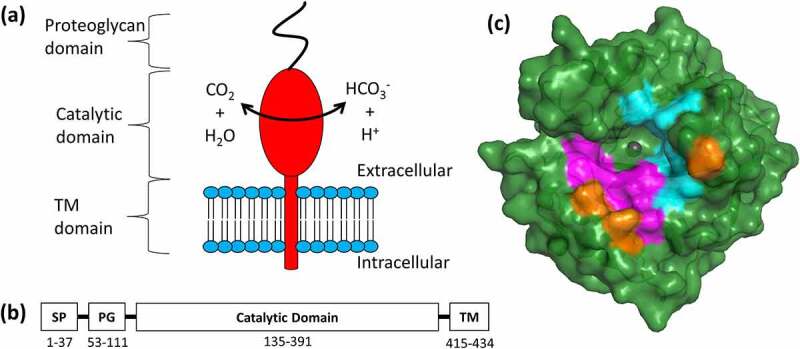
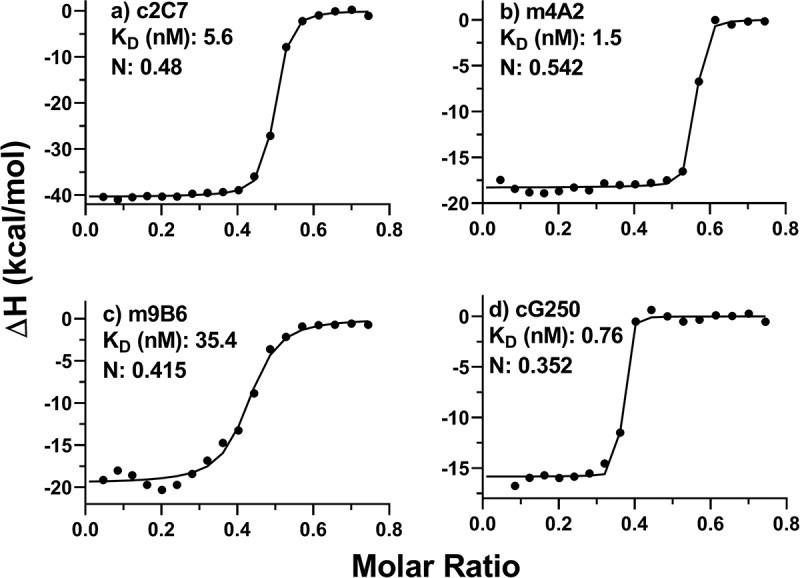
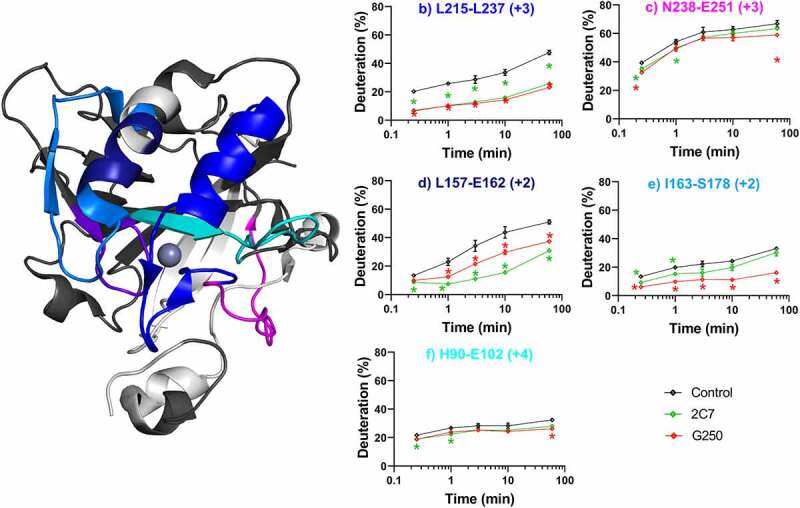
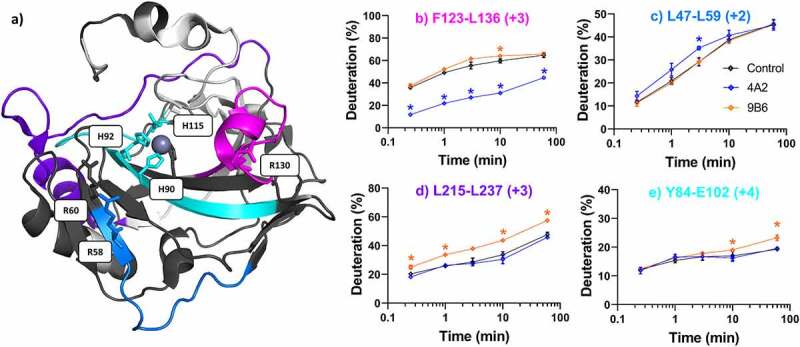
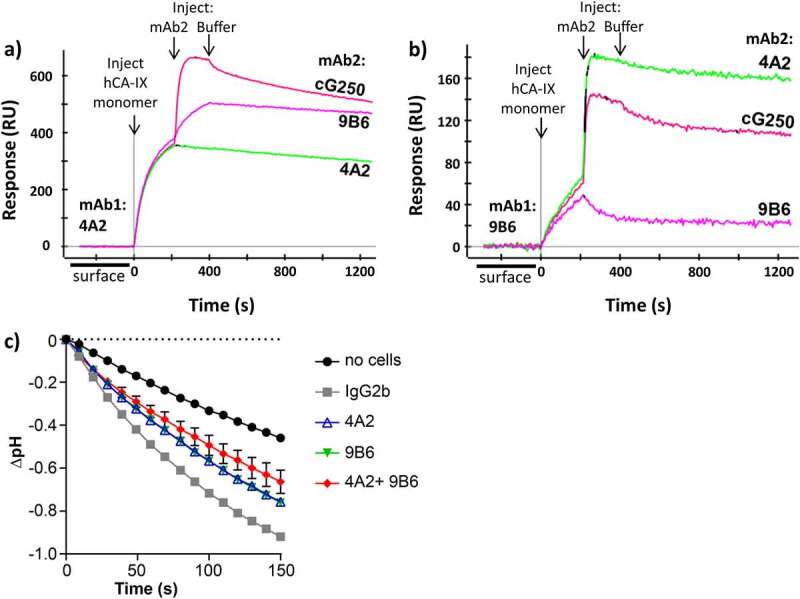
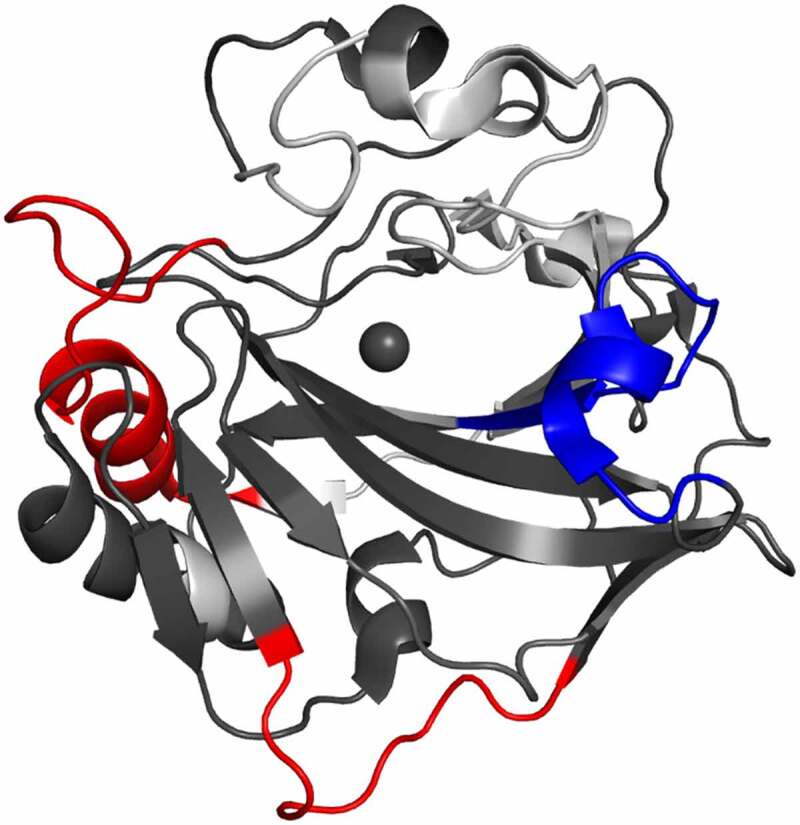
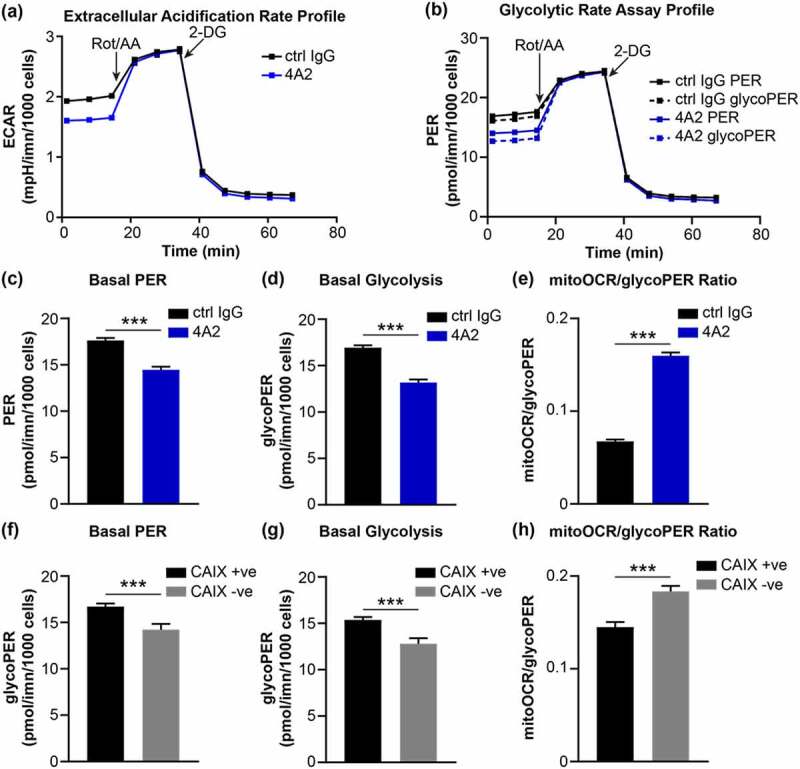
Human carbonic anhydrase (hCAIX), an extracellular enzyme that catalyzes the reversible hydration of CO, is often overexpressed in solid tumors. This enzyme is instrumental in maintaining the survival of cancer cells in a hypoxic and acidic tumor microenvironment. Absent in most normal tissues, hCAIX is a promising therapeutic target for detection and treatment of solid tumors. Screening of a library of anti-hCAIX monoclonal antibodies (mAbs) previously identified three therapeutic candidates (mAb c2C7, m4A2 and m9B6) with distinct biophysical and functional characteristics. Selective binding to the catalytic domain was confirmed by yeast surface display and isothermal calorimetry, and deeper insight into the dynamic binding profiles of these mAbs upon binding were highlighted by bottom-up hydrogen-deuterium exchange mass spectrometry (HDX-MS). Here, a conformational and allosterically silent epitope was identified for the antibody-drug conjugate candidate c2C7. Unique binding profiles are described for both inhibitory antibodies, m4A2 and m9B6. M4A2 reduces the ability of the enzyme to hydrate CO by steric gating at the entrance of the catalytic cavity. Conversely, m9B6 disrupts the secondary structure that is necessary for substrate binding and hydration. The synergy of these two inhibitory mechanisms is demonstrated in activity assays and HDX-MS. Finally, the ability of m4A2 to modulate extracellular pH and intracellular metabolism is reported. By highlighting three unique modes by which hCAIX can be targeted, this study demonstrates both the utility of HDX-MS as an important tool in the characterization of anti-cancer biotherapeutics, and the underlying value of CAIX as a therapeutic target.
人碳酸酐酶(hCAIX)是一种细胞外酶,可催化 CO 的可逆水合作用,在实体瘤中常过度表达。这种酶在维持缺氧和酸性肿瘤微环境中癌细胞的存活中起着重要作用。hCAIX 在大多数正常组织中不存在,是检测和治疗实体瘤的有前途的治疗靶点。先前从抗 hCAIX 单克隆抗体(mAb)文库中筛选出三种具有不同物理化学和功能特性的治疗候选物(mAb c2C7、m4A2 和 m9B6)。酵母表面展示和等温热力学证实了对催化结构域的选择性结合,通过自上而下的氢氘交换质谱(HDX-MS)突出了这些 mAb 在结合时的动态结合谱。在这里,鉴定了抗体药物偶联物候选物 c2C7 的构象和变构沉默表位。描述了两种抑制性抗体 m4A2 和 m9B6 的独特结合谱。m4A2 通过在催化腔入口处的空间位阻来降低酶水合 CO 的能力。相反,m9B6 破坏了底物结合和水合所必需的二级结构。在活性测定和 HDX-MS 中证明了这两种抑制机制的协同作用。最后,报道了 m4A2 调节细胞外 pH 和细胞内代谢的能力。通过突出 hCAIX 可以靶向的三种独特模式,本研究证明了 HDX-MS 作为一种重要工具在抗癌生物疗法表征中的效用,以及 CAIX 作为治疗靶点的潜在价值。