Key Laboratory for Tumor Precision Medicine of Shaanxi Province and Department of Endocrinology, The First Affiliated Hospital of Xi'an Jiaotong University, 710061, Xi'an, People's Republic of China.
Shanxi Provincial Crops Hospital of Chinese People's Armed Police Force, 710054, Xi'an, People's Republic of China.
Signal Transduct Target Ther. 2021 Nov 24;6(1):399. doi: 10.1038/s41392-021-00793-z.
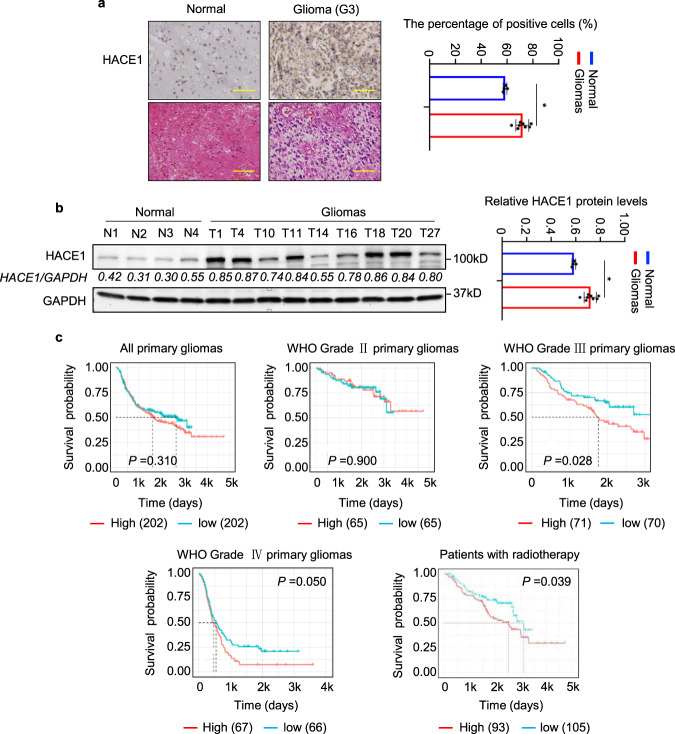
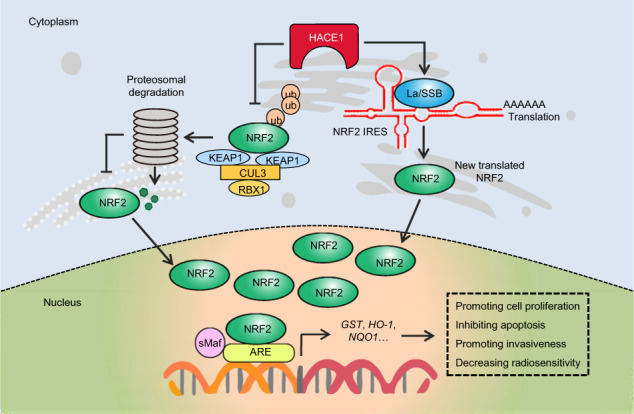
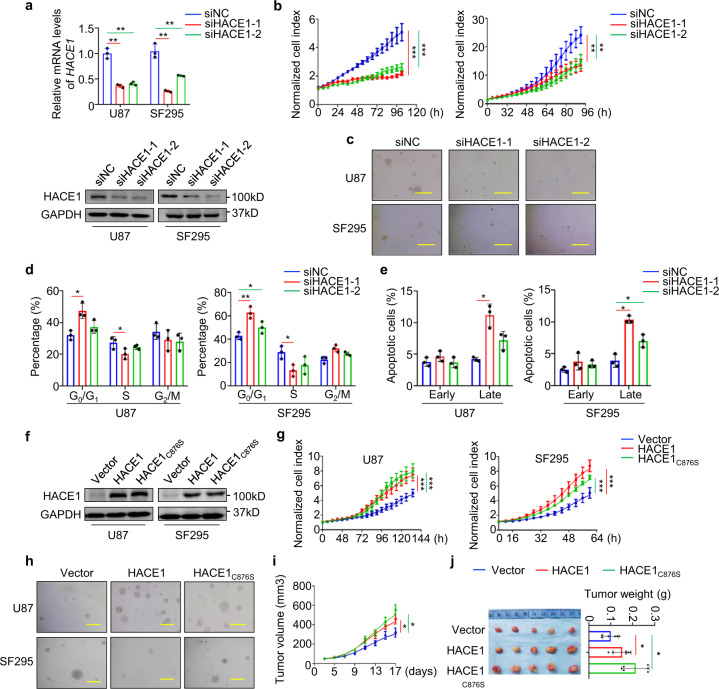
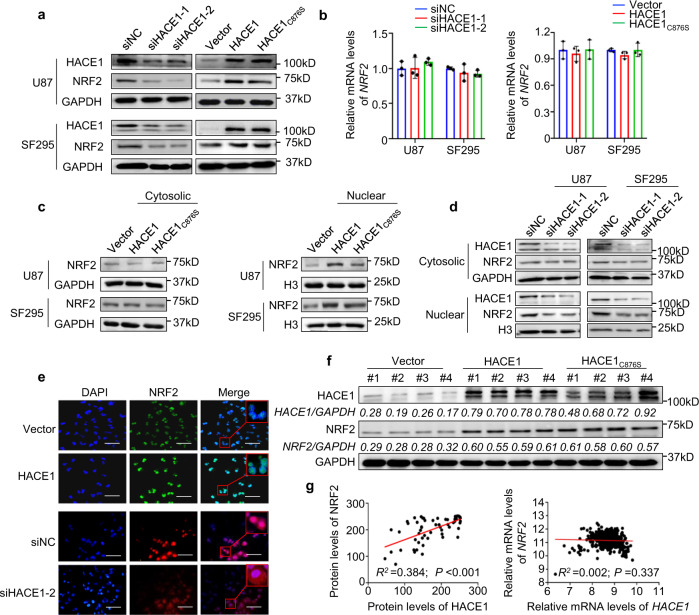
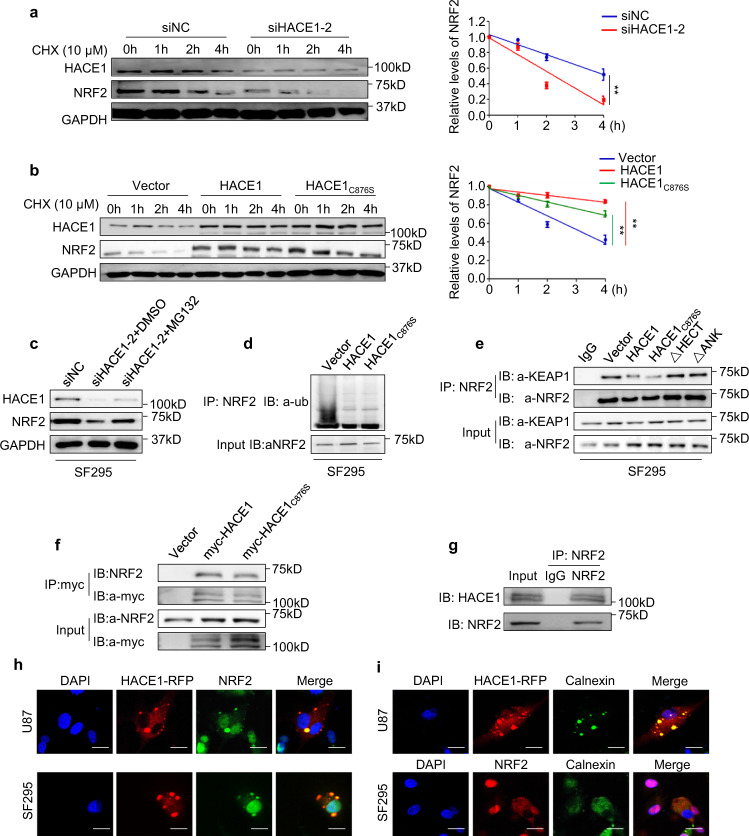
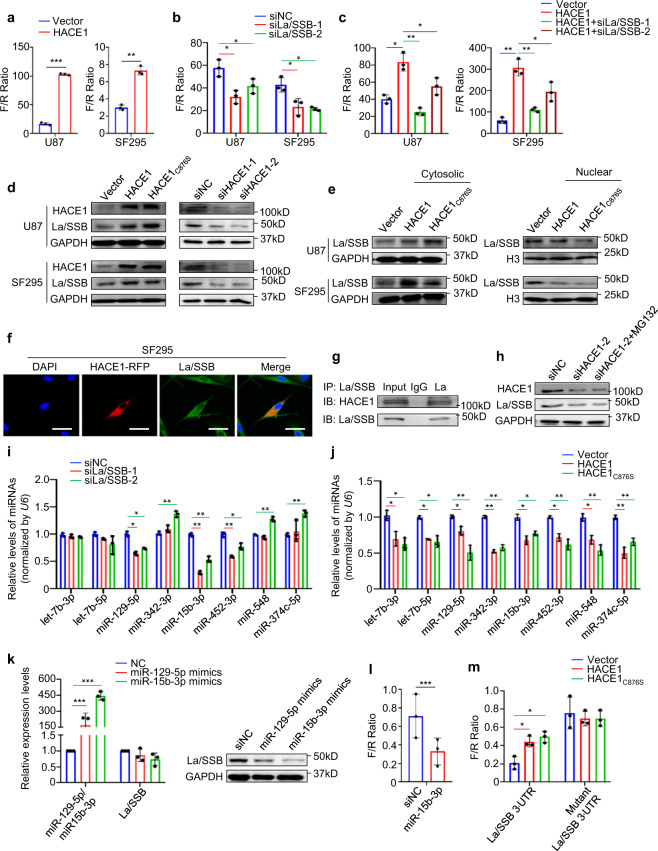
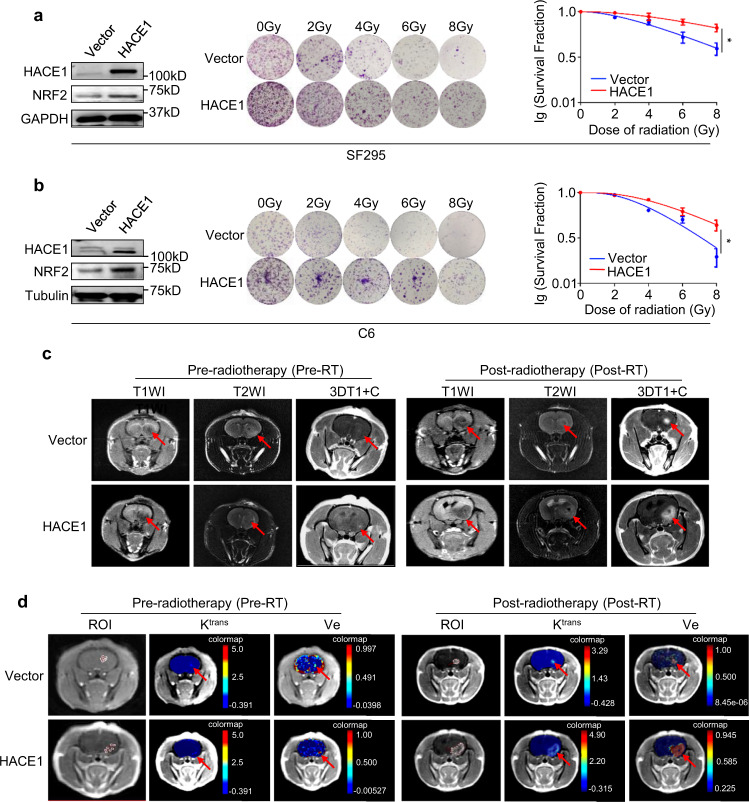
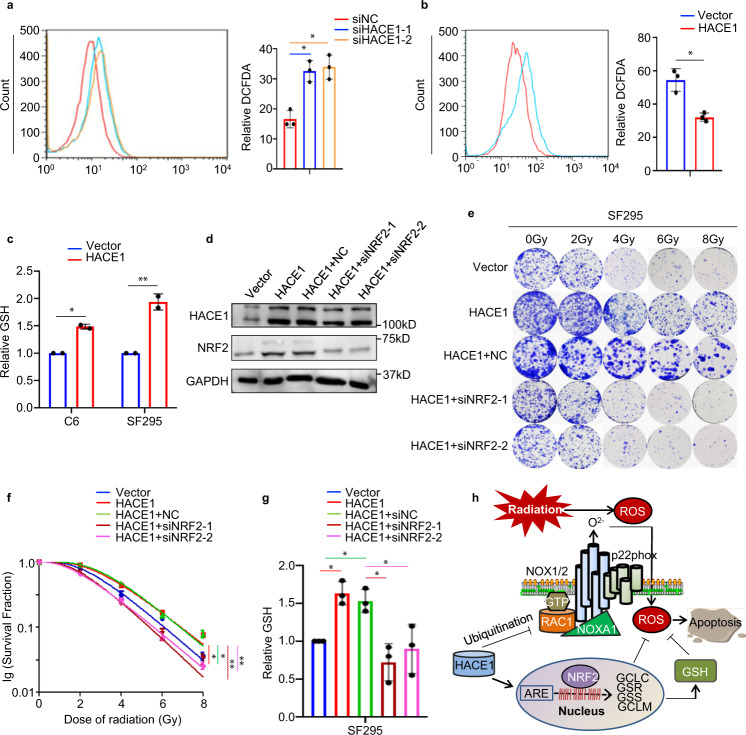
HACE1, an E3 ubiquitin-protein ligase, is frequently inactivated and has been evidenced as a putative tumor suppressor in different types of cancer. However, its role in glioma remains elusive. Here, we observed increased expression of HACE1 in gliomas related to control subjects, and found a strong correlation of high HACE1 expression with poor prognosis in patients with WHO grade III and IV as well as low-grade glioma (LGG) patients receiving radiotherapy. HACE1 knockdown obviously suppressed malignant behaviors of glioma cells, while ectopic expression of HACE1 enhanced cell growth in vitro and in vivo. Further studies revealed that HACE1 enhanced protein stability of nuclear factor erythroid 2-related factor 2 (NRF2) by competitively binding to NRF2 with another E3 ligase KEAP1. Besides, HACE1 also promoted internal ribosome entry site (IRES)-mediated mRNA translation of NRF2. These effects did not depend on its E3 ligase activity. Finally, we demonstrated that HACE1 dramatically reduced cellular ROS levels by activating NRF2, thereby decreasing the response of glioma cells to radiation. Altogether, our data demonstrate that HACE1 causes enhanced malignant phenotypes and decreased radiosensitivity of glioma cells by activating NRF2, and indicate that it may act as the role of prognostic factor and potential therapeutic target in glioma.
HACE1 是一种 E3 泛素蛋白连接酶,在不同类型的癌症中经常失活,并被证明是一种潜在的肿瘤抑制因子。然而,其在神经胶质瘤中的作用仍不清楚。在这里,我们观察到与对照组相比,HACE1 在神经胶质瘤中的表达增加,并发现 HACE1 高表达与 WHO 分级 III 和 IV 级以及接受放疗的低级别神经胶质瘤 (LGG) 患者的预后不良有很强的相关性。HACE1 敲低明显抑制了神经胶质瘤细胞的恶性行为,而 HACE1 的异位表达增强了体外和体内的细胞生长。进一步的研究表明,HACE1 通过与另一种 E3 连接酶 KEAP1 竞争结合核因子红细胞 2 相关因子 2 (NRF2),增强了 NRF2 的蛋白稳定性。此外,HACE1 还促进了 NRF2 的内部核糖体进入位点 (IRES)介导的 mRNA 翻译。这些作用不依赖于其 E3 连接酶活性。最后,我们证明 HACE1 通过激活 NRF2 显著降低细胞 ROS 水平,从而降低神经胶质瘤细胞对辐射的反应。总之,我们的数据表明,HACE1 通过激活 NRF2 导致神经胶质瘤细胞恶性表型增强和放射敏感性降低,并表明它可能在神经胶质瘤中作为预后因素和潜在治疗靶点发挥作用。