Department of Dermatology, University of Ulsan College of Medicine, Seoul, 05505, Korea.
Asan Institute for Life Sciences, Asan Medical Center, Seoul 05505, Korea.
Theranostics. 2021 Oct 17;11(20):9918-9936. doi: 10.7150/thno.66378. eCollection 2021.
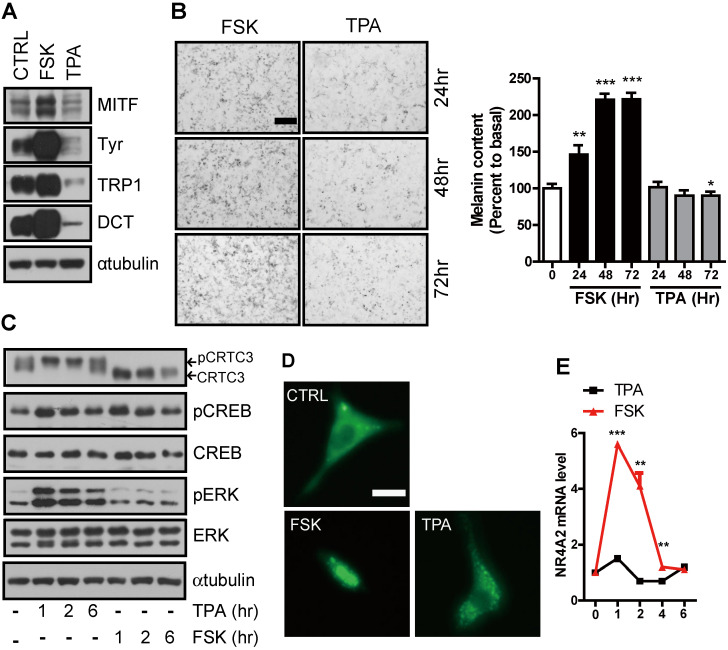
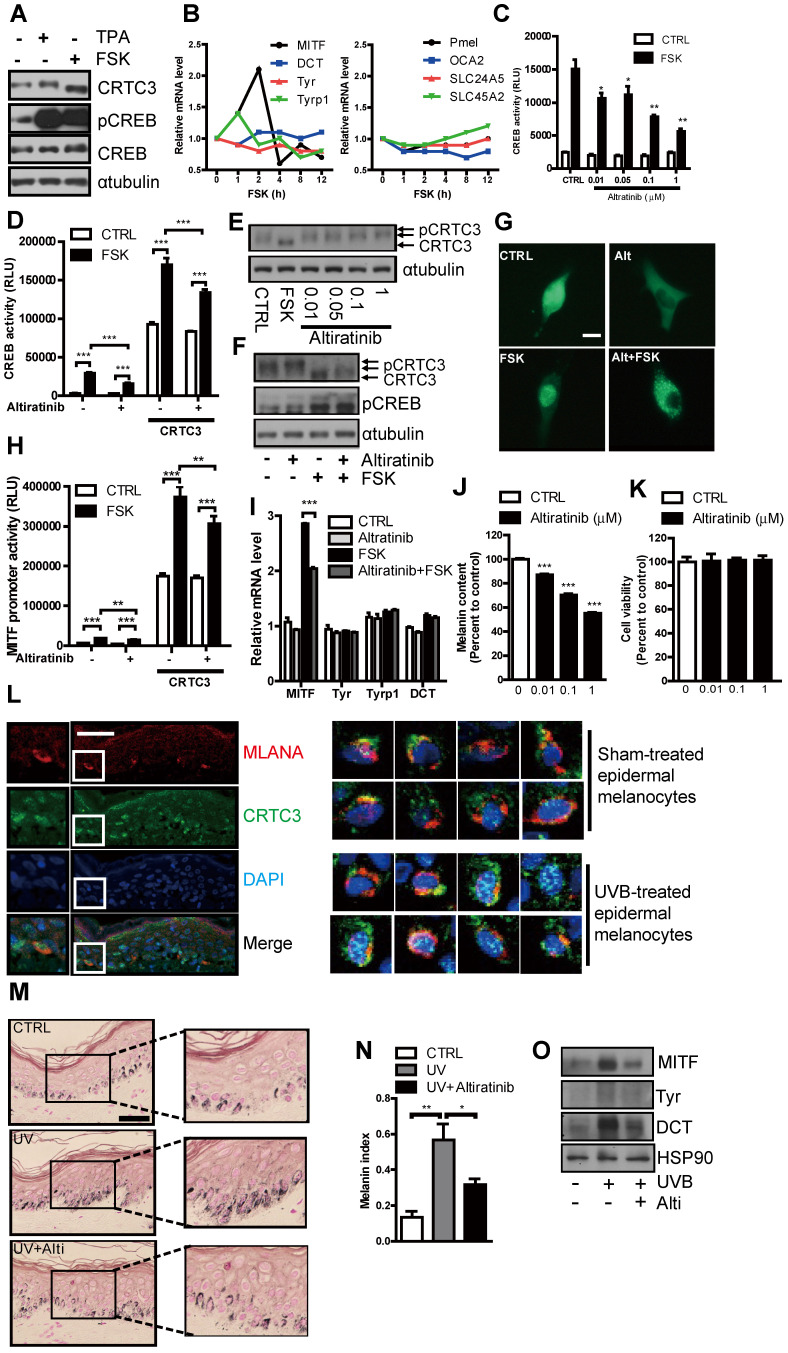
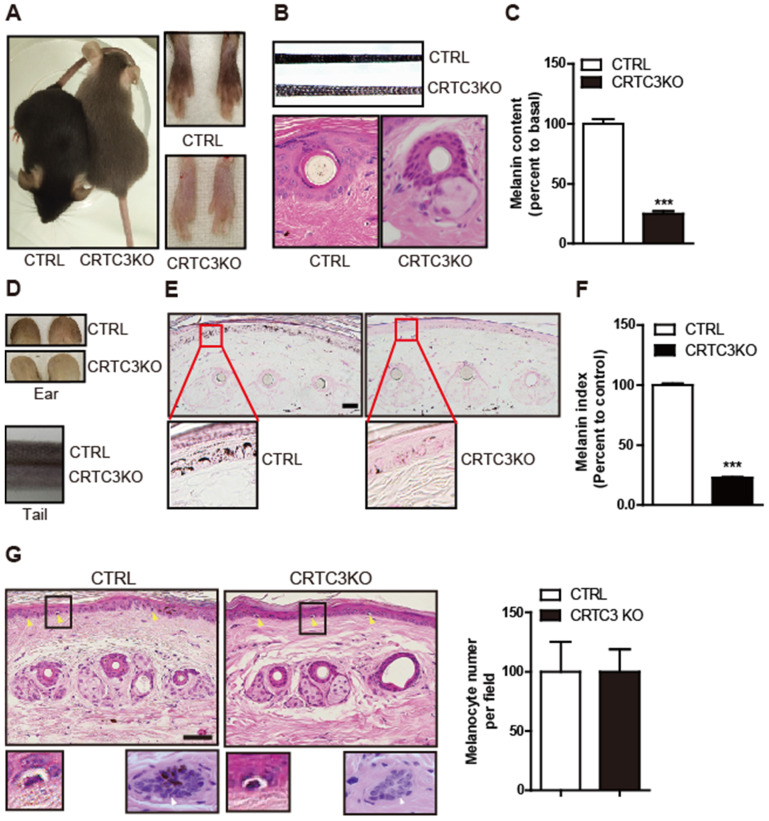
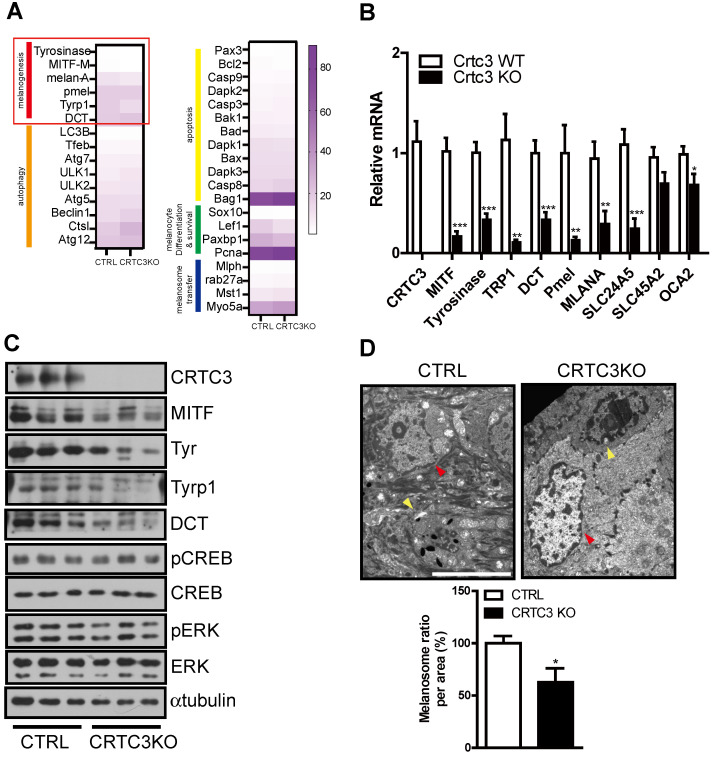
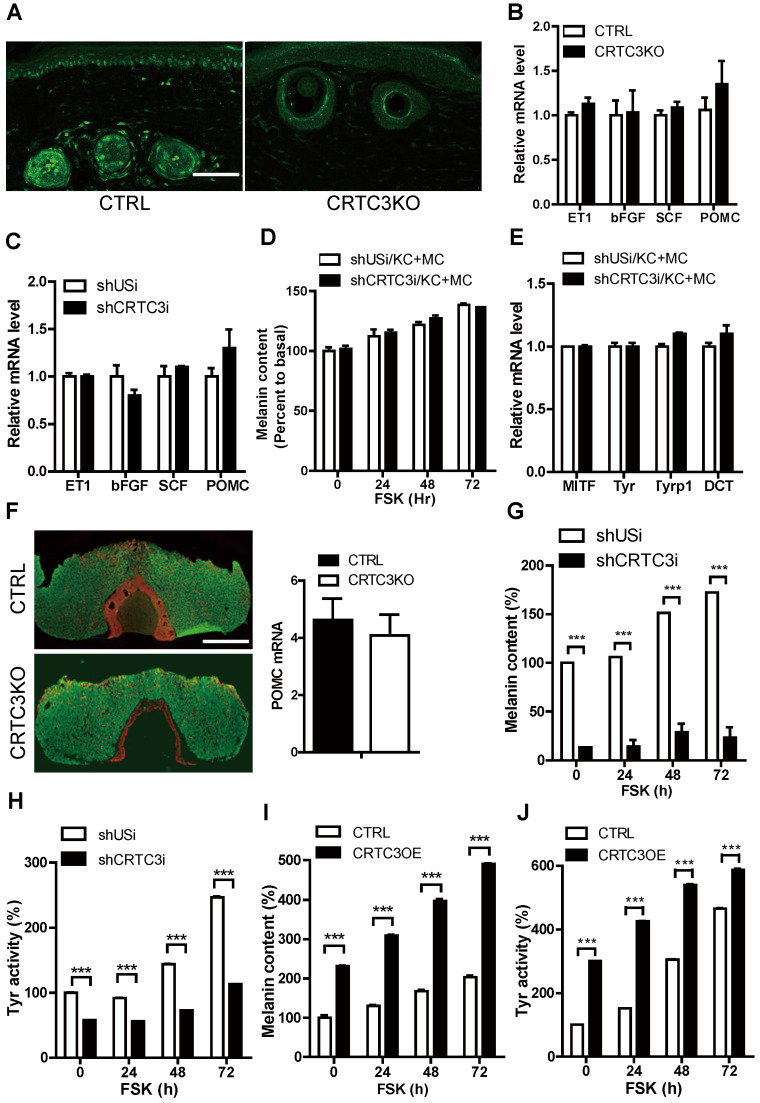
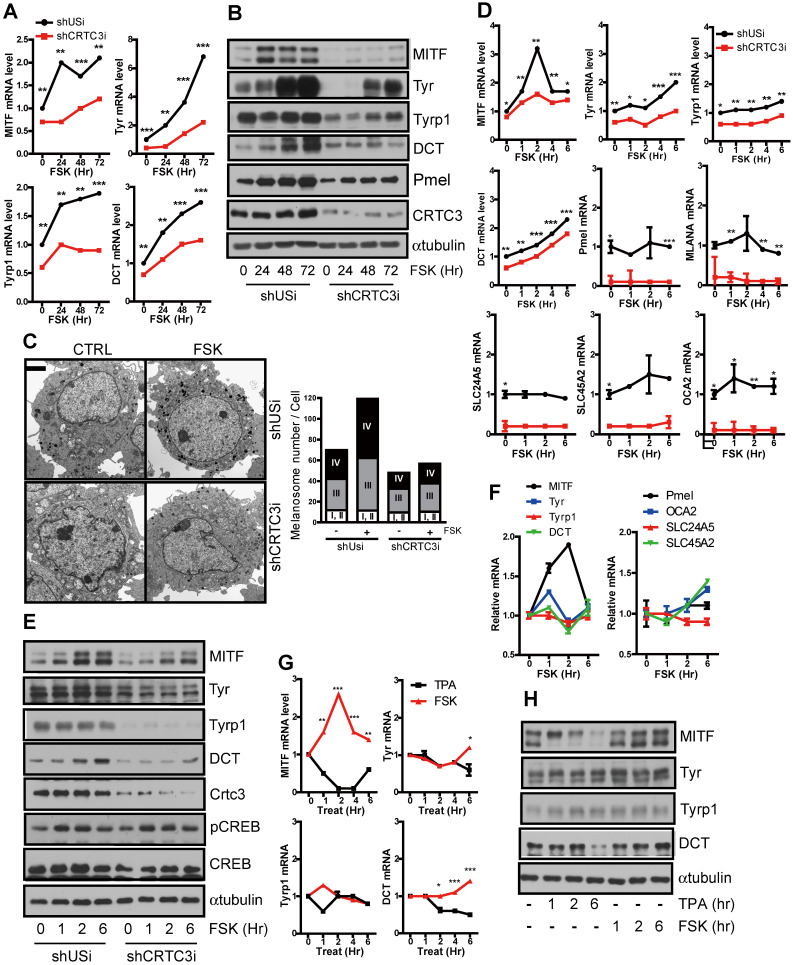
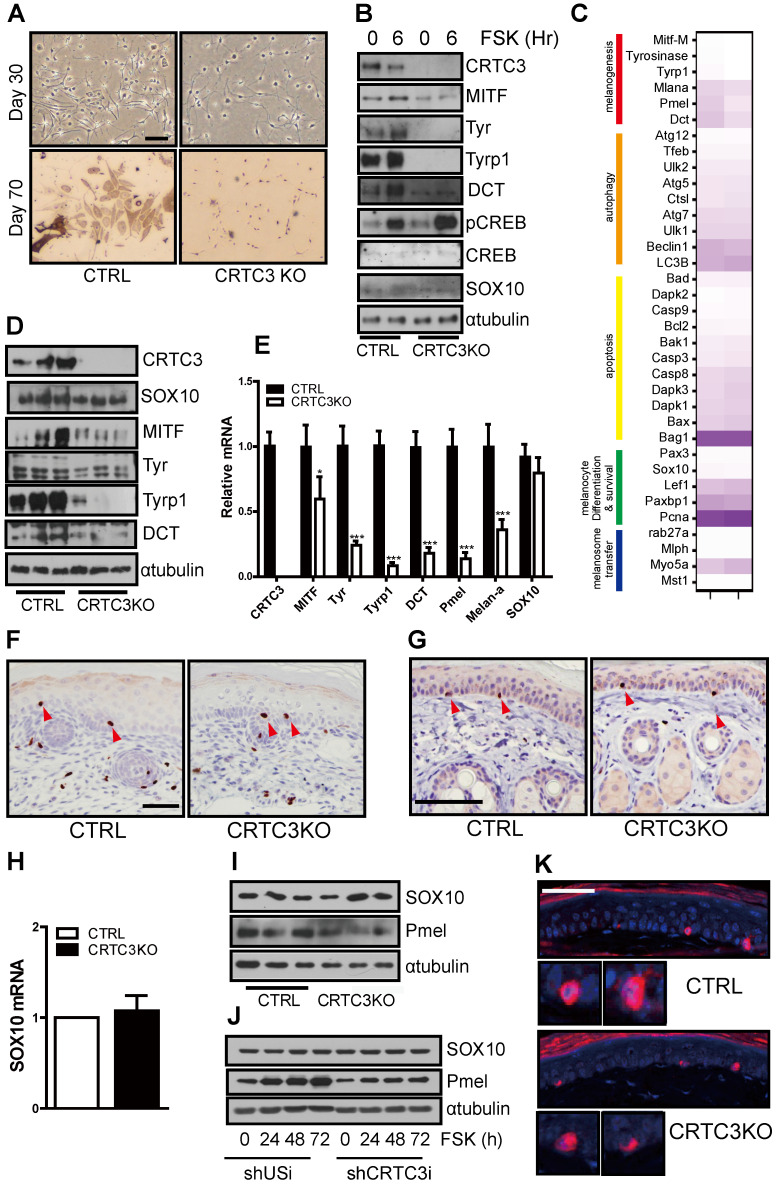
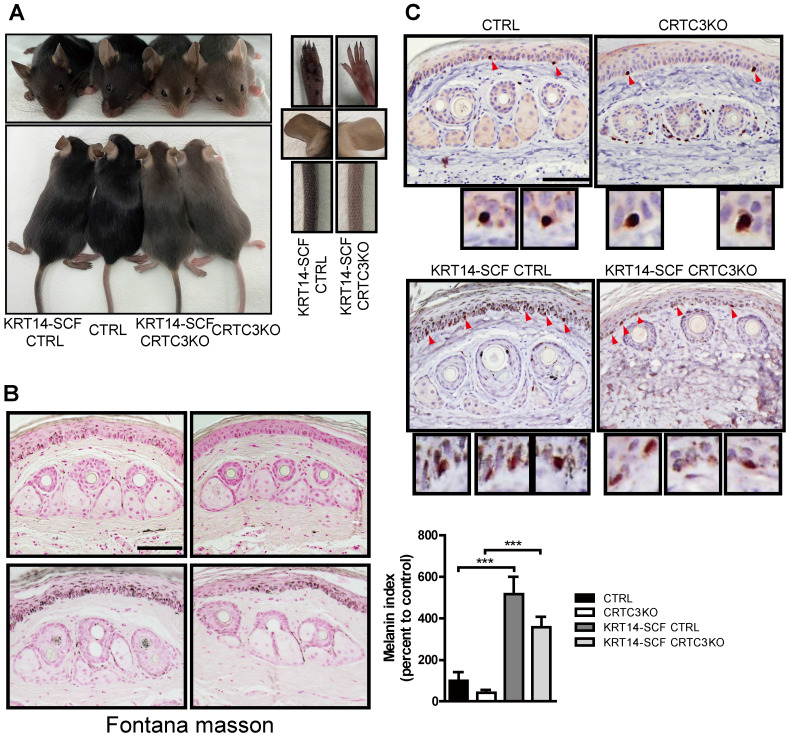
Although CREB phosphorylation is known to be essential in UVB/cAMP-stimulated melanogenesis, CREB null mice did not show identifiable pigmentation phenotypes. Here, we show that CREB-regulated transcription co-activator 3 (CRTC3) quantitatively regulates and orchestrates melanogenesis by directly targeting microphthalmia-associated transcription factor (MITF) and regulating the expression of most key melanogenesis-related genes. We analyzed CRTC3-null, KRT14-SCF transgenic, and their crossover mice. The molecular basis of CRTC3 effects on pigmentation was investigated by histology, melanin/tyrosinase assay, immunoblotting, shRNA, promoter assay, qRT-PCR, and subcellular localization. These analyses were carried out in primary cultured melanocytes, mouse cell lines, normal human cells, co-cultures, and human skin. CRTC/CREB activity screening was performed to identify candidate agents for the regulation of melanogenesis. The coat and skin color of CRTC3-null mice was paler due to a reduction in melanin deposition. Melanogenesis-related genes were reduced in CRTC3-deficient cultured melanocytes and tail skin of CRTC3-null mice. Notably, basal levels of MITF present in CRTC3-null mice were sufficient for melanocytic differentiation/survival. Thus CRTC3-null mice showed a comparable number of epidermal melanocytes compared to control mice. Stem cell factor (SCF) introduction by crossing with KRT14-SCF mice increased epidermal melanocytes and melanin deposition in control and CRTC3-null mice, but the skin color remained still light on the CRTC3-null background. Furthermore, we identified the therapeutic potential of altiratinib to inhibit melanogenesis in human melanocytes and human skin effectively and safely. CRTC3 appears to be a key sensor for melanogenesis and can be used as a reversible and tunable tool for selectively regulating melanogenesis without affecting melanocyte integrity. Thus, CRTC3 can also serve as a screening tool for the discovery of ideal melanogenesis-modulating small molecules.
虽然已知 CREB 磷酸化在 UVB/cAMP 刺激的黑色素生成中是必不可少的,但 CREB 缺失小鼠并没有表现出可识别的色素沉着表型。在这里,我们表明 CREB 调节的转录共激活因子 3(CRTC3)通过直接靶向小眼畸形相关转录因子(MITF)和调节大多数关键黑色素生成相关基因的表达来定量调节和协调黑色素生成。我们分析了 CRTC3 缺失、KRT14-SCF 转基因及其交叉小鼠。通过组织学、黑色素/酪氨酸酶测定、免疫印迹、shRNA、启动子测定、qRT-PCR 和亚细胞定位分析研究了 CRTC3 对色素沉着的分子基础。这些分析在原代培养的黑素细胞、小鼠细胞系、正常人类细胞、共培养物和人类皮肤中进行。进行了 CRTC/CREB 活性筛选,以鉴定调节黑色素生成的候选药物。由于黑色素沉积减少,CRTC3 缺失小鼠的皮毛和皮肤颜色更浅。CRTC3 缺陷培养的黑素细胞和 CRTC3 缺失小鼠尾部皮肤中的黑色素生成相关基因减少。值得注意的是,CRTC3 缺失小鼠中存在的基础水平 MITF 足以用于黑素细胞分化/存活。因此,CRTC3 缺失小鼠与对照小鼠相比具有相当数量的表皮黑素细胞。通过与 KRT14-SCF 小鼠杂交引入干细胞因子 (SCF) 增加了对照和 CRTC3 缺失小鼠的表皮黑素细胞和黑色素沉积,但 CRTC3 缺失背景下皮肤颜色仍然较浅。此外,我们确定了 altiratinib 抑制人类黑素细胞和人类皮肤中黑色素生成的治疗潜力,并且有效且安全。CRTC3 似乎是黑色素生成的关键传感器,可作为一种可逆和可调谐的工具,用于选择性调节黑色素生成,而不会影响黑素细胞完整性。因此,CRTC3 也可以作为发现理想黑色素生成调节小分子的筛选工具。