Department of Otorhinolaryngology, Head and Neck Surgery, University Hospital of Zürich.
University of Zurich, Zurich.
Otol Neurotol. 2022 Feb 1;43(2):227-235. doi: 10.1097/MAO.0000000000003418.
To evaluate the audiological and subjective benefit from hearing rehabilitation with an active bone conduction implant in subjects with single-sided sensorineural deafness (SSD).
Prospective, multicenter, single-subject repeated measures.
Tertiary referral center, five clinics in Germany and Switzerland.
Seventeen subjects aged 18 years and older with severe to profound unilateral sensorineural hearing loss and contralateral normal hearing were followed up for 24 months.
Active bone conduction implant.
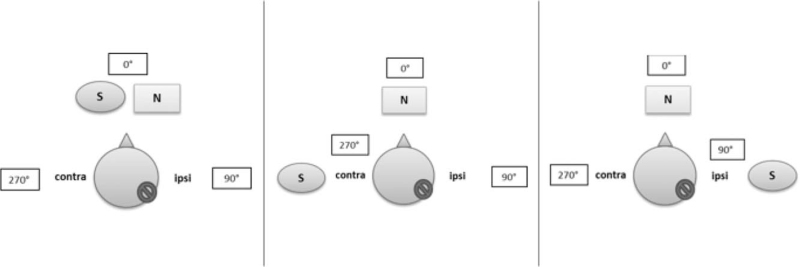
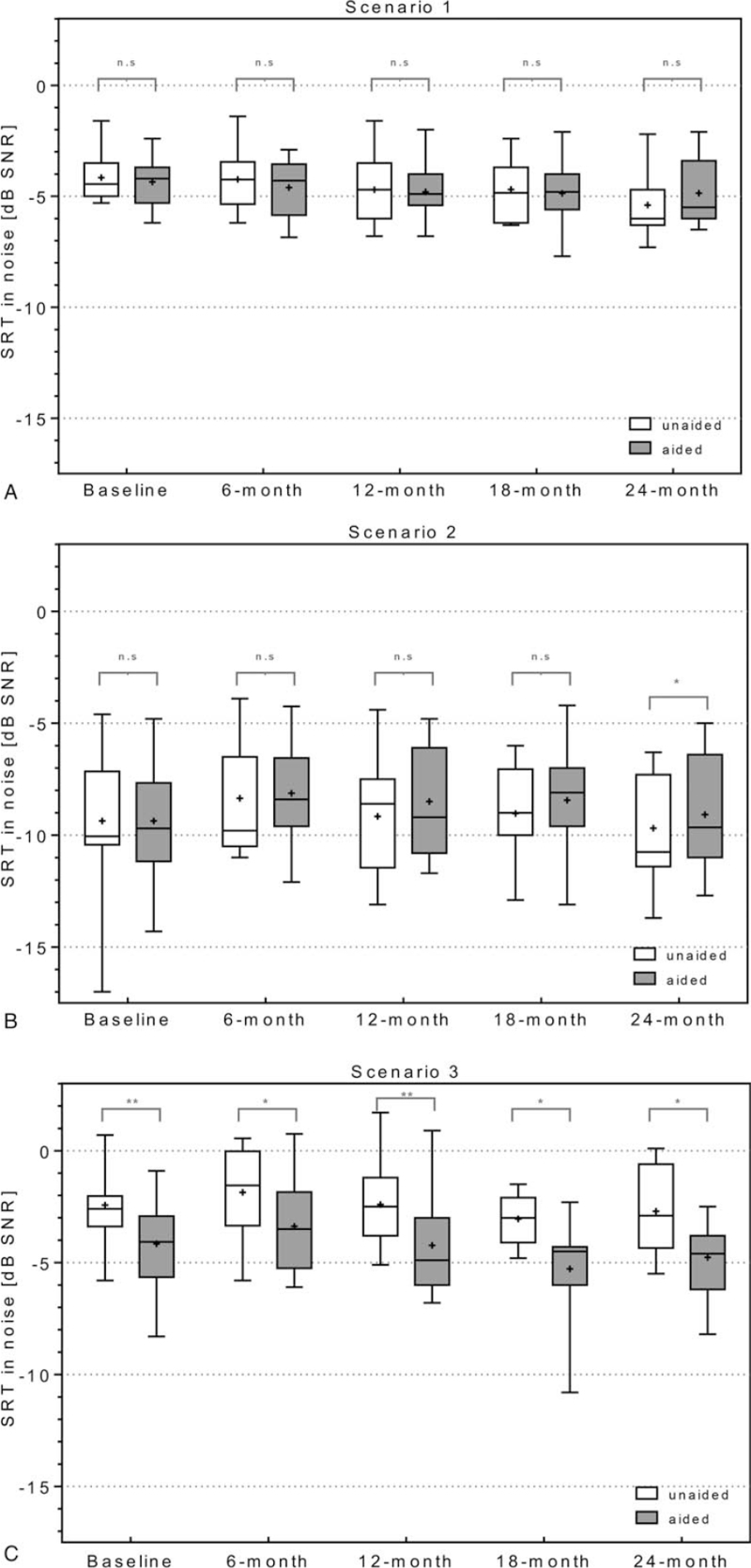
Speech understanding in noise was assessed in three situations: with signal from front, deaf, or normal hearing side (with noise from front in all set-ups). Subjective benefit was evaluated using the Speech, Spatial, and Qualities of Hearing (SSQ-B) and Bern Benefit in Single-Sided Deafness (BBSS) questionnaire.
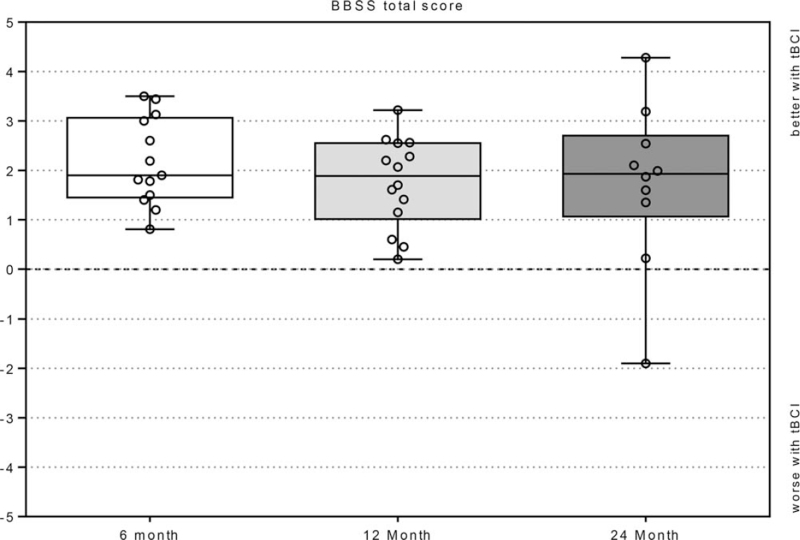
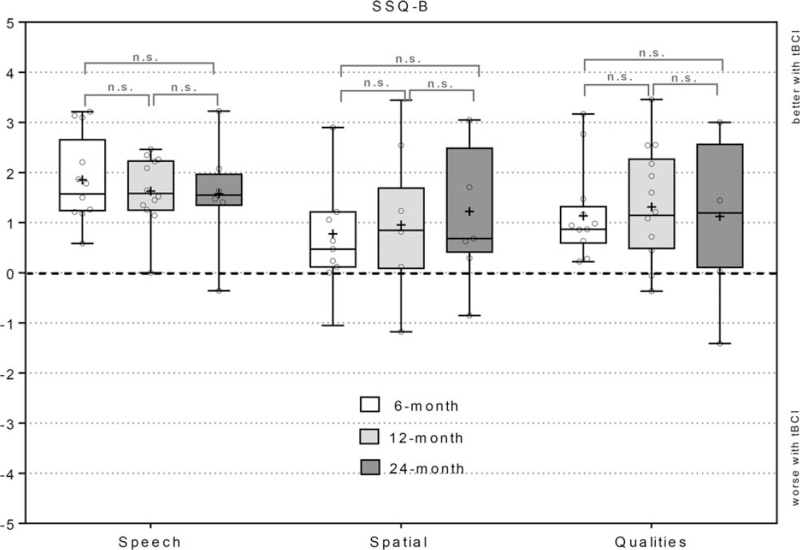
When the signal was coming from the deaf side the mean improvement of the speech reception threshold in noise ranged from 1.5 up to 2.2 dB with the device and was statistically and clinically significant at all tested timepoints. No significant difference between the aided and unaided situation was found when signal and noise were coming from the front. With the signal from the normal hearing side no clinically significant difference, that is, greater than 1 dB between the aided and unaided situation was found. The SSQ-B and BBSS questionnaire showed an overall improvement with no significant difference between time points.
The study demonstrates long-term efficacy and benefit of the device in adults with SSD. Patients reported substantial and persistent subjective benefit from the active bone conduction implant.
评估单侧感音神经性聋(SSD)患者使用主动骨导植入物进行听力康复的听力学和主观获益。
前瞻性、多中心、单受试者重复测量。
三级转诊中心,德国和瑞士的五个诊所。
17 名年龄在 18 岁及以上的单侧严重至极重度感音神经性听力损失且对侧听力正常的受试者,随访时间为 24 个月。
主动骨导植入物。
在三种情况下评估言语理解能力:来自前方、聋侧或正常侧的信号(所有设置中来自前方的噪声)。使用言语、空间和听力质量问卷(SSQ-B)和单侧聋听力获益问卷(BBSS)评估主观获益。
当信号来自聋侧时,使用该设备的言语接受阈在噪声中的平均改善范围为 1.5 至 2.2dB,在所有测试时间点均具有统计学和临床意义。当信号和噪声来自前方时,辅助和未辅助情况之间无显著差异。当信号来自正常听力侧时,辅助和未辅助情况之间无临床显著差异,即大于 1dB。SSQ-B 和 BBSS 问卷显示整体改善,各时间点之间无显著差异。
该研究证明了该装置在 SSD 成人患者中的长期疗效和获益。患者报告了主动骨导植入物的显著和持续的主观获益。