Department of Rheumatology, The First Affiliated Hospital, Zhejiang University School of Medicine, #79 Qingchun Road, Hangzhou, Zhejiang Province, People's Republic of China, 310003.
Arthritis Res Ther. 2021 Nov 25;23(1):288. doi: 10.1186/s13075-021-02678-6.
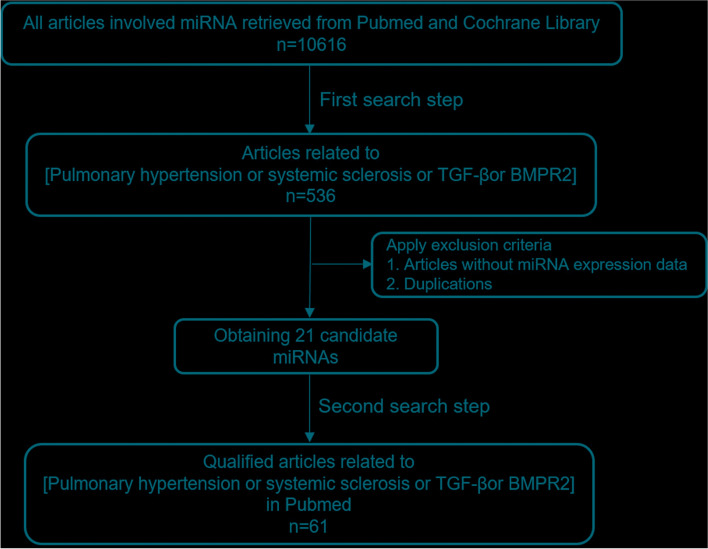
Pulmonary arterial hypertension (PAH) is a severe complication of connective tissue disease (CTD), causing death in systemic sclerosis (SSc). The past decade has yielded many scientific insights into microRNA (miRNAs) in PAH and SSc. This growth of knowledge has well-illustrated the complexity of microRNA (miRNA)-based regulation of gene expression in PAH. However, few miRNA-related SSc-PAH were elucidated. This review firstly discusses the role of transforming growth factor-beta (TGF-β) signaling and bone morphogenetic protein receptor type II (BMPR2) in PAH and SSc. Secondly, the miRNAs relating to TGF-β and BMPR2 signaling pathways in PAH and SSc or merely PAH were subsequently summarized. Finally, future studies might develop early diagnostic biomarkers and target-oriented therapeutic strategies for SSc-PAH and PAH treatment.
肺动脉高压(PAH)是结缔组织病(CTD)的严重并发症,可导致系统性硬化症(SSc)患者死亡。过去十年,人们对 PAH 和 SSc 中的 microRNA(miRNA)有了许多科学认识。这些知识的增长充分说明了 miRNA 对 PAH 中基因表达的调控的复杂性。然而,与 miRNA 相关的 SSc-PAH 仍较少被阐明。本文首先讨论了转化生长因子-β(TGF-β)信号和骨形态发生蛋白受体型 II(BMPR2)在 PAH 和 SSc 中的作用。其次,总结了与 PAH 和 SSc 或仅 PAH 中的 TGF-β和 BMPR2 信号通路相关的 miRNA。最后,未来的研究可能为 SSc-PAH 和 PAH 的治疗开发早期诊断生物标志物和靶向治疗策略。