Dai Shanshan, Ye Bozhi, Zhong Lingfeng, Chen Yanghao, Hong Guangliang, Zhao Guangju, Su Lan, Lu Zhongqiu
The Key Laboratory of Emergency and Disaster Medicine of Wenzhou, Department of Emergency, The First Affiliated Hospital of Wenzhou Medical University, Wenzhou, China.
The Key Laboratory of Cardiovascular Disease of Wenzhou, Department of Cardiology, The First Affiliated Hospital of Wenzhou Medical University, Wenzhou, China.
Front Cell Dev Biol. 2021 Nov 8;9:779432. doi: 10.3389/fcell.2021.779432. eCollection 2021.
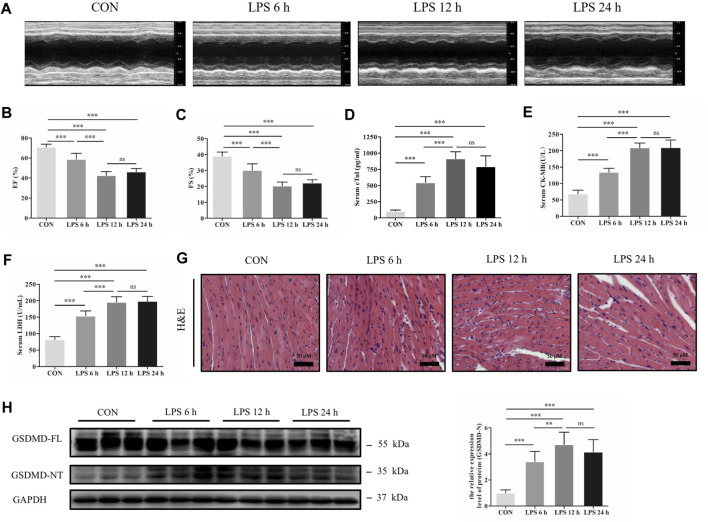
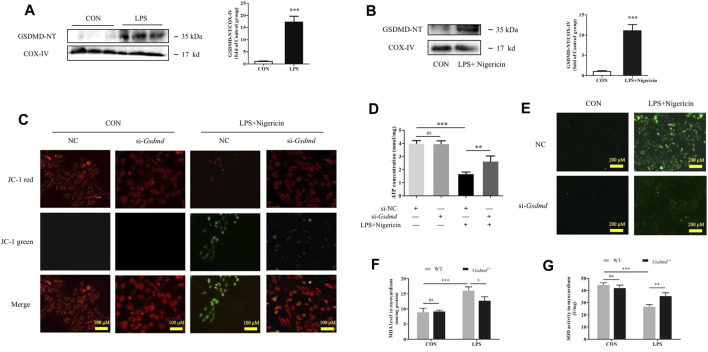
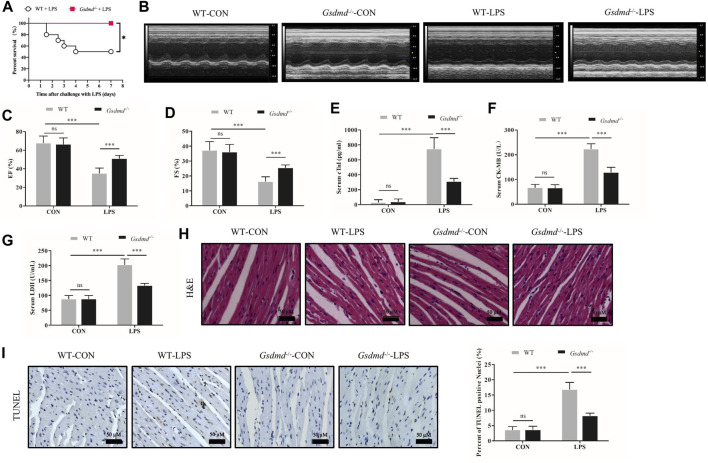
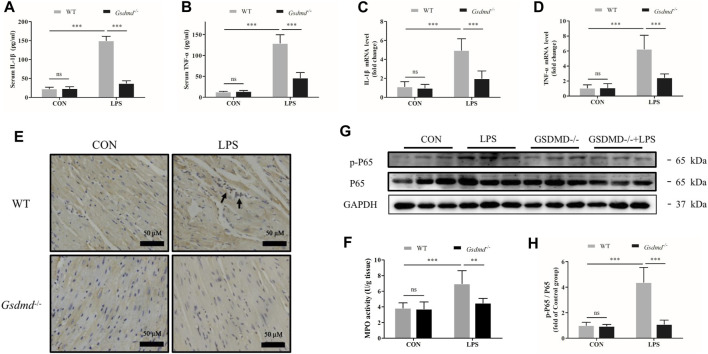
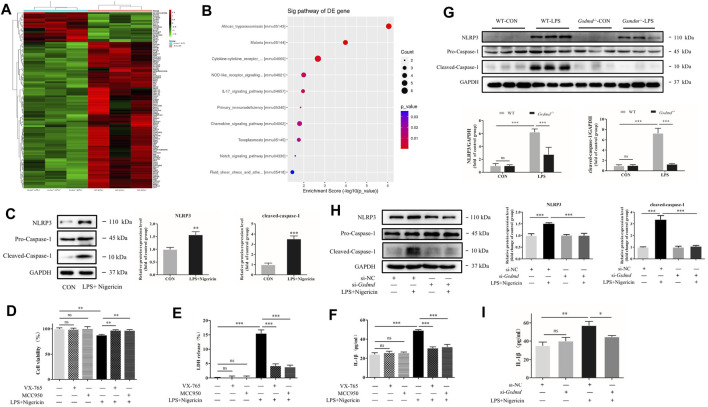
Myocardial dysfunction is a serious consequence of sepsis and contributes to high mortality. Currently, the molecular mechanism of myocardial dysfunction induced by sepsis remains unclear. In the present study, we investigated the role of gasdermin D (GSDMD) in cardiac dysfunction in septic mice and the underlying mechanism. C57BL/6 wild-type (WT) mice and age-matched -knockout ( ) mice were intraperitoneally injected with lipopolysaccharide (LPS) (10 mg/kg) to mimic sepsis. The results showed that GSDMD-NT, the functional fragment of GSDMD, was upregulated in the heart tissue of septic WT mice induced by LPS, which was accompanied by decreased cardiac function and myocardial injury, as shown by decreased ejection fraction (EF) and fractional shortening (FS) and increased cardiac troponin I (cTnI), creatine kinase isoenzymes MB (CK-MB), and lactate dehydrogenase (LDH). mice exhibited protection against LPS-induced myocardial dysfunction and had a higher survival rate. deficiency attenuated LPS-induced myocardial injury and cell death. deficiency prevented LPS-induced the increase of interleukin-1β (IL-1β) and tumor necrosis factor-α (TNF-α) in serum, as well as IL-1β and TNF-α mRNA levels in myocardium. In addition, LPS-mediated inflammatory cell infiltration into the myocardium was ameliorated and activation of NF-κB signaling pathway and the NOD-like receptor protein 3 (NLPR3) inflammasome were suppressed in mice. Further research showed that in the myocardium of LPS-induced septic mice, GSDMD-NT enrichment in mitochondria led to mitochondrial dysfunction and reactive oxygen species (ROS) overproduction, which further regulated the activation of the NLRP3 inflammasome. In summary, our data suggest that GSDMD plays a vital role in the pathophysiology of LPS-induced myocardial dysfunction and may be a crucial target for the prevention and treatment of sepsis-induced myocardial dysfunction.
心肌功能障碍是脓毒症的严重后果,会导致高死亡率。目前,脓毒症诱发心肌功能障碍的分子机制仍不清楚。在本研究中,我们探究了gasdermin D(GSDMD)在脓毒症小鼠心脏功能障碍中的作用及其潜在机制。将C57BL/6野生型(WT)小鼠和年龄匹配的基因敲除( )小鼠腹腔注射脂多糖(LPS)(10 mg/kg)以模拟脓毒症。结果显示,GSDMD的功能片段GSDMD-NT在LPS诱导的脓毒症WT小鼠心脏组织中上调,同时伴有心脏功能下降和心肌损伤,表现为射血分数(EF)和缩短分数(FS)降低,心肌肌钙蛋白I(cTnI)、肌酸激酶同工酶MB(CK-MB)和乳酸脱氢酶(LDH)升高。 小鼠对LPS诱导的心肌功能障碍具有保护作用,生存率更高。 基因缺陷减轻了LPS诱导的心肌损伤和细胞死亡。 基因缺陷可防止LPS诱导血清中白细胞介素-1β(IL-1β)和肿瘤坏死因子-α(TNF-α)升高,以及心肌中IL-1β和TNF-α mRNA水平升高。此外, 小鼠中LPS介导的炎性细胞浸润到心肌的情况得到改善,核因子κB信号通路和NOD样受体蛋白3(NLPR3)炎性小体的激活受到抑制。进一步研究表明,在LPS诱导的脓毒症小鼠心肌中,GSDMD-NT在线粒体中的富集导致线粒体功能障碍和活性氧(ROS)过量产生,进而进一步调节NLRP3炎性小体的激活。总之,我们的数据表明,GSDMD在LPS诱导的心肌功能障碍的病理生理学中起重要作用,可能是预防和治疗脓毒症诱导的心肌功能障碍的关键靶点。