Department of Biliary-Pancreatic Surgery, Renji Hospital, School of Medicine, Shanghai Jiao Tong University, Shanghai, 200127, China.
Department of Thyroid and Breast Surgery, The First Affiliated Hospital of Fujian Medical University, Fuzhou, 350005, China.
J Exp Clin Cancer Res. 2021 Nov 25;40(1):373. doi: 10.1186/s13046-021-02186-0.
Gallbladder cancer (GBC) is known for its high malignancy and multidrug resistance. Previously, we uncovered that impaired integrity and stability of the elongator complex leads to GBC chemotherapy resistance, but whether its restoration can be an efficient therapeutic strategy for GBC remains unknown.
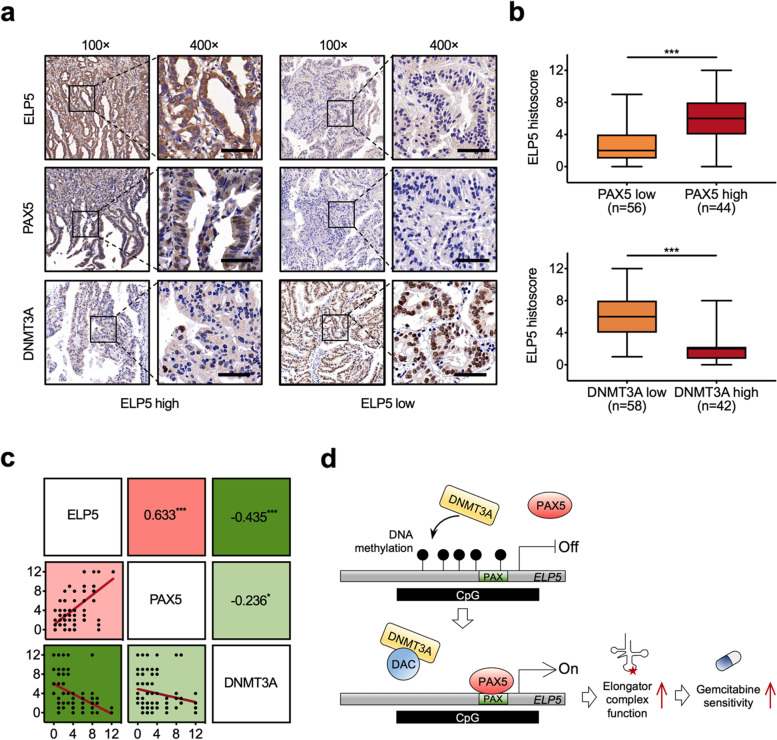
RT-qPCR, MS-qPCR and ChIP-qPCR were used to evaluate the direct association between ELP5 transcription and DNA methylation in tumour and non-tumour tissues of GBC. EMSA, chromatin accessibility assays, and luciferase assays were utilized to analysis the DNA methylation in interfering PAX5-DNA interactions. The functional experiments in vitro and in vivo were performed to investigate the effects of DNA demethylating agent decitabine (DAC) on the transcription activation of elongator complex and the enhanced sensitivity of gemcitabine in GBC cells. Tissue microarray contains GBC tumour tissues was used to evaluate the association between the expression of ELP5, DNMT3A and PAX5.
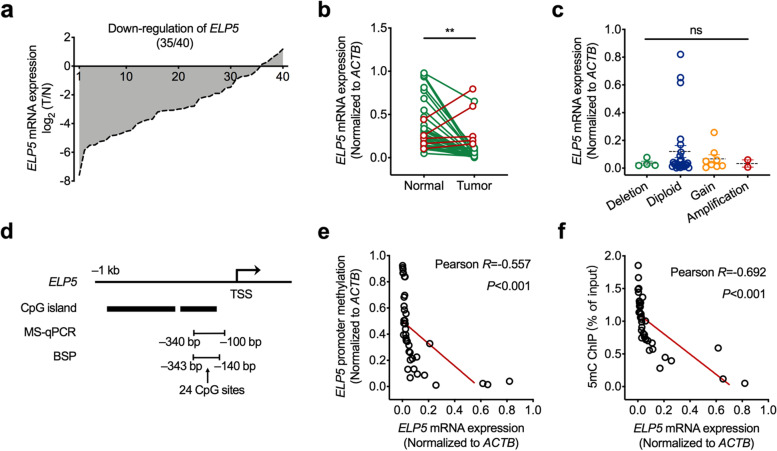
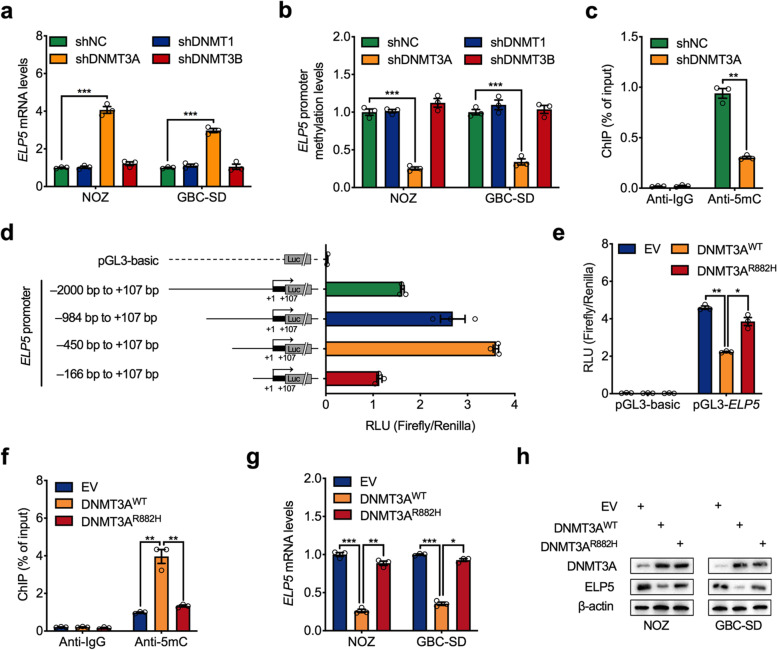
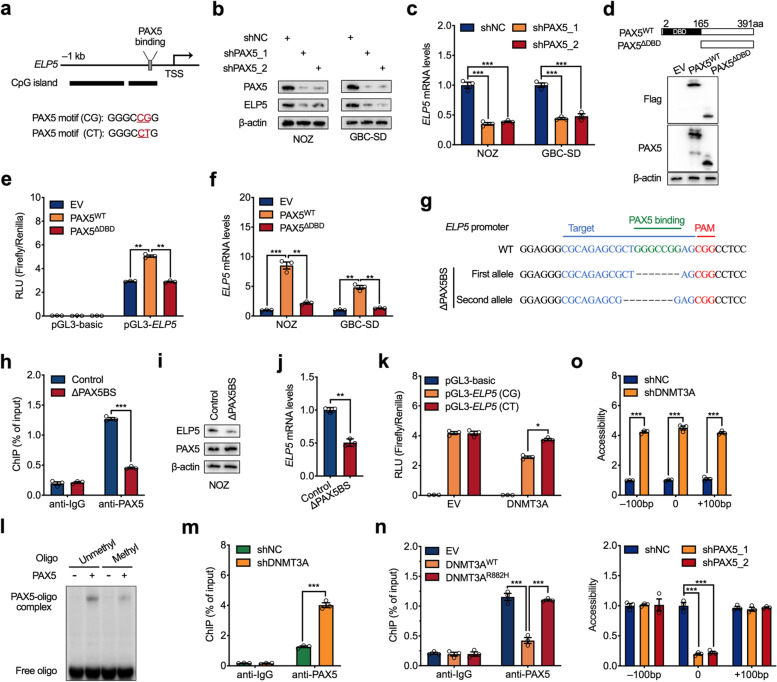
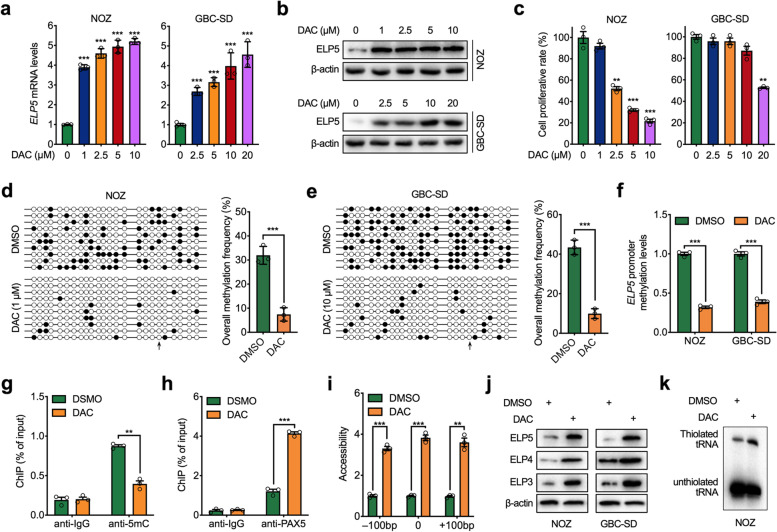
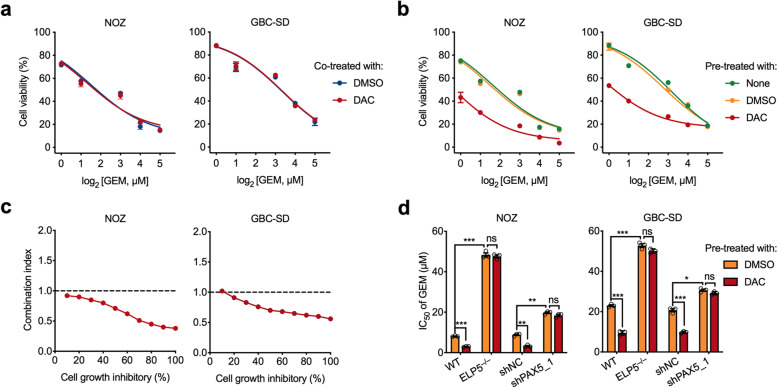
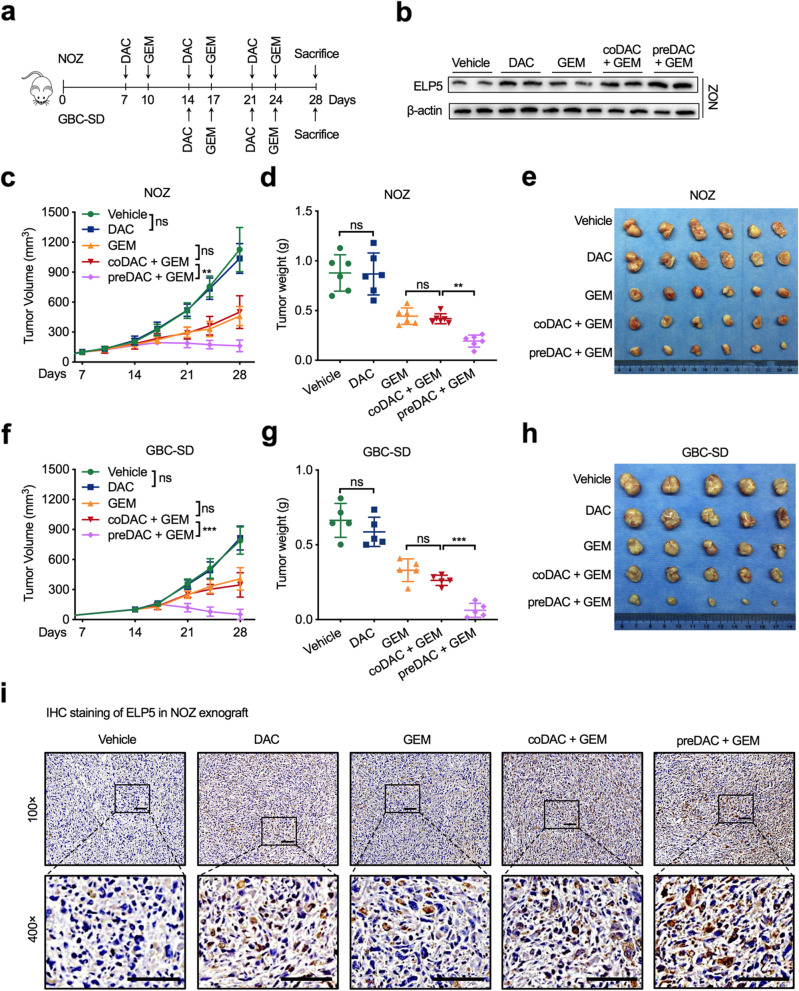
We demonstrated that transcriptional repression of ELP5 in GBC was highly correlated with hypermethylation of the promoter. Mechanistically, epigenetic analysis revealed that DNA methyltransferase DNMT3A-catalysed hypermethylation blocked transcription factor PAX5 activation of ELP5 by disrupting PAX5-DNA interaction, resulting in repressed ELP5 transcription. Pharmacologically, the DNA demethylating agent DAC eliminated the hypermethylated CpG dinucleotides in the ELP5 promoter and then facilitated PAX5 binding and reactivated ELP5 transcription, leading to the enhanced function of the elongator complex. To target this mechanism, we employed a sequential combination therapy of DAC and gemcitabine to sensitize GBC cells to gemcitabine-therapy through epigenetic activation of the elongator complex.
Our findings suggest that ELP5 expression in GBC is controlled by DNA methylation-sensitive induction of PAX5. The sequential combination therapy of DAC and gemcitabine could be an efficient therapeutic strategy to overcome chemotherapy resistance in GBC.
胆囊癌(GBC)以其高度恶性和多药耐药性而闻名。之前,我们发现伸长复合物完整性和稳定性受损会导致 GBC 化疗耐药,但恢复其完整性是否可以成为 GBC 的有效治疗策略尚不清楚。
使用 RT-qPCR、MS-qPCR 和 ChIP-qPCR 评估肿瘤和非肿瘤组织中 ELP5 转录与 DNA 甲基化之间的直接关联。EMSA、染色质可及性测定和荧光素酶测定用于分析干扰 PAX5-DNA 相互作用的 DNA 甲基化。体外和体内的功能实验用于研究去甲基化剂地西他滨 (DAC) 对伸长复合物转录激活和吉西他滨增强 GBC 细胞敏感性的影响。包含 GBC 肿瘤组织的组织微阵列用于评估 ELP5、DNMT3A 和 PAX5 的表达之间的关联。
我们证明了 GBC 中 ELP5 的转录抑制与启动子的高甲基化高度相关。从机制上讲,表观遗传学分析表明,DNA 甲基转移酶 DNMT3A 催化的超甲基化通过破坏 PAX5-DNA 相互作用阻止转录因子 PAX5 激活 ELP5,从而抑制 ELP5 转录。药理学上,DNA 去甲基化剂 DAC 消除了 ELP5 启动子中高度甲基化的 CpG 二核苷酸,然后促进 PAX5 结合并重新激活 ELP5 转录,从而增强伸长复合物的功能。为了针对这种机制,我们采用 DAC 和吉西他滨的序贯联合治疗,通过对伸长复合物的表观遗传激活使 GBC 细胞对吉西他滨治疗敏感。
我们的研究结果表明,GBC 中 ELP5 的表达受 PAX5 诱导的 DNA 甲基化敏感性控制。DAC 和吉西他滨的序贯联合治疗可能是克服 GBC 化疗耐药的有效治疗策略。