Max Planck Institute for the Science of Human History, Jena, Germany.
Institute for Scientific Archaeology, University of Tübingen, Tübingen, Germany.
Nat Ecol Evol. 2022 Jan;6(1):28-35. doi: 10.1038/s41559-021-01581-2. Epub 2021 Nov 25.
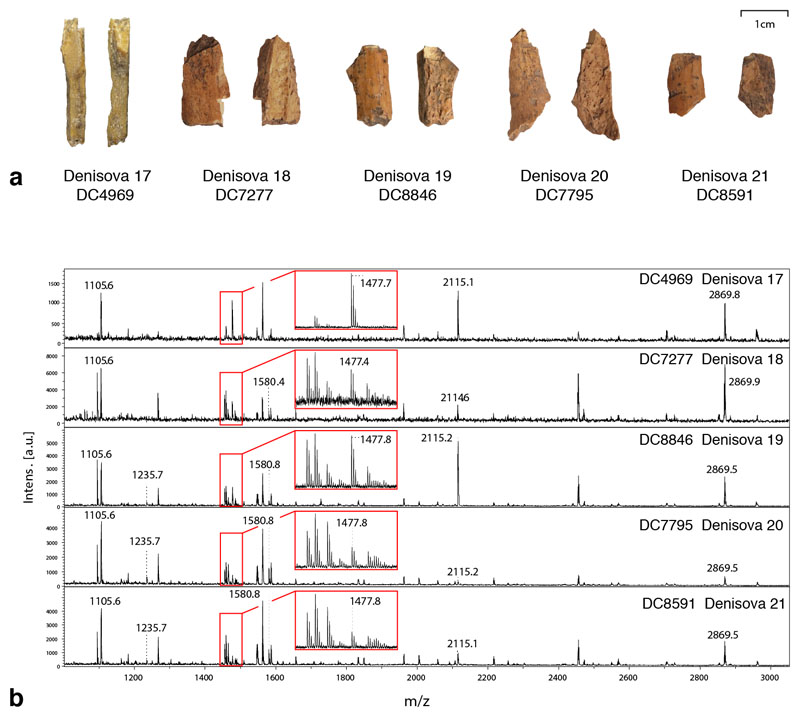
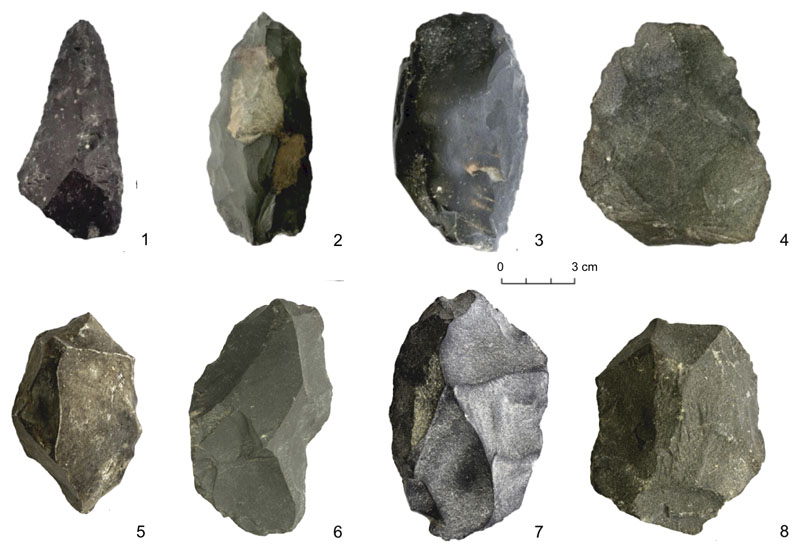
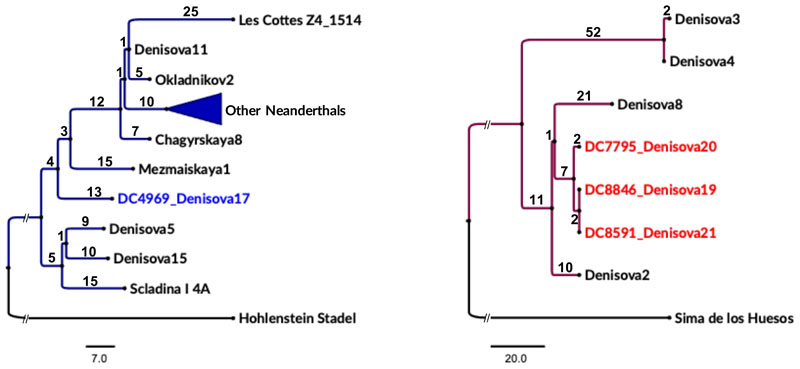
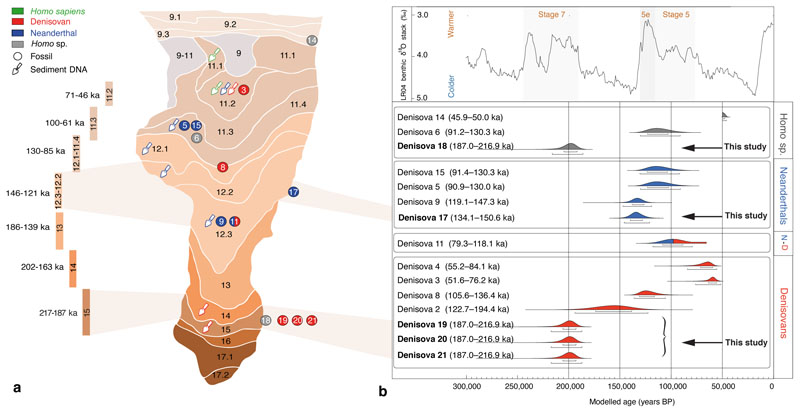
Since the initial identification of the Denisovans a decade ago, only a handful of their physical remains have been discovered. Here we analysed ~3,800 non-diagnostic bone fragments using collagen peptide mass fingerprinting to locate new hominin remains from Denisova Cave (Siberia, Russia). We identified five new hominin bones, four of which contained sufficient DNA for mitochondrial analysis. Three carry mitochondrial DNA of the Denisovan type and one was found to carry mtDNA of the Neanderthal type. The former come from the same archaeological layer near the base of the cave's sequence and are the oldest securely dated evidence of Denisovans at 200 ka (thousand years ago) (205-192 ka at 68.2% or 217-187 ka at 95% probability). The stratigraphic context in which they were located contains a wealth of archaeological material in the form of lithics and faunal remains, allowing us to determine the material culture associated with these early hominins and explore their behavioural and environmental adaptations. The combination of bone collagen fingerprinting and genetic analyses has so far more-than-doubled the number of hominin bones at Denisova Cave and has expanded our understanding of Denisovan and Neanderthal interactions, as well as their archaeological signatures.
自十年前首次发现丹尼索瓦人以来,仅发现了少量其遗骸。在这里,我们使用胶原肽质量指纹图谱分析了约 3800 块非诊断性骨碎片,以在丹尼索瓦洞穴(俄罗斯西伯利亚)发现新的原始人遗骸。我们鉴定了五块新的原始人骨骼,其中四块含有足够的线粒体分析 DNA。其中三个携带丹尼索瓦类型的线粒体 DNA,一个携带尼安德特人类型的 mtDNA。前者来自洞穴序列底部附近的同一考古层,是距今 20 万年(千年前)(68.2%的概率为 205-192 千年前,95%的概率为 217-187 千年前)可确定年代的最古老的丹尼索瓦人证据。它们所处的地层中包含大量以石器和动物遗骸形式存在的考古材料,使我们能够确定与这些早期原始人相关的物质文化,并探索他们的行为和环境适应。骨骼胶原指纹图谱分析和遗传分析的结合使丹尼索瓦洞穴的原始人骨骼数量增加了一倍以上,扩展了我们对丹尼索瓦人和尼安德特人相互作用以及它们的考古特征的理解。