Laboratoire de Microbiologie, Adaptation et Pathogénie, Université de Lyon, INSA Lyon, Université Lyon 1, CNRS UMR 5240, Villeurbanne, France.
Laboratoire de Microbiologie, Adaptation et Pathogénie, Université de Lyon, INSA Lyon, Université Lyon 1, CNRS UMR 5240, Villeurbanne, France.
J Biol Chem. 2022 Jan;298(1):101446. doi: 10.1016/j.jbc.2021.101446. Epub 2021 Nov 23.
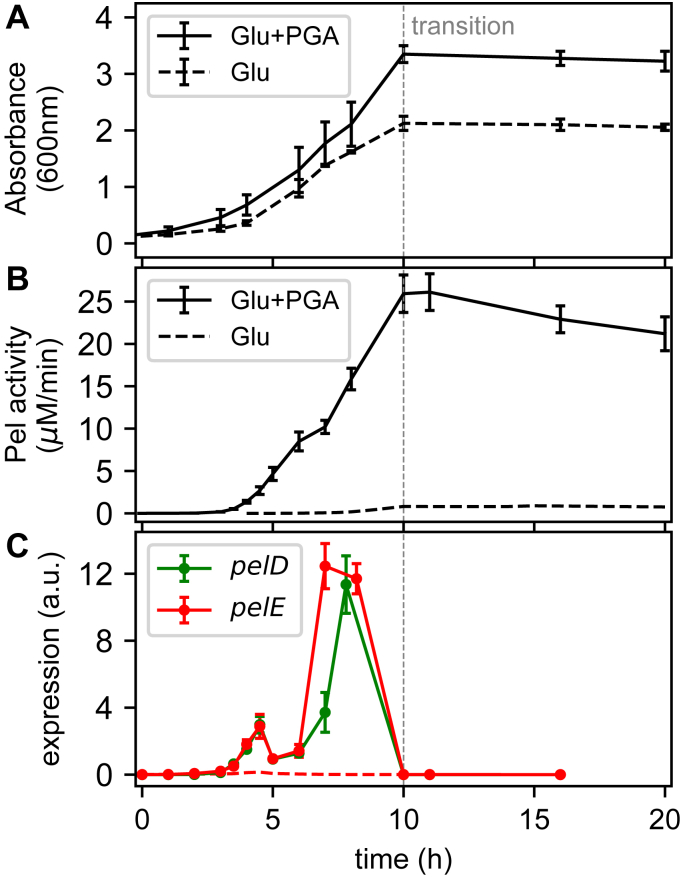
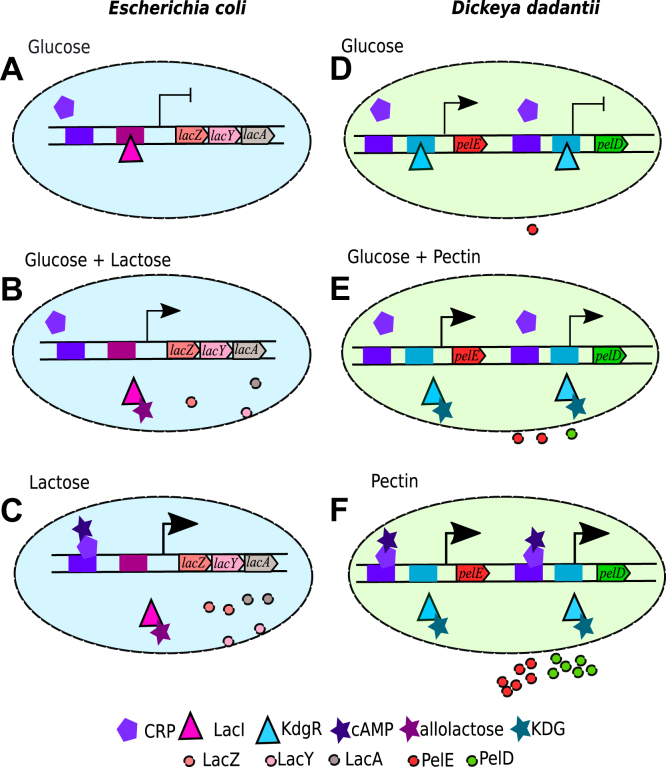
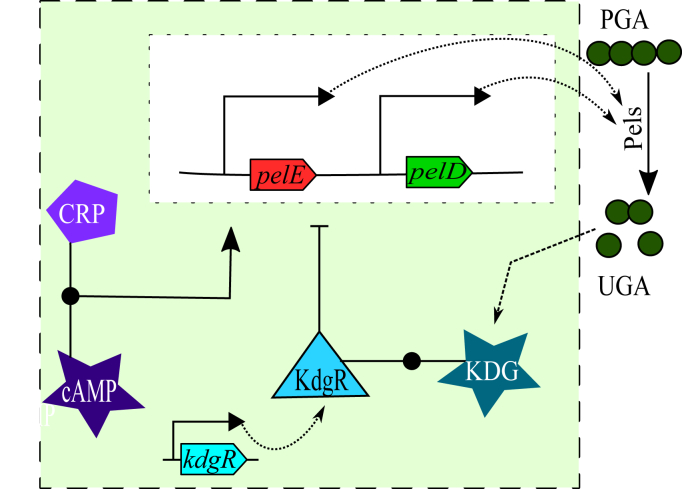
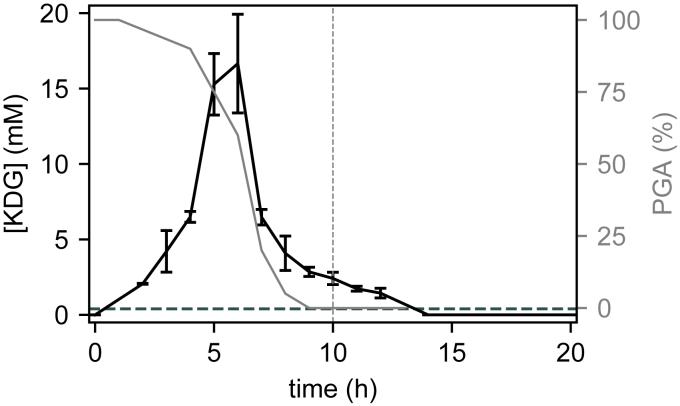
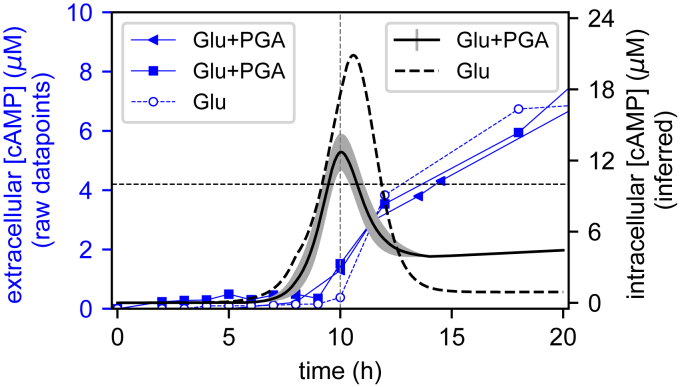
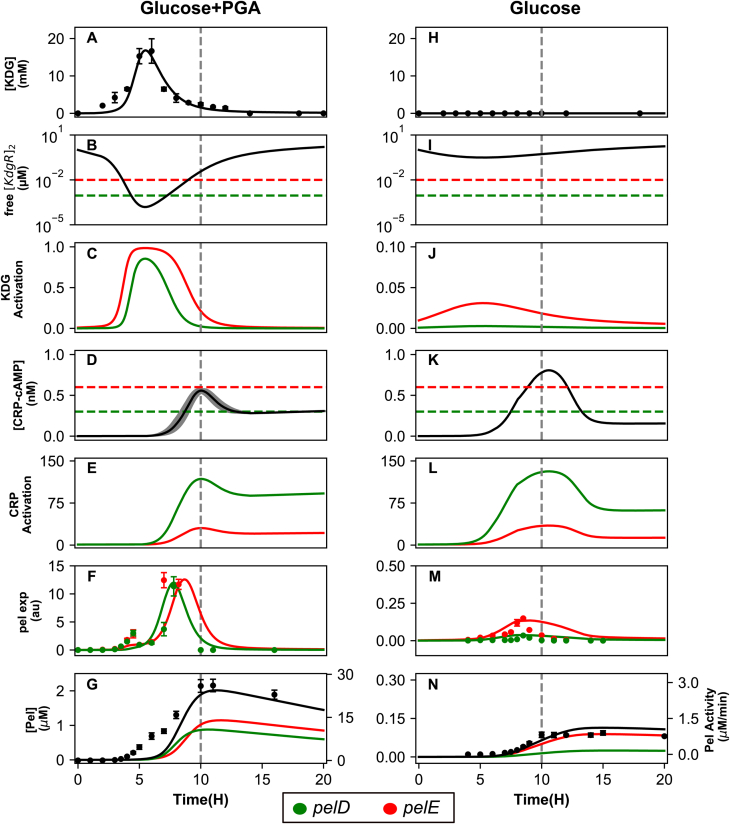
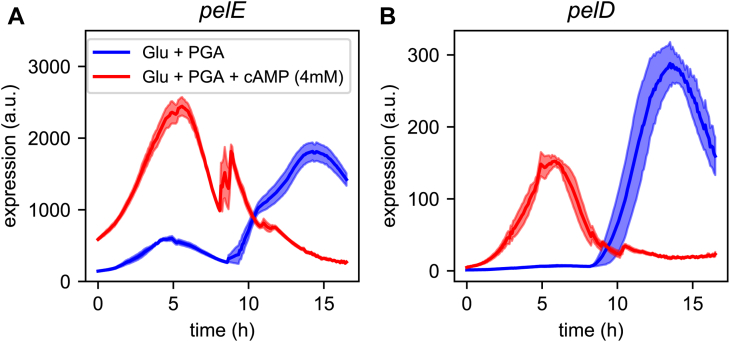
The catabolism of pectin from plant cell walls plays a crucial role in the virulence of the phytopathogen Dickeya dadantii. In particular, the timely expression of pel genes encoding major pectate lyases is essential to circumvent the plant defense systems and induce massive pectinolytic activity during the maceration phase. Previous studies identified the role of a positive feedback loop specific to the pectin-degradation pathway, whereas the precise signals controlling the dynamics of pectate lyase expression were unclear. Here, we show that the latter is controlled by a metabolic switch involving both glucose and pectin. We measured the HPLC concentration profiles of the key metabolites related to these two sources of carbon, cAMP and 2-keto-3-deoxygluconate, and developed a dynamic and quantitative model of the process integrating the associated regulators, cAMP receptor protein and KdgR. The model describes the regulatory events occurring at the promoters of two major pel genes, pelE and pelD. It highlights that their activity is controlled by a mechanism of carbon catabolite repression, which directly controls the virulence of D. dadantii. The model also shows that quantitative differences in the binding properties of common regulators at these two promoters resulted in a qualitatively different role of pelD and pelE in the metabolic switch, and also likely in conditions of infection, justifying their evolutionary conservation as separate genes in this species.
植物细胞壁中果胶的分解代谢对植物病原菌迪氏棒形杆菌的毒力起着至关重要的作用。特别是,pel 基因编码的主要果胶裂解酶的及时表达对于绕过植物防御系统并在软化阶段诱导大量果胶裂解活性至关重要。先前的研究确定了果胶降解途径特有的正反馈环的作用,而控制果胶裂解酶表达动力学的确切信号尚不清楚。在这里,我们表明,后者受涉及葡萄糖和果胶的代谢开关控制。我们测量了与这两种碳源相关的关键代谢物的 HPLC 浓度谱,即 cAMP 和 2-酮-3-脱氧葡萄糖酸,并开发了一个包含相关调节剂、cAMP 受体蛋白和 KdgR 的过程的动态和定量模型。该模型描述了两个主要 pel 基因 pelE 和 pelD 启动子上发生的调节事件。它强调它们的活性受碳分解代谢物阻遏机制的控制,该机制直接控制 D. dadantii 的毒力。该模型还表明,常见调节剂在这两个启动子上的结合特性的定量差异导致 pelD 和 pelE 在代谢开关中具有不同的作用,并且在感染条件下也可能如此,这证明了它们作为该物种中单独基因的进化保守性。