• 文献检索
  • 文档翻译
  • 深度研究
  • 学术资讯
  • Suppr Zotero 插件Zotero 插件
  • 邀请有礼
  • 套餐&价格
  • 历史记录
应用&插件
Suppr Zotero 插件Zotero 插件浏览器插件Mac 客户端Windows 客户端微信小程序
定价
高级版会员购买积分包购买API积分包
服务
文献检索文档翻译深度研究API 文档MCP 服务
关于我们
关于 Suppr公司介绍联系我们用户协议隐私条款
关注我们

Suppr 超能文献

核心技术专利:CN118964589B侵权必究
粤ICP备2023148730 号-1Suppr @ 2026

文献检索

告别复杂PubMed语法,用中文像聊天一样搜索,搜遍4000万医学文献。AI智能推荐,让科研检索更轻松。

立即免费搜索

文件翻译

保留排版,准确专业,支持PDF/Word/PPT等文件格式,支持 12+语言互译。

免费翻译文档

深度研究

AI帮你快速写综述,25分钟生成高质量综述,智能提取关键信息,辅助科研写作。

立即免费体验

COVID-19患者入院时可溶性ST2、热休克蛋白27和20S蛋白酶体升高的临床意义

Clinical Relevance of Elevated Soluble ST2, HSP27 and 20S Proteasome at Hospital Admission in Patients with COVID-19.

作者信息

Wendt Ralph, Lingitz Marie-Therese, Laggner Maria, Mildner Michael, Traxler Denise, Graf Alexandra, Krotka Pavla, Moser Bernhard, Hoetzenecker Konrad, Kalbitz Sven, Lübbert Christoph, Beige Joachim, Ankersmit Hendrik Jan

机构信息

Department of Infectious Diseases, Tropical Medicine, Nephrology and Rheumatology, St. Georg Hospital, Delitzscher Str. 141, 04129 Leipzig, Germany.

Laboratory for Cardiac and Thoracic Diagnosis, Regeneration and Applied Immunology, Medical University of Vienna, Research Laboratories Vienna General Hospital, Waehringer Guertel 18-20, 1090 Vienna, Austria.

出版信息

Biology (Basel). 2021 Nov 15;10(11):1186. doi: 10.3390/biology10111186.

DOI:10.3390/biology10111186
PMID:34827178
原文链接:https://pmc.ncbi.nlm.nih.gov/articles/PMC8615143/
Abstract

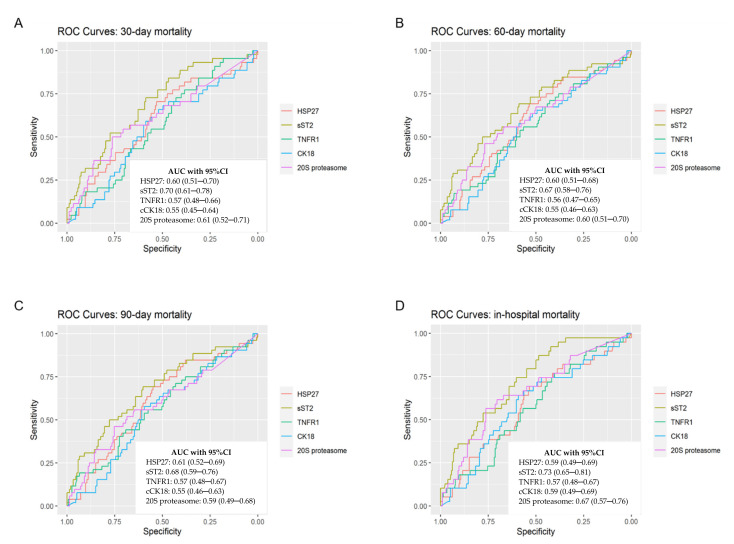
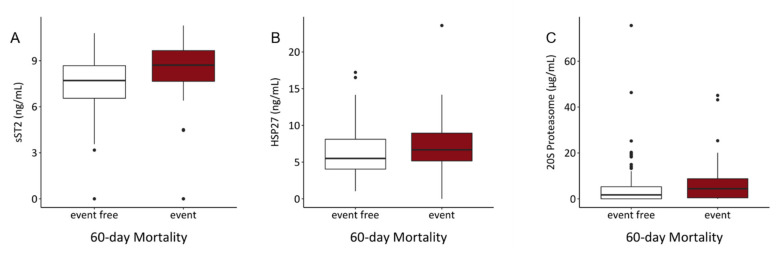
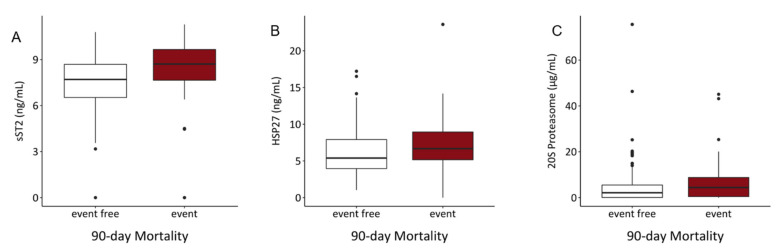
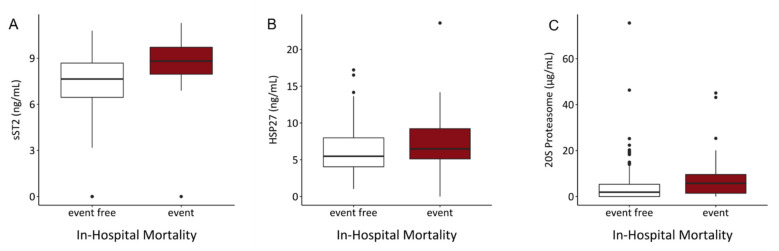
Although, severe acute respiratory syndrome coronavirus-2 (SARS-CoV-2) represents one of the biggest challenges in the world today, the exact immunopathogenic mechanism that leads to severe or critical Coronavirus Disease 2019 (COVID-19) has remained incompletely understood. Several studies have indicated that high systemic plasma levels of inflammatory cytokines result in the so-called "cytokine storm", with subsequent development of microthrombosis, disseminated intravascular coagulation, and multiorgan-failure. Therefore, we reasoned those elevated inflammatory molecules might act as prognostic factors. Here, we analyzed 245 serum samples of patients with COVID-19, collected at hospital admission. We assessed the levels of heat shock protein 27 (HSP27), soluble suppressor of tumorigenicity-2 (sST2) and 20S proteasome at hospital admission and explored their associations with overall-, 30-, 60-, 90-day- and in-hospital mortality. Moreover, we investigated their association with the risk of ventilation. We demonstrated that increased serum sST2 was uni- and multivariably associated with all endpoints. Furthermore, we also identified 20S proteasome as independent prognostic factor for in-hospital mortality (sST2, AUC = 0.73; HSP27, AUC = 0.59; 20S proteasome = 0.67). Elevated sST2, HSP27, and 20S proteasome levels at hospital admission were univariably associated with higher risk of invasive ventilation (OR = 1.8; < 0.001; OR = 1.1; = 0.04; OR = 1.03, = 0.03, respectively). These findings could help to identify high-risk patients early in the course of COVID-19.

摘要

尽管严重急性呼吸综合征冠状病毒2(SARS-CoV-2)是当今世界面临的最大挑战之一,但导致严重或危重型2019冠状病毒病(COVID-19)的确切免疫致病机制仍未完全明确。多项研究表明,全身血浆中炎症细胞因子水平升高会导致所谓的“细胞因子风暴”,随后会出现微血栓形成、弥散性血管内凝血和多器官功能衰竭。因此,我们推断这些升高的炎症分子可能作为预后因素。在此,我们分析了245例COVID-19患者入院时采集的血清样本。我们评估了入院时热休克蛋白27(HSP27)、可溶性肿瘤抑制因子2(sST2)和20S蛋白酶体的水平,并探讨了它们与总体、30天、60天、90天及住院死亡率的相关性。此外,我们还研究了它们与通气风险的相关性。我们发现血清sST2升高与所有终点均存在单变量和多变量相关性。此外,我们还确定20S蛋白酶体是住院死亡率的独立预后因素(sST2,曲线下面积 = 0.73;HSP27,曲线下面积 = 0.59;20S蛋白酶体 = 0.67)。入院时sST2、HSP27和20S蛋白酶体水平升高与有创通气风险增加单变量相关(比值比分别为1.8;P < 0.001;1.1;P = 0.04;1.03,P = 0.03)。这些发现有助于在COVID-19病程早期识别高危患者。
https://cdn.ncbi.nlm.nih.gov/pmc/blobs/c9ac/8615143/9d4290d3d4c4/biology-10-01186-g008.jpg
https://cdn.ncbi.nlm.nih.gov/pmc/blobs/c9ac/8615143/4dc566d6ffb8/biology-10-01186-g001.jpg
https://cdn.ncbi.nlm.nih.gov/pmc/blobs/c9ac/8615143/2bfeba0aafea/biology-10-01186-g002.jpg
https://cdn.ncbi.nlm.nih.gov/pmc/blobs/c9ac/8615143/7a954507ef69/biology-10-01186-g003.jpg
https://cdn.ncbi.nlm.nih.gov/pmc/blobs/c9ac/8615143/940c5f5e8eba/biology-10-01186-g004.jpg
https://cdn.ncbi.nlm.nih.gov/pmc/blobs/c9ac/8615143/17dd5feaeffa/biology-10-01186-g005.jpg
https://cdn.ncbi.nlm.nih.gov/pmc/blobs/c9ac/8615143/ff62d9a784b9/biology-10-01186-g006.jpg
https://cdn.ncbi.nlm.nih.gov/pmc/blobs/c9ac/8615143/e5f107ea169d/biology-10-01186-g007.jpg
https://cdn.ncbi.nlm.nih.gov/pmc/blobs/c9ac/8615143/9d4290d3d4c4/biology-10-01186-g008.jpg
https://cdn.ncbi.nlm.nih.gov/pmc/blobs/c9ac/8615143/4dc566d6ffb8/biology-10-01186-g001.jpg
https://cdn.ncbi.nlm.nih.gov/pmc/blobs/c9ac/8615143/2bfeba0aafea/biology-10-01186-g002.jpg
https://cdn.ncbi.nlm.nih.gov/pmc/blobs/c9ac/8615143/7a954507ef69/biology-10-01186-g003.jpg
https://cdn.ncbi.nlm.nih.gov/pmc/blobs/c9ac/8615143/940c5f5e8eba/biology-10-01186-g004.jpg
https://cdn.ncbi.nlm.nih.gov/pmc/blobs/c9ac/8615143/17dd5feaeffa/biology-10-01186-g005.jpg
https://cdn.ncbi.nlm.nih.gov/pmc/blobs/c9ac/8615143/ff62d9a784b9/biology-10-01186-g006.jpg
https://cdn.ncbi.nlm.nih.gov/pmc/blobs/c9ac/8615143/e5f107ea169d/biology-10-01186-g007.jpg
https://cdn.ncbi.nlm.nih.gov/pmc/blobs/c9ac/8615143/9d4290d3d4c4/biology-10-01186-g008.jpg

相似文献

1
Clinical Relevance of Elevated Soluble ST2, HSP27 and 20S Proteasome at Hospital Admission in Patients with COVID-19.COVID-19患者入院时可溶性ST2、热休克蛋白27和20S蛋白酶体升高的临床意义
Biology (Basel). 2021 Nov 15;10(11):1186. doi: 10.3390/biology10111186.
2
Soluble ST2 concentrations associate with in-hospital mortality and need for mechanical ventilation in unselected patients with COVID-19.可溶性 ST2 浓度与 COVID-19 患者住院死亡率和机械通气需求相关,而这些患者未经选择。
Open Heart. 2021 Dec;8(2). doi: 10.1136/openhrt-2021-001884.
3
Soluble ST2 as a Useful Biomarker for Predicting Clinical Outcomes in Hospitalized COVID-19 Patients.可溶性ST2作为预测住院COVID-19患者临床结局的有用生物标志物。
Diagnostics (Basel). 2023 Jan 10;13(2):259. doi: 10.3390/diagnostics13020259.
4
Elevations in Circulating sST2 Levels Are Associated With In-Hospital Mortality and Adverse Clinical Outcomes After Blunt Trauma.循环 sST2 水平升高与钝性创伤后住院死亡率和不良临床结局相关。
J Surg Res. 2019 Dec;244:23-33. doi: 10.1016/j.jss.2019.05.057. Epub 2019 Jul 3.
5
A possible role for ST2 as prognostic biomarker for COVID-19.ST2 可能作为 COVID-19 的预后生物标志物。
Vascul Pharmacol. 2021 Jun;138:106857. doi: 10.1016/j.vph.2021.106857. Epub 2021 Mar 18.
6
The inflammatory markers sST2, HSP27 and hsCRP as a prognostic biomarker panel in chronic heart failure patients.炎症标志物可溶性生长刺激表达基因2(sST2)、热休克蛋白27(HSP27)和超敏C反应蛋白(hsCRP)作为慢性心力衰竭患者的预后生物标志物组合。
Clin Chim Acta. 2020 Nov;510:507-514. doi: 10.1016/j.cca.2020.07.050. Epub 2020 Jul 29.
7
Early Measurement of Blood sST2 Is a Good Predictor of Death and Poor Outcomes in Patients Admitted for COVID-19 Infection.新冠病毒感染入院患者血液可溶性生长刺激表达基因2蛋白(sST2)的早期检测是死亡和不良预后的良好预测指标。
J Clin Med. 2021 Aug 11;10(16):3534. doi: 10.3390/jcm10163534.
8
Specific cytokines in the inflammatory cytokine storm of patients with COVID-19-associated acute respiratory distress syndrome and extrapulmonary multiple-organ dysfunction.COVID-19 相关急性呼吸窘迫综合征和肺外多器官功能障碍患者炎症细胞因子风暴中的特定细胞因子。
Virol J. 2021 Jun 4;18(1):117. doi: 10.1186/s12985-021-01588-y.
9
Soluble ST2 levels are associated with bleeding in patients with severe Leptospirosis.可溶性 ST2 水平与严重钩端螺旋体病患者的出血有关。
PLoS Negl Trop Dis. 2009 Jun 2;3(6):e453. doi: 10.1371/journal.pntd.0000453.
10
Soluble ST2 levels in patients with cardiogenic and septic shock are not predictors of mortality.心源性休克和感染性休克患者的可溶性ST2水平并非死亡率的预测指标。
Exp Clin Cardiol. 2012 Winter;17(4):205-9.

引用本文的文献

1
Baseline medication load and long-term outcomes in COVID-19-hospitalized patients: results of the AUTCOVSTUDY.新冠住院患者的基线用药负荷与长期预后:AUTCOV研究结果
Front Public Health. 2025 Jun 11;13:1565677. doi: 10.3389/fpubh.2025.1565677. eCollection 2025.
2
Serum sST2: key biomarkers in COVID-19 patients with implications for coronary artery disease.血清可溶性生长刺激表达基因2蛋白:对冠状动脉疾病有影响的COVID-19患者的关键生物标志物
BMC Infect Dis. 2025 Apr 7;25(1):471. doi: 10.1186/s12879-025-10849-y.
3
Targeting WDPF domain of Hsp27 achieves a broad spectrum of antiviral.

本文引用的文献

1
Early sST2 Liberation after Implantation of a Left Ventricular Assist Device in Patients with Advanced Heart Failure.晚期心力衰竭患者植入左心室辅助装置后早期可溶性生长刺激表达基因2蛋白的释放
J Immunol Res. 2020 Dec 26;2020:5826176. doi: 10.1155/2020/5826176. eCollection 2020.
2
The COVID-19 puzzle: deciphering pathophysiology and phenotypes of a new disease entity.新冠病毒谜题:解析新疾病实体的病理生理学和表型。
Lancet Respir Med. 2021 Jun;9(6):622-642. doi: 10.1016/S2213-2600(21)00218-6. Epub 2021 May 6.
3
Fractional heat shock protein 27 urine excretion as a short-term predictor in acute exacerbation of chronic obstructive pulmonary disease.
靶向热休克蛋白27(Hsp27)的WDPF结构域可实现广谱抗病毒作用。
MedComm (2020). 2025 Feb 26;6(3):e70032. doi: 10.1002/mco2.70032. eCollection 2025 Mar.
4
Heat shock protein 27 in the pathogenesis of COVID-19 and non-COVID acute respiratory distress syndrome.COVID-19 和非 COVID 急性呼吸窘迫综合征发病机制中的热休克蛋白 27。
Cell Stress Chaperones. 2023 Nov;28(6):877-887. doi: 10.1007/s12192-023-01381-6. Epub 2023 Nov 15.
5
Soluble ST2 as a Useful Biomarker for Predicting Clinical Outcomes in Hospitalized COVID-19 Patients.可溶性ST2作为预测住院COVID-19患者临床结局的有用生物标志物。
Diagnostics (Basel). 2023 Jan 10;13(2):259. doi: 10.3390/diagnostics13020259.
6
The potential link between Covid-19 and multiple myeloma: A new saga.新冠病毒与多发性骨髓瘤之间的潜在联系:一个新的传说。
Immun Inflamm Dis. 2022 Dec;10(12):e701. doi: 10.1002/iid3.701.
7
Host cell stress response as a predictor of COVID-19 infectivity and disease progression.宿主细胞应激反应作为新冠病毒感染性和疾病进展的预测指标
Front Mol Biosci. 2022 Aug 11;9:938099. doi: 10.3389/fmolb.2022.938099. eCollection 2022.
8
A Real Pandora's Box in Pandemic Times: A Narrative Review on the Acute Cardiac Injury Due to COVID-19.疫情时代的一个真正的潘多拉魔盒:关于COVID-19所致急性心脏损伤的叙述性综述
Life (Basel). 2022 Jul 20;12(7):1085. doi: 10.3390/life12071085.
9
Advanced Molecular and Immunological Diagnostic Methods to Detect SARS-CoV-2 Infection.用于检测新型冠状病毒感染的先进分子和免疫诊断方法
Microorganisms. 2022 Jun 10;10(6):1193. doi: 10.3390/microorganisms10061193.
10
Upregulated Proteasome Subunits in COVID-19 Patients: A Link with Hypoxemia, Lymphopenia and Inflammation.COVID-19 患者中上调的蛋白酶体亚基:与低氧血症、淋巴细胞减少和炎症有关。
Biomolecules. 2022 Mar 13;12(3):442. doi: 10.3390/biom12030442.
分数热休克蛋白27尿排泄作为慢性阻塞性肺疾病急性加重的短期预测指标
Ann Transl Med. 2021 Jan;9(2):117. doi: 10.21037/atm-20-3683.
4
The Novel Perspectives Opened by ST2 in the Pandemic: A Review of Its Role in the Diagnosis and Prognosis of Patients with Heart Failure and COVID-19.ST2 在大流行中开启的新视角:关于其在心力衰竭和 COVID-19 患者诊断及预后中作用的综述
Diagnostics (Basel). 2021 Jan 26;11(2):175. doi: 10.3390/diagnostics11020175.
5
Beyond cells: The extracellular circulating 20S proteasomes.超越细胞:细胞外循环的 20S 蛋白酶体。
Biochim Biophys Acta Mol Basis Dis. 2021 Mar 1;1867(3):166041. doi: 10.1016/j.bbadis.2020.166041. Epub 2020 Dec 16.
6
Serum-soluble ST2 as a novel biomarker reflecting inflammatory status and illness severity in patients with COVID-19.血清可溶性 ST2 作为一种新型生物标志物,反映 COVID-19 患者的炎症状态和疾病严重程度。
Biomark Med. 2020 Dec;14(17):1619-1629. doi: 10.2217/bmm-2020-0410.
7
Immunomodulation for Severe COVID-19 Pneumonia: The State of the Art.免疫调节治疗严重 COVID-19 肺炎:现状。
Front Immunol. 2020 Nov 9;11:577442. doi: 10.3389/fimmu.2020.577442. eCollection 2020.
8
An immune-based biomarker signature is associated with mortality in COVID-19 patients.基于免疫的生物标志物特征与 COVID-19 患者的死亡率相关。
JCI Insight. 2021 Jan 11;6(1):144455. doi: 10.1172/jci.insight.144455.
9
Thrombocytopathy and endotheliopathy: crucial contributors to COVID-19 thromboinflammation.血小板病和血管内皮病:COVID-19 血栓炎症的重要促成因素。
Nat Rev Cardiol. 2021 Mar;18(3):194-209. doi: 10.1038/s41569-020-00469-1. Epub 2020 Nov 19.
10
Cytokine elevation in severe and critical COVID-19: a rapid systematic review, meta-analysis, and comparison with other inflammatory syndromes.严重和危重新冠肺炎中的细胞因子升高:快速系统评价、荟萃分析,并与其他炎症综合征比较。
Lancet Respir Med. 2020 Dec;8(12):1233-1244. doi: 10.1016/S2213-2600(20)30404-5. Epub 2020 Oct 16.