Parafati Lucia, Pesce Fabiola, Siracusa Laura, Fallico Biagio, Restuccia Cristina, Palmeri Rosa
Di3A, Dipartimento di Agricoltura, Alimentazione e Ambiente, University of Catania, via S. Sofia 100, 95123 Catania, Italy.
CNR-ICB, Consiglio Nazionale delle Ricerche-Istituto di Chimica Biomolecolare, via Paolo Gaifami 18, 95126 Catania, Italy.
Foods. 2021 Nov 3;10(11):2669. doi: 10.3390/foods10112669.
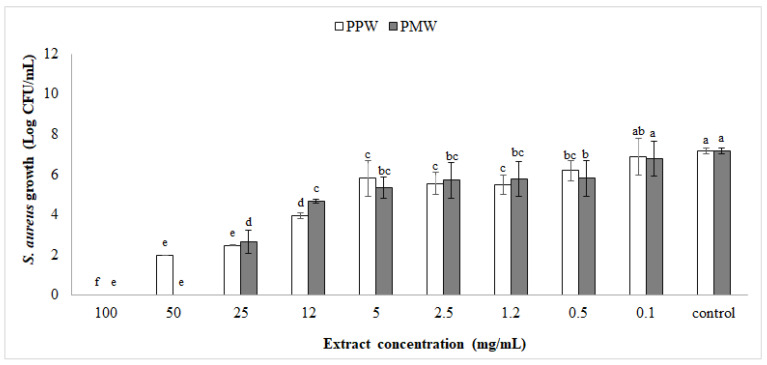
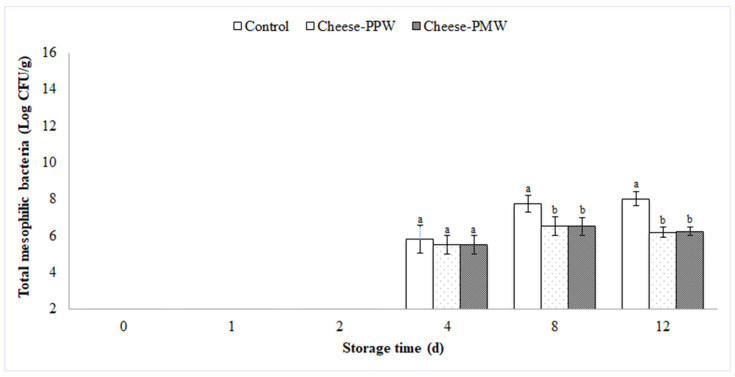
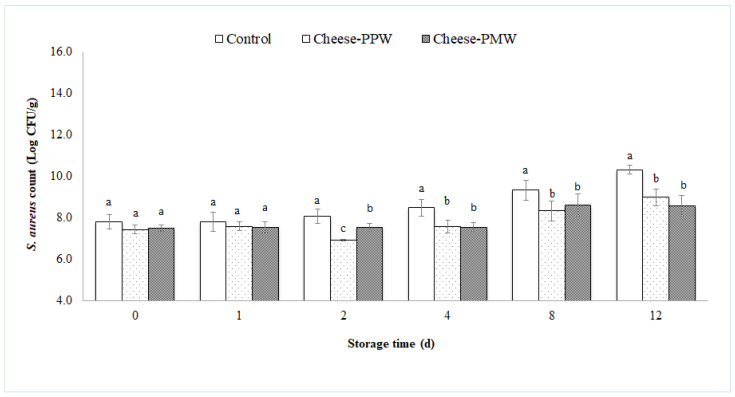
Pomegranate peel and mesocarp, considered as wastes of fruit processing, are rich sources of beneficial phytochemicals, including hydrolyzable tannins and flavonoids, with proven antimicrobial and antioxidant activity, which can be employed for improving the overall quality of food products. In the present study, extracts from pomegranate peel (PPW) and mesocarp (PMW) were obtained through a water extraction method and evaluated for in vitro antimicrobial activity and polyphenol content. The two extracts were then added during the cheese-making process in order to create a new functional cheese with improved microbiological and physico-chemical characteristics. Antimicrobial in vitro assays evidenced a substantial efficacy of both extracts against , which often causes staphylococcal food poisoning outbreaks linked to the consumption of raw milk cheeses and artisanal cheeses. For this reason, a simulated cheese contamination was carried out in order to assess if pomegranate extracts can exert antimicrobial activity towards this pathogen even when incorporated into the cheese matrix. Milk enriched with pomegranate extracts (PPW and PMW) was used to produce two different experimental cheeses, which were then evaluated for yield, polyphenol content, and microbiological as well as physico-chemical traits throughout the refrigerated storage. Despite the low concentration of the extracts, the treated cheeses showed an increase in firmness and a slight decrease in counts, of more than one log unit in comparison to the control cheese, for up to 12 d of cold storage. Such results support the reuse of agro-food byproducts, in substitution to chemical food preservatives, as the key to a circular economy.
石榴皮和中果皮被视为水果加工的废弃物,是有益植物化学物质的丰富来源,包括可水解单宁和黄酮类化合物,具有已被证实的抗菌和抗氧化活性,可用于提高食品的整体质量。在本研究中,通过水提取法获得了石榴皮提取物(PPW)和中果皮提取物(PMW),并对其体外抗菌活性和多酚含量进行了评估。然后在奶酪制作过程中添加这两种提取物,以制作一种具有改善的微生物和理化特性的新型功能性奶酪。体外抗菌试验证明,这两种提取物对 均具有显著疗效, 常导致与食用生乳奶酪和手工奶酪相关的葡萄球菌食物中毒暴发。因此,进行了模拟奶酪污染试验,以评估石榴提取物即使掺入奶酪基质中是否仍能对这种病原体发挥抗菌活性。用富含石榴提取物(PPW和PMW)的牛奶制作了两种不同的实验奶酪,然后在冷藏储存期间对其产量、多酚含量、微生物以及理化特性进行了评估。尽管提取物浓度较低,但与对照奶酪相比,经过处理的奶酪在冷藏储存长达12天的时间里,硬度增加, 数量略有下降,下降幅度超过一个对数单位。这些结果支持将农业食品副产品作为化学食品防腐剂的替代品进行再利用,这是循环经济的关键。