Redox Biology Group, Discipline of Pathology, Faculty of Medicine and Health, Charles Perkins Centre, The University of Sydney, Sydney, NSW 2006, Australia.
Int J Mol Sci. 2021 Nov 22;22(22):12582. doi: 10.3390/ijms222212582.
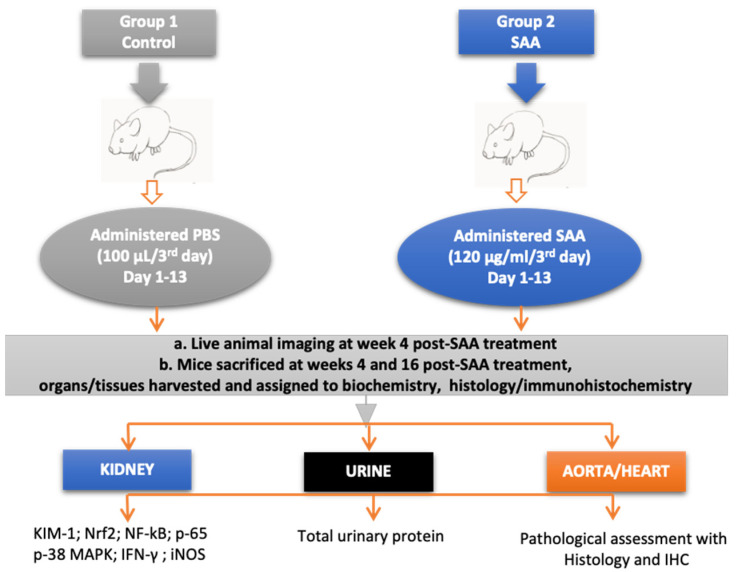
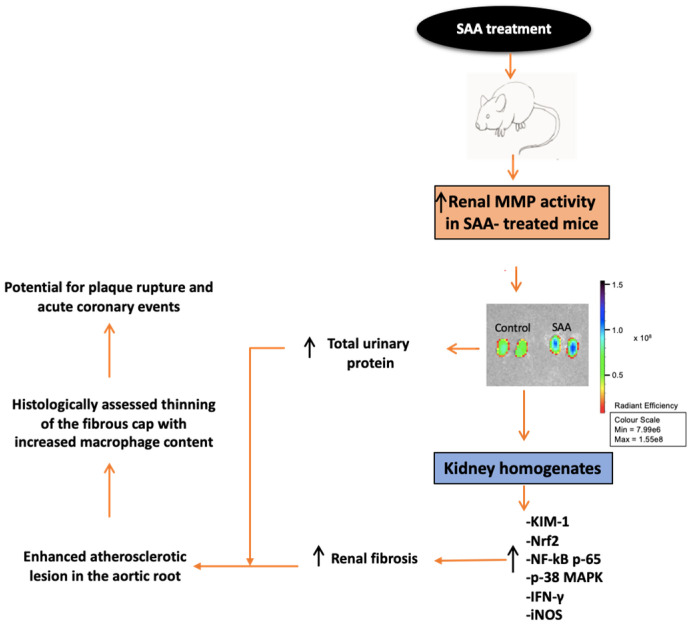
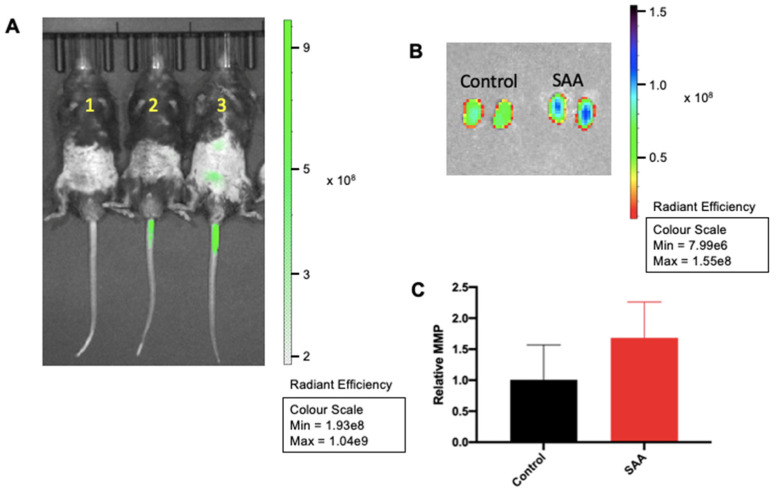
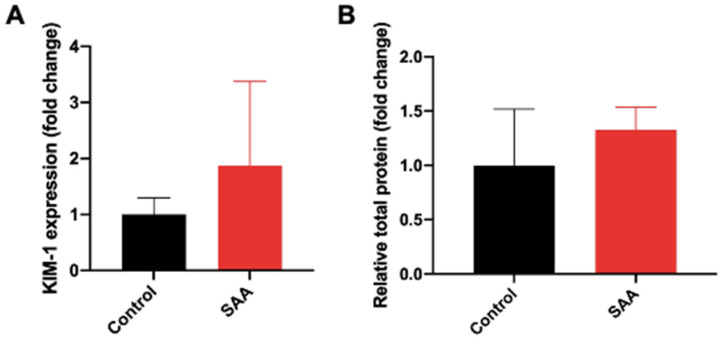
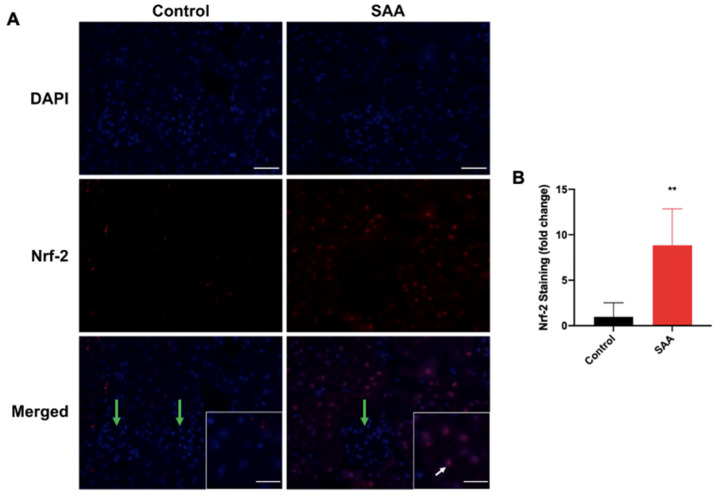
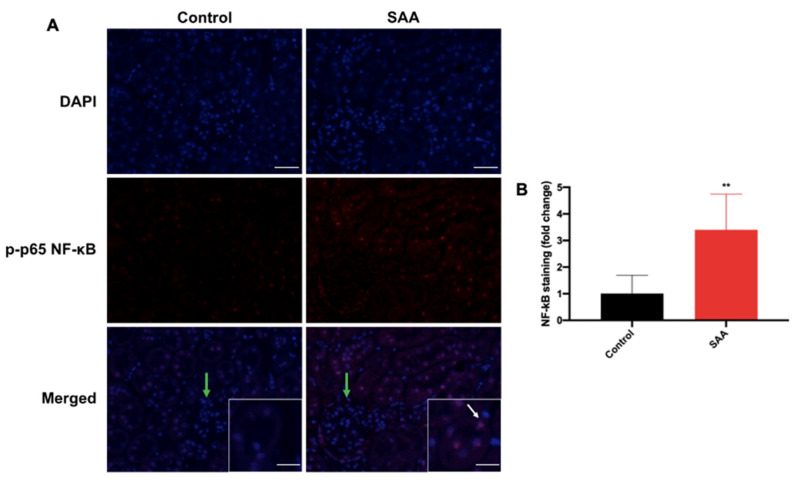
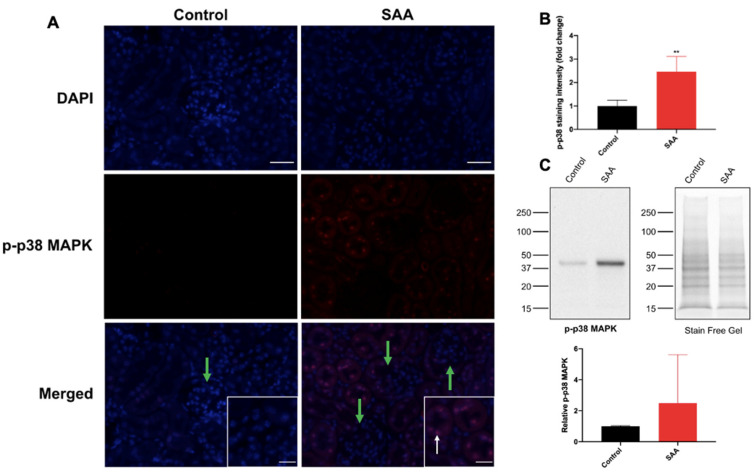
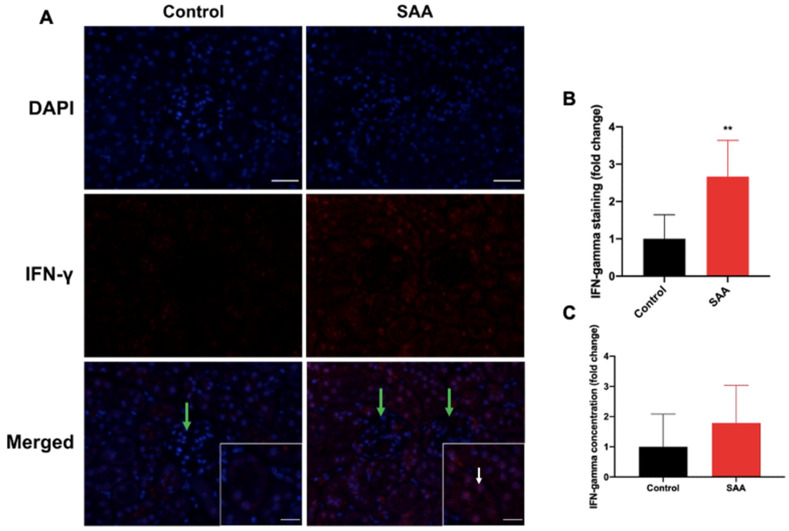
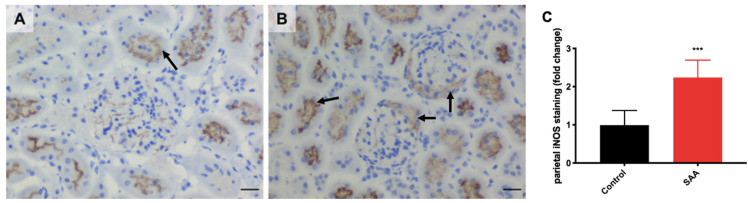
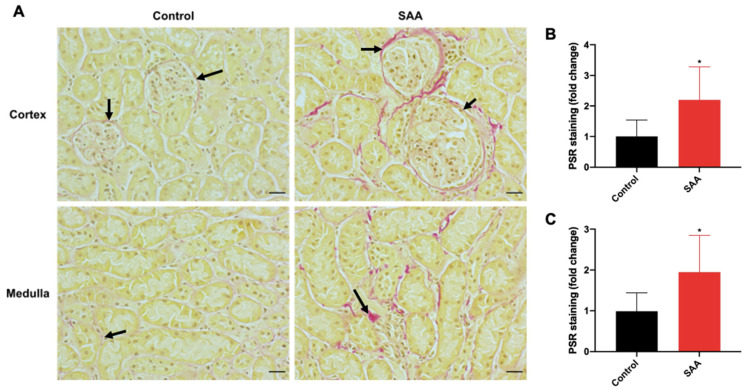
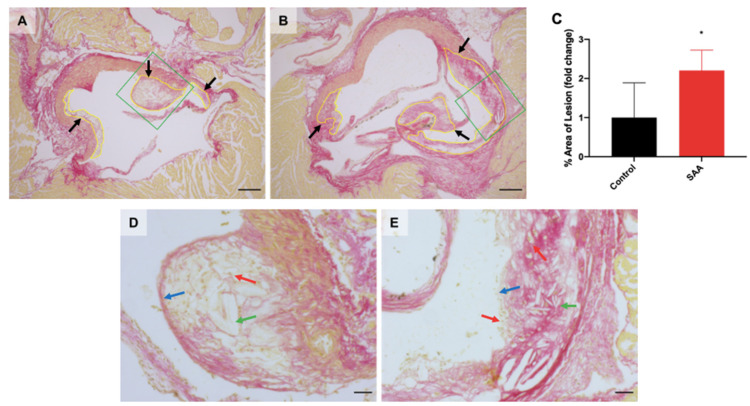
Acute serum amyloid A (SAA) is an apolipoprotein that mediates pro-inflammatory and pro-atherogenic pathways. SAA-mediated signalling is diverse and includes canonical and acute immunoregulatory pathways in a range of cell types and organs. This study aimed to further elucidate the roles for SAA in the pathogenesis of vascular and renal dysfunction. Two groups of male ApoE-deficient mice were administered SAA (100 µL, 120 µg/mL) or vehicle control (100 µL PBS) and monitored for 4 or 16 weeks after SAA treatment; tissue was harvested for biochemical and histological analyses at each time point. Under these conditions, SAA administration induced crosstalk between NF-κB and Nrf2 transcriptional factors, leading to downstream induction of pro-inflammatory mediators and antioxidant response elements 4 weeks after SAA administration, respectively. SAA treatment stimulated an upregulation of renal IFN-γ with a concomitant increase in renal levels of p38 MAPK and matrix metalloproteinase (MMP) activities, which is linked to tissue fibrosis. In the kidney of SAA-treated mice, the immunolocalisation of inducible nitric oxide synthase (iNOS) was markedly increased, and this was localised to the parietal epithelial cells lining Bowman's space within glomeruli, which led to progressive renal fibrosis. Assessment of aortic root lesion at the study endpoint revealed accelerated atherosclerosis formation; animals treated with SAA also showed evidence of a thinned fibrous cap as judged by diffuse collagen staining. Together, this suggests that SAA elicits early renal dysfunction through promoting the IFN-γ-iNOS-p38 MAPK axis that manifests as the fibrosis of renal tissue and enhanced cardiovascular disease.
急性血清淀粉样蛋白 A(SAA)是一种载脂蛋白,可介导促炎和促动脉粥样硬化途径。SAA 介导的信号转导多种多样,包括在多种细胞类型和器官中经典和急性免疫调节途径。本研究旨在进一步阐明 SAA 在血管和肾功能障碍发病机制中的作用。两组雄性载脂蛋白 E 缺陷型小鼠给予 SAA(100 µL,120 µg/mL)或载体对照(100 µL PBS),并在 SAA 治疗后 4 或 16 周进行监测;在每个时间点采集组织进行生化和组织学分析。在这些条件下,SAA 给药诱导 NF-κB 和 Nrf2 转录因子之间的串扰,分别导致 SAA 给药后 4 周下游促炎介质和抗氧化反应元件的诱导。SAA 处理刺激了 IFN-γ 的上调,同时伴有肾脏 p38 MAPK 和基质金属蛋白酶(MMP)活性的增加,这与组织纤维化有关。在 SAA 处理小鼠的肾脏中,诱导型一氧化氮合酶(iNOS)的免疫定位明显增加,并且定位在肾小球鲍曼氏空间的壁细胞上,导致进行性肾纤维化。在研究终点评估主动脉根部病变时发现动脉粥样硬化形成加速;用 SAA 处理的动物也表现出纤维帽变薄的证据,这可通过弥漫性胶原染色判断。综上所述,SAA 通过促进 IFN-γ-iNOS-p38 MAPK 轴引发早期肾功能障碍,表现为肾组织纤维化和心血管疾病增强。