
动态调节 GH-IGF1 信号在高氧诱导的新生儿肺损伤中的损伤和恢复中的作用。
Dynamic Regulation of GH-IGF1 Signaling in Injury and Recovery in Hyperoxia-Induced Neonatal Lung Injury.
机构信息
Department of Pediatric and Adolescent Medicine, Translational Experimental Pediatrics-Experimental Pulmonology, Faculty of Medicine and University Hospital Cologne, University of Cologne, 50937 Cologne, Germany.
Department of Pediatric and Adolescent Medicine, Faculty of Medicine and University Hospital Cologne, University of Cologne, 50937 Cologne, Germany.
出版信息
Cells. 2021 Oct 29;10(11):2947. doi: 10.3390/cells10112947.
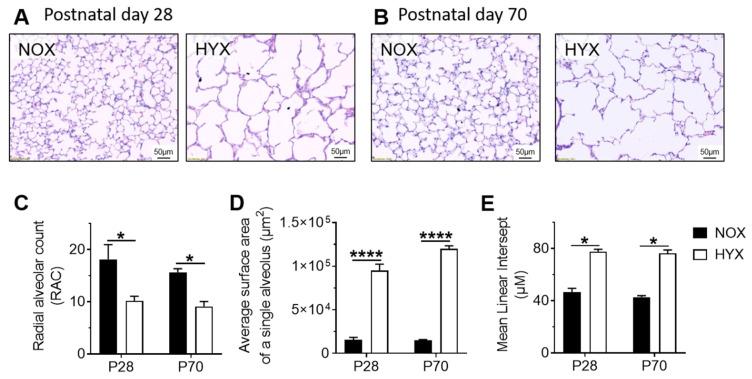
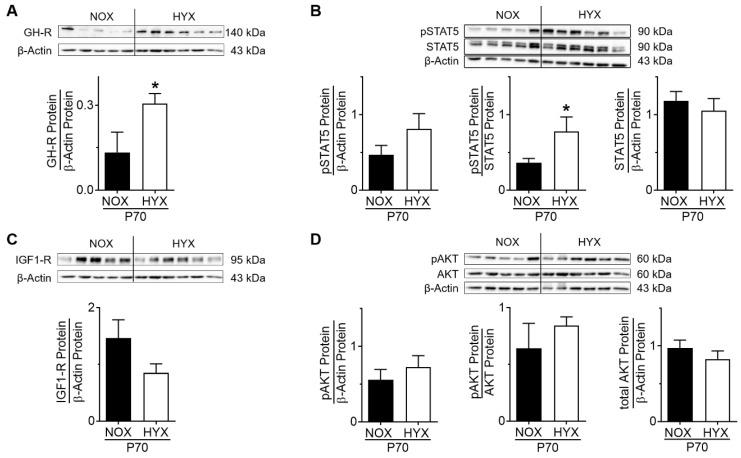
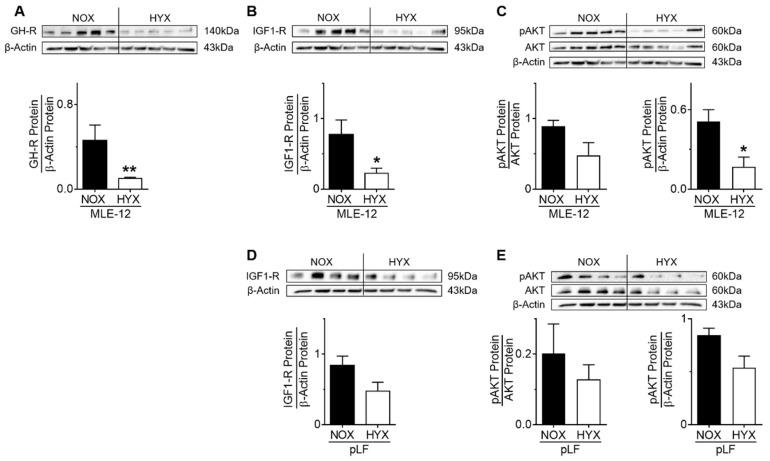
Prematurely born infants often require supplemental oxygen that impairs lung growth and results in arrest of alveolarization and bronchopulmonary dysplasia (BPD). The growth hormone (GH)- and insulin-like growth factor (IGF)1 systems regulate cell homeostasis and organ development. Since IGF1 is decreased in preterm infants, we investigated the GH- and IGF1 signaling (1) in newborn mice with acute and prolonged exposure to hyperoxia as well as after recovery in room air; and (2) in cultured murine lung epithelial cells (MLE-12) and primary neonatal lung fibroblasts (pLFs) after treatment with GH, IGF1, and IGF1-receptor (IGF1-R) inhibitor or silencing of GH-receptor () and using the siRNA technique. We found that (1) early postnatal hyperoxia caused an arrest of alveolarization that persisted until adulthood. Both short-term and prolonged hyperoxia reduced GH-receptor expression and STAT5 signaling, whereas mRNA and pAKT signaling were increased. These findings were related to a loss of epithelial cell markers (SFTPC, AQP5) and proliferation of myofibroblasts (αSMA cells). After recovery, GH-R-expression and STAT5 signaling were activated, mRNA reduced, and SFTPC protein significantly increased. Cell culture studies showed that IGF1 induced expression of mesenchymal (e.g., , ) and alveolar epithelial cell type I (, ) markers, whereas inhibition of IGF1 increased SFTPC and reduced AQP5 in MLE-12. GH increased mRNA and reduced proliferation of pLFs, whereas IGF1 exhibited the opposite effect. In summary, our data demonstrate an opposite regulation of GH- and IGF1- signaling during short-term/prolonged hyperoxia-induced lung injury and recovery, affecting alveolar epithelial cell differentiation, inflammatory activation of fibroblasts, and a possible uncoupling of the GH-IGF1 axis in lungs after hyperoxia.
早产儿通常需要补充氧气,这会损害肺部生长,导致肺泡化和支气管肺发育不良 (BPD) 停止。生长激素 (GH) 和胰岛素样生长因子 (IGF1) 系统调节细胞内稳态和器官发育。由于早产儿 IGF1 减少,我们研究了 GH 和 IGF1 信号通路:(1) 新生小鼠急性和长期暴露于高氧以及在恢复到常氧后;(2) 在 GH、IGF1 和 IGF1 受体 (IGF1-R) 抑制剂处理后,培养的鼠肺上皮细胞 (MLE-12) 和原代新生肺成纤维细胞 (pLF) 以及使用 siRNA 技术沉默 GH 受体 ()。我们发现:(1) 出生后早期的高氧导致肺泡化停止,这种情况一直持续到成年。短期和长期高氧均降低 GH 受体表达和 STAT5 信号通路,而 mRNA 和 pAKT 信号通路增加。这些发现与上皮细胞标志物 (SFTPC、AQP5) 的丧失和肌成纤维细胞 (αSMA 细胞) 的增殖有关。恢复后,GH-R 表达和 STAT5 信号通路被激活, mRNA 减少,SFTPC 蛋白显著增加。细胞培养研究表明,IGF1 诱导间充质 (例如, ) 和肺泡上皮细胞 I 型 ( ) 标志物的表达,而 IGF1 抑制剂增加 MLE-12 中的 SFTPC 并减少 AQP5。GH 增加 pLF 的 mRNA 并减少增殖,而 IGF1 则表现出相反的效果。总之,我们的数据表明,GH 和 IGF1 信号通路在短期/长期高氧诱导的肺损伤和恢复过程中受到相反的调节,影响肺泡上皮细胞分化、成纤维细胞炎症激活以及高氧后肺中 GH-IGF1 轴的可能解耦。







 Zotero 插件