Carrasco Félix, Santana Pérez Orlando, Maspoch Maria Lluïsa
Department of Chemical Engineering, Universitat de Girona (UdG), C/Maria Aurèlia Capmany 61, 17003 Girona, Spain.
Centre Català del Plàstic (CCP), Universitat Politècnica de Catalunya Barcelona Tech (UPC-EEBE), C/Colom 114, 08222 Terrassa, Spain.
Polymers (Basel). 2021 Nov 19;13(22):3996. doi: 10.3390/polym13223996.
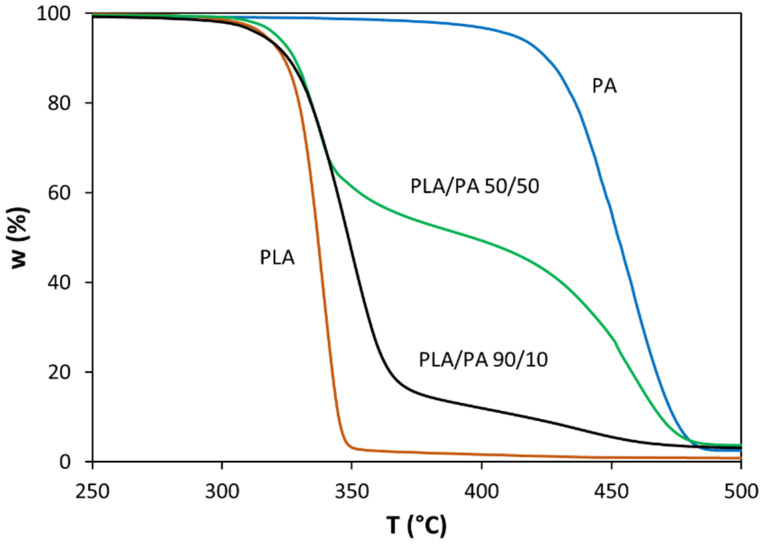
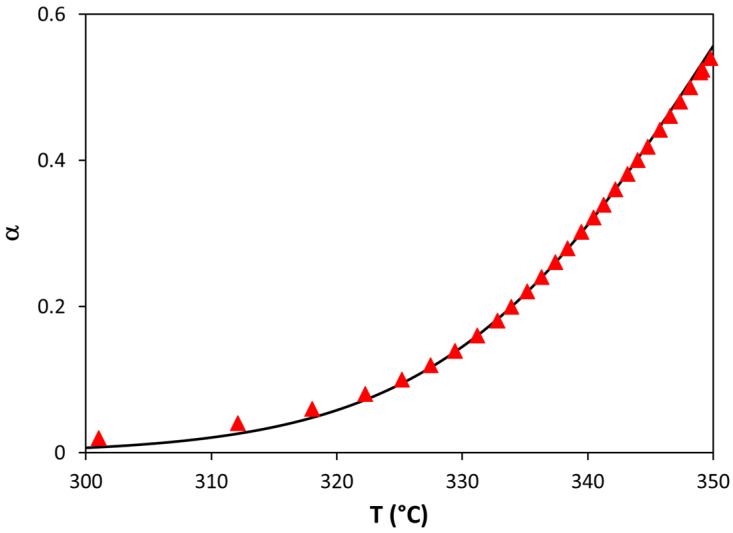
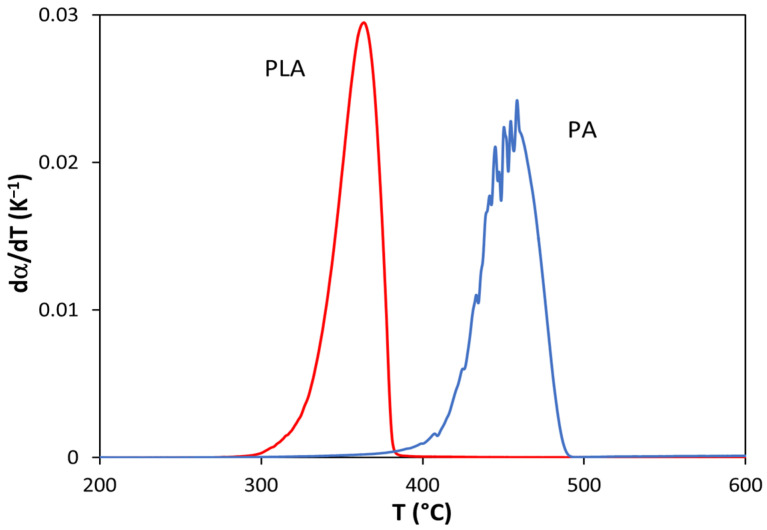
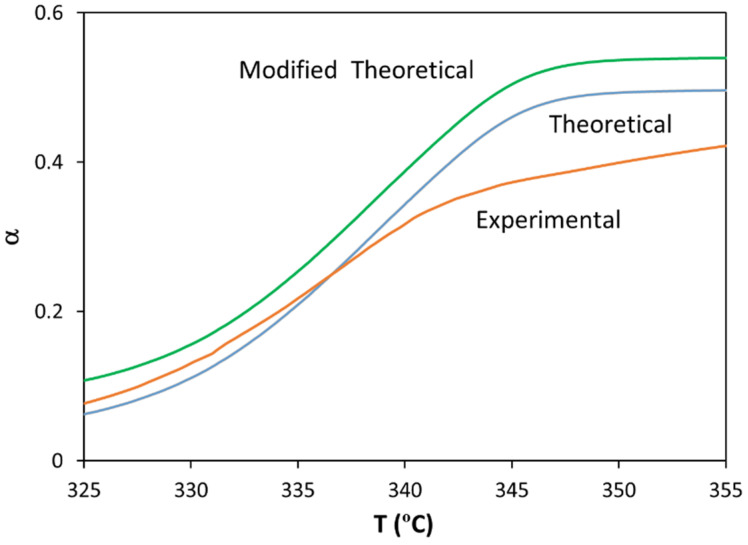
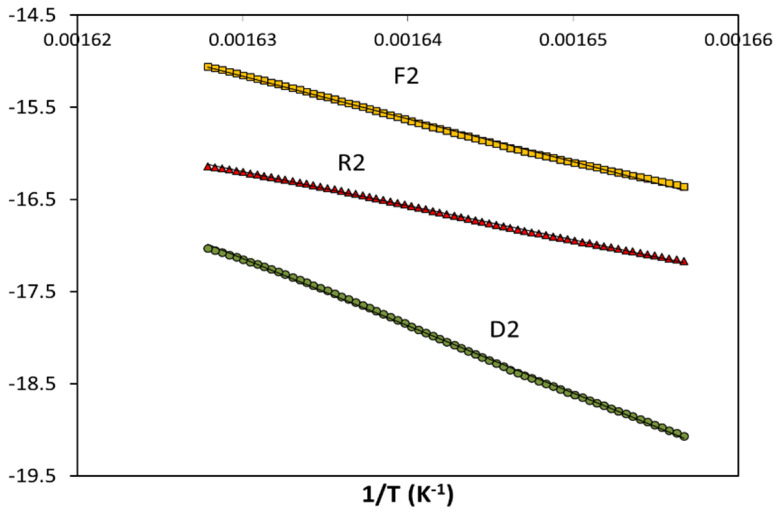
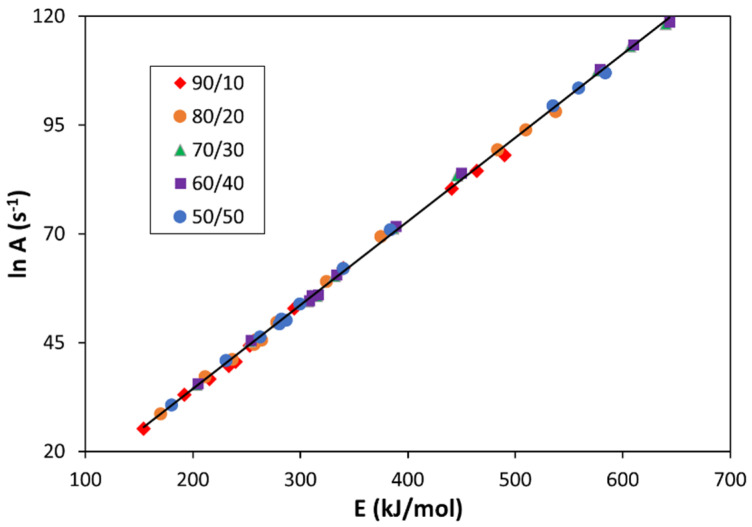
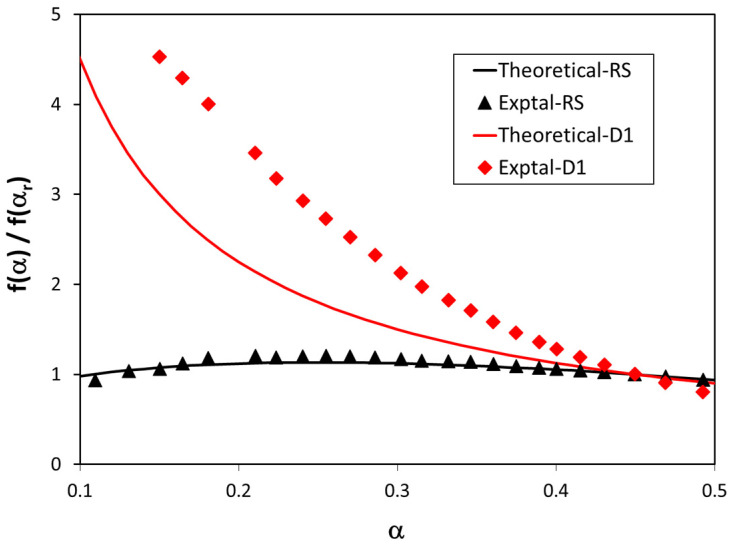
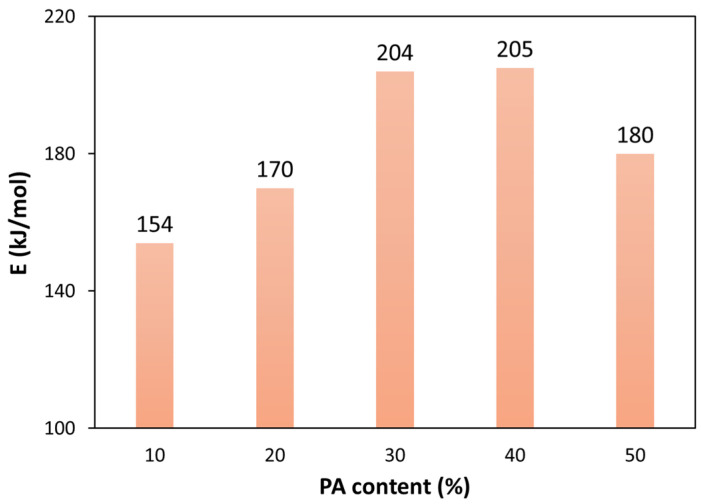
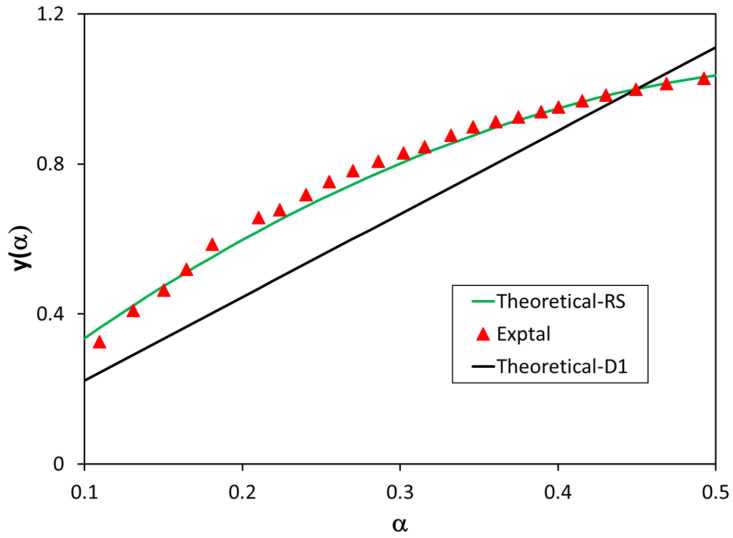
Poly(lactic acid) (PLA) and biosourced polyamide (PA) bioblends, with a variable PA weight content of 10-50%, were prepared by melt blending in order to overcome the high brittleness of PLA. During processing, the properties of the melt were stabilized and enhanced by the addition of a styrene-acrylic multi-functional-epoxide oligomeric reactive agent (SAmfE). The general analytical equation (GAE) was used to evaluate the kinetic parameters of the thermal degradation of PLA within bioblends. Various empirical and theoretical solid-state mechanisms were tested to find the best kinetic model. In order to study the effect of PA on the PLA matrix, only the first stage of the thermal degradation was taken into consideration in the kinetic analysis ( < 0.4). On the other hand, standardized conversion functions were evaluated. Given that it is not easy to visualize the best accordance between experimental and theoretical values of standardized conversion functions, an index, based on the integral mean error, was evaluated to quantitatively support our findings relative to the best reaction mechanism. It was demonstrated that the most probable mechanism for the thermal degradation of PLA is the random scission of macromolecular chains. Moreover, () master plots, which are independent of activation energy values, were used to confirm that the selected reaction mechanism was the most adequate. Activation energy values were calculated as a function of PA content. Moreover, the onset thermal stability of PLA was also determined.
为了克服聚乳酸(PLA)的高脆性,通过熔融共混制备了聚乳酸(PLA)与生物基聚酰胺(PA)的生物共混物,其中PA的重量含量为10 - 50%且含量可变。在加工过程中,通过添加苯乙烯 - 丙烯酸多功能环氧化合物低聚物反应剂(SAmfE)来稳定和增强熔体的性能。使用通用分析方程(GAE)来评估共混物中PLA热降解的动力学参数。测试了各种经验和理论固态机理以找到最佳动力学模型。为了研究PA对PLA基体的影响,在动力学分析中仅考虑热降解的第一阶段(< 0.4)。另一方面,评估了标准化转化率函数。鉴于不容易直观地看出标准化转化率函数的实验值和理论值之间的最佳一致性,评估了一个基于积分平均误差的指数,以定量支持我们关于最佳反应机理的研究结果。结果表明,PLA热降解最可能的机理是大分子链的无规断裂。此外,使用与活化能值无关的()主曲线来确认所选反应机理是最合适的。计算了活化能值作为PA含量的函数。此外,还测定了PLA的起始热稳定性。