Chemistry Department, Faculty of Science, Minia University, El-Minia 61519, Egypt.
Department of Pharmaceutical Organic Chemistry, Faculty of Pharmacy, Al-Azhar University, Assiut 71524, Egypt.
Molecules. 2021 Nov 10;26(22):6798. doi: 10.3390/molecules26226798.
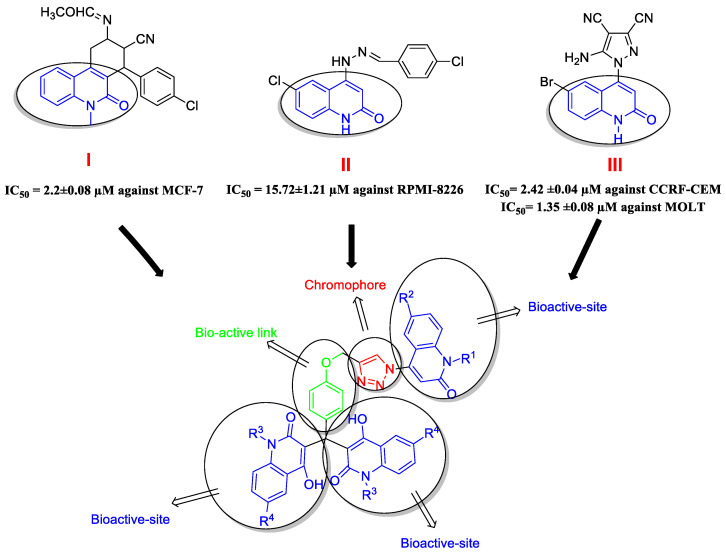
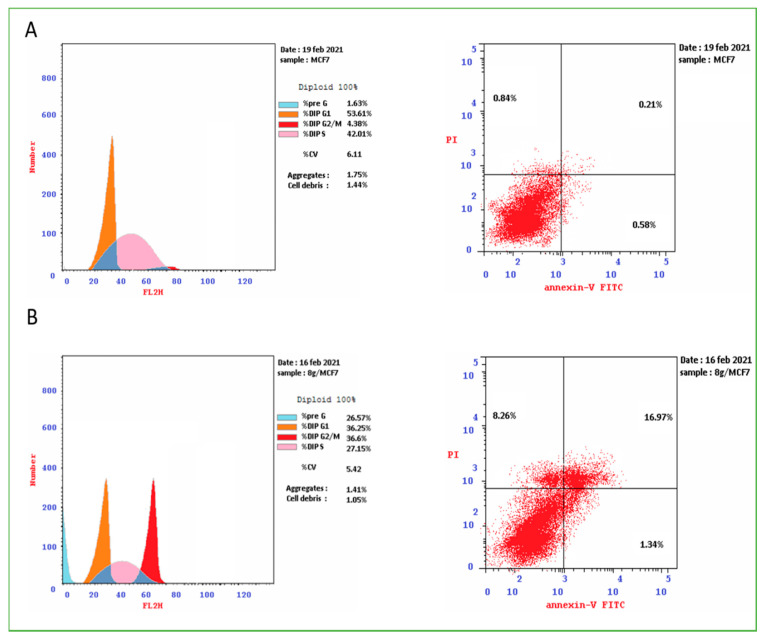
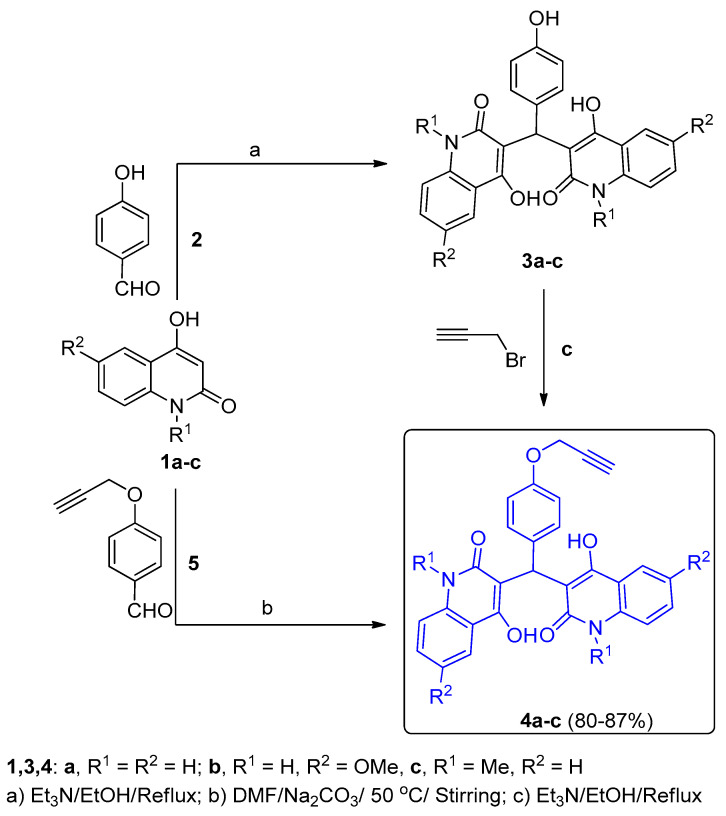
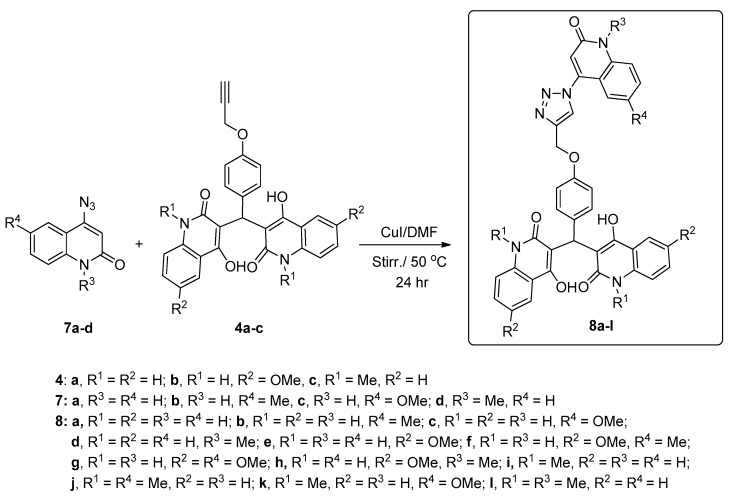
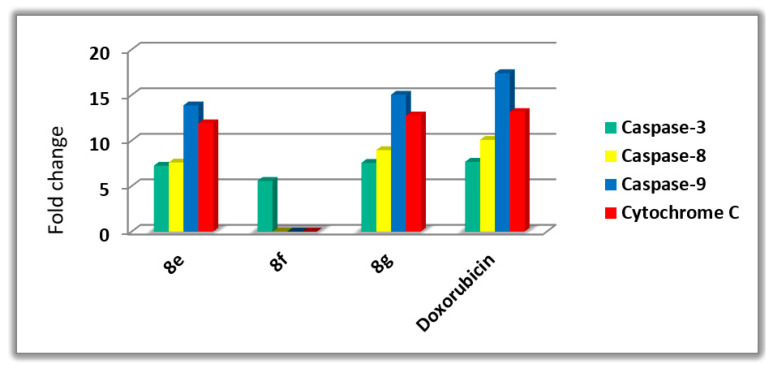
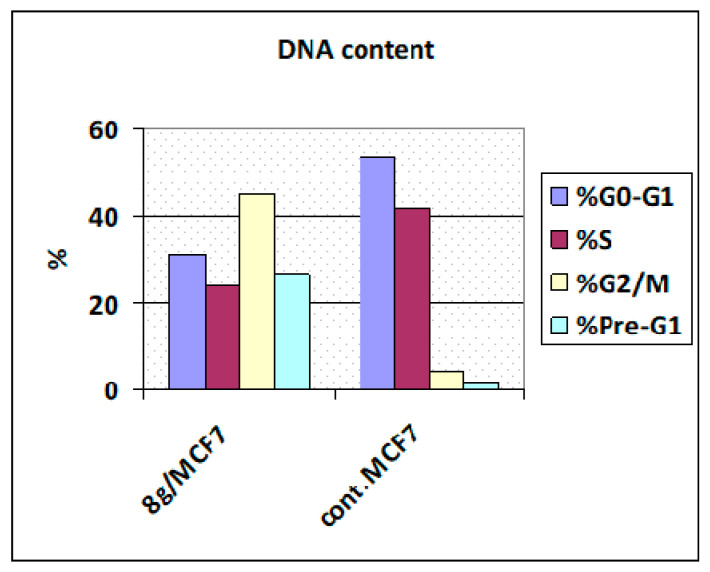
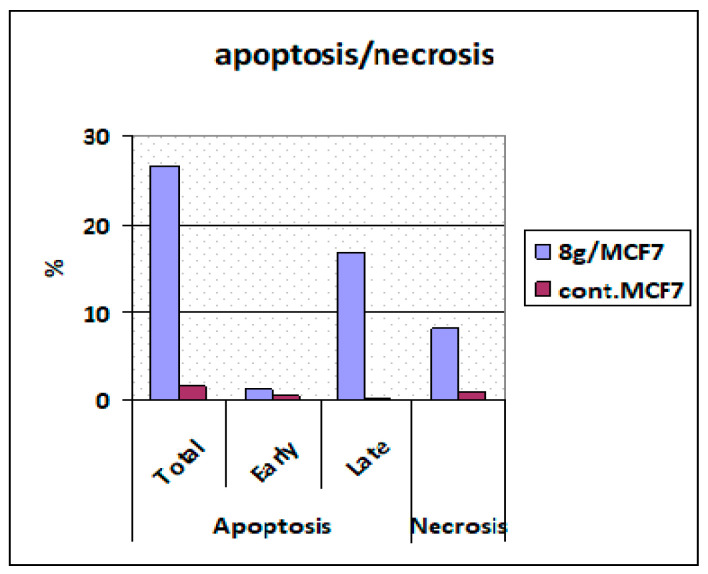
A mild and versatile method based on Cu-catalyzed [2+3] cycloaddition (Huisgen-Meldal-Sharpless reaction) was developed to tether 3,3'-((4-(prop-2-yn-1-yloxy)phenyl)methylene)(4-hydroxyquinolin-2(1)-ones) with 4-azido-2-quinolones in good yields. This methodology allowed attaching three quinolone molecules via a triazole linker with the proposed mechanism. The products are interesting precursors for their anti-proliferative activity. Compound was the most active one, achieving IC = 1.2 ± 0.2 µM and 1.4 ± 0.2 µM against MCF-7 and Panc-1 cell lines, respectively. Moreover, cell cycle analysis of cells MCF-7 treated with showed cell cycle arrest at the G2/M phase (supported by Caspase-3,8,9, Cytochrome C, BAX, and Bcl-2 studies). Additionally, significant pro-apoptotic activity is indicated by annexin V-FITC staining.
一种温和且多功能的方法是基于 Cu 催化的 [2+3] 环加成(Huisgen-Meldal-Sharpless 反应),用于将 3,3'-((4-(丙-2-炔-1-基氧基)苯基)亚甲基)(4-叠氮基-2-喹诺酮)与 4-叠氮基-2-喹诺酮以高产率连接。该方法允许通过三唑键将三个喹诺酮分子连接在一起,并提出了相应的机制。这些产物作为它们的抗增殖活性的有趣前体。化合物 是最活跃的,对 MCF-7 和 Panc-1 细胞系的 IC = 1.2 ± 0.2 µM 和 1.4 ± 0.2 µM ,分别。此外,用 处理 MCF-7 细胞的细胞周期分析表明细胞周期停滞在 G2/M 期(通过 Caspase-3、8、9、细胞色素 C、BAX 和 Bcl-2 研究支持)。此外,通过 Annexin V-FITC 染色表明明显的促凋亡活性。