Rahman Inayat Ur, Afzal Aftab, Iqbal Zafar, Hashem Abeer, Al-Arjani Al-Bandari Fahad, Alqarawi Abdulaziz A, Abd Allah Elsayed Fathi, Abdalla Mohnad, Calixto Eduardo Soares, Sakhi Shazia, Ali Niaz, Bussmann Rainer W
Department of Botany, Hazara University, Mansehra 21300, Khyber Pakhtunkhwa, Pakistan.
William L. Brown Center, Missouri Botanical Garden, P.O. Box 299, St. Louis, MO 63166, USA.
Plants (Basel). 2021 Nov 4;10(11):2372. doi: 10.3390/plants10112372.
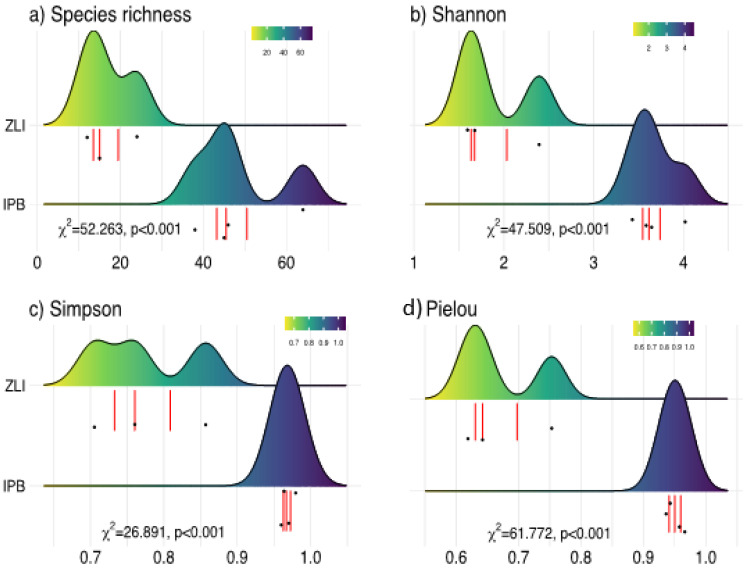
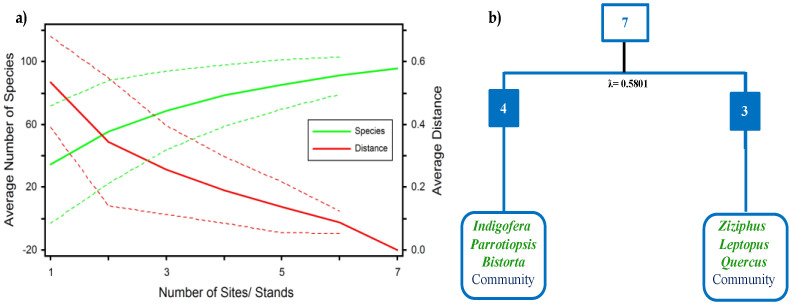
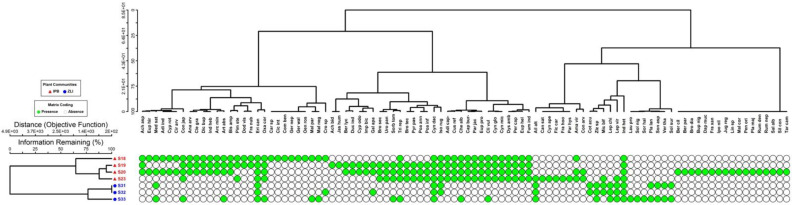
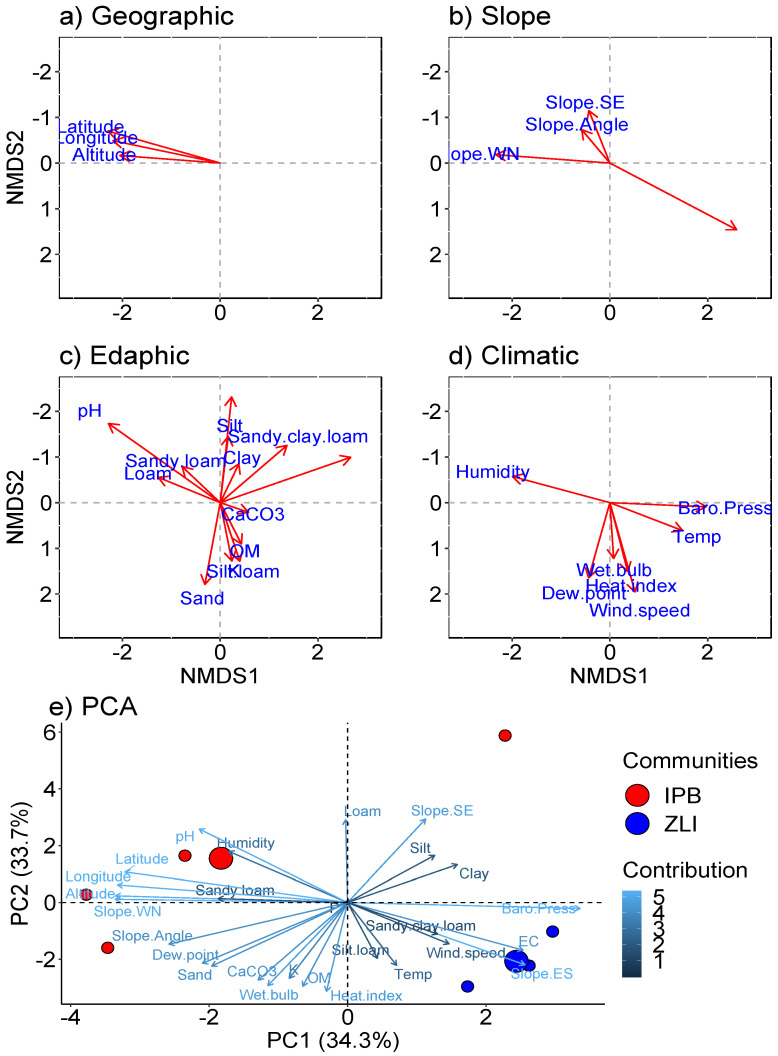
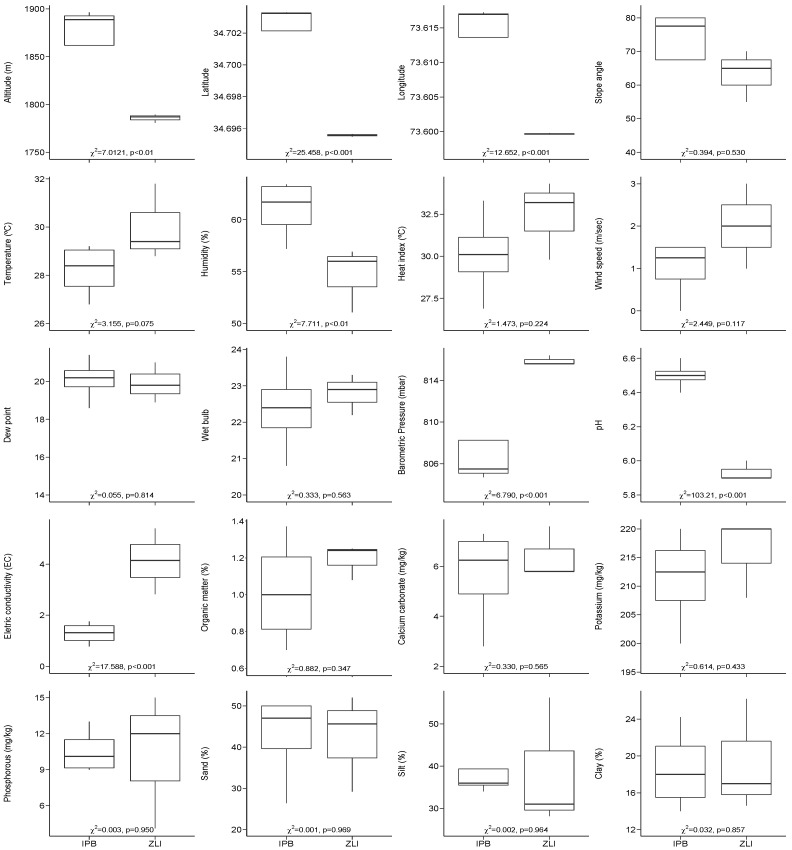
The ecotonal zones support populations that are acclimated to changing, fluctuating, and unstable conditions, and as a result, these populations are better equipped to adjust to expected change. In this context, a hypothesis was tested that there must be vegetation dominated by unique indicator plant species under the influence of ecological gradients in the ecotonal zone of Manoor Valley (northwestern Himalaya), Pakistan. Keeping the aforementioned hypothesis in mind, detailed field studies were conducted during different seasons in 2015-18. Line transect sampling and phytosociological characteristics (density, frequency, cover, and their relative values and Importance Value) were implemented as ecological methods. This investigation documented 97 plant species recorded from seven sampling sites. The community distribution modelling revealed that the ecological variables separate the seven sampling sites into two major plant communities ( and ) recognized by TWINSPAN. The IBP communities showed a positive and significant correlation with altitude (1789.6-1896.3 m), sandy soil texture with a slightly acidic pH (6.4-6.5), and higher phosphorous (9-13 mg kg). In contrast with this, the ZLQ community was recognized on the southern slope under the strong influence of high electrical conductivity (2.82-5.4 dsm), organic matter (1.08-1.25%), calcium carbonate (5.8-7.6 mg kg), potassium (202-220 mg kg), and temperature (28.8-31.8 °C). Hence, both communities were found on opposite axes with clear differences based on the ecological gradients. NMDS clustered different species with similar habitats and different stands with common species, showing that plant species and stands were in a linear combination with ecological gradients. The IPB community has the maximum number of plant species (87 species), Shannon value (H' = 4), Simpson value (0.98), and Pielou's evenness value (0.96). Thus, the multivariate approaches revealed unique vegetation with sharp boundaries between communities which might be due to abrupt environmental changes.
生态交错带支持着适应变化、波动和不稳定条件的种群,因此,这些种群更有能力适应预期的变化。在此背景下,人们对一个假设进行了检验,即在巴基斯坦马诺尔山谷(喜马拉雅西北部)的生态交错带,在生态梯度的影响下,必然存在以独特指示植物物种为主导的植被。牢记上述假设,于2015 - 2018年不同季节进行了详细的实地研究。采用了样线抽样和植物社会学特征(密度、频度、盖度及其相对值和重要值)作为生态学方法。该调查记录了从7个采样点采集到的97种植物。群落分布模型显示,生态变量将7个采样点分为TWINSPAN识别的两个主要植物群落(和)。IBP群落与海拔(1789.6 - 1896.3米)、pH值略呈酸性(6.4 - 6.5)的沙质土壤质地以及较高的磷含量(9 - 13毫克/千克)呈正相关且显著相关。与此相反,ZLQ群落是在高电导率(2.82 - 5.4 dsm)、有机质(1.08 - 1.25%)、碳酸钙(5.8 - 7.6毫克/千克)、钾(202 - 220毫克/千克)和温度(28.8 - 31.8℃)的强烈影响下,在南坡被识别出来的。因此,基于生态梯度,这两个群落位于相反的轴线上,存在明显差异。非度量多维尺度分析(NMDS)将具有相似生境的不同物种和具有共同物种的不同林分聚类在一起,表明植物物种和林分与生态梯度呈线性组合。IPB群落的植物物种数量最多(87种),香农值(H' = 4)、辛普森值(0.98)和皮洛均匀度值(0.96)。因此,多变量方法揭示了群落之间具有清晰边界的独特植被,这可能是由于环境的突然变化所致。