Günther Albrecht, Brämer Dirk, Pletz Mathias W, Kamradt Thomas, Baumgart Sabine, Mayer Thomas E, Baier Michael, Autsch Angelina, Mawrin Christian, Schönborn Linda, Greinacher Andreas, Thiele Thomas
Hans-Berger-Department of Neurology, Jena University Hospital, 07743 Jena, Germany.
Institute for Infectious Diseases and Infection Control, Jena University Hospital, 07743 Jena, Germany.
Vaccines (Basel). 2021 Nov 17;9(11):1344. doi: 10.3390/vaccines9111344.
Vaccine induced thrombotic thrombocytopenia (VITT) may occur after COVID-19 vaccination with recombinant adenoviral vector-based vaccines. VITT can present as cerebral sinus and venous thrombosis (CSVT), often complicated by intracranial hemorrhage. Today it is unclear, how long symptomatic VITT can persist. Here, we report the complicated long-term course of a VITT patient with extremely high titers of pathogenic anti-platelet factor 4 (PF4)-IgG antibodies.
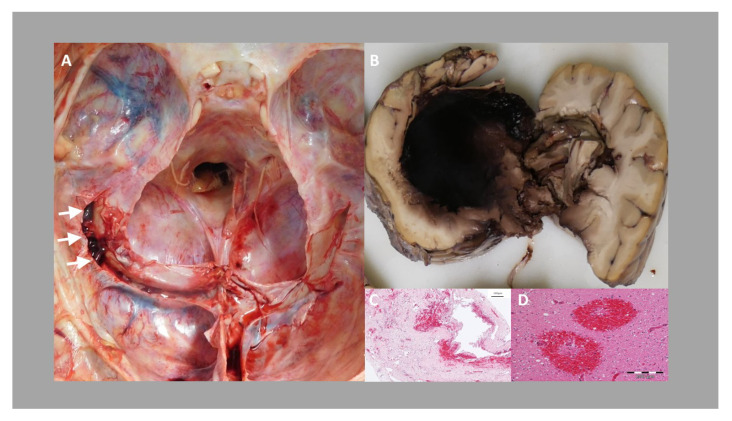
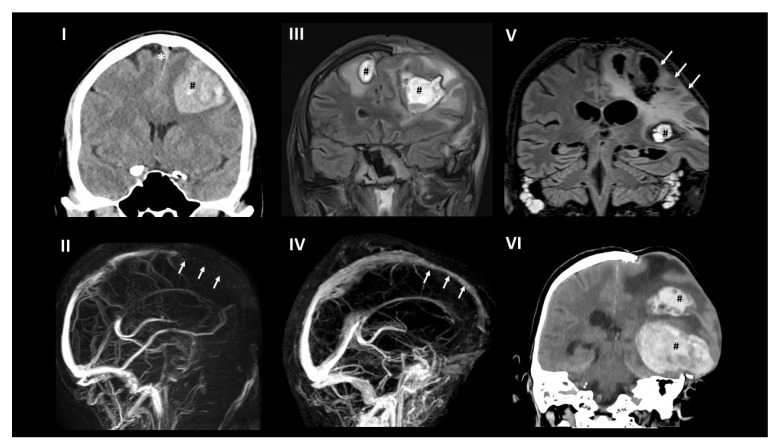
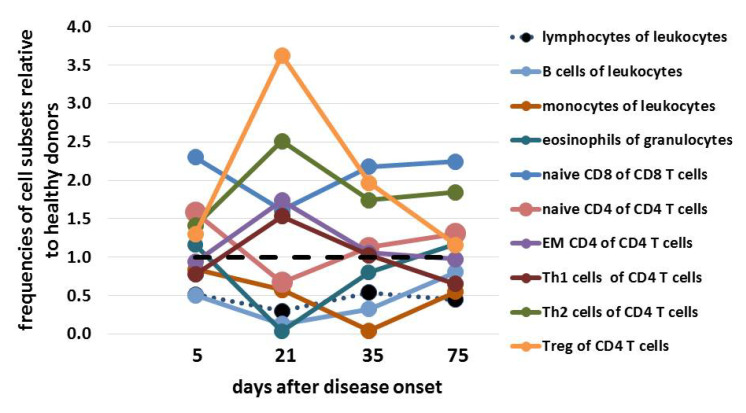
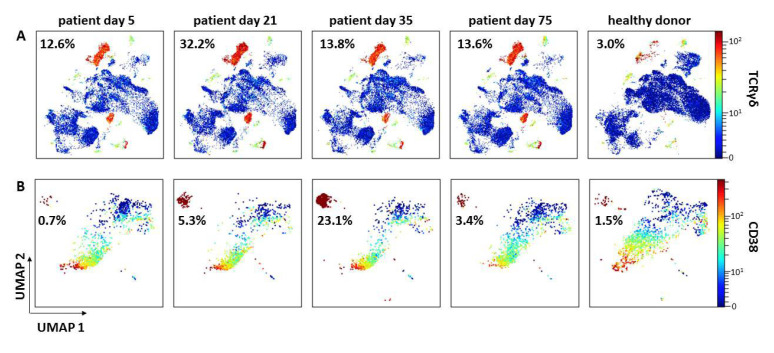
Clinical and laboratory findings are presented, including the course of platelet counts, D-Dimer levels, clinical presentation, imaging, SARS-CoV-2-serological and immunological, platelet activating anti-PF4-IgG, as well as autopsy findings.
The patient presented with extended superior sagittal sinus thrombosis with accompanying bifrontal intracerebral hemorrhage. Repeated treatment with intravenous immune globuline (IVIG) resolved recurrent episodes of thrombocytopenia. Moreover, the patient's serum remained strongly positive for platelet-activating anti-PF4-IgG over three months. After a period of clinical stabilization, the patient suffered a recurrent and fatal intracranial hemorrhage.
Complicated VITT with extremely high anti-PF4-IgG titers over three months can induce recurrent thrombocytopenia despite treatment with IVIG and anticoagulation. Plasma exchange, immunoadsorption, and /or immunosuppressive treatment may be considered in complicated VITT to reduce extraordinarily high levels of anti-PF4-IgG. Long-term therapy in such cases must take the individual bleeding risk and CSVT risk into account.
接种基于重组腺病毒载体的新冠疫苗后可能会发生疫苗诱导的血栓性血小板减少症(VITT)。VITT可表现为脑静脉窦血栓形成(CSVT),常并发颅内出血。目前尚不清楚有症状的VITT会持续多久。在此,我们报告了一名VITT患者的复杂长期病程,该患者具有极高滴度的致病性抗血小板因子4(PF4)-IgG抗体。
介绍了临床和实验室检查结果,包括血小板计数、D-二聚体水平、临床表现、影像学检查、新冠病毒血清学和免疫学检查、血小板激活抗PF4-IgG以及尸检结果。
该患者表现为上矢状窦广泛血栓形成并伴有双侧额叶脑出血。静脉注射免疫球蛋白(IVIG)反复治疗解决了血小板减少的复发问题。此外,患者血清在三个月内血小板激活抗PF4-IgG一直呈强阳性。经过一段时间的临床稳定后,患者再次发生致命性颅内出血。
尽管接受了IVIG和抗凝治疗,但伴有极高抗PF4-IgG滴度超过三个月的复杂VITT仍可诱发血小板减少复发。对于复杂的VITT,可考虑进行血浆置换、免疫吸附和/或免疫抑制治疗,以降低异常高水平的抗PF4-IgG。此类病例的长期治疗必须考虑个体出血风险和CSVT风险。