Department of Nutrition, Faculty of Health Sciences, Kio University, 4-2-4 Umami-naka, Koryo, Kitakatsuragi, Nara 635-0832, Japan.
Department of Anatomy and Neuroscience, Graduate School of Medical Sciences, Nagoya City University, 1 Kawasumi, Mizuho-cho, Mizuho-ku, Nagoya 467-8601, Japan.
Nutrients. 2021 Oct 23;13(11):3749. doi: 10.3390/nu13113749.
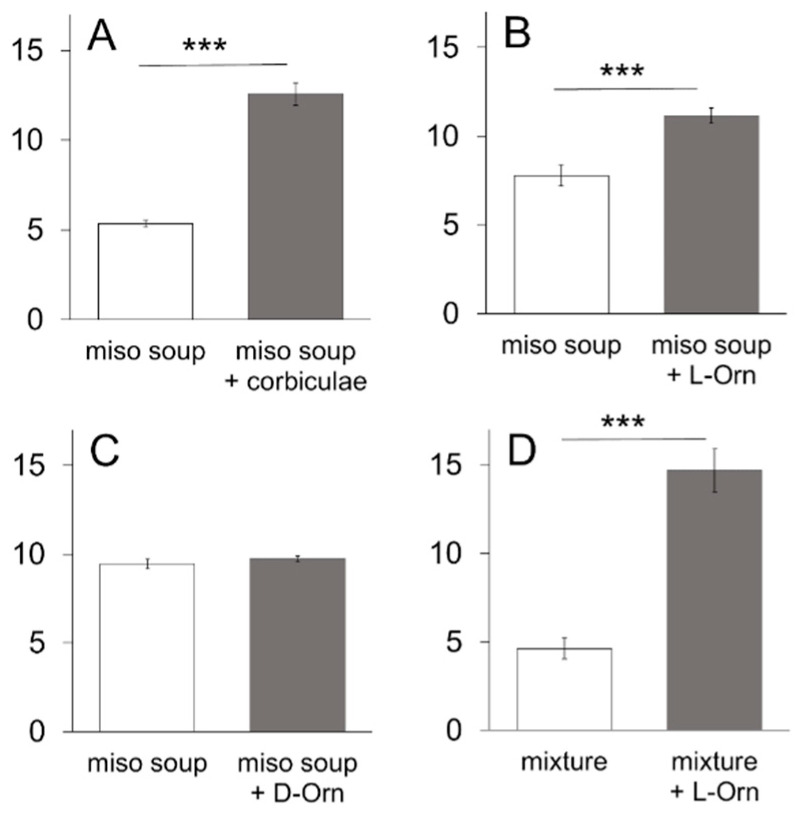
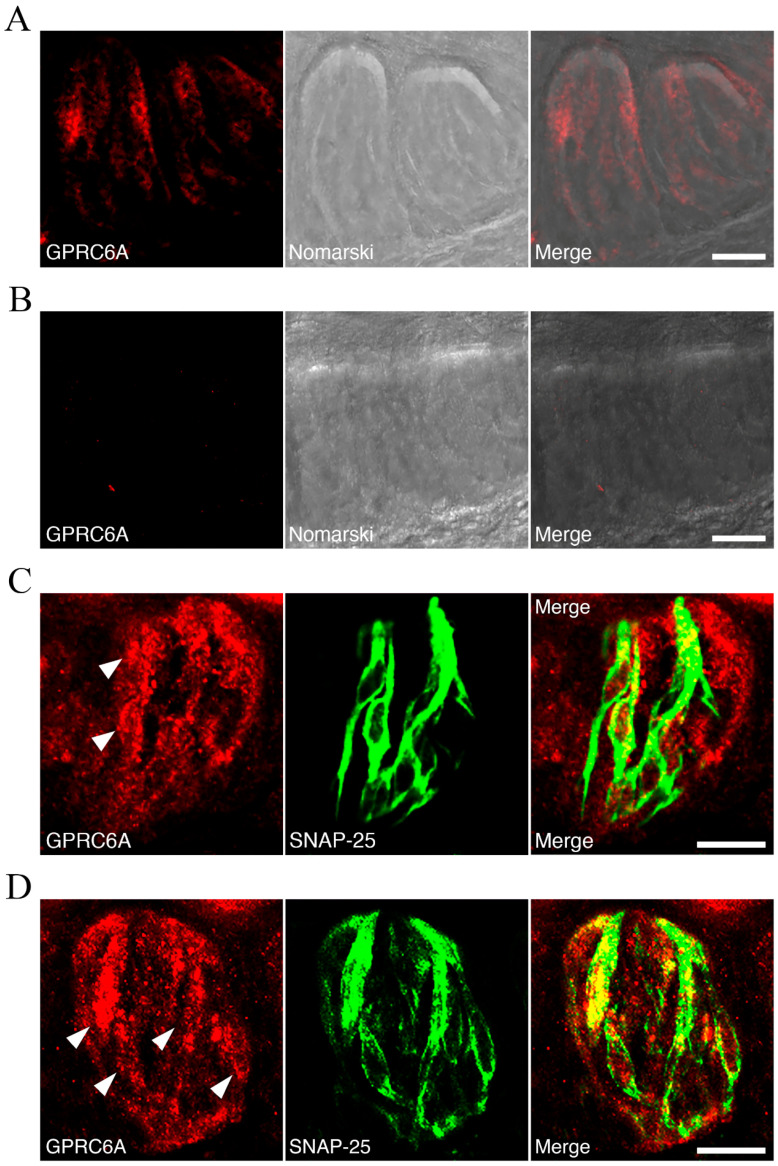
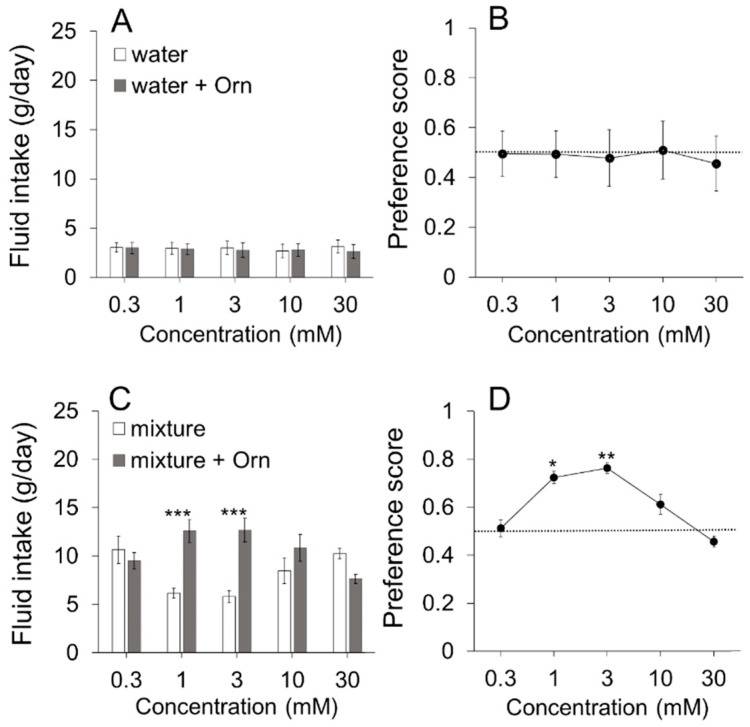
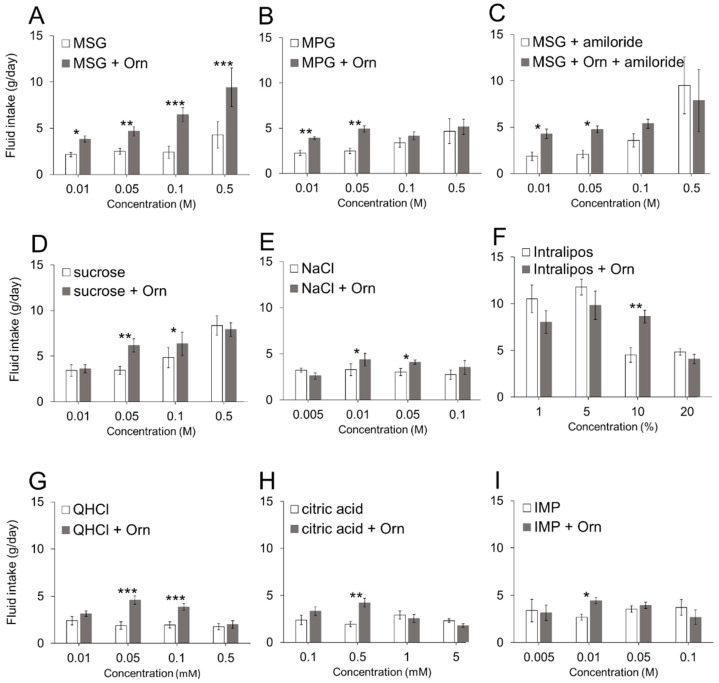
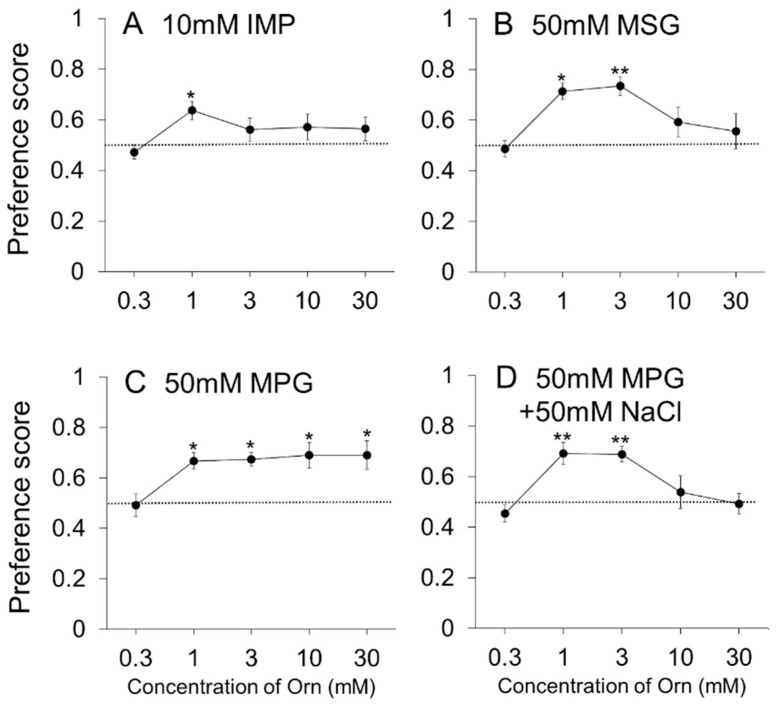
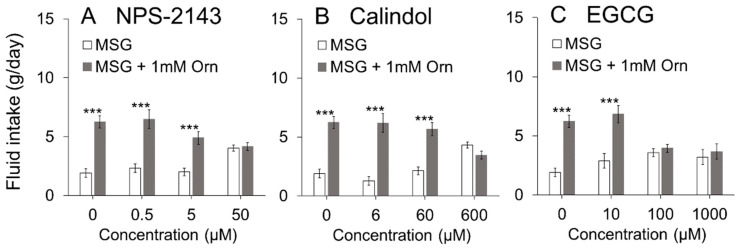
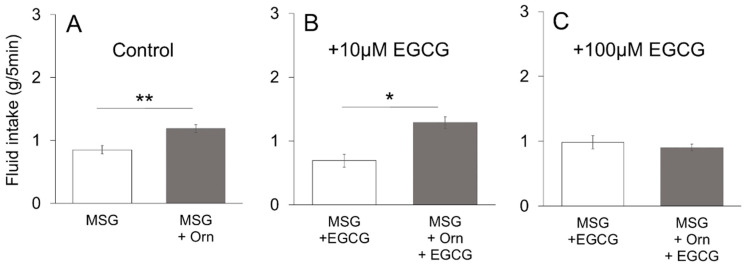
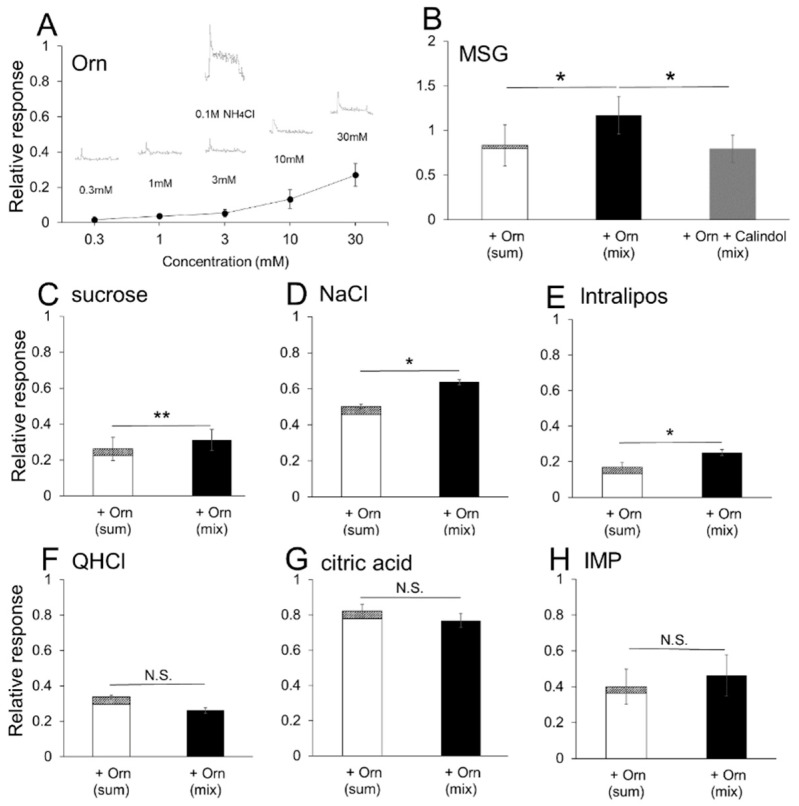
In addition to the taste receptors corresponding to the six basic taste qualities-sweet, salty, sour, bitter, umami, and fatty-another type of taste receptor, calcium-sensing receptor (CaSR), is found in taste-bud cells. CaSR is called the '' receptor because its agonists increase sweet, salty and umami tastes to induce '', a Japanese word meaning the enhancement of flavor characters such as thickness, mouthfulness, and continuity. is an important factor for enhancing food palatability. However, it is not well known whether other -receptors and substances exist. Here, we show that ornithine (L-ornithine but not D-ornithine) at low concentrations that do not elicit a taste of its own, enhances preferences to sweet, salty, umami, and fat taste solutions in mice. Increased preference to monosodium glutamate (MSG) was the most dominant effect. Antagonists of G-protein-coupled receptor family C group 6 subtype A (GPRC6A) abolished the additive effect of ornithine on MSG solutions. The additive effects of ornithine on taste stimuli are thought to occur in the oral cavity, and are not considered post-oral events because ornithine's effects were confirmed in a brief-exposure test. Moreover, the additive effects of ornithine and the action of the antagonist were verified in electrophysiological taste nerve responses. Immunohistochemical analysis implied that GPRC6A was expressed in subsets of type II and type III taste cells of mouse circumvallate papillae. These results are in good agreement with those reported for taste modulation involving CaSR and its agonists. The present study suggests that ornithine is a substance and GPRC6A is a newly identified receptor.
除了与六种基本味觉(甜、咸、酸、苦、鲜和脂肪)相对应的味觉受体之外,在味蕾细胞中还发现了另一种味觉受体,即钙感应受体(CaSR)。CaSR 之所以被称为“鲜味受体”,是因为其激动剂会增加甜味、咸味和鲜味,从而引起“鲜味增强”,这是一个日语词汇,意思是增强味道特征,如浓郁度、饱满度和持续性。鲜味增强是提高食物适口性的重要因素。然而,其他鲜味受体和物质是否存在尚不清楚。在这里,我们发现低浓度的鸟氨酸(L-鸟氨酸而不是 D-鸟氨酸)本身不会产生味道,但可以增强小鼠对甜味、咸味、鲜味和脂肪味溶液的偏好。对谷氨酸单钠(MSG)的偏好增加是最主要的效果。G 蛋白偶联受体家族 C 组 6 亚类 A(GPRC6A)的拮抗剂消除了鸟氨酸对 MSG 溶液的附加效果。鸟氨酸对味觉刺激的附加效果被认为发生在口腔中,并且不是口腔后的事件,因为在短暂暴露测试中证实了鸟氨酸的作用。此外,在味觉神经电生理反应中验证了鸟氨酸的附加效果和拮抗剂的作用。免疫组织化学分析表明,GPRC6A 在小鼠环状乳突的 II 型和 III 型味觉细胞亚群中表达。这些结果与涉及 CaSR 和其激动剂的味觉调节的报道非常吻合。本研究表明,鸟氨酸是一种鲜味物质,GPRC6A 是一种新发现的鲜味受体。