Department of Psychology, University of Alaska Anchorage, Anchorage, Alaska, USA.
Department of Psychology, Montana State University, Bozeman, Montana, USA.
Alcohol Clin Exp Res. 2021 Nov;45(11):2309-2321. doi: 10.1111/acer.14703. Epub 2021 Nov 27.
Belief in the myth of an American Indian/Alaska Native (AIAN)-specific biological vulnerability (BV) to alcohol problems is associated with worse alcohol outcomes among AIAN college students who drink, despite also being associated with greater attempts to reduce drinking. This study examined the association of belief in a BV with alcohol use among reservation-dwelling AI adults with a substance use problem.
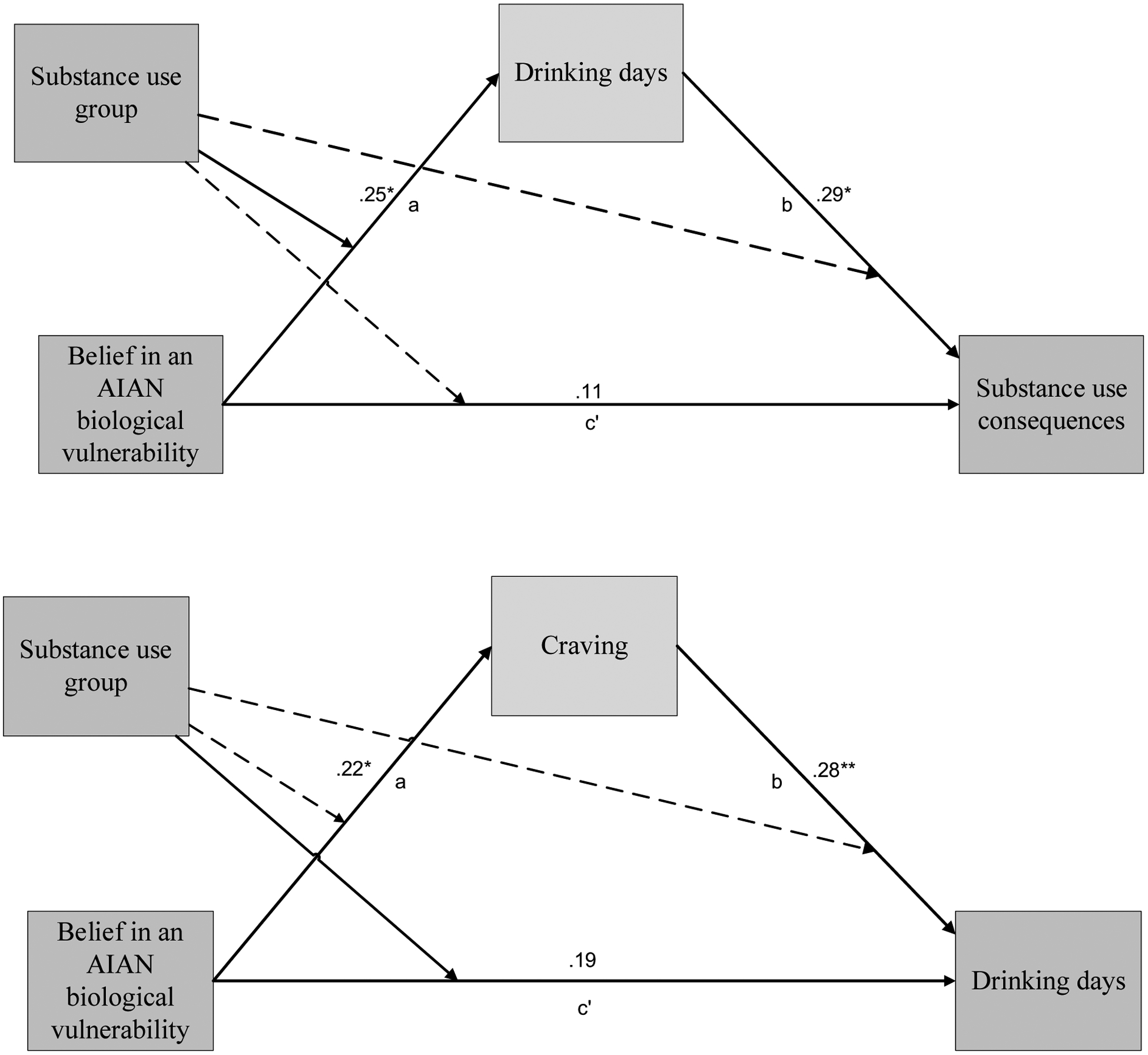
Participants (n = 141) who drank alcohol in the past 90 days were selected from a larger AI sample who self-identified as having a substance use problem. Moderated-mediation analyses examined whether belief in a BV was positively associated with alcohol- and substance use-related consequences and whether self-efficacy and craving mediated the association of belief in a BV with alcohol use.
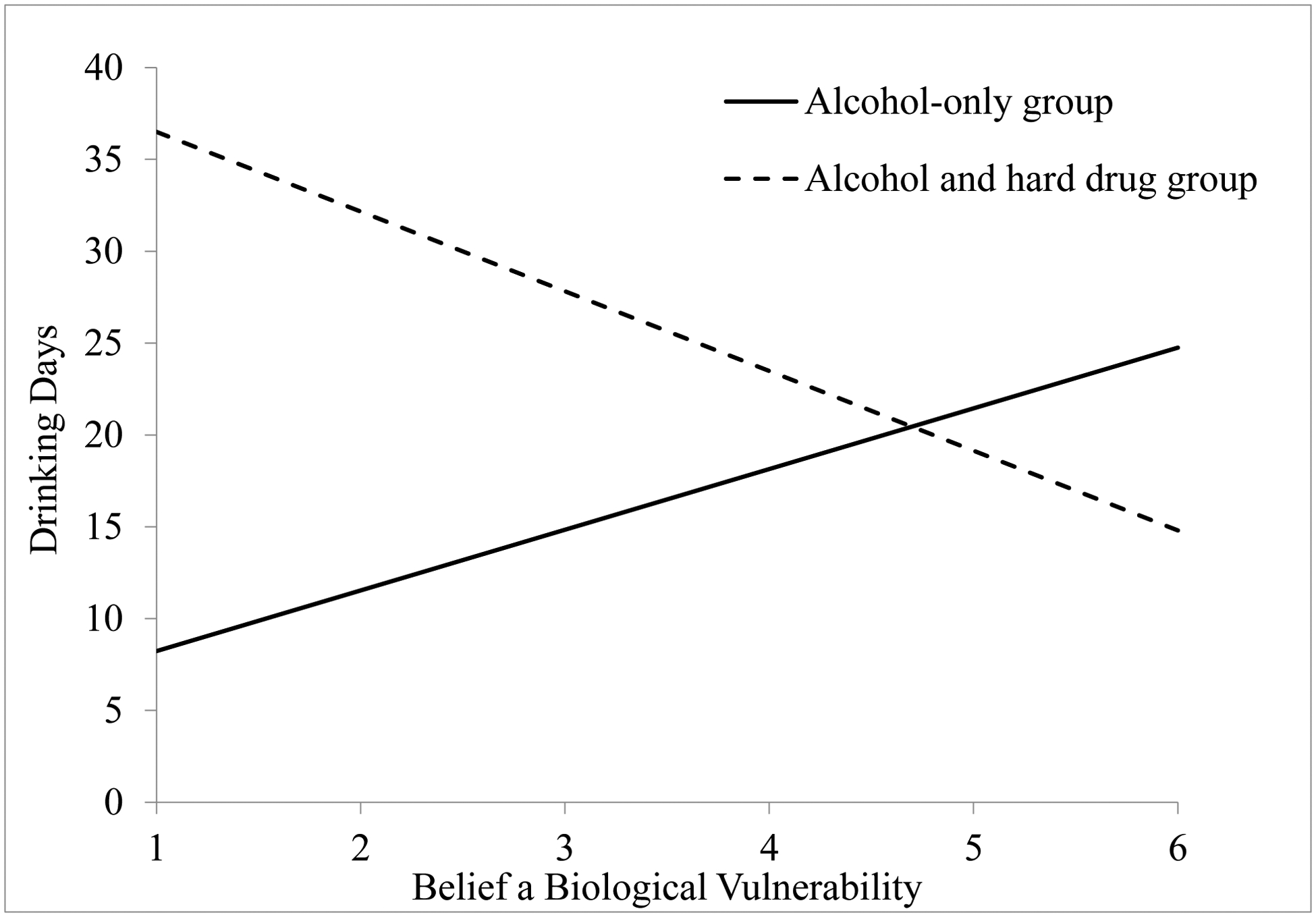
Among participants who reported using alcohol but not hard drugs (e.g., methamphetamine, opioids), greater belief in a BV was associated with more drinking days, which in turn was associated with greater alcohol-related consequences. Among participants who used alcohol only, belief in a BV was also significantly associated with greater craving, and in turn with more drinking days. Among individuals who used both alcohol and hard drugs, greater belief in a BV was associated with fewer drinking days, but was not significantly associated with substance use-related consequences. No association was found between belief in a BV and self-efficacy to avoid alcohol or drug use.
Among individuals who use only alcohol, belief in a BV may contribute to more drinking days and greater alcohol-related consequences through its association with greater craving. This study provides further evidence of the potential harm of internalizing the belief that being AIAN contributes to the risk for alcohol problems, a notion that lacks scientific evidence despite decades of research. The findings highlight the importance of combating societal myths regarding AIAN peoples and the internalization of these stereotypes.
尽管相信原住民(AI)具有特定的生物学脆弱性(BV)易患酒精问题与减少饮酒的尝试增加有关,但相信这种生物脆弱性与饮酒的 AI 大学生的酒精相关结果较差有关。本研究调查了相信 BV 与居住在保留地的有物质使用问题的 AI 成年人饮酒之间的关联。
从自我报告过去 90 天内饮酒的更大的 AI 样本中选择了过去 90 天内饮酒的参与者(n=141)。调节中介分析检验了相信 BV 是否与酒精和物质使用相关的后果呈正相关,以及自我效能感和渴望是否中介了相信 BV 与饮酒的关联。
在报告使用酒精但不使用硬性毒品(例如,冰毒,阿片类药物)的参与者中,相信 BV 的程度越高,饮酒天数越多,这反过来又与更多的酒精相关后果相关。在仅使用酒精的参与者中,相信 BV 也与更大的渴望显著相关,反过来又与更多的饮酒天数相关。在同时使用酒精和硬性毒品的个体中,相信 BV 的程度越高,饮酒天数越少,但与物质使用相关的后果没有显著关联。相信 BV 与避免使用酒精或毒品的自我效能之间没有关联。
在仅使用酒精的个体中,相信 BV 可能会通过与更大的渴望相关联,导致更多的饮酒天数和更大的酒精相关后果。这项研究提供了进一步的证据,证明内化 AI 具有易患酒精问题的风险的信念可能会造成潜在的危害,尽管几十年的研究表明,这种观念缺乏科学依据。研究结果强调了打击有关 AI 人民的社会神话和内化这些刻板印象的重要性。