Department of Veterinary Medicine, University of Cambridge, Cambridge, United Kingdom.
Department of Zoology, University of Oxford, Oxford, United Kingdom.
PLoS Pathog. 2021 Nov 29;17(11):e1010075. doi: 10.1371/journal.ppat.1010075. eCollection 2021 Nov.
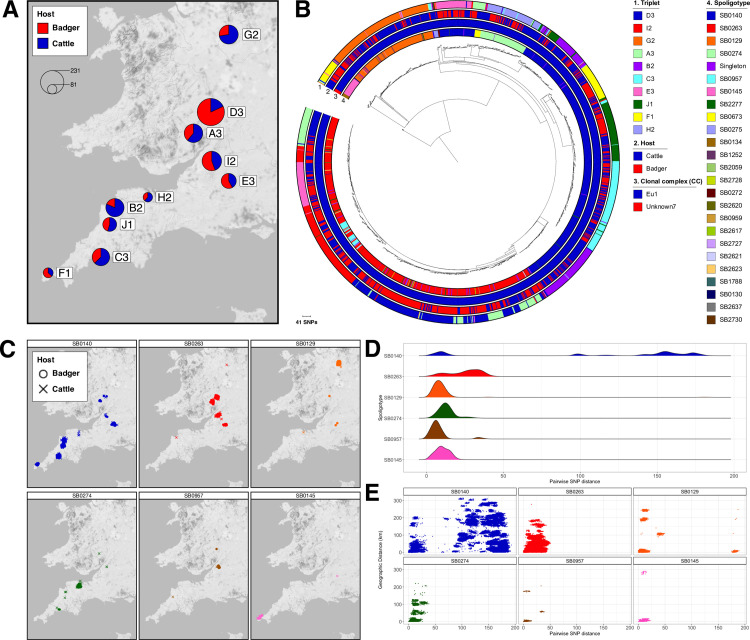
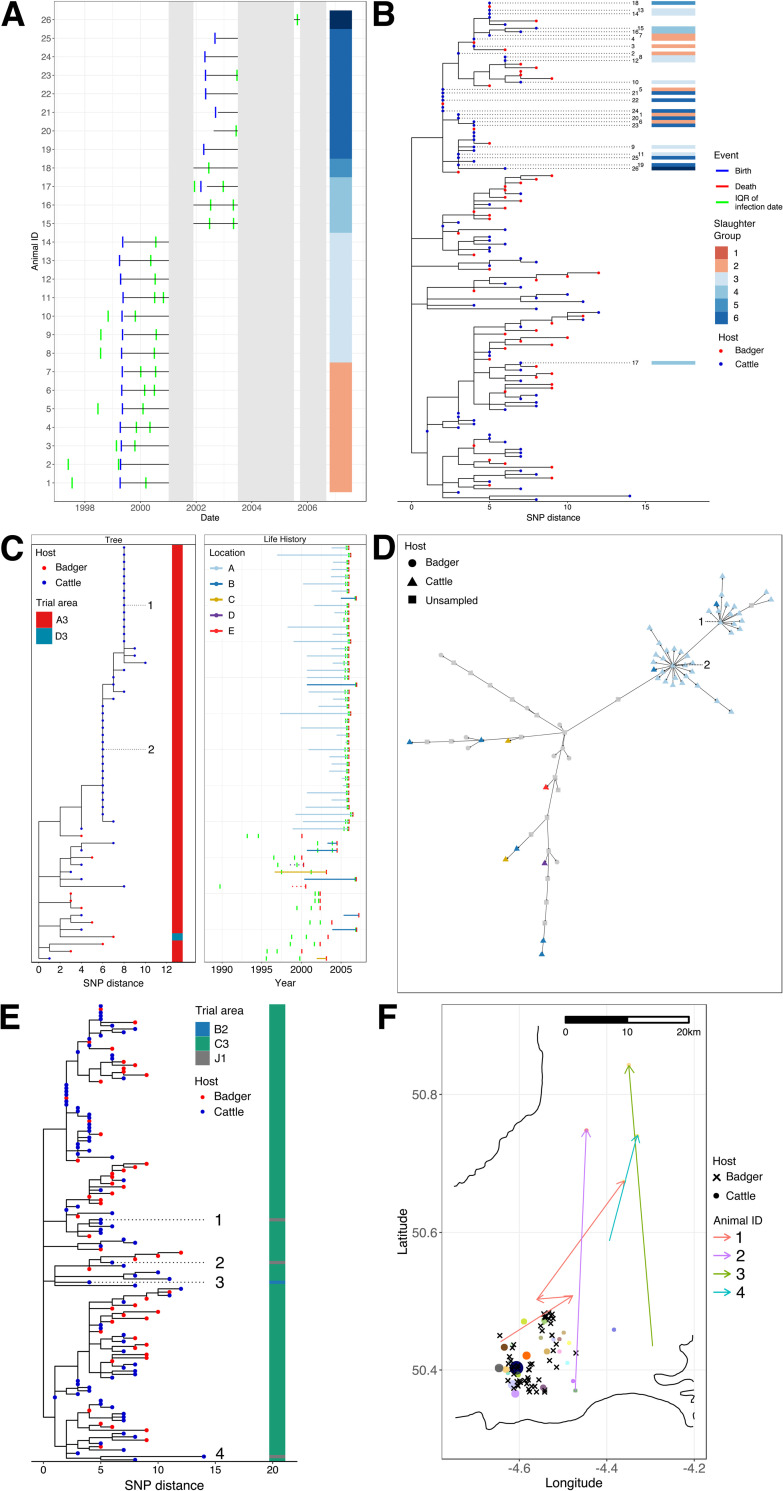
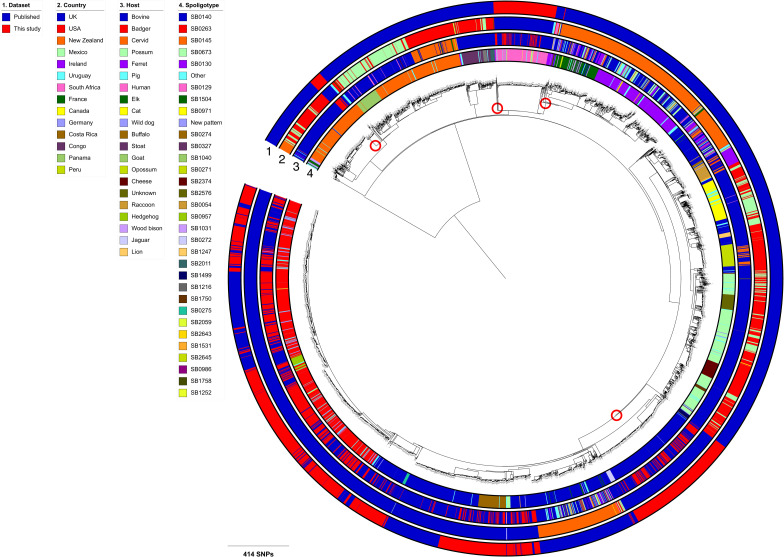
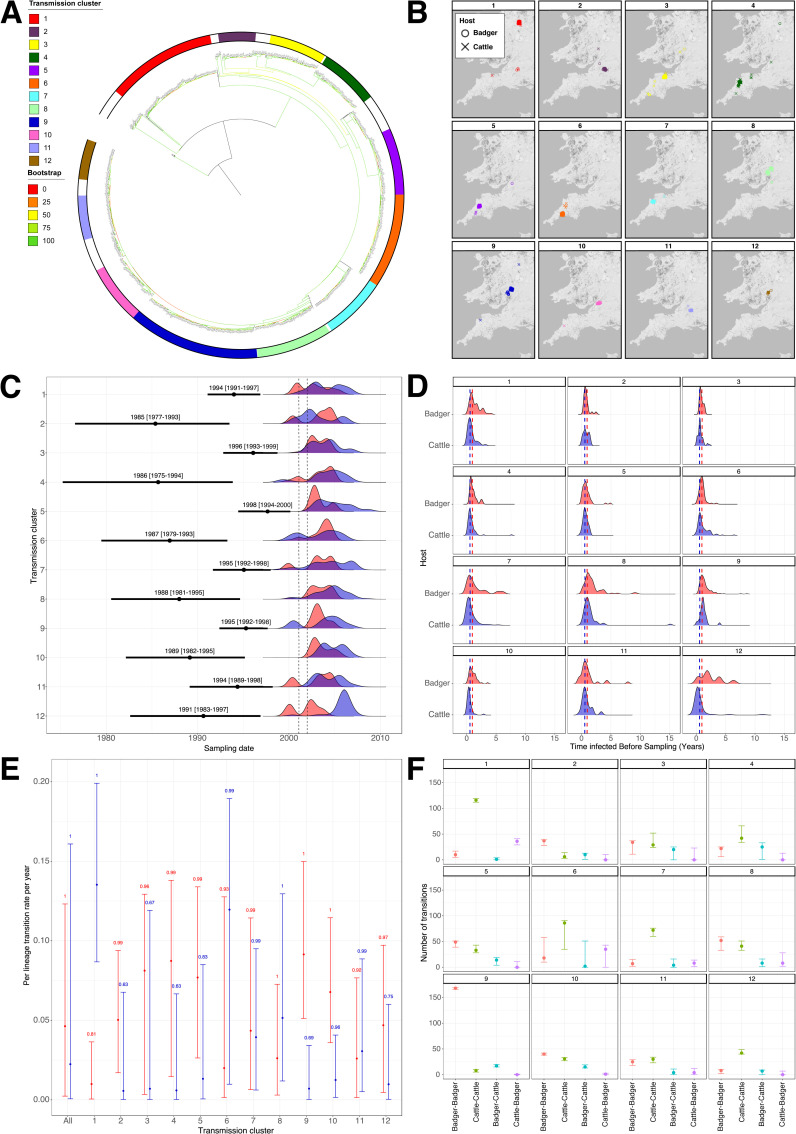
Mycobacterium bovis (M. bovis) is a causative agent of bovine tuberculosis, a significant source of morbidity and mortality in the global cattle industry. The Randomised Badger Culling Trial was a field experiment carried out between 1998 and 2005 in the South West of England. As part of this trial, M. bovis isolates were collected from contemporaneous and overlapping populations of badgers and cattle within ten defined trial areas. We combined whole genome sequences from 1,442 isolates with location and cattle movement data, identifying transmission clusters and inferred rates and routes of transmission of M. bovis. Most trial areas contained a single transmission cluster that had been established shortly before sampling, often contemporaneous with the expansion of bovine tuberculosis in the 1980s. The estimated rate of transmission from badger to cattle was approximately two times higher than from cattle to badger, and the rate of within-species transmission considerably exceeded these for both species. We identified long distance transmission events linked to cattle movement, recurrence of herd breakdown by infection within the same transmission clusters and superspreader events driven by cattle but not badgers. Overall, our data suggests that the transmission clusters in different parts of South West England that are still evident today were established by long-distance seeding events involving cattle movement, not by recrudescence from a long-established wildlife reservoir. Clusters are maintained primarily by within-species transmission, with less frequent spill-over both from badger to cattle and cattle to badger.
牛分枝杆菌(M. bovis)是牛结核病的病原体,是全球牛业中发病率和死亡率的重要来源。随机化獾群扑杀试验是 1998 年至 2005 年在英格兰西南部进行的一项现场试验。作为该试验的一部分,从十个定义明确的试验区域中同时存在的獾和牛的同期和重叠种群中收集了 M. bovis 分离株。我们将 1442 个分离株的全基因组序列与位置和牛群移动数据相结合,确定了 M. bovis 的传播簇,并推断了其传播的速率和途径。大多数试验区域都包含一个单一的传播簇,该簇在采样前不久就已经建立,通常与 20 世纪 80 年代牛结核病的扩张同时发生。从獾到牛的估计传播速率约为从牛到獾的两倍,而种内传播的速率远远超过这两种物种。我们确定了与牛群移动有关的长距离传播事件、同一传播簇内的牛群因感染而再次暴发以及由牛而不是獾引起的超级传播事件。总的来说,我们的数据表明,今天仍然存在于英格兰西南部不同地区的传播簇是由涉及牛群移动的远距离播种事件建立的,而不是由长期存在的野生动物库中复发引起的。簇主要通过种内传播来维持,从獾到牛和从牛到獾的溢出传播频率较低。