Department of Microbiology and Infectious Disease Center, School of Basic Medical Sciences, Peking University Health Science Center, 38 Xueyuan Road, Haidian District, Beijing, 100083, China.
Jiangsu Provincial Center for Disease Control and Prevention, Nanjing, 210009, China.
Virol J. 2021 Nov 29;18(1):236. doi: 10.1186/s12985-021-01707-9.
Previous works have observed that younger infants with chronic hepatitis B virus (HBV) infection are more responsive to antiviral treatment. However, the underlying mechanism remains unclear. In this study, the dynamic changes of HBV quasispecies in infants with immunoprophylaxis failure were investigated to provide virological explanations for clinical management on infantile antiviral therapy.
Thirteen 7-month-old infants with immunoprophylaxis failure and their mothers were enrolled from a prospective cohort, and 8 of them were followed up to 3 years old. The sequences of HBV quasispecies were analyzed by the full-length genome clone-based sequencing, and compared among mothers and their infants at different ages.
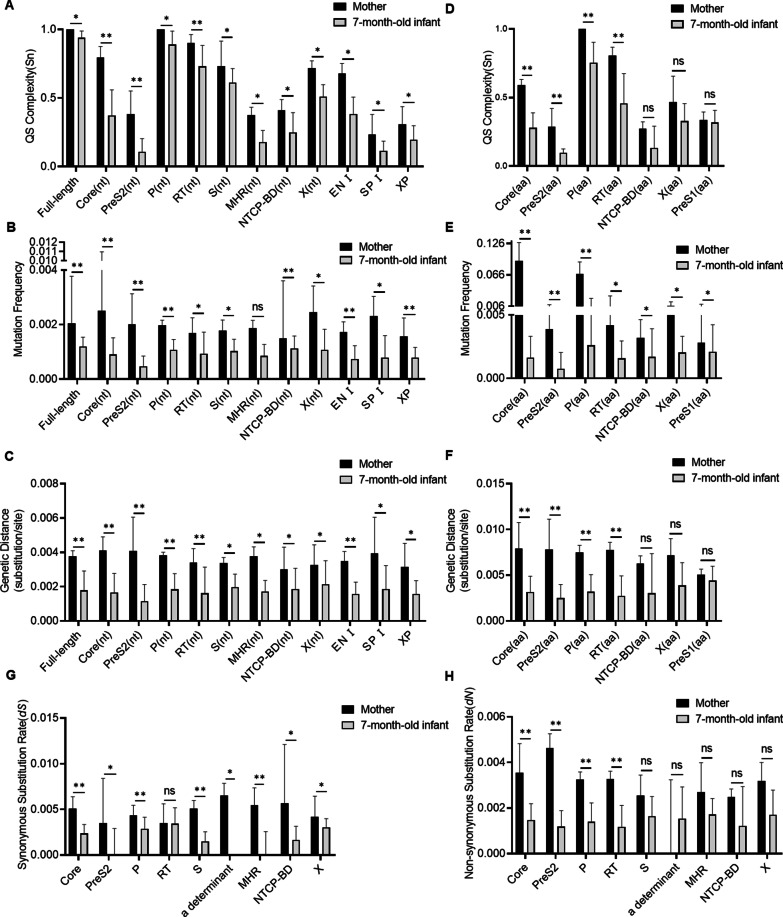
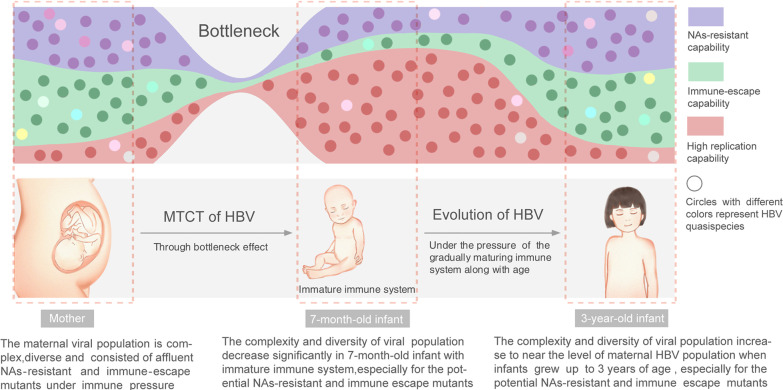
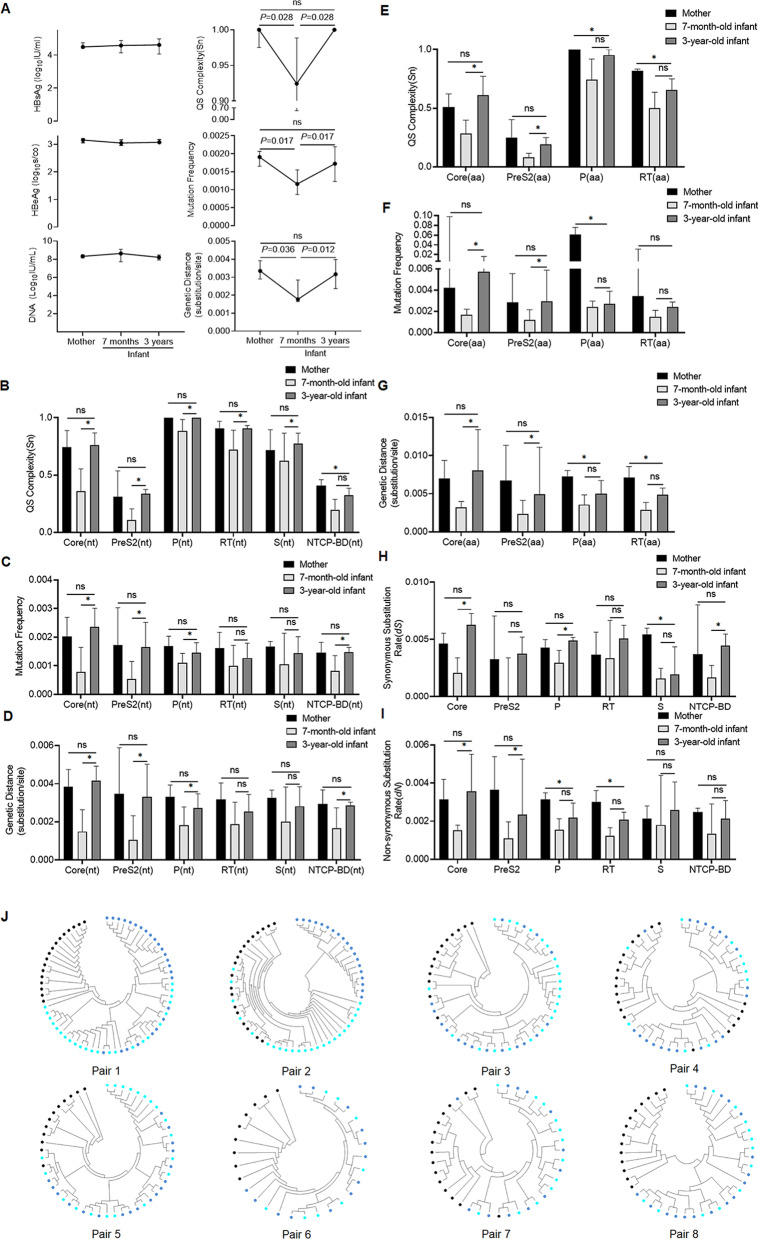
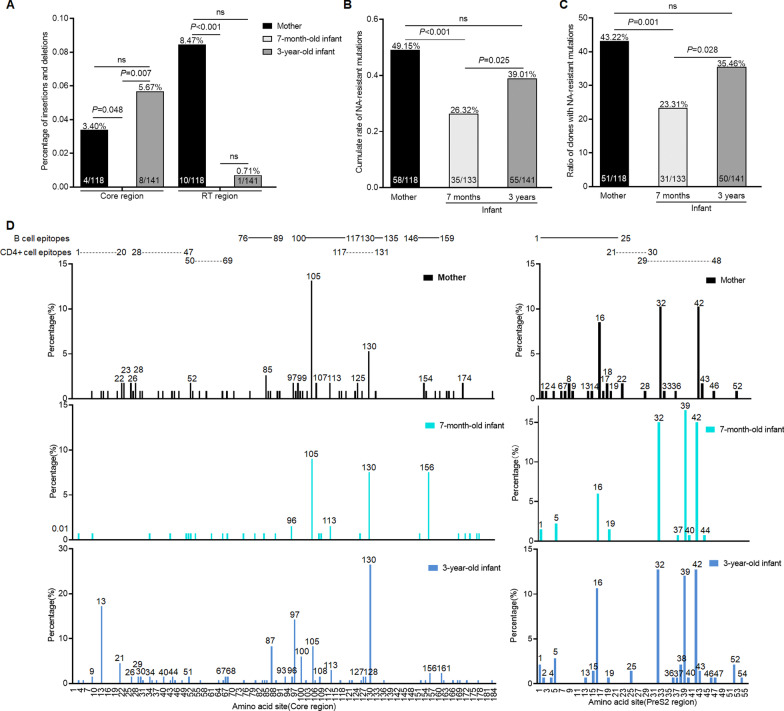
The results revealed that the complexity, mutation frequency and genetic distance of HBV quasispecies decreased significantly at full-length, partial open reading frames and regulatory regions of HBV genome at nucleotide level in 7-month-old infants comparing with their mothers, whereas increased significantly to near the maternal level when infants grew up to 3 years old. Furthermore, similar changes were also found in Core, PreS2, RT and P regions of HBV genome at amino acid level, especially for potential NAs-resistant mutants in RT region and immune-escape mutants in Core and PreS2 regions.
This study uncovered the evolution of HBV quasispecies in infancy after mother-to-child transmission, which may provide the virological evidence for explaning that younger children are more responsive to antiviral therapy.
先前的研究观察到,慢性乙型肝炎病毒(HBV)感染的婴幼儿对抗病毒治疗的反应性更强。然而,其潜在机制尚不清楚。本研究旨在通过对免疫预防失败婴儿的 HBV 准种进行动态分析,为婴幼儿抗病毒治疗的临床管理提供病毒学解释。
从前瞻性队列中招募了 13 名 7 月龄免疫预防失败的婴儿及其母亲,其中 8 名婴儿随访至 3 岁。采用全长基因组克隆测序法分析 HBV 准种序列,并比较不同年龄时母婴间 HBV 准种的差异。
结果显示,与母亲相比,7 月龄婴儿的 HBV 全长、部分开放阅读框和调控区核苷酸水平的 HBV 准种的复杂度、突变频率和遗传距离明显降低,当婴儿长至 3 岁时则显著升高,接近母亲的水平。在 HBV 基因组的 Core、PreS2、RT 和 P 区的氨基酸水平上也观察到了类似的变化,尤其是 RT 区的潜在 NAs 耐药突变体和 Core 和 PreS2 区的免疫逃逸突变体。
本研究揭示了母婴传播后婴幼儿期 HBV 准种的进化,这可能为解释为什么年幼的儿童对抗病毒治疗的反应性更强提供病毒学证据。