Poplawska Maria, Dutta Dibyendu, Lee Yichun, Lim Seah H
Division of Hematology and Oncology, Department of Medicine, SUNY Downstate Health Sciences University, Brooklyn, NY, USA.
Division of Gynecologic Oncology, Department of Obstetrics and Gynecology, SUNY Downstate Health Sciences University, Brooklyn, NY, USA.
Mol Ther Oncolytics. 2021 Oct 28;23:378-386. doi: 10.1016/j.omto.2021.10.010. eCollection 2021 Dec 17.
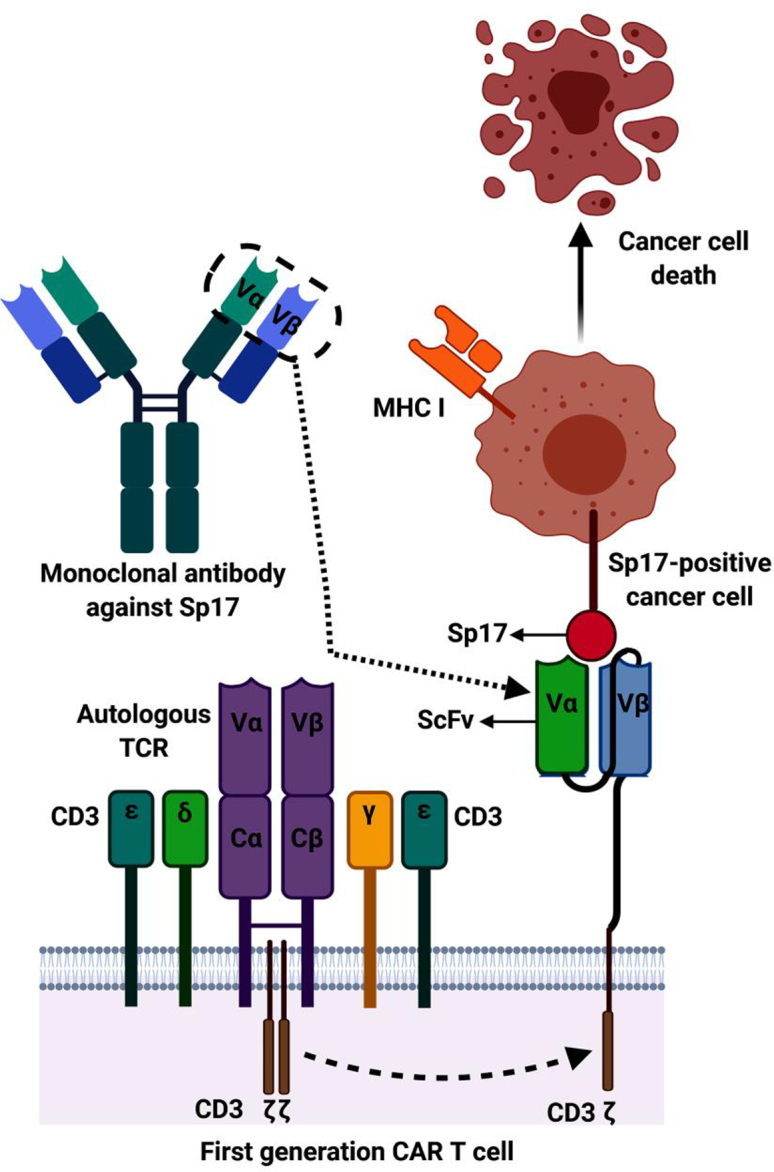
Due to the vague symptomatology of the disease and a lack of effective screening methods, most patients with epithelial ovarian cancer (EOC) present late in their disease. Despite advances in chemotherapeutic agents, the prognosis of these patients has uniformly been extremely poor. Although cisplatin-based chemotherapy regimens induce responses in most of these patients, the patients invariably experience disease progression or relapses. In an attempt to improve the treatment outcome using a different therapeutic approach, immunotherapy was investigated nearly 20 years ago. Many tumor antigens that are potentially suitable for specific immunotherapy were identified, and many immunotherapeutic approaches were attempted. However, although some responses were observed, the results from clinical studies were generally disappointing. Recent advances in immunoengineering and successes observed among patients treated for refractory/relapsed hematologic malignancies have rekindled the interest to revisit specific cellular immunotherapy in EOC. In this review, we provide the rationale for immunotherapy of EOC, discuss the results of some of the historical studies on the use of cellular immunotherapy in EOC, outline the principles of modern immunoengineering that could be applied to treat the disease, and propose the re-evaluation of the cancer-testis antigen, Sperm protein 17, for targeting by using modern immunoengineering technology.
由于该疾病的症状不明确且缺乏有效的筛查方法,大多数上皮性卵巢癌(EOC)患者在疾病晚期才出现症状。尽管化疗药物有所进展,但这些患者的预后一直非常差。虽然基于顺铂的化疗方案能使大多数此类患者产生反应,但患者最终总会出现疾病进展或复发。为了尝试通过不同的治疗方法改善治疗效果,大约20年前就对免疫疗法进行了研究。确定了许多可能适用于特异性免疫疗法的肿瘤抗原,并尝试了多种免疫治疗方法。然而,尽管观察到了一些反应,但临床研究结果总体上令人失望。免疫工程学的最新进展以及在难治性/复发性血液系统恶性肿瘤患者中观察到的成功,重新激发了人们对重新审视EOC中特异性细胞免疫疗法的兴趣。在这篇综述中,我们阐述了EOC免疫治疗的基本原理,讨论了一些关于EOC中使用细胞免疫疗法的历史研究结果,概述了可用于治疗该疾病的现代免疫工程学原理,并提议通过使用现代免疫工程技术重新评估癌症睾丸抗原精子蛋白17作为治疗靶点。