Therapeutic Drug Monitoring Center, Bagdad Teaching Hospital, Mosul, Iraq.
Department of Clinical Pharmacy, Welfare Teaching Hospital, Mosul, Iraq.
Indian J Pharmacol. 2021 Sep-Oct;53(5):364-370. doi: 10.4103/ijp.ijp_881_20.
The purpose of this research was to determine the effectiveness of Pentaglobin® as adjuvant therapy in the treatment of sepsis in preterm newborns.
It was a prospective, observational, randomized study for 272 premature neonates and very low birth weight (VLBW) that were diagnosed with sepsis carried at neonatal intensive care units. The patients randomized into control group who received standard sepsis antibiotic treatments, and an intervention group who received Pentaglobin® 5 ml/kg daily for 3 consecutive days as an adjunct therapy to a standard sepsis antibiotic treatment.
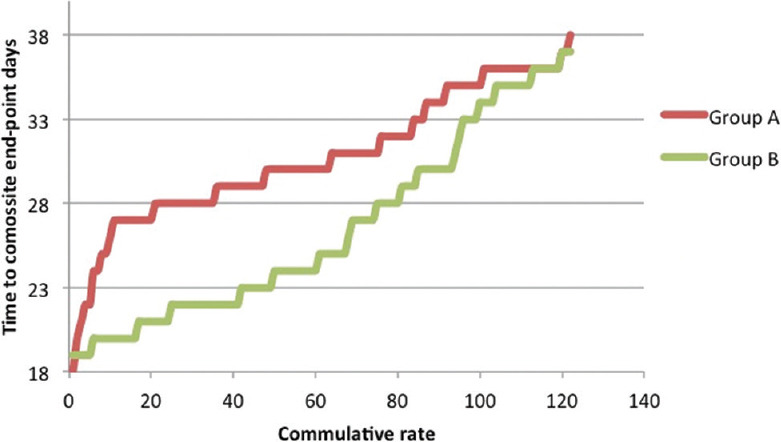
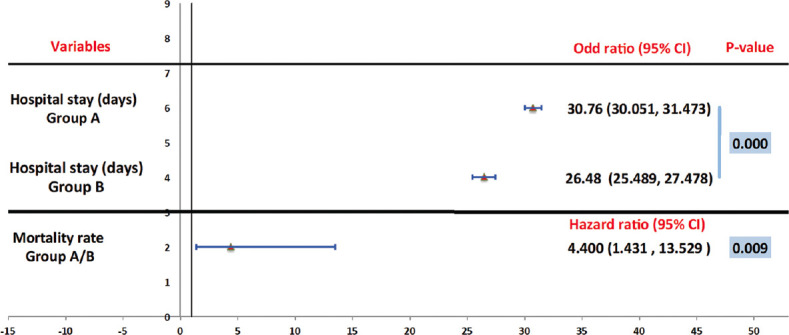
Multiple organisms that isolated from culture specimens were Gram-negative bacteria, Gram-positive, and candida (56.25%, 42.28%, and 1.47%, respectively). The disease duration was distinctively longer in patients who were treated by the standard antibiotic protocol (mean ± standard deviation [SD]: 30.76 ± 3.97, odds ratio [OR]: 30.76, 95% confidence interval [CI]: 30.051, 31.473) comparing to the patients who received Pentaglobin adjuvant therapy (mean ± SD: 26.48 ± 5.55, OR: 26.48, 95% CI: 25.489, 27.477) (P < 0.000). Patients treated by standard antibiotic protocol were associated to a substantially increased risk of death (11.76%, hazard ratio 4.400, 95% CI: 1.432, 13.529, P = 0.009).
Neonatal sepsis is more common in premature and VLBW newborns, and Pentaglobin® management of newborn nosocomial sepsis might be used in addition to other therapies.
本研究旨在确定 Pentaglobin®作为辅助疗法在治疗早产儿败血症中的疗效。
这是一项前瞻性、观察性、随机研究,共纳入 272 例在新生儿重症监护病房诊断为败血症的早产儿和极低出生体重儿(VLBW)。患者随机分为对照组,接受标准败血症抗生素治疗;干预组接受 Pentaglobin® 5ml/kg,每日 1 次,连续 3 天,作为标准败血症抗生素治疗的辅助治疗。
从培养标本中分离出的多种病原体为革兰氏阴性菌、革兰氏阳性菌和念珠菌(分别为 56.25%、42.28%和 1.47%)。接受标准抗生素方案治疗的患者的疾病持续时间明显长于接受 Pentaglobin 辅助治疗的患者(平均±标准差[SD]:30.76±3.97,比值比[OR]:30.76,95%置信区间[CI]:30.051,31.473)(P<0.000)。接受标准抗生素方案治疗的患者死亡风险显著增加(11.76%,危险比 4.400,95%CI:1.432,13.529,P=0.009)。
新生儿败血症在早产儿和极低出生体重儿中更为常见,Pentaglobin®管理新生儿医院获得性败血症可能与其他治疗方法联合使用。