Myall Nathaniel J, Yu Helena, Soltys Scott G, Wakelee Heather A, Pollom Erqi
Division of Oncology, Department of Medicine, Stanford Cancer Institute, Palo Alto, California, USA.
Department of Medicine-Oncology, Memorial Sloan Kettering Cancer Center, New York City, New York, USA.
Neurooncol Adv. 2021 Nov 27;3(Suppl 5):v52-v62. doi: 10.1093/noajnl/vdab106. eCollection 2021 Nov.
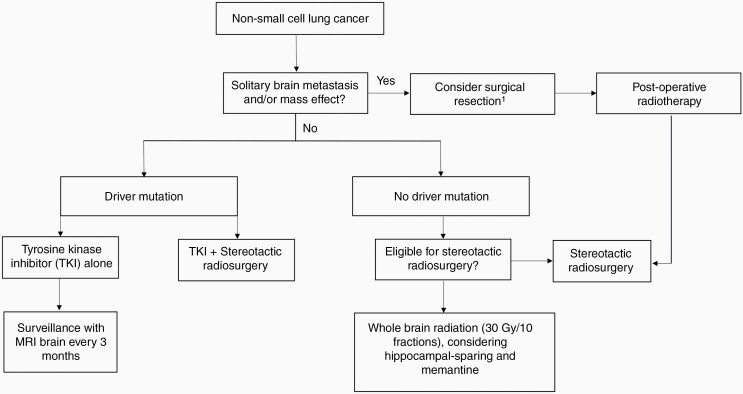
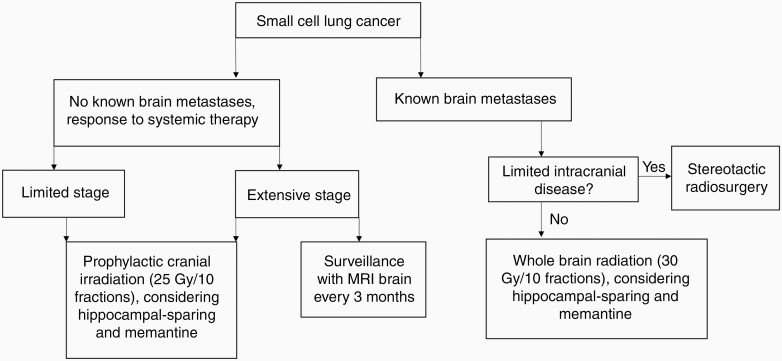
Brain metastases are a common occurrence in both non-small cell and small cell lung cancer with the potential to affect quality of life and prognosis. Due to concerns about the accessibility of the central nervous system by systemic chemotherapy agents, the management of brain metastases has historically relied on local therapies including surgery and radiation. However, novel targeted and immune therapies that improve overall outcomes in lung cancer have demonstrated effective intracranial activity. As a result, the management of brain metastases in lung cancer has evolved, with both local and systemic therapies now playing an important role. Factors such as tumor histology (non-small versus small cell), oncogenic driver mutations, and symptom burden from intracranial disease impact treatment decisions. Here, we review the current management of brain metastases in lung cancer, highlighting the roles of stereotactic radiosurgery and novel systemic therapies as well as the ongoing questions that remain under investigation.
脑转移在非小细胞肺癌和小细胞肺癌中都很常见,有可能影响生活质量和预后。由于担心全身化疗药物对中枢神经系统的可达性,脑转移的治疗历来依赖于包括手术和放疗在内的局部治疗。然而,在肺癌中改善总体预后的新型靶向治疗和免疫治疗已显示出有效的颅内活性。因此,肺癌脑转移的治疗已经发生了演变,局部和全身治疗现在都发挥着重要作用。肿瘤组织学(非小细胞与小细胞)、致癌驱动基因突变以及颅内疾病的症状负担等因素会影响治疗决策。在此,我们综述了肺癌脑转移的当前治疗方法,重点介绍立体定向放射外科和新型全身治疗的作用以及仍在研究中的未决问题。