Tang Xiaolei, Lu Jing, Chen Haoyuan, Zhai Lu, Zhang Yuxin, Lou Huijuan, Wang Yufeng, Sun Liwei, Song Bailin
Research Center of Traditional Chinese Medicine, the Affiliated Hospital of Changchun University of Chinese Medicine, Changchun, China.
College of Traditional Chinese Medicine, Changchun University of Chinese Medicine, Changchun, China.
Front Pharmacol. 2021 Nov 16;12:760503. doi: 10.3389/fphar.2021.760503. eCollection 2021.
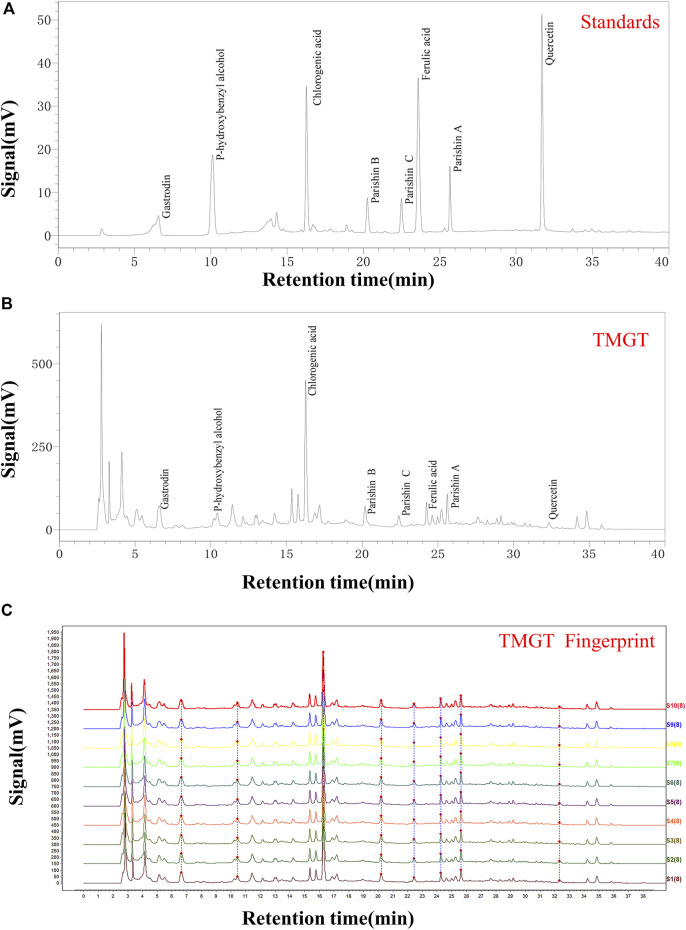
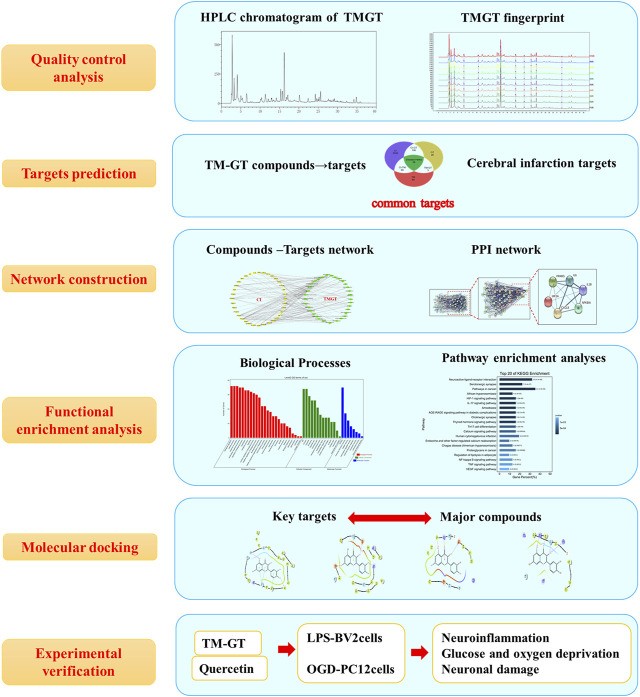
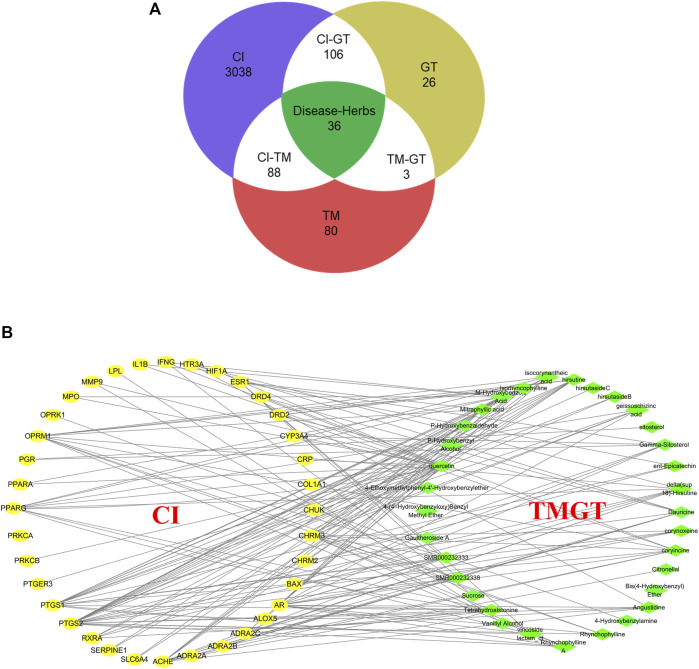
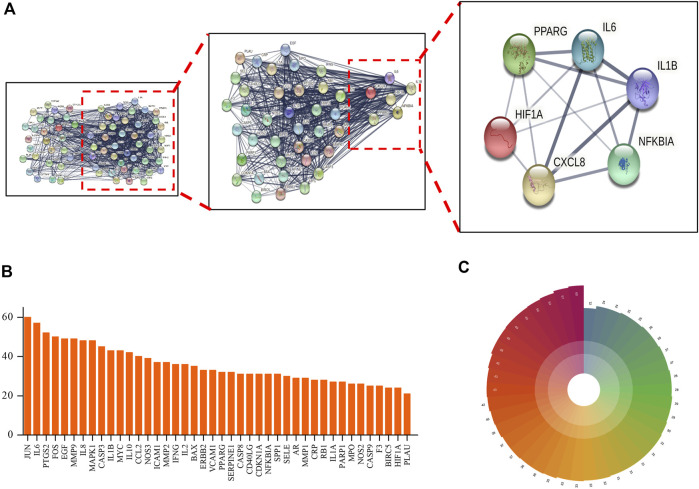
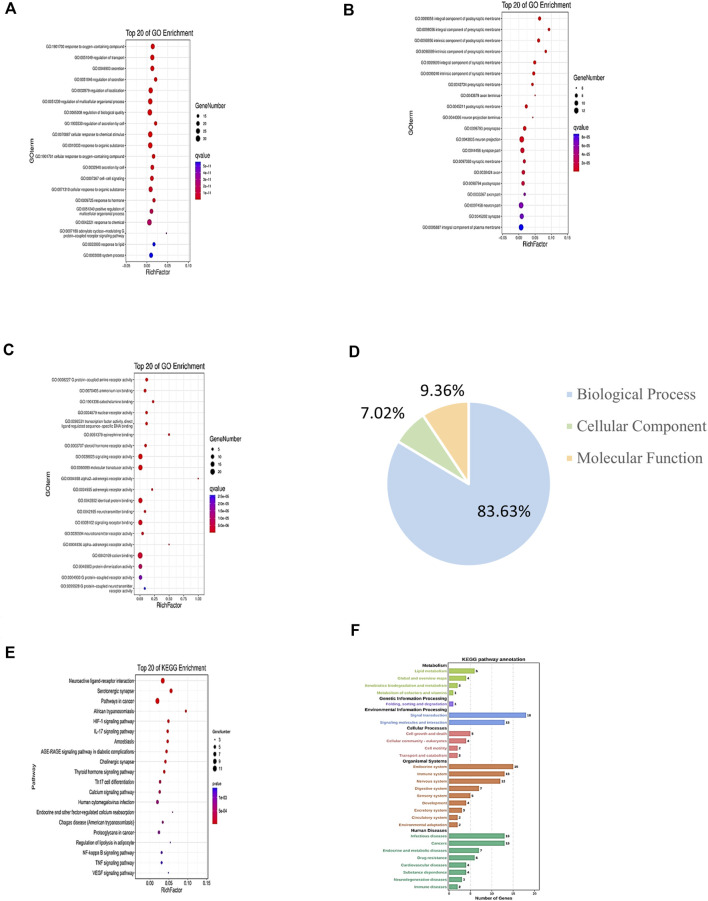
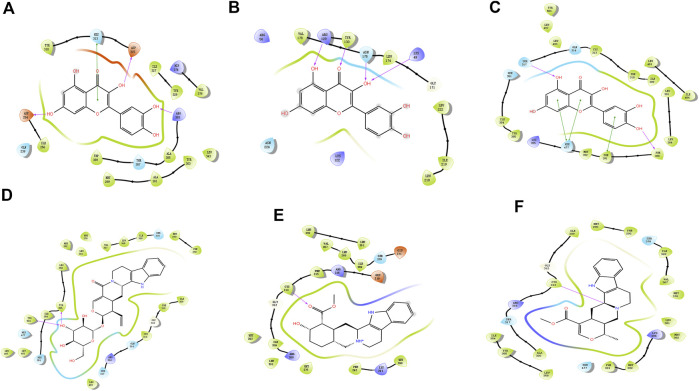
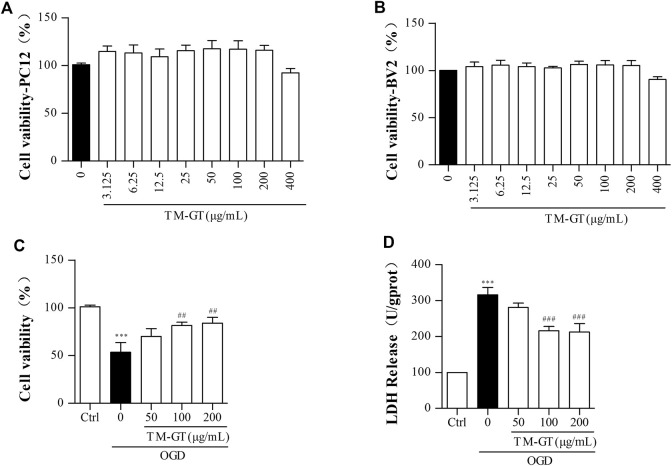
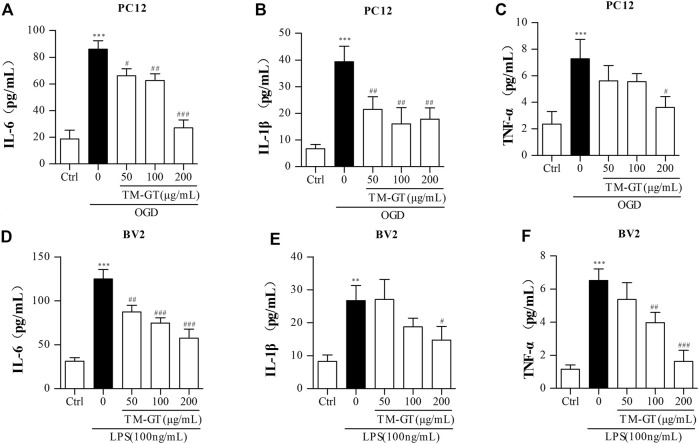
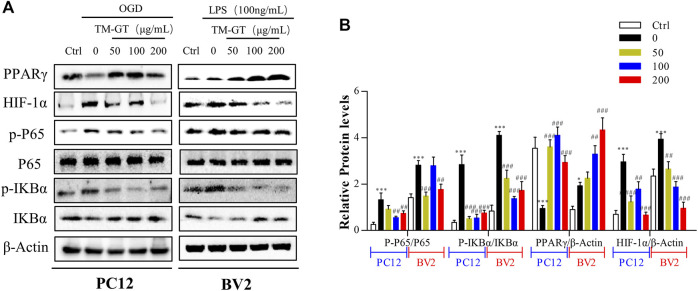
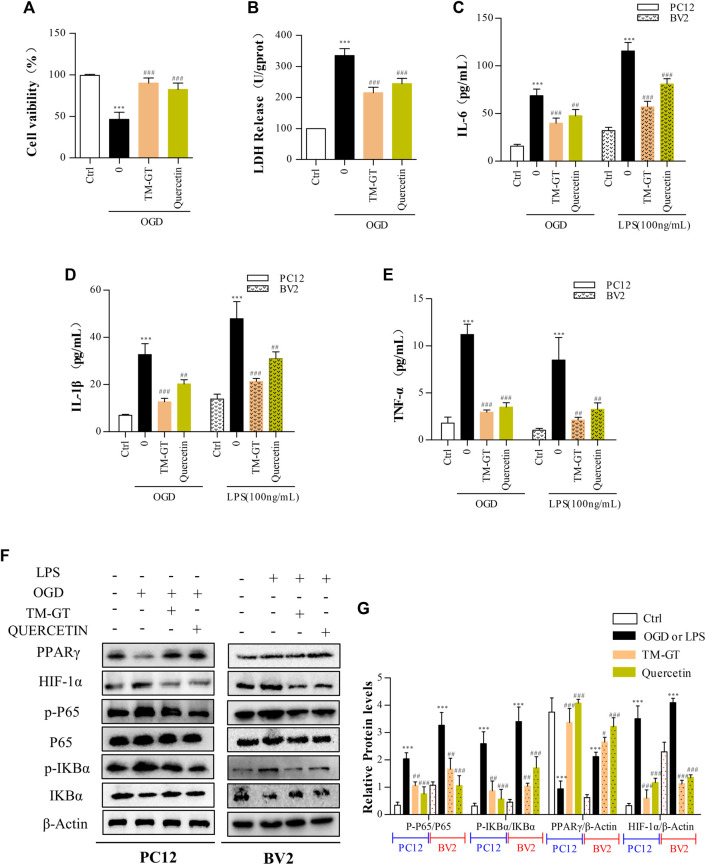
Cerebral infarction (CI), a common cerebrovascular disease worldwide, is caused by unknown factors common to many diseases, including hypokalemia, respiratory diseases, and lower extremity venous thrombosis. Tianma Gouteng (TMGT), a traditional Chinese Medicine (TCM) prescription, has been used for the clinical treatment of CI. In this study, high-performance liquid chromatography (HPLC) fingerprint analysis was used to detect and identify major chemical constituents of TMGT. TCMSP and BATMAN-TCM databases were used to screen for active TMGT constituent compounds, while the GeneCards database was used to screen for protein targets associated with CI. Next, GO and KEGG enrichment analysis of these core nodes were performed to determine the identities of key associated biological processes and signal pathways. Meanwhile, a total of six possible gene targets of TMGT, including NFKBIA, PPARG, IL6, IL1B, CXCL8, and HIF1A, were selected for further study using two cellular models of CI. For one model, PC12 cells were treated under oxygen and glucose deprivation (OGD) conditions to generate an OGD cellular model of CI, while for the other model, BV2 cells were stimulated with lipopolysaccharide (LPS) to generate a cellular model of CI-associated inflammation. Ultimately TMGT treatment increased PPARγ expression and downregulated the expression of p-P65, p-IκBα, and HIF-1α in both OGD-induced and LPS-induced cell models of CI. In addition, molecular docking analysis showed that one TMGT chemical constituent, quercetin, may be a bioactive TMGT compound with activity that may be associated with the alleviation of neuronal damage and neuroinflammation triggered by CI. Moreover, additional data obtained in this work revealed that TMGT could inhibit neuroinflammation and protect brain cells from OGD-induced and LPS-induced damage by altering HIF-1α/PPARγ/NF-κB pathway functions. Thus, targeting this pathway through TMGT administration to CI patients may be a strategy for alleviating nerve injury and neuroinflammation triggered by CI.
脑梗死(CI)是一种全球常见的脑血管疾病,由多种疾病共有的未知因素引起,包括低钾血症、呼吸系统疾病和下肢静脉血栓形成。天麻钩藤(TMGT)是一种中药方剂,已用于CI的临床治疗。在本研究中,采用高效液相色谱(HPLC)指纹图谱分析来检测和鉴定TMGT的主要化学成分。利用中药系统药理学数据库与分析平台(TCMSP)和中药系统生物学分析平台(BATMAN-TCM)数据库筛选TMGT的活性成分化合物,同时利用基因卡片(GeneCards)数据库筛选与CI相关的蛋白质靶点。接下来,对这些核心节点进行基因本体(GO)和京都基因与基因组百科全书(KEGG)富集分析,以确定关键相关生物学过程和信号通路的身份。同时,使用两种CI细胞模型,选择了TMGT总共六个可能的基因靶点,包括NFKBIA、PPARG、IL6、IL1B、CXCL8和HIF1A进行进一步研究。对于一种模型,将PC12细胞在氧糖剥夺(OGD)条件下处理以生成CI的OGD细胞模型,而对于另一种模型,用脂多糖(LPS)刺激BV2细胞以生成CI相关炎症的细胞模型。最终,在OGD诱导和LPS诱导的CI细胞模型中,TMGT治疗均增加了PPARγ表达,并下调了p-P65、p-IκBα和HIF-1α的表达。此外,分子对接分析表明,TMGT的一种化学成分槲皮素可能是一种具有生物活性的TMGT化合物,其活性可能与减轻CI引发的神经元损伤和神经炎症有关。此外,这项工作中获得的其他数据表明,TMGT可以通过改变HIF-1α/PPARγ/NF-κB信号通路功能来抑制神经炎症,并保护脑细胞免受OGD诱导和LPS诱导的损伤。因此,通过对CI患者施用TMGT来靶向该信号通路可能是减轻CI引发的神经损伤和神经炎症的一种策略。