Vlaams Instituut voor Biotechnologie (VIB)-UGent Center for Medical Biotechnology, VIB, Ghent, Belgium.
Department of Biochemistry and Microbiology, Ghent University, Ghent, Belgium.
Front Immunol. 2021 Nov 16;12:786617. doi: 10.3389/fimmu.2021.786617. eCollection 2021.
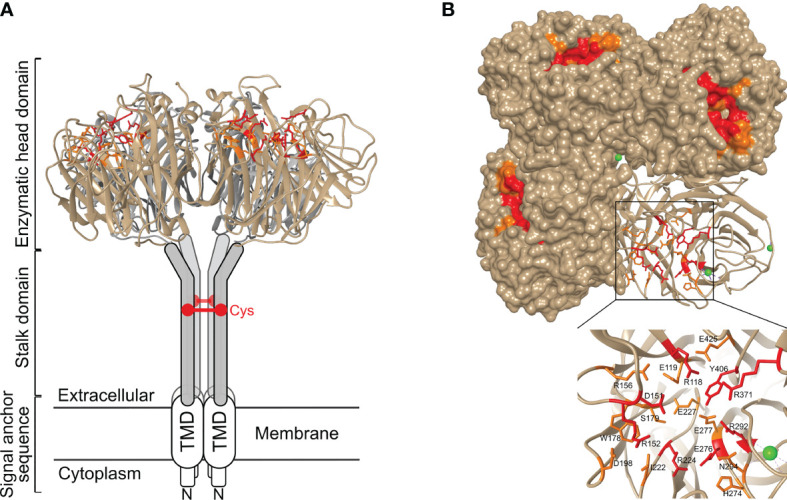
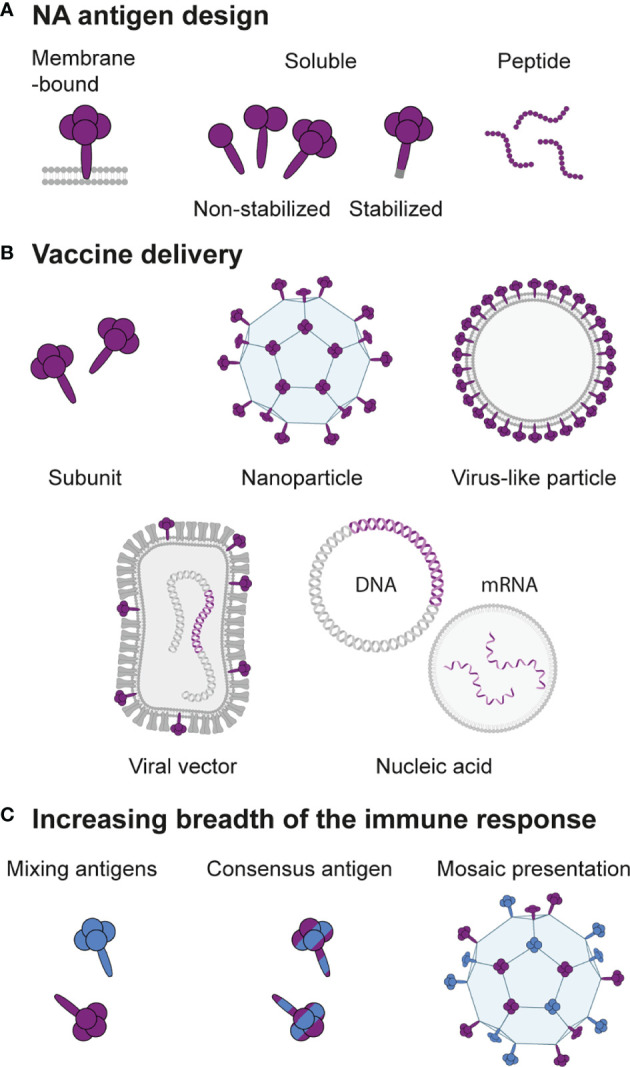
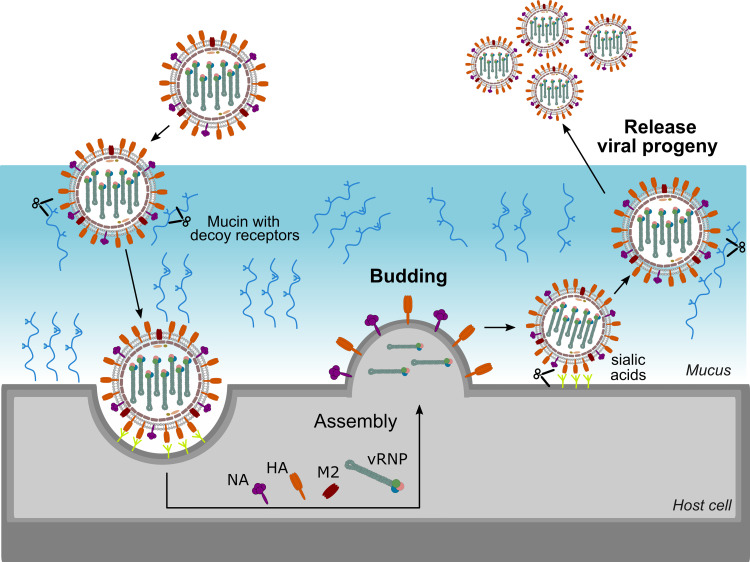
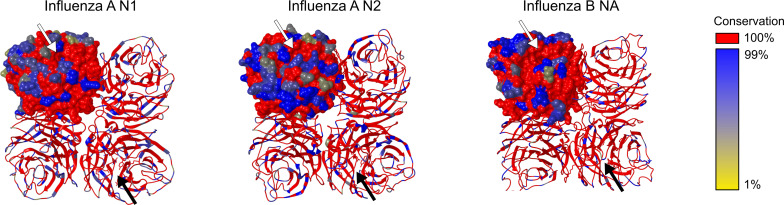
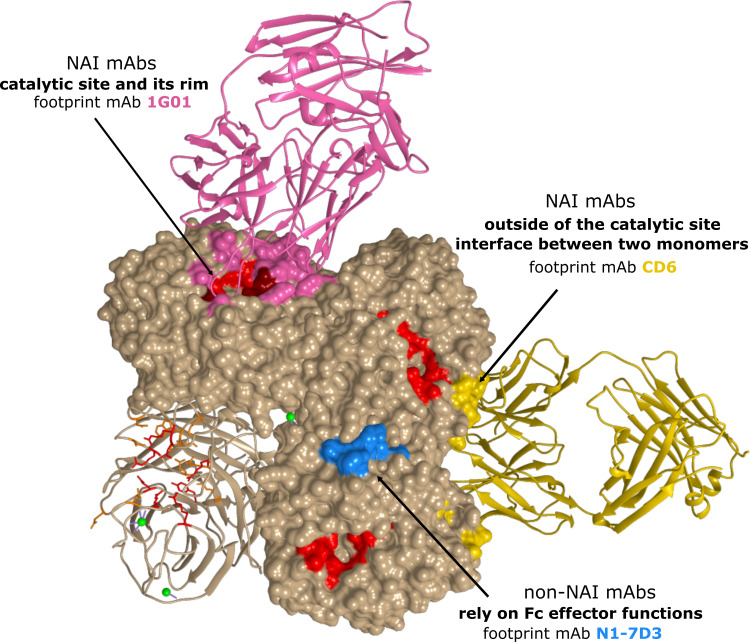
Neuraminidase of influenza A and B viruses plays a critical role in the virus life cycle and is an important target of the host immune system. Here, we highlight the current understanding of influenza neuraminidase structure, function, antigenicity, immunogenicity, and immune protective potential. Neuraminidase inhibiting antibodies have been recognized as correlates of protection against disease caused by natural or experimental influenza A virus infection in humans. In the past years, we have witnessed an increasing interest in the use of influenza neuraminidase to improve the protective potential of currently used influenza vaccines. A number of well-characterized influenza neuraminidase-specific monoclonal antibodies have been described recently, most of which can protect in experimental challenge models by inhibiting the neuraminidase activity or by Fc receptor-dependent mechanisms. The relative instability of the neuraminidase poses a challenge for protein-based antigen design. We critically review the different solutions that have been proposed to solve this problem, ranging from the inclusion of stabilizing heterologous tetramerizing zippers to the introduction of inter-protomer stabilizing mutations. Computationally engineered neuraminidase antigens have been generated that offer broad, within subtype protection in animal challenge models. We also provide an overview of modern vaccine technology platforms that are compatible with the induction of robust neuraminidase-specific immune responses. In the near future, we will likely see the implementation of influenza vaccines that confront the influenza virus with a double punch: targeting both the hemagglutinin and the neuraminidase.
甲型和乙型流感病毒的神经氨酸酶在病毒生命周期中起着关键作用,是宿主免疫系统的重要靶点。在这里,我们重点介绍流感神经氨酸酶的结构、功能、抗原性、免疫原性和免疫保护潜力的最新认识。神经氨酸酶抑制抗体已被认为是人类自然或实验性甲型流感病毒感染疾病的保护相关因素。在过去的几年中,人们越来越关注利用流感神经氨酸酶来提高现有流感疫苗的保护潜力。最近描述了许多特征明确的流感神经氨酸酶特异性单克隆抗体,其中大多数通过抑制神经氨酸酶活性或通过 Fc 受体依赖性机制在实验性挑战模型中提供保护。神经氨酸酶的相对不稳定性给基于蛋白质的抗原设计带来了挑战。我们批判性地回顾了为解决此问题而提出的不同解决方案,范围从包含稳定的异源四聚化拉链到引入单体间稳定突变。已经生成了经过计算工程设计的神经氨酸酶抗原,可在动物挑战模型中提供广泛的、亚类内的保护。我们还概述了与诱导强大的神经氨酸酶特异性免疫反应兼容的现代疫苗技术平台。在不久的将来,我们可能会看到实施流感疫苗的情况,即针对血凝素和神经氨酸酶对流感病毒进行双重打击。