Cavini Italo A, Leonardo Diego A, Rosa Higor V D, Castro Danielle K S V, D'Muniz Pereira Humberto, Valadares Napoleão F, Araujo Ana P U, Garratt Richard C
São Carlos Institute of Physics, University of São Paulo, São Carlos, Brazil.
São Carlos Institute of Chemistry, University of São Paulo, São Carlos, Brazil.
Front Cell Dev Biol. 2021 Nov 19;9:765085. doi: 10.3389/fcell.2021.765085. eCollection 2021.
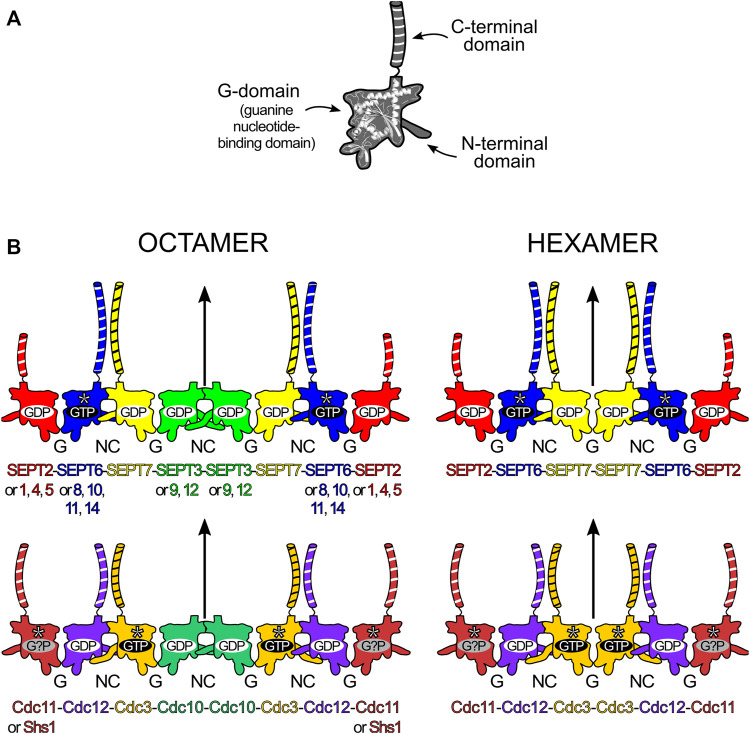
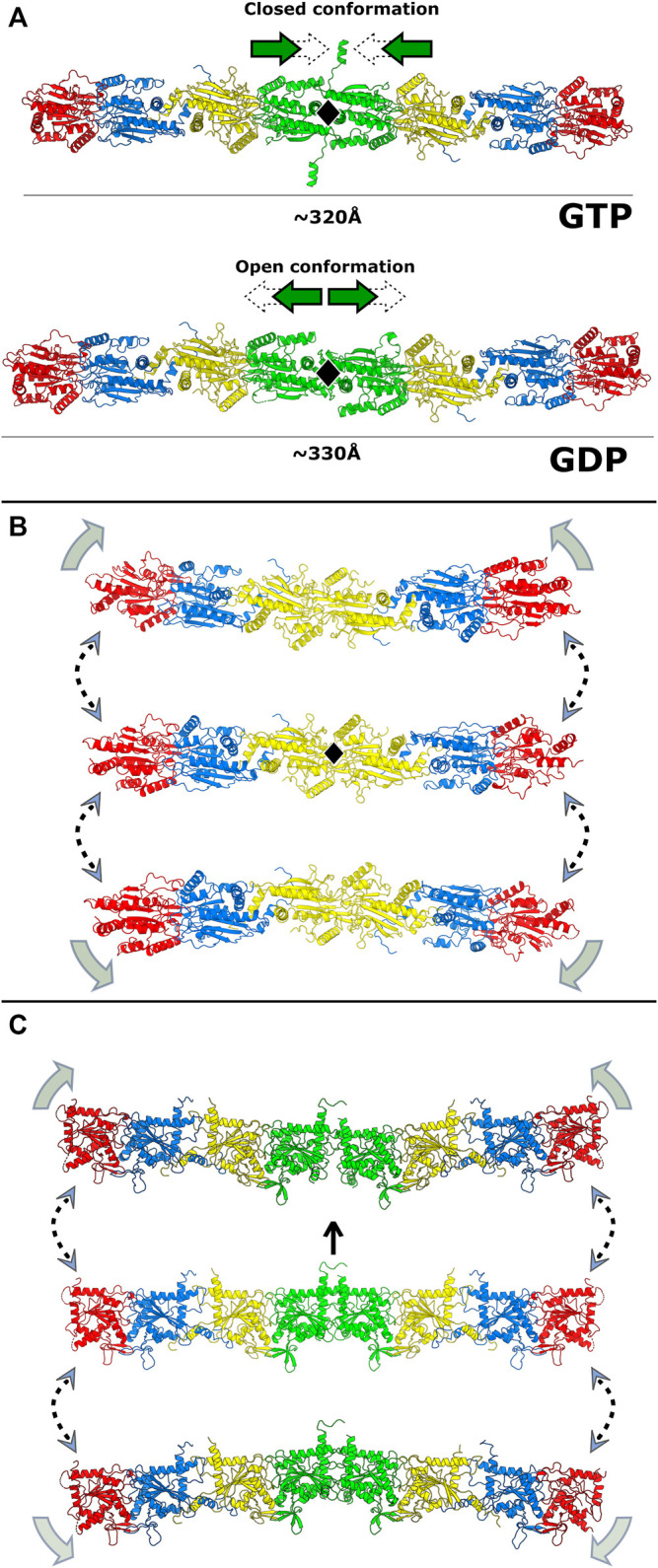
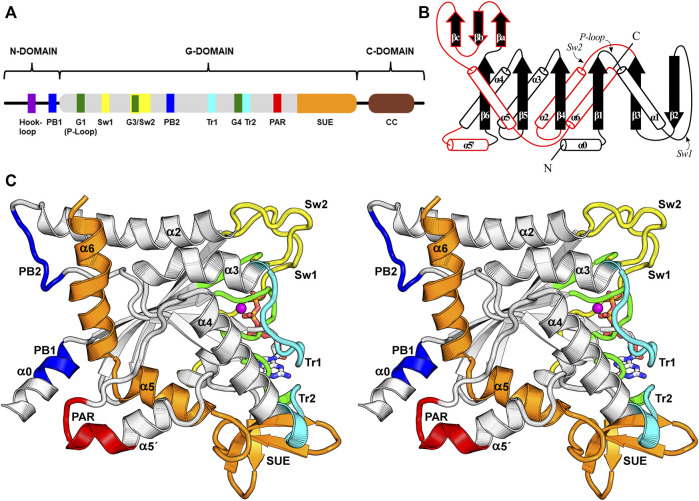
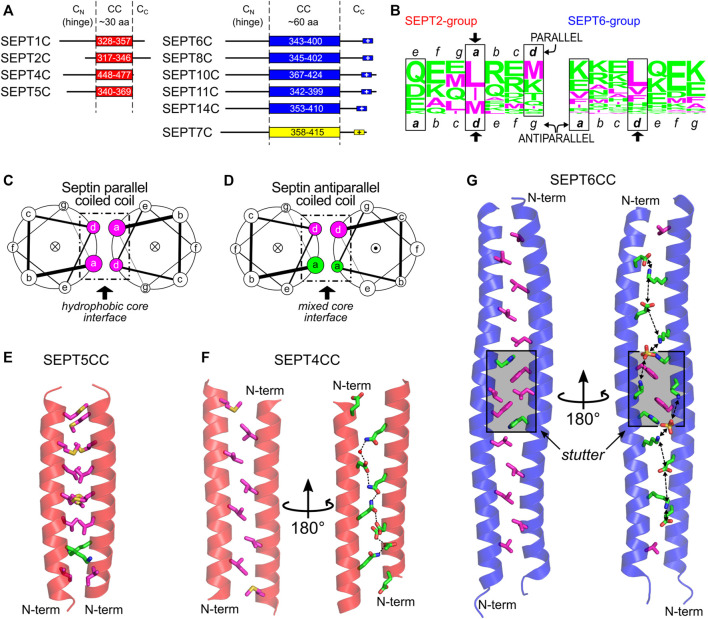
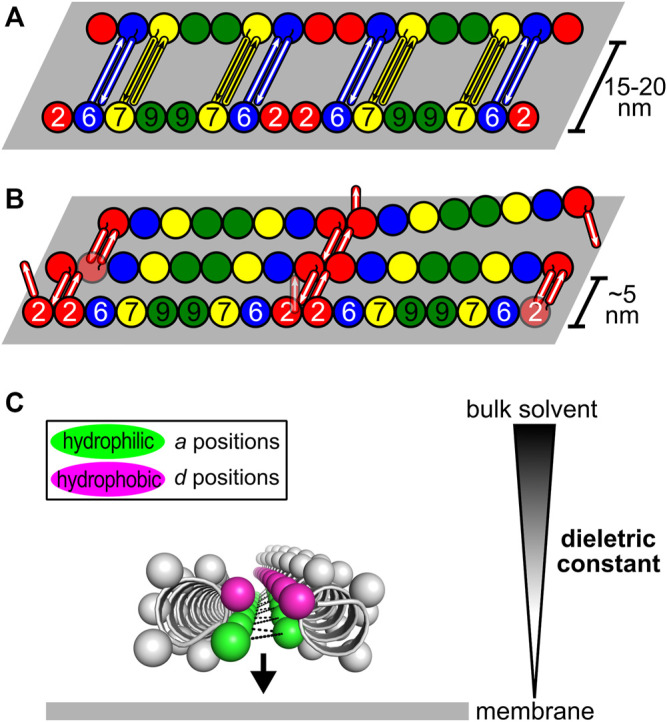
In order to fully understand any complex biochemical system from a mechanistic point of view, it is necessary to have access to the three-dimensional structures of the molecular components involved. Septins and their oligomers, filaments and higher-order complexes are no exception. Indeed, the spontaneous recruitment of different septin monomers to specific positions along a filament represents a fascinating example of subtle molecular recognition. Over the last few years, the amount of structural information available about these important cytoskeletal proteins has increased dramatically. This has allowed for a more detailed description of their individual domains and the different interfaces formed between them, which are the basis for stabilizing higher-order structures such as hexamers, octamers and fully formed filaments. The flexibility of these structures and the plasticity of the individual interfaces have also begun to be understood. Furthermore, recently, light has been shed on how filaments may bundle into higher-order structures by the formation of antiparallel coiled coils involving the C-terminal domains. Nevertheless, even with these advances, there is still some way to go before we fully understand how the structure and dynamics of septin assemblies are related to their physiological roles, including their interactions with biological membranes and other cytoskeletal components. In this review, we aim to bring together the various strands of structural evidence currently available into a more coherent picture. Although it would be an exaggeration to say that this is complete, recent progress seems to suggest that headway is being made in that direction.
为了从机制角度全面理解任何复杂的生化系统,有必要了解所涉及分子成分的三维结构。Septins及其寡聚体、细丝和高阶复合物也不例外。事实上,不同的septin单体沿着细丝自发募集到特定位置,这是一个微妙分子识别的迷人例子。在过去几年中,关于这些重要细胞骨架蛋白的结构信息数量大幅增加。这使得能够更详细地描述它们的各个结构域以及它们之间形成的不同界面,这些是稳定高阶结构(如六聚体、八聚体和完全形成的细丝)的基础。这些结构的灵活性和各个界面的可塑性也已开始被理解。此外,最近,关于细丝如何通过涉及C末端结构域的反平行卷曲螺旋形成而聚集成高阶结构的情况也有所了解。然而,即使有了这些进展,在我们完全理解septin组装体的结构和动力学如何与其生理作用(包括它们与生物膜和其他细胞骨架成分的相互作用)相关之前,仍有一段路要走。在这篇综述中,我们旨在将目前可用的各种结构证据整合到一个更连贯的图景中。虽然说这是完整的有点夸张,但最近的进展似乎表明正在朝着那个方向取得进展。