Liu Qiang, Qiu Hangyuan, Jiang Ruhong, Tang Xiaomei, Guo Wenpu, Zhou Kuangshi, Chen Qiufan, Sun Yaxun, Yu Lu, Chen Shiquan, Zhang Pei, Sheng Xia, Zhu Jun, Lin Jianwei, Cheng Hui, Wang Yunhe, Wang Bei, Yu Chan, Mao Yankai, Zhang Juhong, Zhang Zuwen, Zei Paul C, Fu Guosheng, Jiang Chenyang
Department of Cardiology, Sir Run Run Shaw Hospital, School of Medicine, Zhejiang University, Hangzhou, China.
Medicine, Brigham and Women's Hospital Associate, Harvard Medical School, Boston, MA, United States.
Front Cardiovasc Med. 2021 Nov 16;8:743044. doi: 10.3389/fcvm.2021.743044. eCollection 2021.
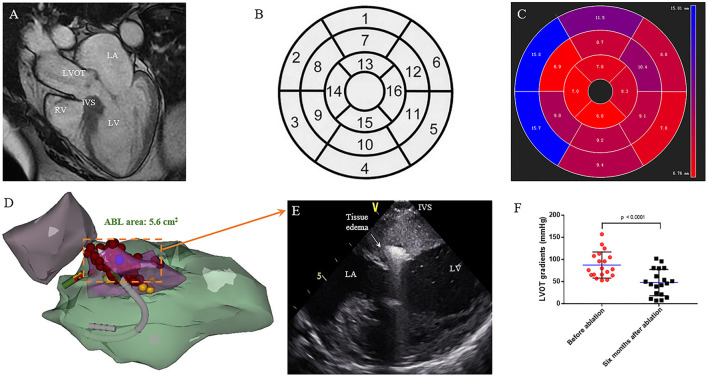
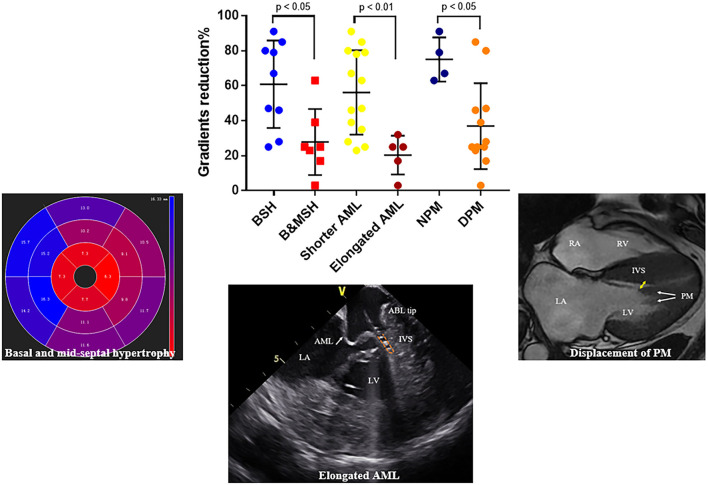
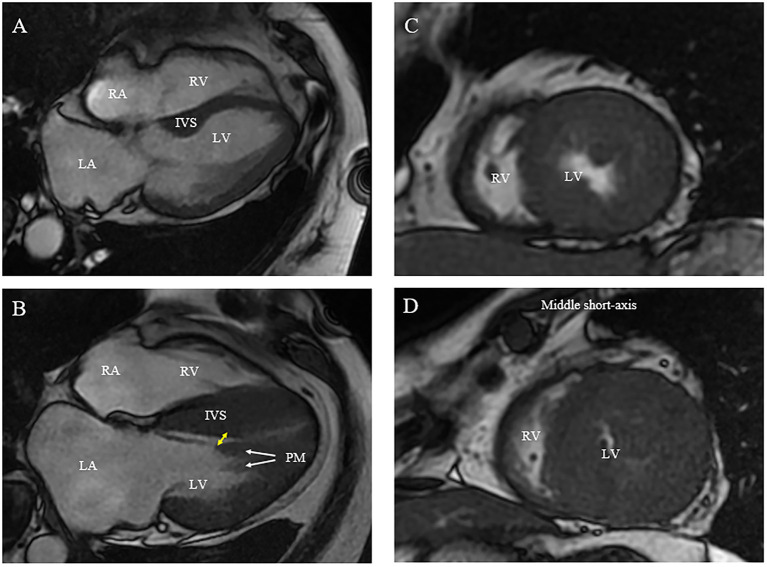
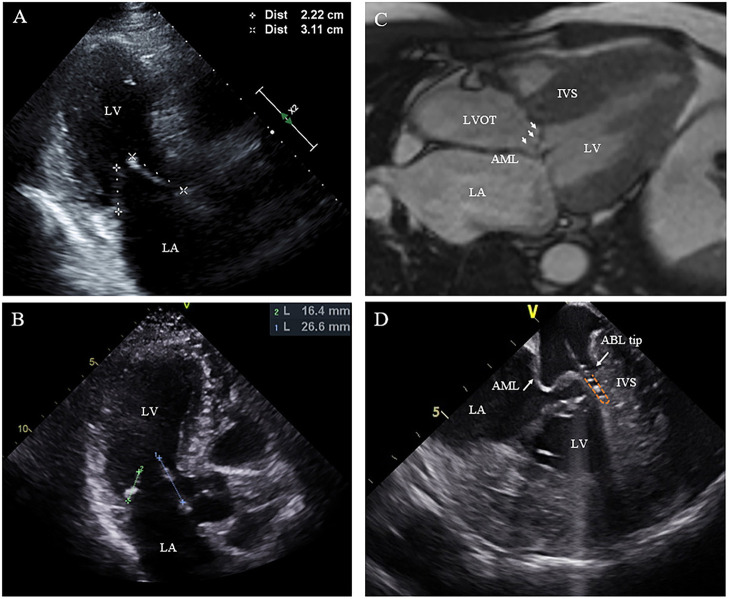
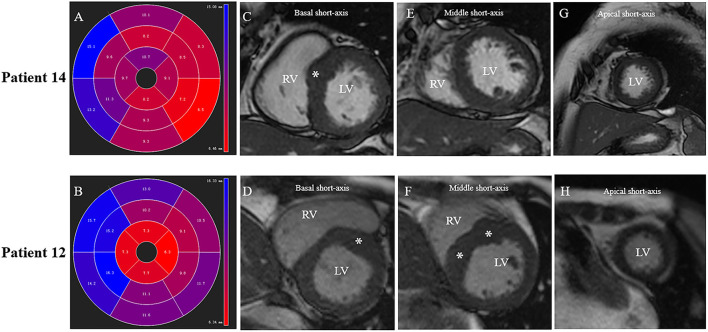
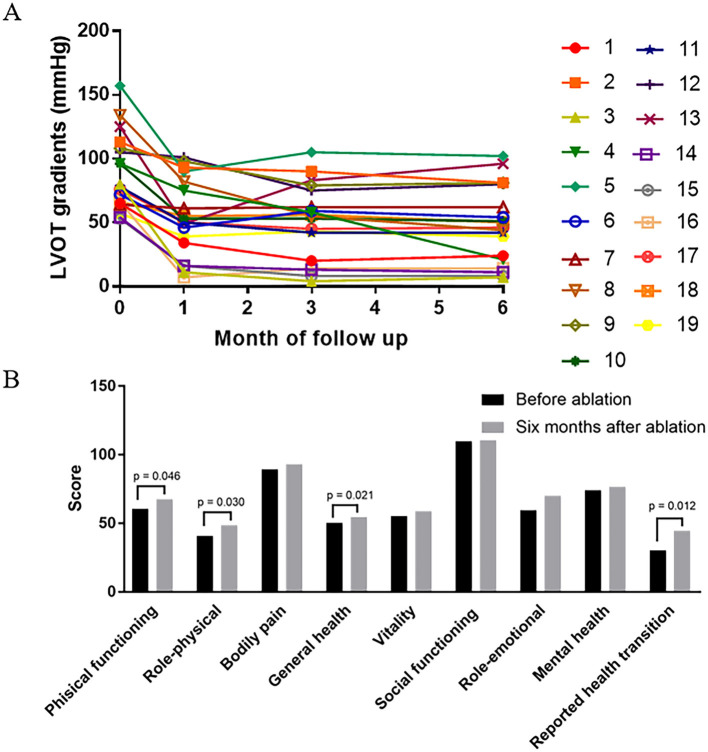
Septal mass reduction is beneficial for hypertrophic obstructive cardiomyopathy (HOCM) patients with severe left ventricular outflow (LVOT) gradient and symptoms, with surgical myectomy or alcohol septal ablation (ASA) currently recommended in selected patients. Radiofrequency (RF) ablation of hypertrophied septum has been published as a novel method to alleviate LVOT obstruction in small populations. This study aims to investigate factors influencing clinical outcomes of radiofrequency septum ablation. In this study, 20 patients with HOCM who underwent endocardial ablation were included. Echocardiography and cardiac MRI (CMR) data was collected and analyzed pre- and (or) post- procedure. Nineteen patients underwent ablation successfully, while ablation was aborted in one patient with prior RBBB due to transient complete atrioventricular block (AVB). After 6 months of follow-up, NYHA heart functional class improved from III (2 - 3) to II (1 - 2) ( < 0.001), and resting LVOT gradient was significantly reduced (87.6 ± 29.5 mmHg vs. 48.1 ± 29.7, < 0.001). LVOT gradient reduction was significantly higher in patients with limited basal septal hypertrophy (60.9 ± 8.3 vs. 27.9 ± 7.1, = 0.01), shorter anterior mitral leaflet (56.1 ± 6.4 vs. 20.4 ± 5.0, < 0.01), and normally positioned papillary muscle (36.9 ± 7.1 vs. 75.0 ± 6.3, < 0.05). Endocardial septal ablation appears to be a safe and effective procedure for alleviating LVOT gradient in patients with HOCM, especially in those with limited basal septal hypertrophy, shorter anterior mitral leaflet, and normal positioned papillary muscle.
对于伴有严重左心室流出道(LVOT)梯度及症状的肥厚型梗阻性心肌病(HOCM)患者,减少室间隔质量有益,目前推荐对部分患者行外科室间隔心肌切除术或酒精室间隔消融术(ASA)。射频(RF)消融肥厚的室间隔已作为一种在小部分人群中减轻LVOT梗阻的新方法被报道。本研究旨在探讨影响射频室间隔消融临床结局的因素。在本研究中,纳入了20例行心内膜消融的HOCM患者。收集并分析了术前和(或)术后的超声心动图及心脏磁共振成像(CMR)数据。19例患者成功进行了消融,1例既往有右束支传导阻滞的患者因短暂性完全房室传导阻滞(AVB)而中止消融。随访6个月后,纽约心脏协会(NYHA)心功能分级从III级(2 - 3)改善至II级(1 - 2)(<0.001),静息LVOT梯度显著降低(87.6±29.5 mmHg对48.1±29.7,<0.001)。基底室间隔肥厚受限的患者、前叶二尖瓣较短的患者以及乳头肌位置正常的患者,其LVOT梯度降低更为显著(分别为60.9±8.3对27.9±7.1,P = 0.01;56.1±6.4对20.4±5.0,<0.01;36.9±7.1对75.0±6.3,<0.05)。心内膜室间隔消融对于减轻HOCM患者的LVOT梯度似乎是一种安全有效的方法,尤其是对于基底室间隔肥厚受限、前叶二尖瓣较短且乳头肌位置正常的患者。