Department of Experimental Psychology, University of Oxford, Oxford, UK.
Department of General Psychology, Justus-Liebig-Universität Gießen, Gießen, Germany.
J Vis. 2021 Dec 1;21(13):3. doi: 10.1167/jov.21.13.3.
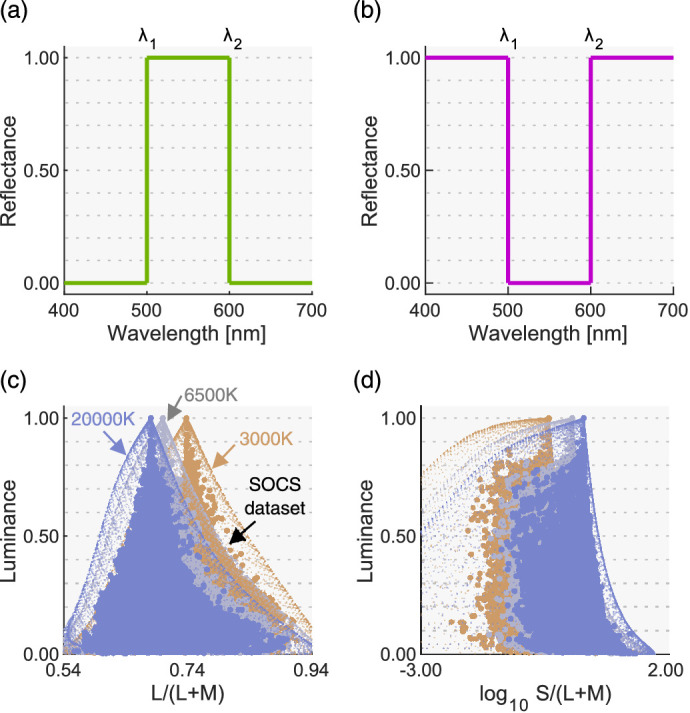
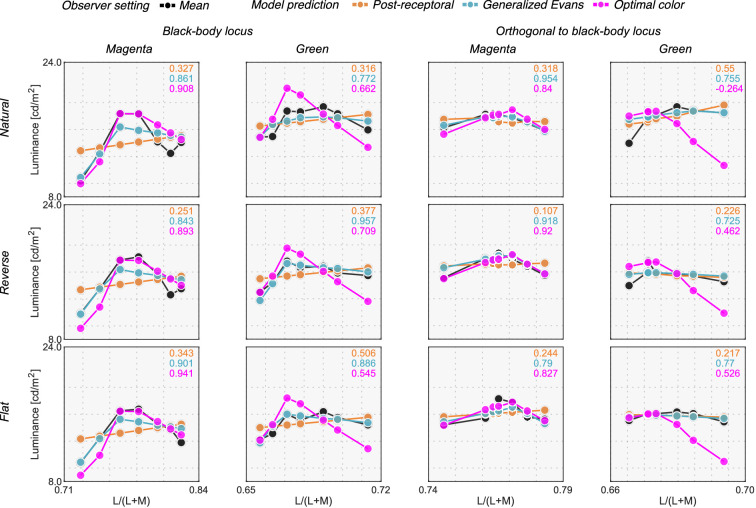
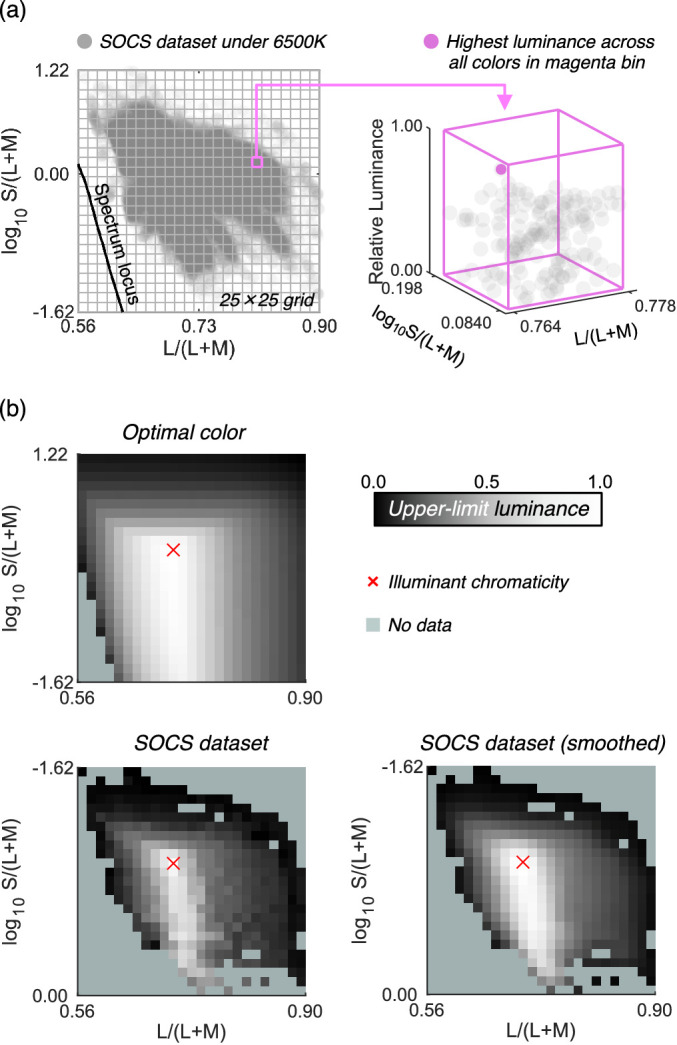
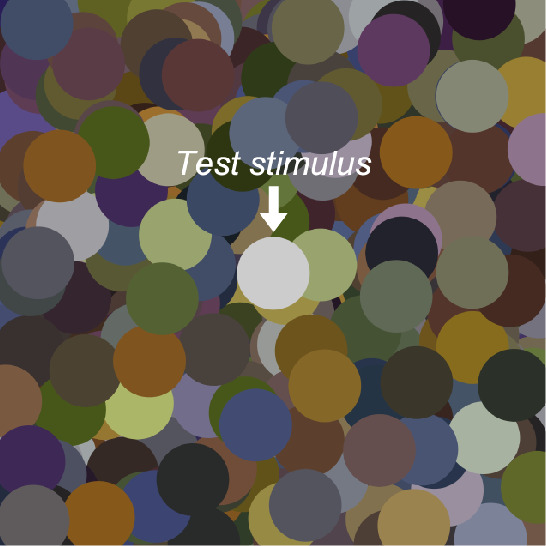
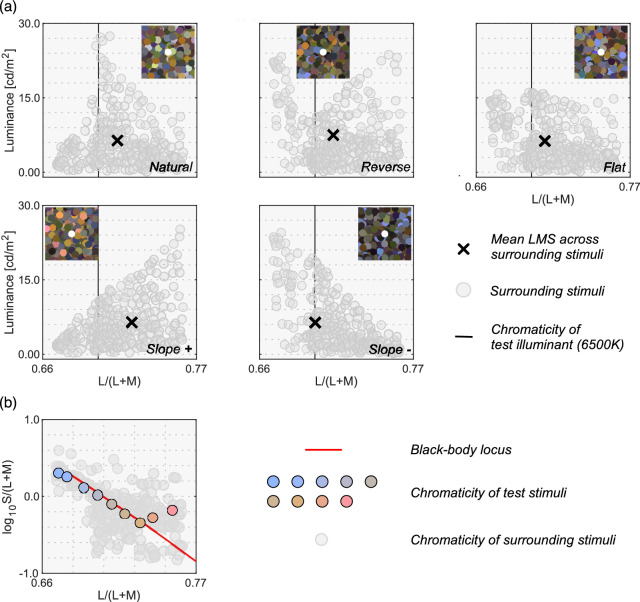
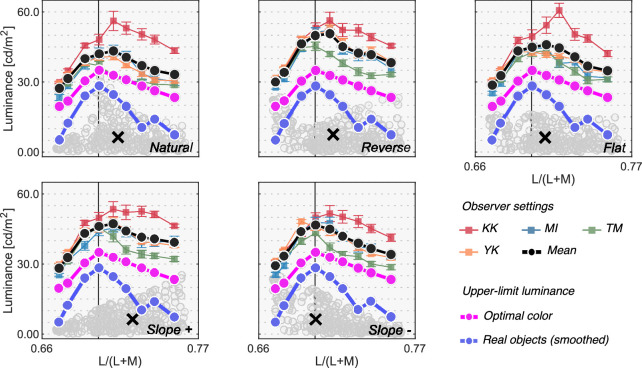
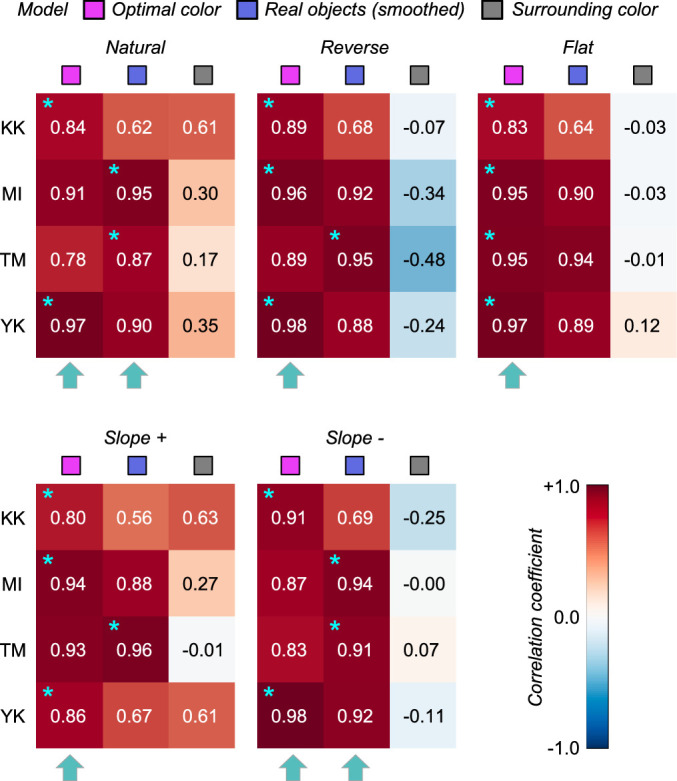
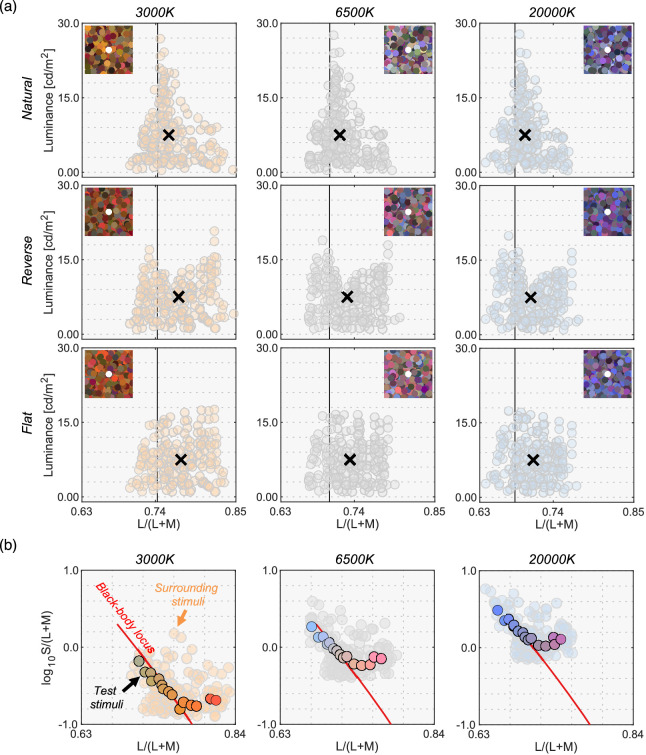
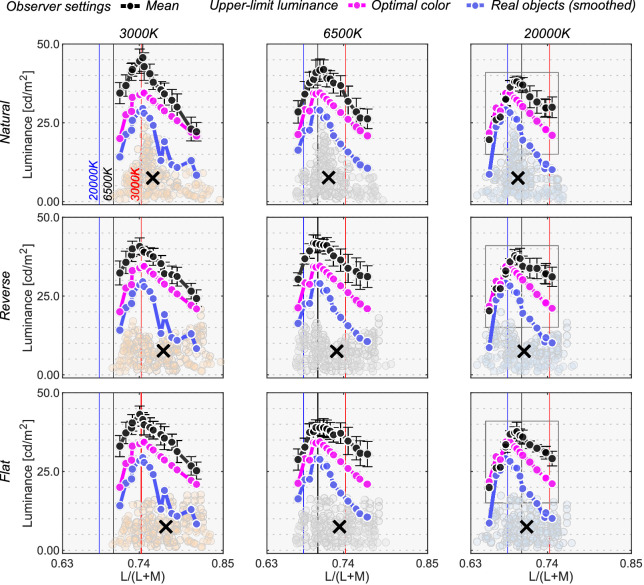
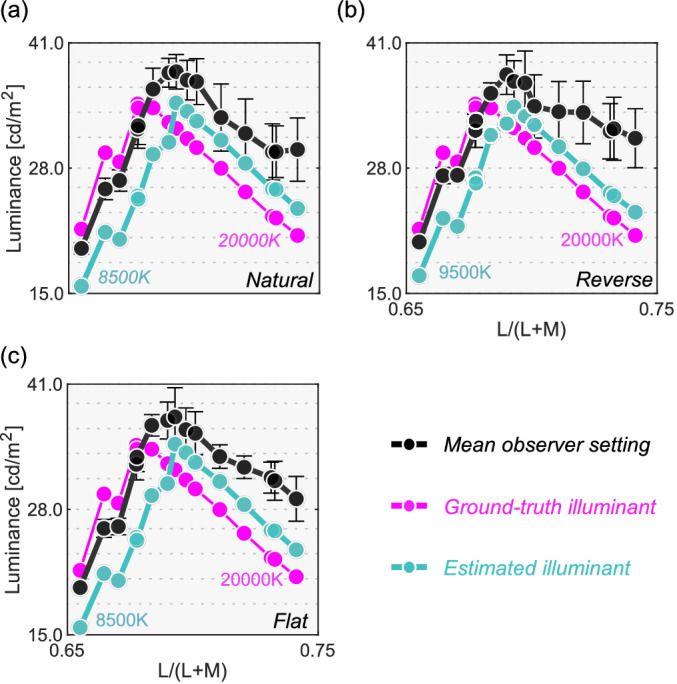
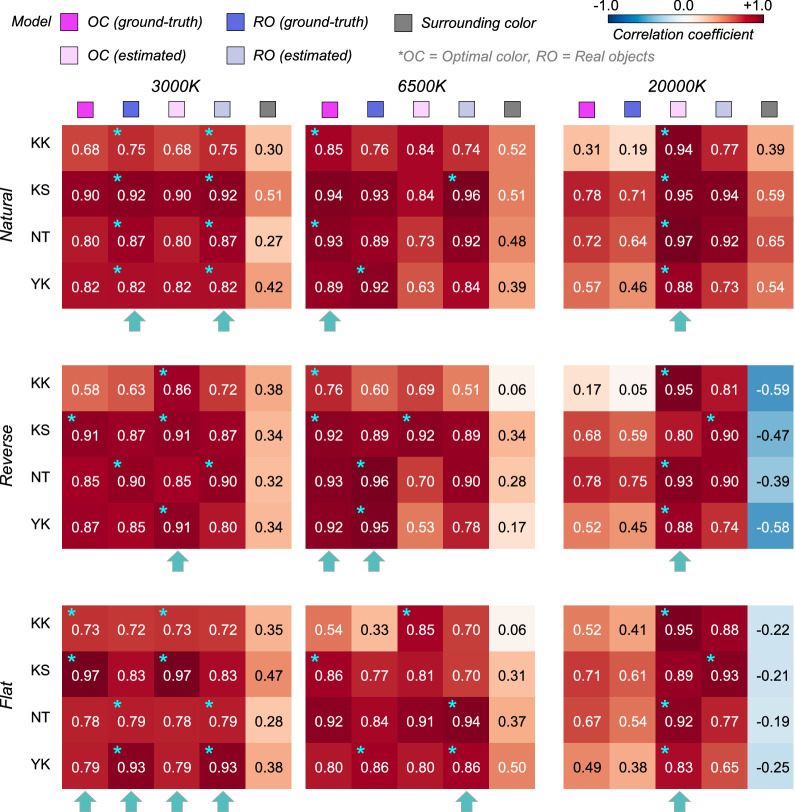
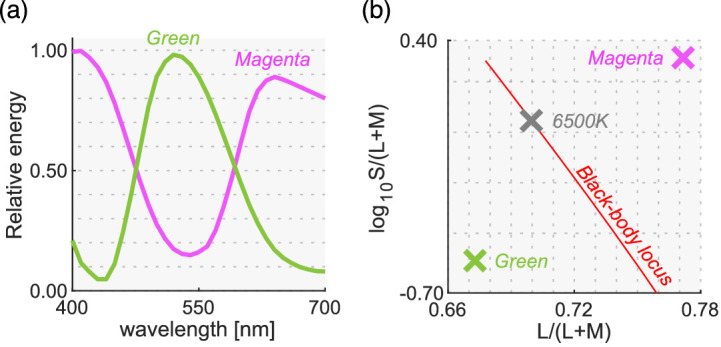
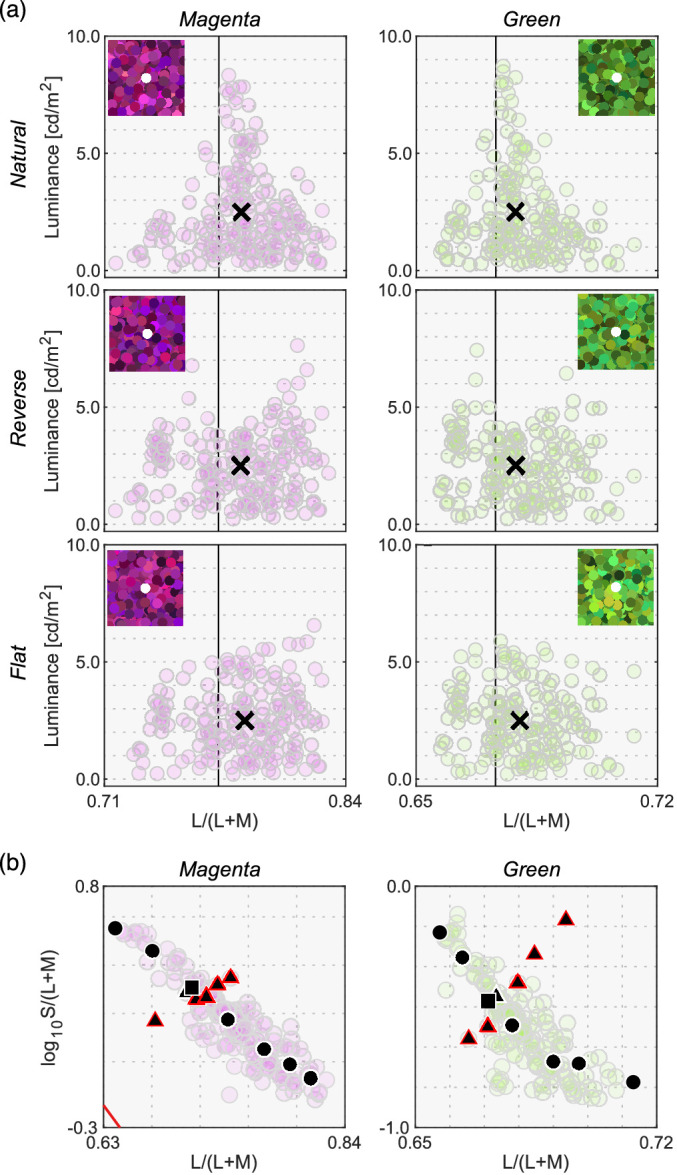
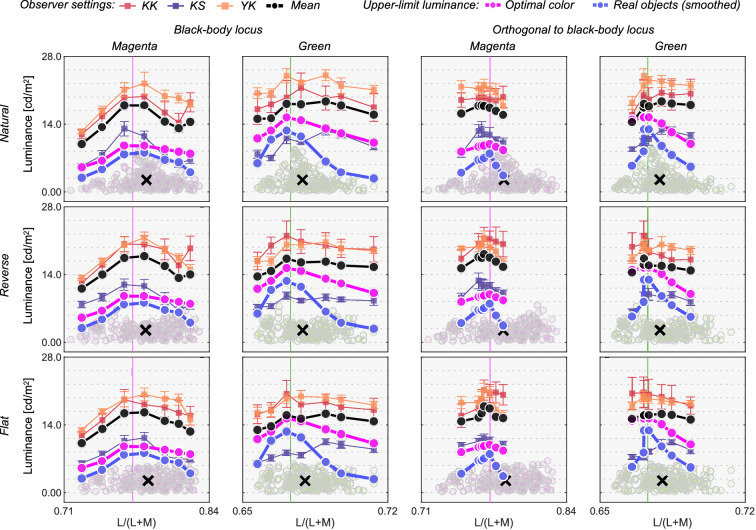
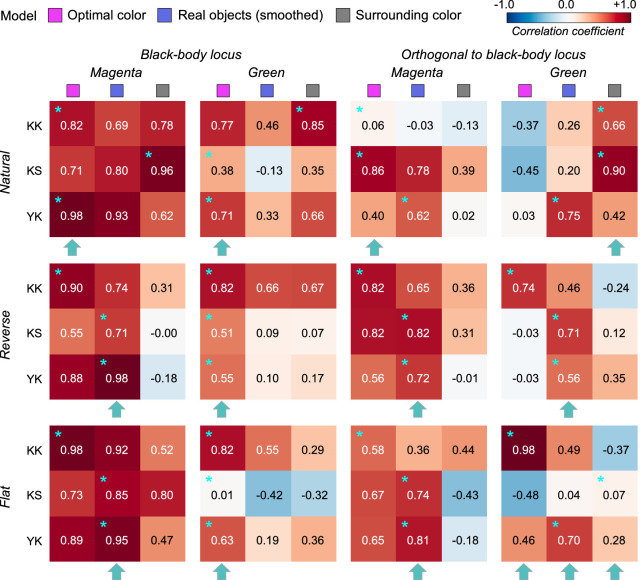
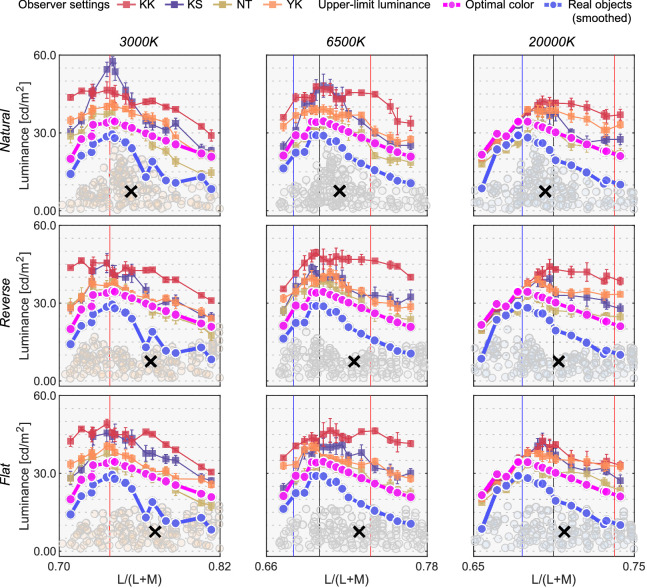
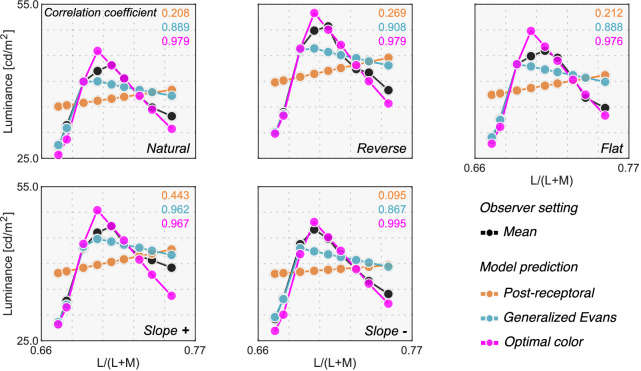
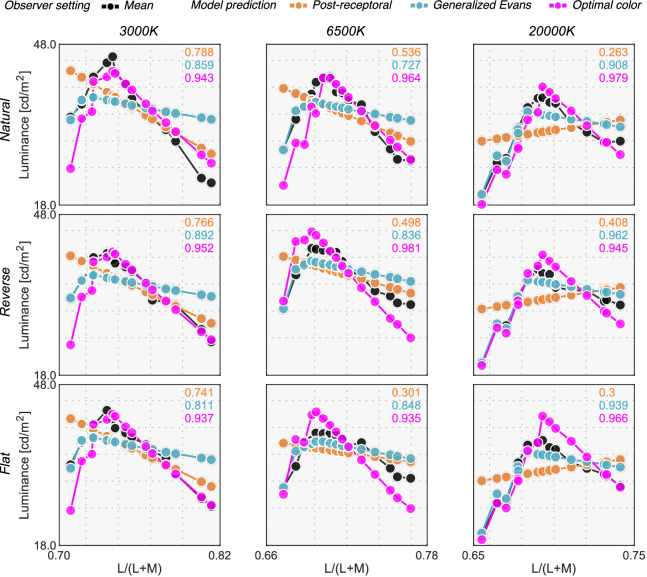
We typically have a fairly good idea whether a given object is self-luminous or illuminated, but it is not fully understood how we make this judgment. This study aimed to identify determinants of the luminosity threshold, a luminance level at which a surface begins to appear self-luminous. We specifically tested a hypothesis that our visual system knows the maximum luminance level that a surface can reach under the physical constraint that a surface cannot reflect more light than any incident light and applies this prior to determine the luminosity thresholds. Observers were presented with a 2-degree circular test field surrounded by numerous overlapping colored circles and luminosity thresholds were measured as a function of (i) the chromaticity of the test field, (ii) the shape of surrounding color distribution, and (iii) the color of the illuminant of the surrounding colors. We found that the luminosity thresholds peaked around the chromaticity of test illuminants and decreased as the purity of the test chromaticity increased. However, the loci of luminosity thresholds across chromaticities were nearly invariant to the shape of the surrounding color distribution and generally resembled the loci drawn from theoretical upper-limit luminances and upper-limit luminance boundaries of real objects. These trends were particularly evident for illuminants on the black-body locus and did not hold well under atypical illuminants, such as magenta or green. These results support the idea that our visual system empirically internalizes the gamut of surface colors under natural illuminants and a given object appears self-luminous when its luminance exceeds this internalized upper-limit luminance.
我们通常对某个给定物体是自发光还是被照明有一个相当好的概念,但我们还不完全清楚我们是如何做出这种判断的。本研究旨在确定亮度阈值的决定因素,即表面开始呈现自发光的亮度水平。我们特别测试了一个假设,即我们的视觉系统知道一个表面在物理约束下所能达到的最大亮度水平,即一个表面不能反射比任何入射光更多的光,并在此之前应用这个约束来确定亮度阈值。观察者被呈现一个 2 度的圆形测试场,周围环绕着许多重叠的彩色圆圈,亮度阈值被测量为(i)测试场的色度、(ii)周围颜色分布的形状和(iii)周围颜色的光源的颜色的函数。我们发现,亮度阈值在测试光源的色度周围达到峰值,并随着测试色度的纯度增加而降低。然而,在不同色度下的亮度阈值的轨迹几乎不受周围颜色分布形状的影响,并且通常与从理论上的上限亮度和真实物体的上限亮度边界得出的轨迹相似。这些趋势在黑体轨迹上的光源下尤为明显,而在非典型光源下,如品红色或绿色,这些趋势并不明显。这些结果支持了这样一种观点,即我们的视觉系统经验性地内化了自然光源下表面颜色的色域,并且当一个物体的亮度超过这个内化的上限亮度时,它就会呈现出自发光。