Dept of Translational Neuroscience, Michigan State University, 400 Monroe Ave NW, Grand Rapids, MI, 49503, USA.
Dept. of Neurodegenerative Disease and Geriatric Psychiatry/Neurology, University of Bonn Medical Center, Sigmund-Freud Str. 25, 53127 Bonn, Germany.
Alzheimers Dement. 2022 May;18(5):1038-1046. doi: 10.1002/alz.12488. Epub 2021 Dec 7.
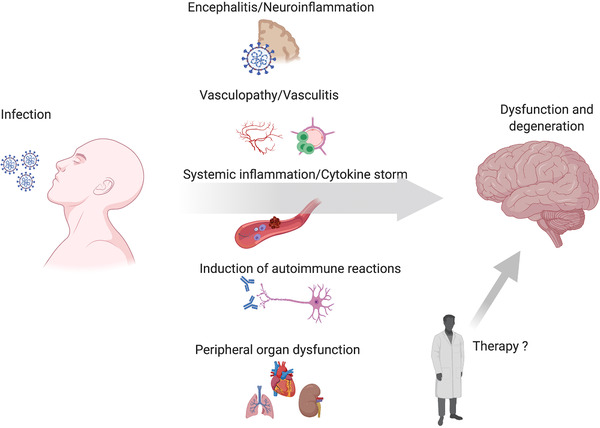
COVID-19 causes lasting neurological symptoms in some survivors. Like other infections, COVID-19 may increase risk of cognitive impairment. This perspective highlights four knowledge gaps about COVID-19 that need to be filled to avoid this possible health issue. The first is the need to identify the COVID-19 symptoms, genetic polymorphisms and treatment decisions associated with risk of cognitive impairment. The second is the absence of model systems in which to test hypotheses relating infection to cognition. The third is the need for consortia for studying both existing and new longitudinal cohorts in which to monitor long term consequences of COVID-19 infection. A final knowledge gap discussed is the impact of the isolation and lack of social services brought about by quarantine/lockdowns on people living with dementia and their caregivers. Research into these areas may lead to interventions that reduce the overall risk of cognitive decline for COVID-19 survivors.
COVID-19 在一些幸存者中会导致持久的神经症状。像其他感染一样,COVID-19 可能会增加认知障碍的风险。本观点重点介绍了 COVID-19 四个需要填补的知识空白,以避免出现这种潜在的健康问题。首先是需要确定与认知障碍风险相关的 COVID-19 症状、遗传多态性和治疗决策。其次是缺乏可用于测试感染与认知关系的假说的模型系统。第三是需要研究团体来研究现有的和新的纵向队列,以监测 COVID-19 感染的长期后果。讨论的最后一个知识空白是隔离和封锁带来的痴呆症患者及其护理人员的隔离和缺乏社会服务的影响。对这些领域的研究可能会导致干预措施,从而降低 COVID-19 幸存者认知能力下降的总体风险。