Department of Biological Sciences, Auburn University, Auburn, AL, 36849, USA.
Department of Ecology, Evolution, and Marine Biology, University of California Santa Barbara, Santa Barbara, CA, 93117, USA.
Sci Rep. 2021 Dec 7;11(1):23546. doi: 10.1038/s41598-021-02807-w.
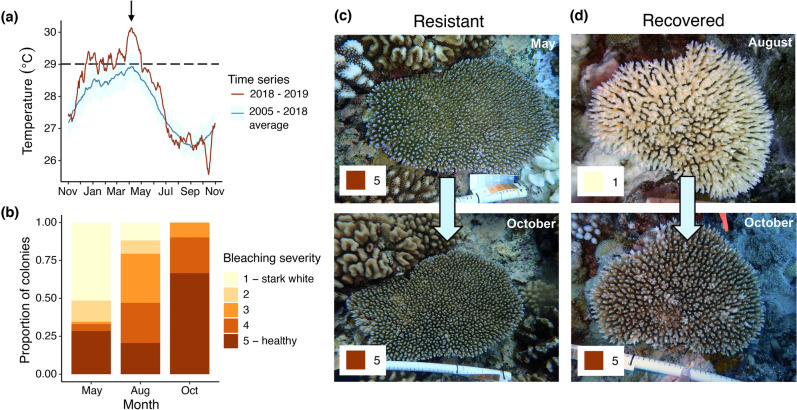
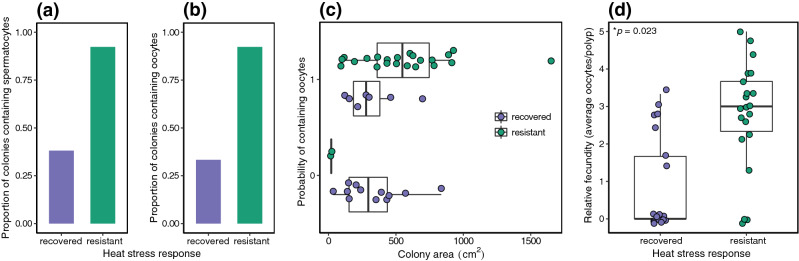
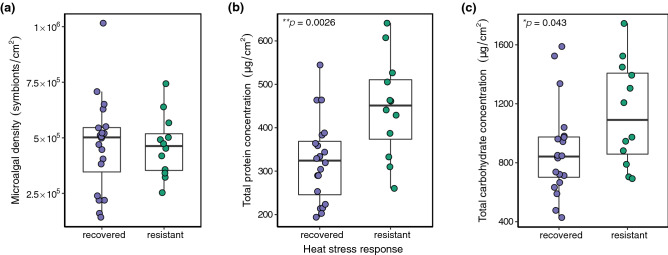
Mass thermal bleaching events are a primary threat to coral reefs, yet the sublethal impacts, particularly on energetics and reproduction, are poorly characterized. Given that the persistence of coral populations is contingent upon the reproduction of individuals that survive disturbances, there is an urgent need to understand the sublethal effects of bleaching on reproductive output to accurately predict coral recovery rates. In 2019, the French Polynesian island of Mo'orea experienced a severe mass bleaching event accompanied by widespread coral mortality. At the most heavily impacted sites, we observed Acropora hyacinthus individuals that were resistant to bleaching, alongside colonies that bleached but showed signs of symbiont recovery shortly after the bleaching event. We collected fragments from A. hyacinthus colonies five months post-bleaching and, using energetic assays and histological measurements, examined the physiological and reproductive consequences of these two distinct heat stress responses. Despite healthy appearances in both resistant and recovered corals, we found that recovered colonies had significantly reduced energy reserves compared to resistant colonies. In addition, we detected compound effects of stress on reproduction: recovered colonies displayed both a lower probability of containing gametes and lower fecundity per polyp. Our results indicate that bleaching inflicts an energetic constraint on the concurrent re-accumulation of energy reserves and development of reproductive material, with decreased reproductive potential of survivors possibly hampering overall reef resilience. These findings highlight the presence of intraspecific responses to bleaching and the importance of considering multiple trajectories for individual species when predicting population recovery following disturbance.
大规模热漂白事件是珊瑚礁的主要威胁,但亚致死影响,特别是对能量学和繁殖的影响,还没有得到很好的描述。鉴于珊瑚种群的持续存在取决于在干扰后幸存下来的个体的繁殖,因此迫切需要了解漂白对繁殖输出的亚致死影响,以准确预测珊瑚的恢复速度。2019 年,法属波利尼西亚的莫雷阿岛经历了一次严重的大规模漂白事件,伴随着广泛的珊瑚死亡。在受影响最严重的地点,我们观察到了对漂白有抵抗力的 Acropora hyacinthus 个体,以及漂白但在漂白事件后不久显示出共生体恢复迹象的殖民地。我们从 A. hyacinthus 殖民地采集了漂白后五个月的片段,并使用能量学测定和组织学测量,检查了这两种不同热应激反应的生理和繁殖后果。尽管抵抗和恢复的珊瑚都表现出健康的外观,但我们发现恢复的殖民地的能量储备明显低于抵抗的殖民地。此外,我们还检测到了压力对繁殖的复合影响:恢复的殖民地显示出较低的含卵率和每个息肉的较低生育率。我们的研究结果表明,漂白对能量储备的再积累和生殖材料的发育施加了能量限制,而幸存者繁殖潜力的降低可能会损害整体珊瑚礁的恢复能力。这些发现强调了对漂白的种内反应的存在,以及在预测干扰后种群恢复时考虑单个物种的多种轨迹的重要性。