Rubino Francesco, Logue Jennifer, Bøgelund Mette, Madsen Maria Elmegaard, Cancino Ana-Paula, Høy Maria, Panton Ulrik Haagen
Diabetes and Nutritional Sciences King's College London London UK.
Lancaster Medical School Lancaster University Lancaster UK.
Obes Sci Pract. 2021 May 21;7(6):659-668. doi: 10.1002/osp4.518. eCollection 2021 Dec.
Obesity is associated with the development and progression of many diseases. Understanding and management of obesity have become increasingly important; however, a knowledge gap remains between how healthcare providers (HCPs) consider weight-loss treatment and the importance of weight loss for improving obesity-related diseases.
The objective of this study was to investigate how HCPs assess obesity, how they interpret the relationship between obesity and 12 recognized co-morbidities of obesity (excluding diabetes), and their view about the value of various weight-loss therapies.
This was a cross-sectional, non-interventional, descriptive study. Participants were medical doctors (HCPs) from eight European countries.
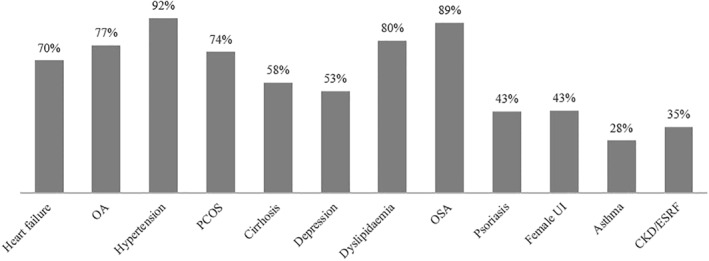
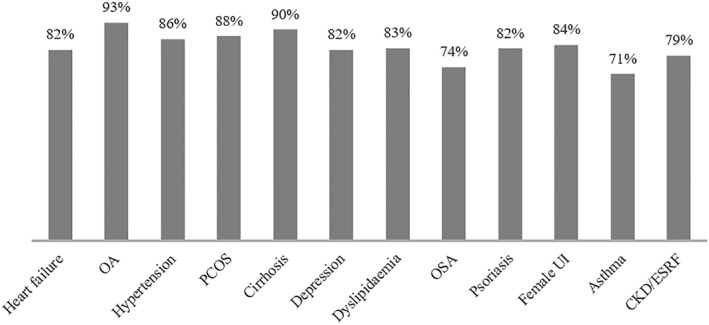
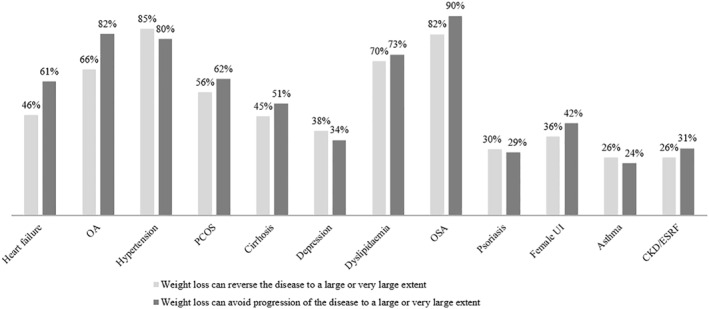
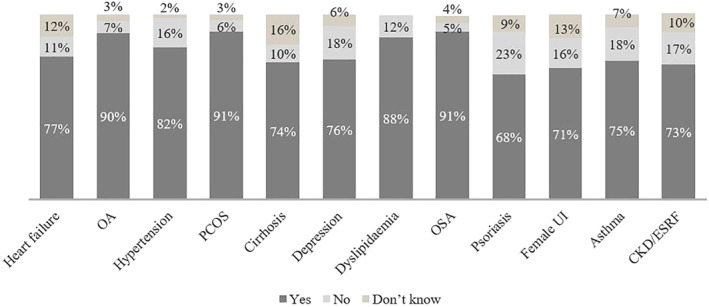
Eighty-nine percent of the 197 HCPs that completed the survey considered obesity a disease. For most of the 12 obesity-related diseases under consideration, a majority of HCPs agreed that weight loss could reverse the disease or prevent progression. Among HCPs who have recommended weight loss, lifestyle interventions were by far the most common recommendation. However, more than three out of four HCPs stated that they would be likely to prescribe anti-obesity medications if available and reimbursed.
Most HCPs in this survey consider obesity a disease that needs to be treated. However, the majority of HCPs appear to prefer recommending lifestyle changes, although it is well documented that weight loss obtained by lifestyle changes is difficult to maintain. These results underscore the need for improved education of HCPs involved in the treatment of obesity-related diseases.
肥胖与多种疾病的发生和发展相关。对肥胖的理解和管理变得愈发重要;然而,在医疗服务提供者(HCPs)如何看待减肥治疗以及减肥对于改善肥胖相关疾病的重要性方面,仍存在知识差距。
本研究的目的是调查HCPs如何评估肥胖,他们如何解读肥胖与12种公认的肥胖合并症(不包括糖尿病)之间的关系,以及他们对各种减肥疗法价值的看法。
这是一项横断面、非干预性的描述性研究。参与者是来自八个欧洲国家的医生(HCPs)。
完成调查的197名HCPs中,89%认为肥胖是一种疾病。对于所考虑的12种肥胖相关疾病中的大多数,大多数HCPs都认为减肥可以逆转疾病或预防疾病进展。在推荐过减肥的HCPs中,生活方式干预是迄今为止最常见的建议。然而,超过四分之三的HCPs表示,如果有可用且可报销的抗肥胖药物,他们很可能会开此类药物。
本次调查中的大多数HCPs认为肥胖是一种需要治疗的疾病。然而,大多数HCPs似乎更倾向于推荐改变生活方式,尽管有充分的文献记载,通过改变生活方式实现的体重减轻很难维持。这些结果强调了对参与治疗肥胖相关疾病的HCPs进行强化教育的必要性。