Department of Radiology, Hospital of the University of Occupational and Environmental Health, Japan, Kitakyushu, Fukuoka, Japan.
Department of Radiation Regulatory Research Group, National Institute of Radiological Sciences, Quantum Life and Medical Science Directorate, National Institute for Quantum and Radiological Science and Technology, Chiba, Japan.
J Occup Health. 2021 Jan;63(1):e12305. doi: 10.1002/1348-9585.12305.
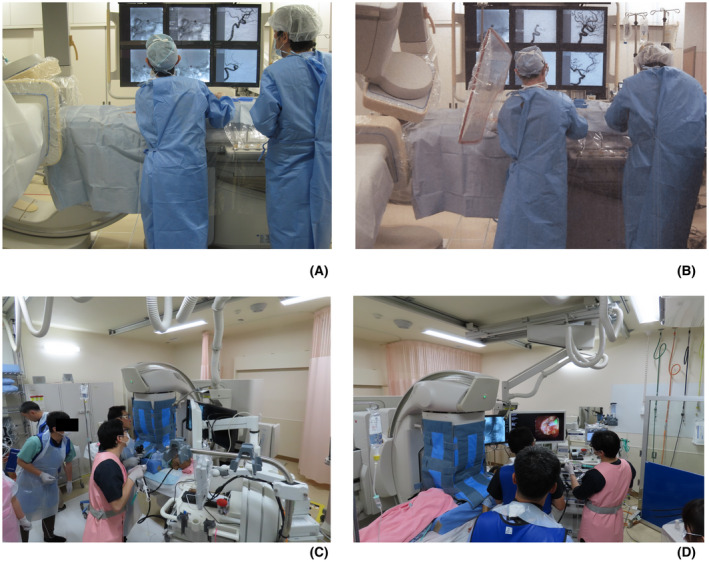
We investigated occupational dose to the lens of the eye for physicians engaged in radiology procedures. We evaluated the potential for compliance with the new-equivalent dose limits to the lens of the eye. Further, a "multiple radiation protection" protocol was proposed according to the basic principles of occupational health, and its effectiveness was estimated.
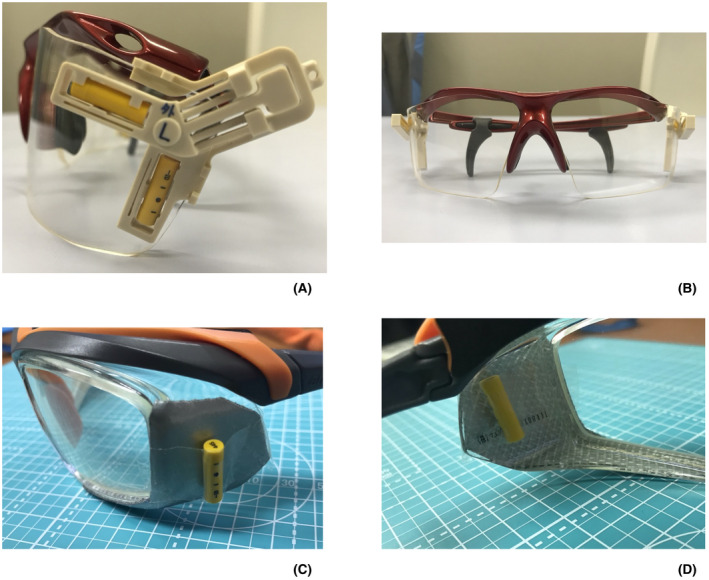
Physicians engaged in radiology procedure at medical facilities in Japan were included in this study. The eye lens dose (3-mm dose equivalent: H (3)) for each participant was measured using a small radio-photoluminescence glass dosimeter mounted on lead glasses. Physicians were directed to procedure multiple radiation protection measures to evaluate their usefulness.
The H (3) was reduced by multiple radiation protection in all physicians. In particular, the H (3) reduced from 207.7 to 43.2 μSv/procedure and from 21.6 to 10.2 μSv/procedure in cardiovascular internal physician and cerebrovascular physician, respectively, after the implementation of the proposed multiple radiation protection measures. The dose reduction rate of these measures was 53% (range: 37%-79%).
The radiation doses received by the eye lenses of physicians engaged in radiology procedure may exceed the dose limits to the lens of the eye if radio-protective equipment and imaging conditions are not properly controlled. However, based on the lens equivalent dose data, the implementation of "multiple radiation protection" according to the basic principles of occupational health can ensure compliance with the new-equivalent dose limits to the lens of the eye without placing an undue burden on individual physicians or medical facilities.
我们调查了从事放射科工作的医师的眼部晶状体的职业剂量。我们评估了遵守新的晶状体当量剂量限值的可能性。此外,根据职业健康的基本原则,提出了一种“多重放射防护”方案,并评估了其有效性。
本研究纳入了在日本医疗机构从事放射科工作的医师。使用安装在铅玻璃上的小型放射光致发光玻璃剂量计测量每位参与者的眼部晶状体剂量(3 毫米剂量当量:H(3))。指导医师采取多种放射防护措施,以评估其有用性。
所有医师均通过多重放射防护降低了 H(3)。特别是在实施所提议的多重放射防护措施后,心血管内科医师和脑血管科医师的 H(3)分别从 207.7 降至 43.2 μSv/次和从 21.6 降至 10.2 μSv/次。这些措施的剂量降低率为 53%(范围:37%-79%)。
如果不适当控制放射防护设备和成像条件,从事放射科工作的医师眼部晶状体所接受的辐射剂量可能会超过晶状体剂量限值。但是,根据晶状体当量剂量数据,按照职业健康的基本原则实施“多重放射防护”,可以在不增加医师或医疗机构负担的情况下,确保符合新的晶状体当量剂量限值。