St. Vincent's Institute of Medical Research, Fitzroy, VIC, 3065, Australia.
St. Vincent's Institute of Medical Research, Fitzroy, VIC, 3065, Australia.
Mol Metab. 2022 Jan;55:101413. doi: 10.1016/j.molmet.2021.101413. Epub 2021 Dec 7.
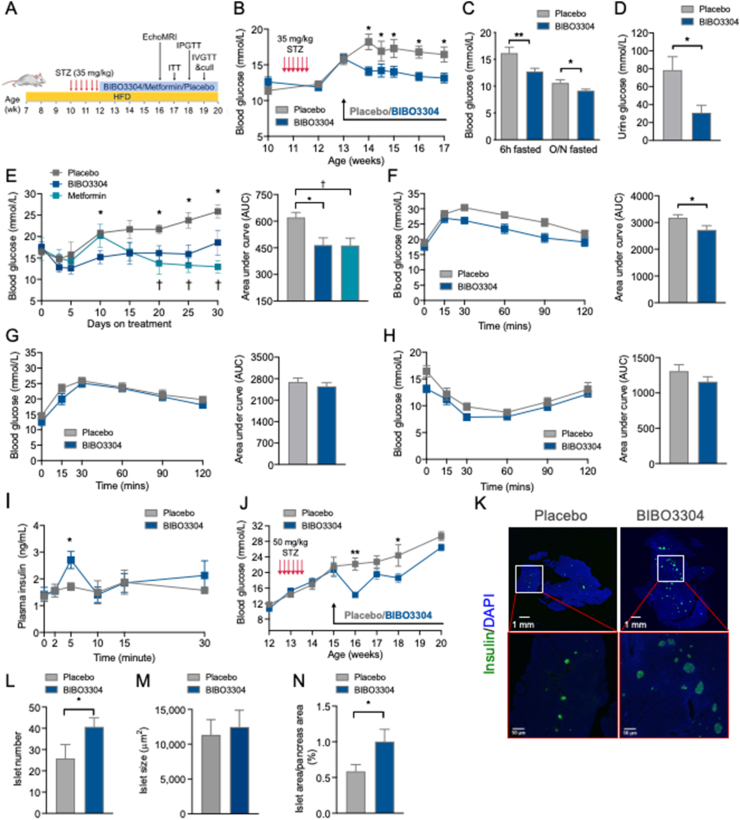
Loss of functional β-cell mass is a key factor contributing to poor glycemic control in advanced type 2 diabetes (T2D). We have previously reported that the inhibition of the neuropeptide Y1 receptor improves the islet transplantation outcome in type 1 diabetes (T1D). The aim of this study was to identify the pathophysiological role of the neuropeptide Y (NPY) system in human T2D and further evaluate the therapeutic potential of using the Y1 receptor antagonist BIBO3304 to improve β-cell function and survival in T2D.
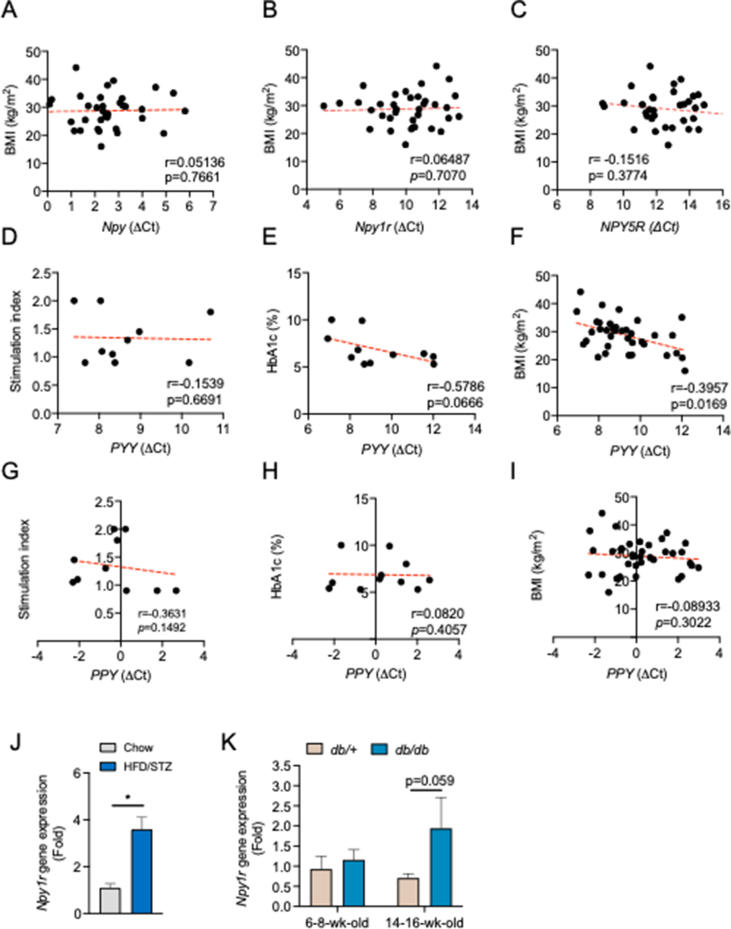
The gene expression of the NPY system in human islets from nondiabetic subjects and subjects with T2D was determined and correlated with the stimulation index. The glucose-lowering and β-cell-protective effects of BIBO3304, a selective orally bioavailable Y1 receptor antagonist, in high-fat diet (HFD)/multiple low-dose streptozotocin (STZ)-induced and genetically obese (db/db) T2D mouse models were assessed.
In this study, we identified a more than 2-fold increase in NPY1R and its ligand, NPY mRNA expression in human islets from subjects with T2D, which was significantly associated with reduced insulin secretion. Consistently, the pharmacological inhibition of Y1 receptors by BIBO3304 significantly protected β cells from dysfunction and death under multiple diabetogenic conditions in islets. In a preclinical study, we demonstrated that the inhibition of Y1 receptors by BIBO3304 led to reduced adiposity and enhanced insulin action in the skeletal muscle. Importantly, the Y1 receptor antagonist BIBO3304 treatment also improved β-cell function and preserved functional β-cell mass, thereby resulting in better glycemic control in both HFD/multiple low-dose STZ-induced and db/db T2D mice.
Our results revealed a novel causal link between increased islet NPY-Y1 receptor gene expression and β-cell dysfunction and failure in human T2D, contributing to the understanding of the pathophysiology of T2D. Furthermore, our results demonstrate that the inhibition of the Y1 receptor by BIBO3304 represents a potential β-cell-protective therapy for improving functional β-cell mass and glycemic control in T2D.
功能性β细胞数量的减少是导致 2 型糖尿病(T2D)患者血糖控制不佳的关键因素。我们之前曾报道过,抑制神经肽 Y1 受体可改善 1 型糖尿病(T1D)患者的胰岛移植效果。本研究旨在确定神经肽 Y(NPY)系统在人类 T2D 中的病理生理学作用,并进一步评估使用 Y1 受体拮抗剂 BIBO3304 改善 T2D 患者β细胞功能和存活的治疗潜力。
测定非糖尿病患者和 T2D 患者胰岛中 NPY 系统的基因表达,并将其与刺激指数相关联。评估选择性口服生物可利用的 Y1 受体拮抗剂 BIBO3304 在高脂肪饮食(HFD)/多次低剂量链脲佐菌素(STZ)诱导和遗传性肥胖(db/db)T2D 小鼠模型中的降血糖和β细胞保护作用。
在这项研究中,我们发现 T2D 患者胰岛中 NPY1R 和其配体 NPY 的 mRNA 表达增加了两倍以上,这与胰岛素分泌减少显著相关。一致地,BIBO3304 对 Y1 受体的药理学抑制显著保护胰岛在多种致糖尿病条件下β细胞的功能障碍和死亡。在一项临床前研究中,我们证明了 BIBO3304 对 Y1 受体的抑制导致骨骼肌中的脂肪减少和胰岛素作用增强。重要的是,Y1 受体拮抗剂 BIBO3304 治疗还改善了β细胞功能并保留了功能性β细胞数量,从而在 HFD/多次低剂量 STZ 诱导和 db/db T2D 小鼠中改善了血糖控制。
我们的研究结果揭示了人类 T2D 中胰岛 NPY-Y1 受体基因表达增加与β细胞功能障碍和衰竭之间的新因果关系,有助于理解 T2D 的病理生理学。此外,我们的研究结果表明,BIBO3304 抑制 Y1 受体可能是改善 T2D 患者功能性β细胞数量和血糖控制的β细胞保护治疗的一种潜在方法。