Hawai'i Institute of Marine Biology, University of Hawai'i at Mānoa, Kaneohe, HI, 96744, USA.
Pacific Islands Fish and Wildlife Office, U.S. Fish and Wildlife Service, Honolulu, HI, 96850, USA.
Sci Rep. 2021 Dec 10;11(1):23787. doi: 10.1038/s41598-021-03128-8.
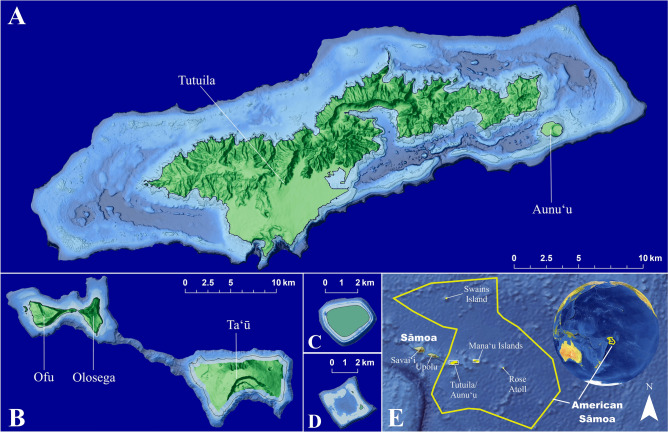
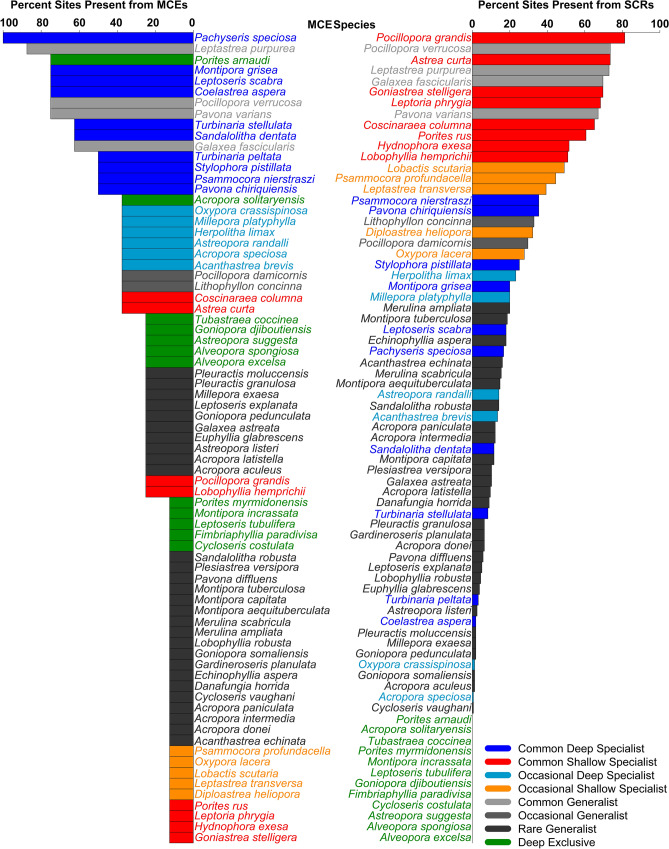
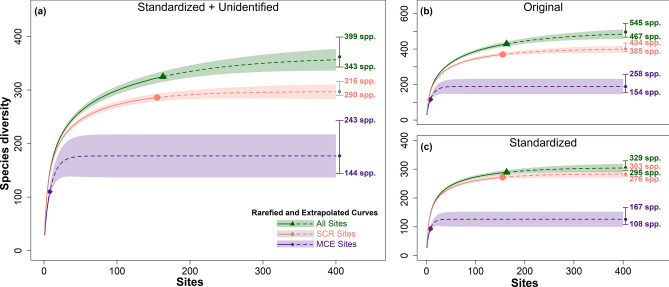
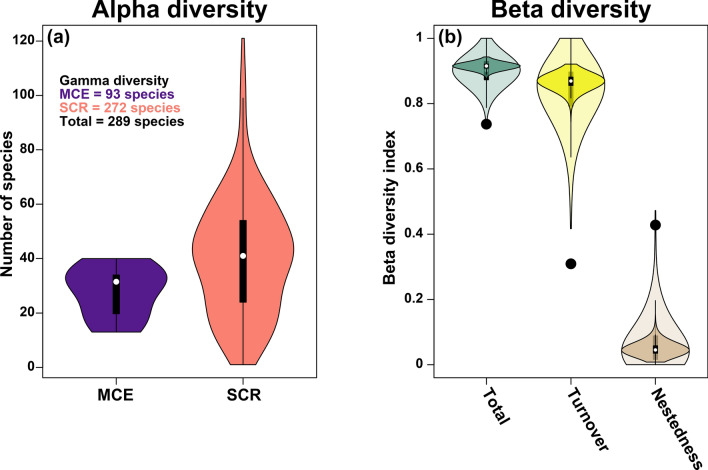
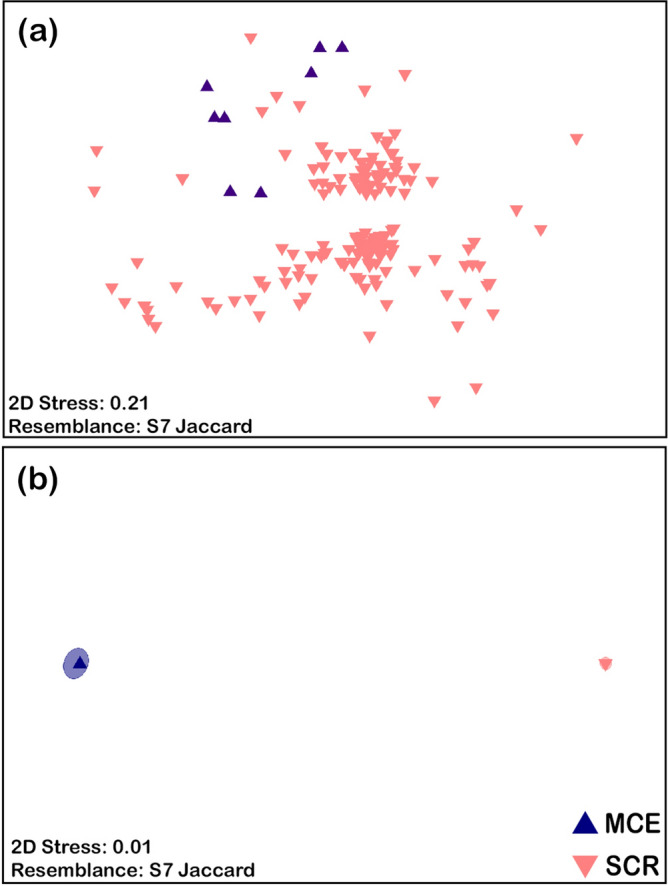
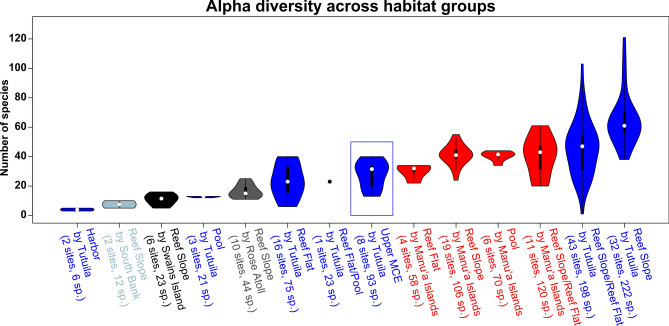
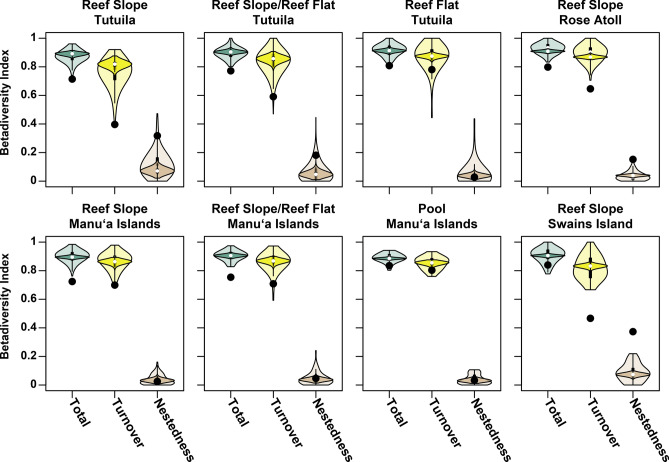
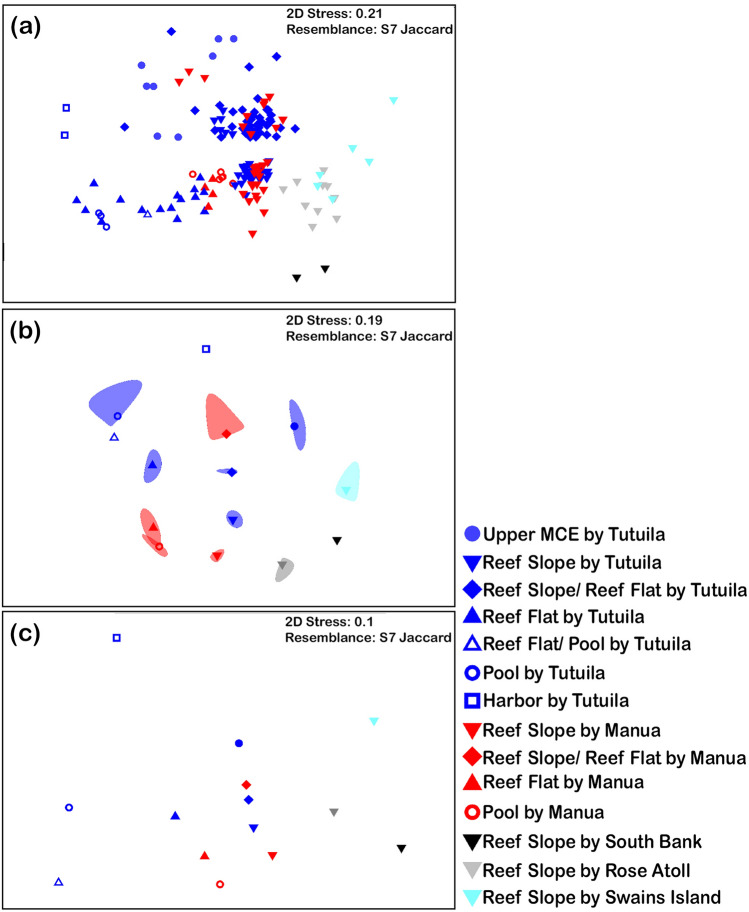
The deep reef refuge hypothesis (DRRH) postulates that mesophotic coral ecosystems (MCEs) may provide a refuge for shallow coral reefs (SCRs). Understanding this process is an important conservation tool given increasing threats to coral reefs. To establish a better framework to analyze the DRRH, we analyzed stony coral communities in American Sāmoa across MCEs and SCRs to describe the community similarity and species overlap to test the foundational assumption of the DRRH. We suggest a different approach to determine species as depth specialists or generalists that changes the conceptual role of MCEs and emphasizes their importance in conservation planning regardless of their role as a refuge or not. This further encourages a reconsideration of a broader framework for the DRRH. We found 12 species of corals exclusively on MCEs and 183 exclusively on SCRs with another 63 species overlapping between depth zones. Of these, 19 appear to have the greatest potential to serve as reseeding species. Two additional species are listed under the U.S. Endangered Species Act, Acropora speciosa and Fimbriaphyllia paradivisa categorized as an occasional deep specialist and a deep exclusive species, respectively. Based on the community distinctiveness and minimal species overlap of SCR and MCE communities, we propose a broader framework by evaluating species overlap across coral reef habitats. This provides an opportunity to consider the opposite of the DRRH where SCRs support MCEs.
深海珊瑚礁避难所假说(DRRH)认为,中层珊瑚礁生态系统(MCE)可能为浅海珊瑚礁(SCR)提供避难所。鉴于珊瑚礁面临的威胁日益增加,了解这一过程是一项重要的保护工具。为了建立一个更好的框架来分析 DRRH,我们分析了美属萨摩亚的石珊瑚群落,涵盖了 MCE 和 SCR,以描述群落相似性和物种重叠,从而检验 DRRH 的基本假设。我们建议采用一种不同的方法来确定物种是深度专家还是普通物种,这改变了 MCE 的概念作用,并强调了它们在保护规划中的重要性,无论它们是否作为避难所。这进一步鼓励重新考虑更广泛的 DRRH 框架。我们发现 12 种珊瑚仅存在于 MCE 中,183 种仅存在于 SCR 中,还有 63 种物种在深度区域之间重叠。其中,有 19 种似乎最有可能成为重新播种的物种。另外两种物种被列入美国濒危物种法案,即 Acropora speciosa 和 Fimbriaphyllia paradivisa,分别被归类为偶尔的深专性物种和深特有物种。基于 SCR 和 MCE 群落的群落独特性和最小物种重叠,我们通过评估珊瑚礁栖息地的物种重叠来提出一个更广泛的框架。这为考虑 DRRH 的相反情况提供了机会,即 SCR 支持 MCE。