Department of Internal Medicine and Clinical Pharmacology, School of Medicine in Katowice, Medical University of Silesia, Medyków 18, 40-752, Katowice, Poland.
Department of Pediatrics in Bytom, School of Health Sciences in Katowice, Medical University of Silesia, Katowice, Poland.
Pharmacol Rep. 2022 Feb;74(1):216-228. doi: 10.1007/s43440-021-00347-8. Epub 2021 Dec 12.
Early-onset androgenic alopecia is considered the phenotypic equivalent of polycystic ovary syndrome in men. The purpose of the current study was to investigate whether the presence of early-onset male-pattern baldness modulates metabolic effects of metformin.
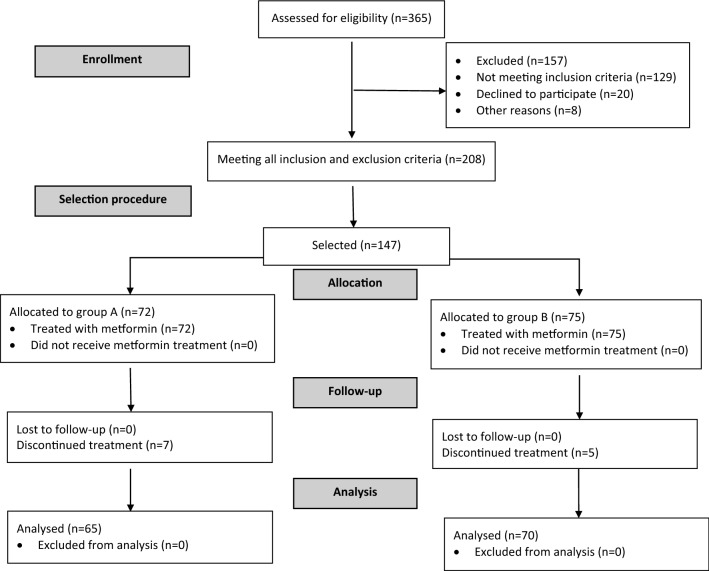
This prospective case-control study included 2 groups of men at high risk for type 2 diabetes: 72 individuals with androgenic alopecia (group A) and 75 subjects with normal hair growth (group B). Both groups were matched for age, blood pressure, body mass index, insulin sensitivity and plasma lipids. Glycated hemoglobin, glucose, plasma lipids, indices of insulin sensitivity/resistance, sex hormones, high-sensitivity C-reactive protein (hsCRP) and 25-hydroxyvitamin D were determined before and after metformin treatment (1.7 g daily).
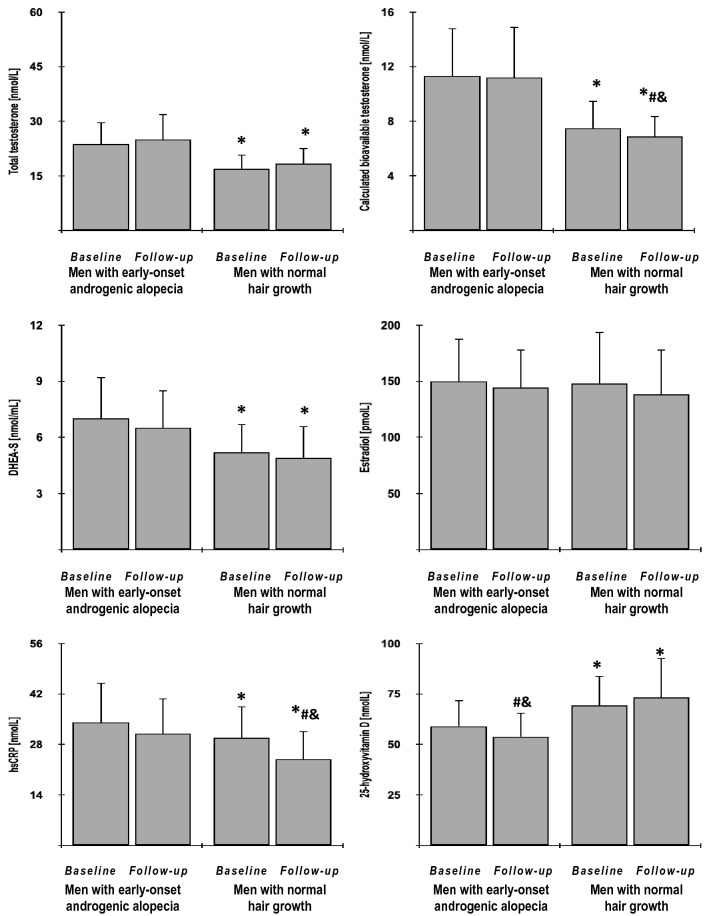
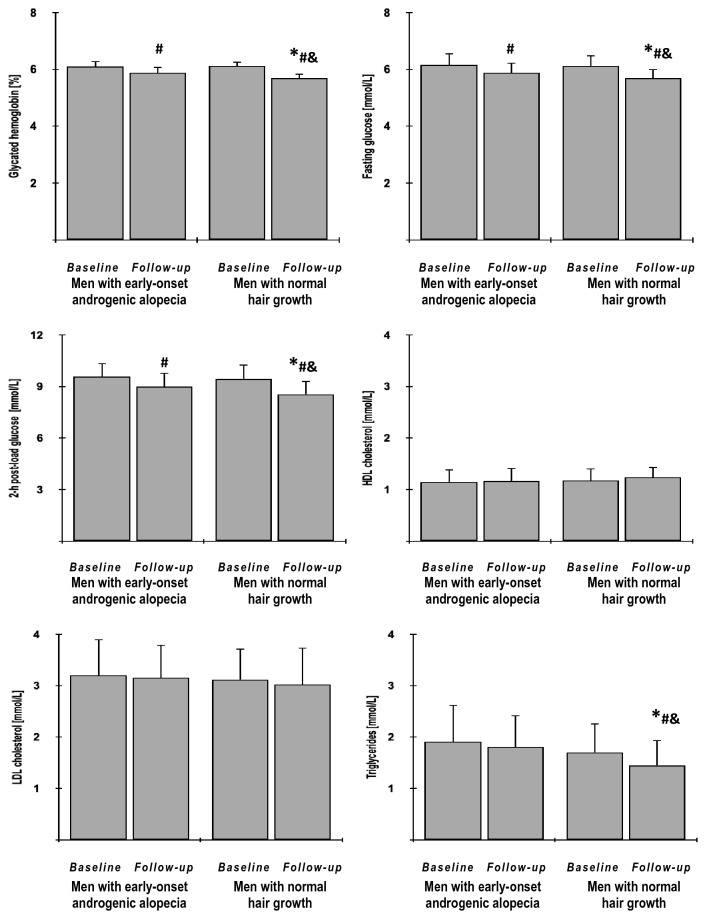
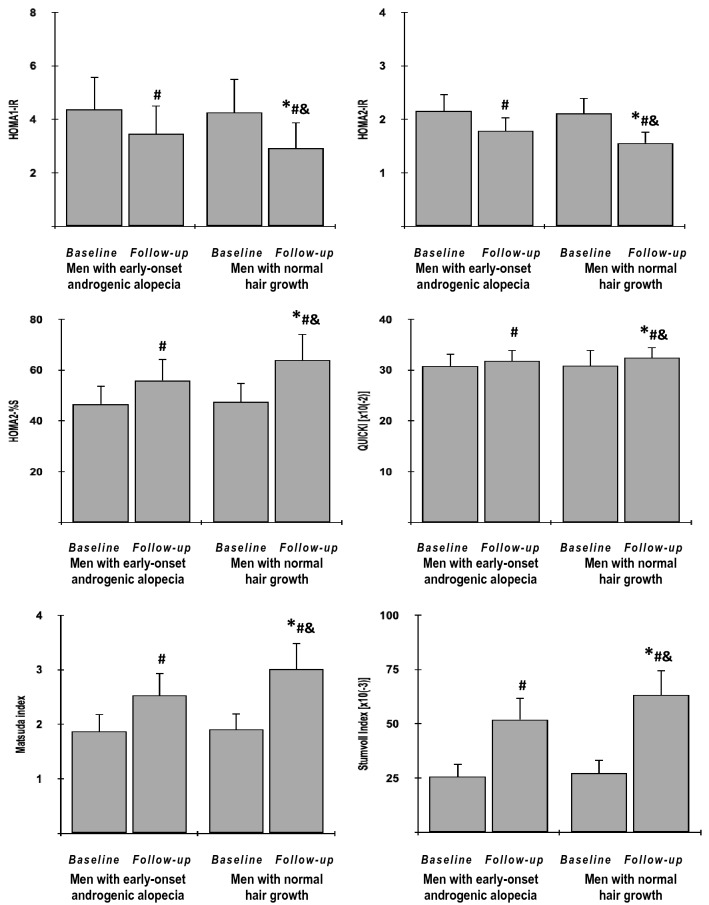
Twelve-month metformin treatment reduced fat content, waist circumference, glycated hemoglobin, glucose and triglycerides, as well as improved insulin sensitivity. Although observed in both study populations, these effects were more pronounced in group B. Moreover, metformin decreased hsCRP and bioavailable testosterone levels in group B, as well as reduced 25-hydroxyvitamin D concentration in group A. Treatment-induced changes in glucose homeostasis markers correlated with the impact of metformin on hsCRP and 25-hydroxyvitamin D levels.
Metabolic effects of metformin in males are attenuated if they have coexisting early-onset androgenic alopecia. This finding may be partially explained by differences in severity of low-grade systemic inflammation and vitamin D status. The obtained results, requiring confirmation in large prospective studies, suggest that men with early-onset male-pattern baldness benefit to a lesser degree from metformin treatment than other men at high risk for type 2 diabetes.
早发性雄激素性脱发被认为是男性多囊卵巢综合征的表型等效物。本研究的目的是研究早发性男性型秃发是否会调节二甲双胍的代谢作用。
这项前瞻性病例对照研究包括两组 2 型糖尿病高危人群:72 名雄激素性脱发患者(A 组)和 75 名毛发正常生长的受试者(B 组)。两组在年龄、血压、体重指数、胰岛素敏感性和血浆脂质方面相匹配。糖化血红蛋白、血糖、血浆脂质、胰岛素敏感性/抵抗指数、性激素、高敏 C 反应蛋白(hsCRP)和 25-羟维生素 D 在二甲双胍治疗前后(每日 1.7g)进行测定。
12 个月的二甲双胍治疗降低了脂肪含量、腰围、糖化血红蛋白、血糖和甘油三酯,并改善了胰岛素敏感性。尽管在两组研究人群中均观察到这些效果,但在 B 组中更为明显。此外,二甲双胍降低了 B 组 hsCRP 和生物可利用睾酮水平,并降低了 A 组 25-羟维生素 D 浓度。葡萄糖稳态标志物的治疗诱导变化与二甲双胍对 hsCRP 和 25-羟维生素 D 水平的影响相关。
如果男性同时患有早发性雄激素性脱发,二甲双胍的代谢作用会减弱。这一发现部分可以通过低水平全身炎症和维生素 D 状态的严重程度差异来解释。需要在大型前瞻性研究中确认的获得结果表明,与其他 2 型糖尿病高危男性相比,早发性男性型秃发的男性从二甲双胍治疗中获益较少。