Hylén Ulrika, McGlinchey Aidan, Orešič Matej, Bejerot Susanne, Humble Mats B, Särndahl Eva, Hyötyläinen Tuulia, Eklund Daniel
University Health Care Research Center, Faculty of Medicine and Health, Örebro University, Örebro, Sweden.
School of Medical Sciences, Faculty of Medicine and Health, Örebro University, Örebro, Sweden.
Front Psychiatry. 2021 Nov 26;12:778325. doi: 10.3389/fpsyt.2021.778325. eCollection 2021.
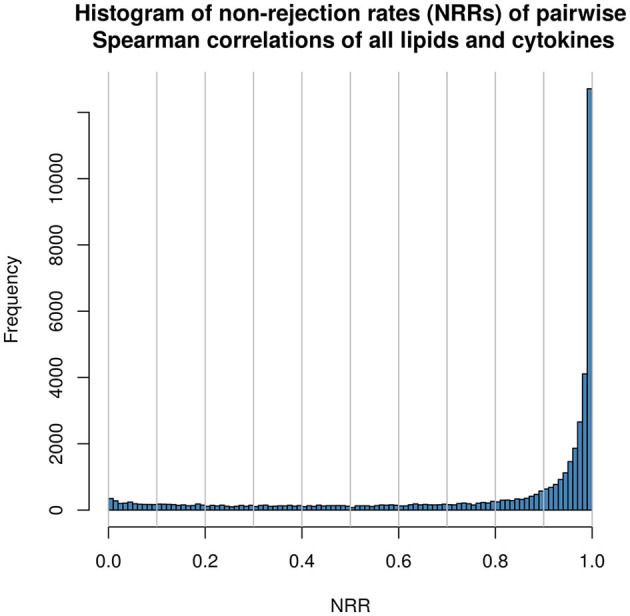
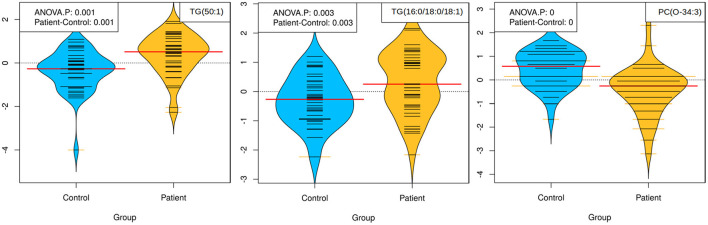
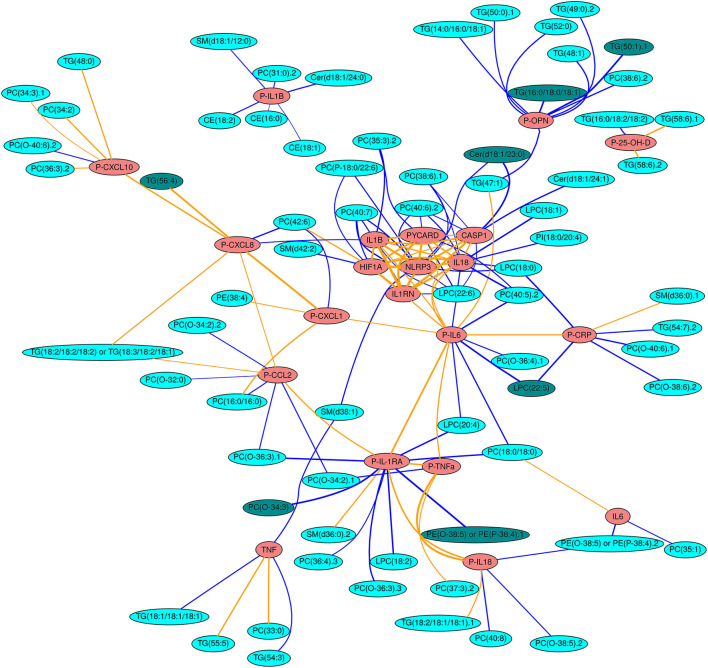
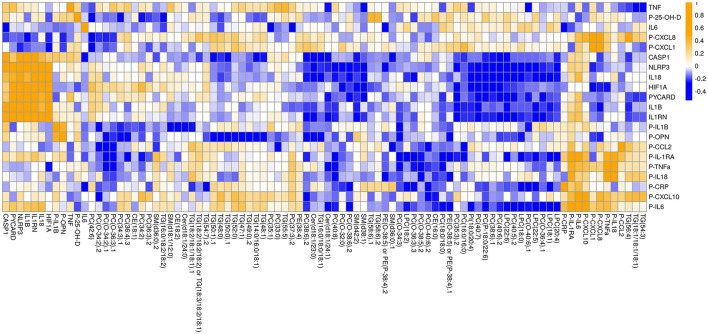
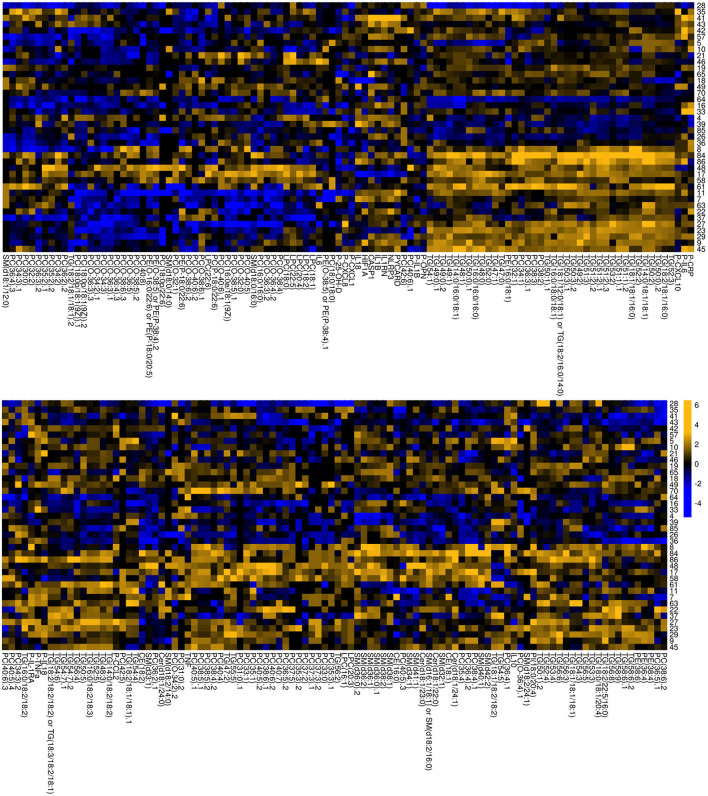
Mental disorders are heterogeneous and psychiatric comorbidities are common. Previous studies have suggested a link between inflammation and mental disorders. This link can manifest as increased levels of proinflammatory mediators in circulation and as signs of neuroinflammation. Furthermore, there is strong evidence that individuals suffering from psychiatric disorders have increased risk of developing metabolic comorbidities. Our group has previously shown that, in a cohort of low-functioning individuals with serious mental disorders, there is increased expression of genes associated with the NLRP3 inflammasome, a known sensor of metabolic perturbations, as well as increased levels of IL-1-family cytokines. In the current study, we set out to explore the interplay between disease-specific changes in lipid metabolism and known markers of inflammation. To this end, we performed mass spectrometry-based lipidomic analysis of plasma samples from low-functioning individuals with serious mental disorders ( = 39) and matched healthy controls ( = 39). By identifying non-spurious immune-lipid associations, we derived a partial correlation network of inflammatory markers and molecular lipids. We identified levels of lipids as being altered between individuals with serious mental disorders and controls, showing associations between lipids and inflammatory mediators, e.g., osteopontin and IL-1 receptor antagonist. These results indicate that, in low-functioning individuals with serious mental disorders, changes in specific lipids associate with immune mediators that are known to affect neuroinflammatory diseases.
精神障碍具有异质性,精神疾病合并症很常见。先前的研究表明炎症与精神障碍之间存在联系。这种联系可表现为循环中促炎介质水平升高以及神经炎症迹象。此外,有强有力的证据表明,患有精神疾病的个体发生代谢合并症的风险增加。我们小组先前表明,在一组患有严重精神障碍的低功能个体中,与NLRP3炎性小体(一种已知的代谢紊乱传感器)相关的基因表达增加,白细胞介素-1家族细胞因子水平也升高。在当前研究中我们着手探究脂质代谢中疾病特异性变化与已知炎症标志物之间的相互作用。为此,我们对患有严重精神障碍的低功能个体(n = 39)和匹配的健康对照(n = 39)的血浆样本进行了基于质谱的脂质组学分析。通过识别非虚假的免疫-脂质关联,我们得出了炎症标志物和分子脂质的偏相关网络。我们发现严重精神障碍个体与对照之间的脂质水平存在差异,显示脂质与炎症介质(如骨桥蛋白和白细胞介素-1受体拮抗剂)之间存在关联。这些结果表明,在患有严重精神障碍的低功能个体中,特定脂质的变化与已知会影响神经炎症性疾病的免疫介质相关。