Zhang Peng, Fang Jiali, Li Guanghui, Zhang Lei, Lai Xingqiang, Xu Lu, Liu Luhao, Xiong Yunyi, Li Li, Zhang Tao, Wan Jiao, Xu Hailin, Chen Rongxin, Zhang Weiting, Ma Junjie, Chen Zheng
Organ Transplant Center, The Second Affiliated Hospital of Guangzhou Medical University, Guangzhou, China.
Front Microbiol. 2021 Nov 26;12:752393. doi: 10.3389/fmicb.2021.752393. eCollection 2021.
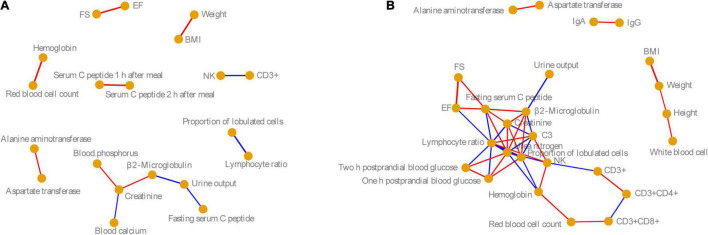
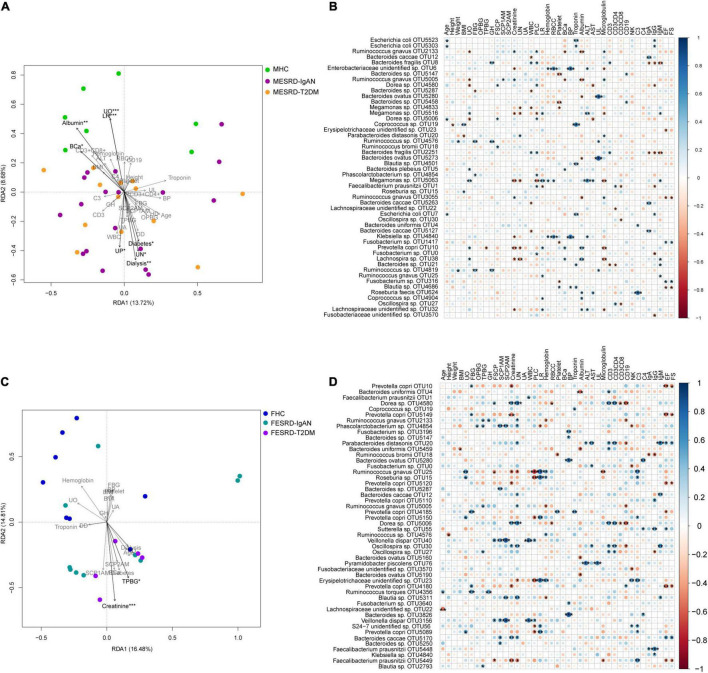
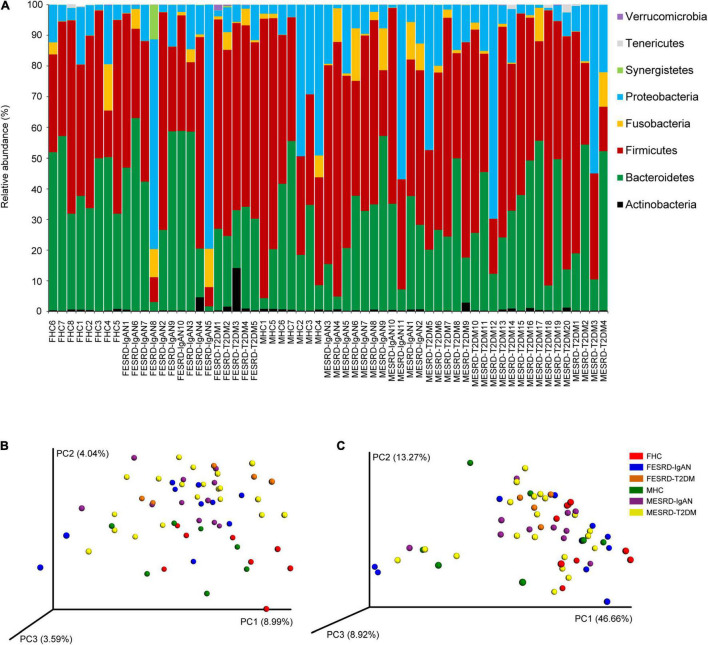
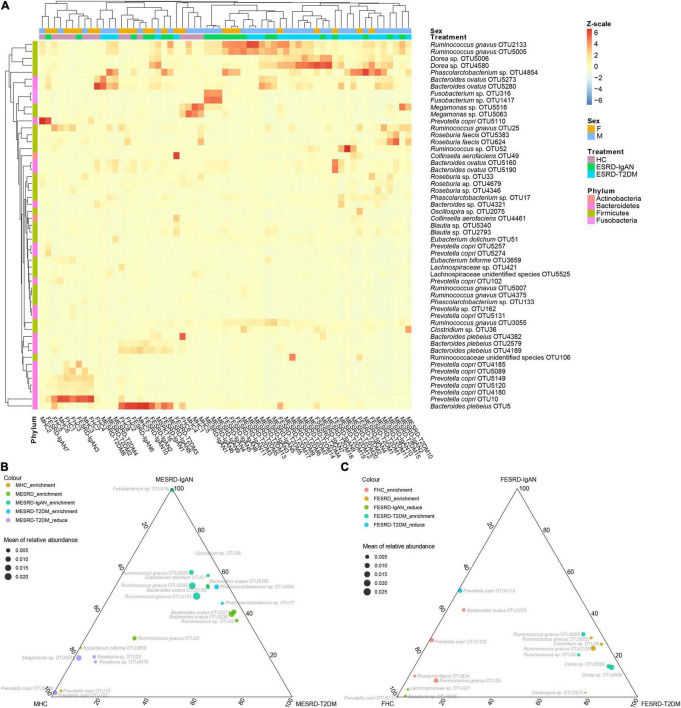
This study investigated the sex-specific differences in the correlation between intestinal microbiota and end-stage renal disease. Here, we compared the differences in the gut microbiota of male and female healthy controls (HC) and patients with end-stage renal disease (ESRD) caused by immunoglobulin A (IgA) nephropathy (ESRD-IgAN) or type-2 diabetes mellitus (ESRD-T2DM) using high-throughput sequencing of the 16S rRNA gene. We also analyzed the correlation between gut microbiota and clinical immune indicators. We assigned 8, 10, 5, 7, 11, and 20 volunteers to female HC, ESRD-IgAN, and ESRD-T2DM, and male HC, ESRD-IgAN, and ESRD-T2DM, respectively. The results showed sex-specific differences in both physiological and biochemical indices and intestinal microbiota composition, as well as the correlation between them. The correlations between physiological and biochemical indices in men were significantly lower than those in women, especially for indices related to immunity, blood glucose, and cardiac color sonography. Urine output, lymphocyte ratio, serum albumin, blood calcium, dialysis status, serum urea nitrogen, urine protein, and diabetes significantly correlated with male fecal microbiota composition, whereas only creatinine and 2-h post-prandial blood glucose significantly correlated with female fecal microbiota composition. The top 50 dominant operational taxonomic units showed a stronger correlation with physiological and biochemical indices in samples obtained from females than from males. These differences highlight sex-specific differences in the effectiveness of ESRD prevention and treatments regulating intestinal microbiota.
本研究调查了肠道微生物群与终末期肾病之间相关性的性别差异。在此,我们使用16S rRNA基因的高通量测序,比较了男性和女性健康对照(HC)以及由免疫球蛋白A(IgA)肾病(ESRD-IgAN)或2型糖尿病(ESRD-T2DM)引起的终末期肾病(ESRD)患者的肠道微生物群差异。我们还分析了肠道微生物群与临床免疫指标之间的相关性。我们分别将8名、10名、5名、7名、11名和20名志愿者分配到女性HC、ESRD-IgAN和ESRD-T2DM组,以及男性HC、ESRD-IgAN和ESRD-T2DM组。结果显示,在生理生化指标、肠道微生物群组成及其之间的相关性方面均存在性别差异。男性生理生化指标之间的相关性显著低于女性,尤其是与免疫、血糖和心脏彩色超声相关的指标。尿量、淋巴细胞比例、血清白蛋白、血钙、透析状态、血清尿素氮、尿蛋白和糖尿病与男性粪便微生物群组成显著相关,而只有肌酐和餐后2小时血糖与女性粪便微生物群组成显著相关。前50个优势操作分类单元与女性样本中生理生化指标的相关性强于男性样本。这些差异突出了在ESRD预防和治疗中调节肠道微生物群有效性方面的性别差异。