Liu Weifeng, Yang Dongjing, Shi Jihua, Wen Peihao, Zhang Jiakai, Wang Zhihui, Hu Bowen, Shi Xiaoyi, Cao Shengli, Guo Wenzhi, Zhang Shuijun
Department of Hepatobiliary and Pancreatic Surgery, The First Affiliated Hospital of Zhengzhou University, Zhengzhou, China.
Henan Engineering Technology Research Center of Organ Transplantation, Zhengzhou, China.
Front Surg. 2021 Nov 26;8:760989. doi: 10.3389/fsurg.2021.760989. eCollection 2021.
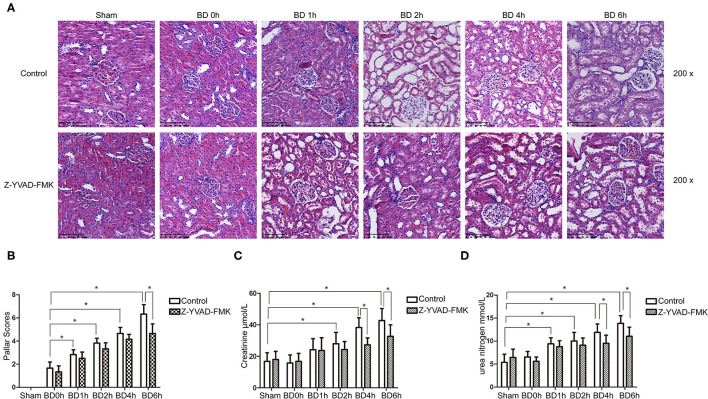
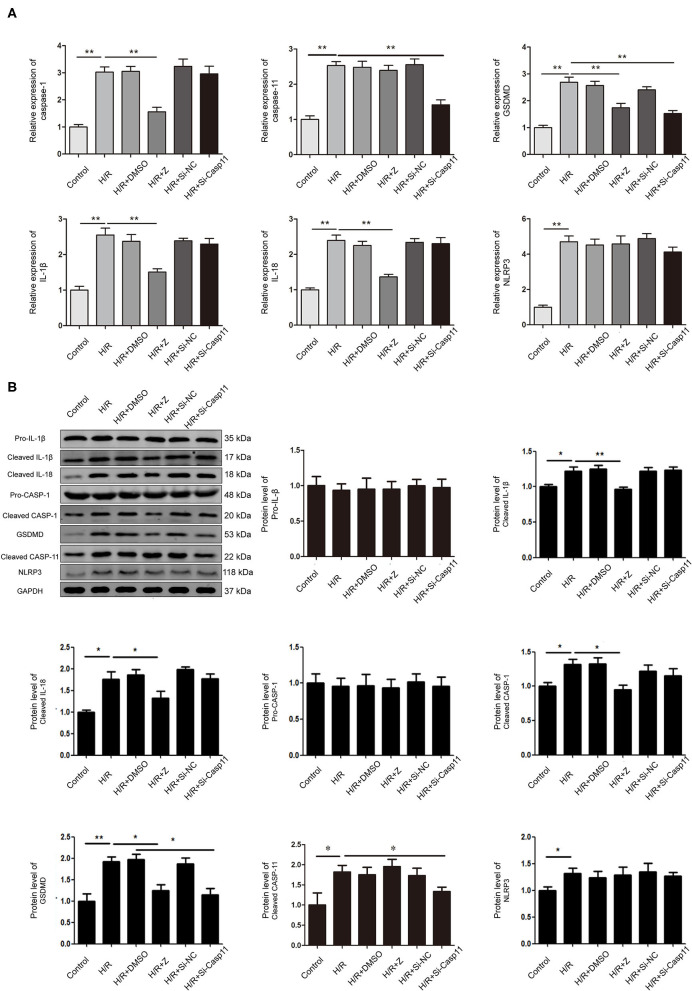
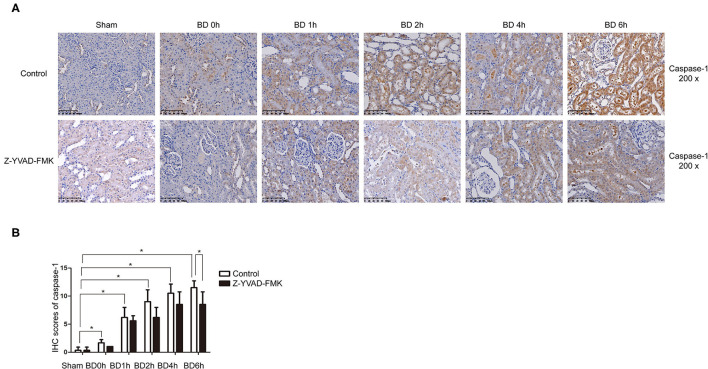
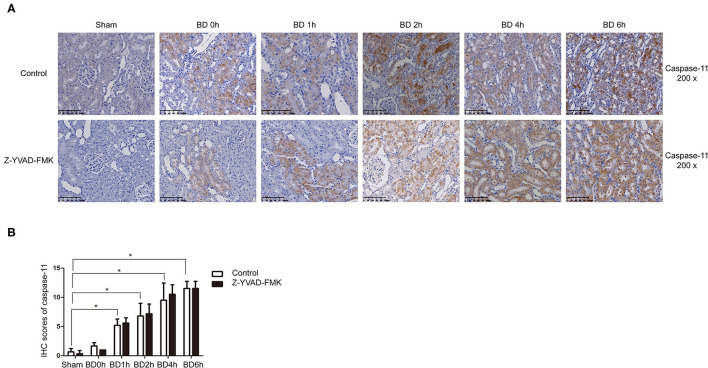
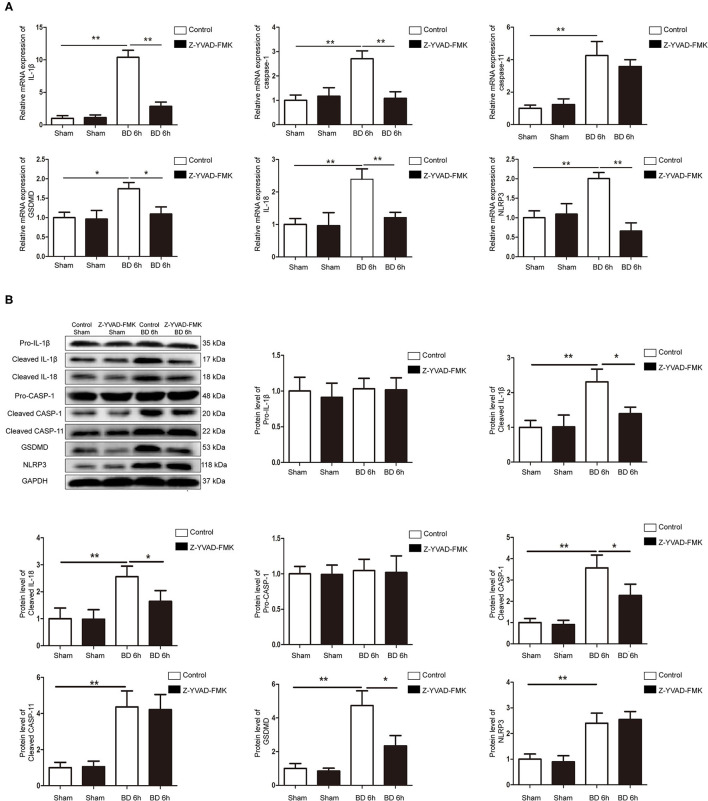
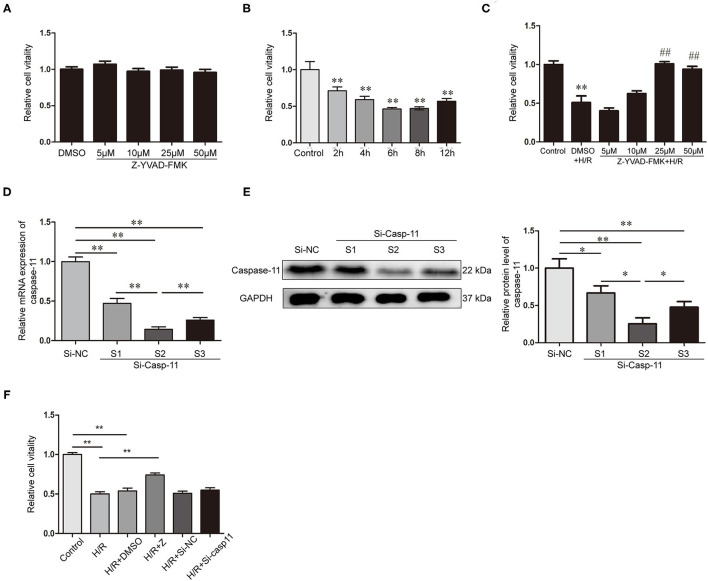
Brain death (BD) induces an organ-level inflammatory response. However, the underlying mechanisms have not been fully elucidated. Here, we investigated the role of caspase-1-mediated pyroptosis in BD-induced kidney injury in rats. A BD model was established in Sprague-Dawley rats. The rats were intravenously injected with Z-YVAD-FMK 1 h before BD, and sham-operated rats served as controls. After 0, 1, 2, 4, and 6 h of BD, renal injury, and renal expression of the nod-like receptor family pyrin domain-containing 3 (NLRP3), caspase-1, caspase-11, gasdermin D (GSDMD), IL-1β, and IL-18 were assessed using quantitative reverse transcriptase-polymerase chain reaction, western blotting, and immunohistochemistry. Blood urea nitrogen and serum creatinine levels were measured. Additionally, renal tubular epithelial cells (NRK-52E) were subjected to 3 h of hypoxia followed by 6 h of reoxygenation and incubated with Z-YVAD-FMK before hypoxia and reoxygenation. Caspase-11 was knocked-down using small interfering RNA technology. Cell viability and levels of pyroptosis-associated proteins were assessed thereafter. NLRP3, caspase-1, GSDMD, IL-1β, and IL-18 expression levels were upregulated in BD rats. Treatment with Z-YVAD-FMK reduced mRNA and protein levels of caspase-1, GSDMD, IL-1β, and IL-18, improved renal function, and alleviated renal injury. Z-YVAD-FMK efficaciously reduced pyroptosis effects in kidneys in BD rats. Thus, it could be considered as a therapeutic target for BD-induced kidney injury.
脑死亡(BD)会引发器官水平的炎症反应。然而,其潜在机制尚未完全阐明。在此,我们研究了半胱天冬酶 -1介导的细胞焦亡在BD诱导的大鼠肾损伤中的作用。在Sprague-Dawley大鼠中建立BD模型。在BD前1小时给大鼠静脉注射Z-YVAD-FMK,假手术大鼠作为对照。BD后0、1、2、4和6小时,使用定量逆转录聚合酶链反应、蛋白质印迹和免疫组织化学评估肾损伤以及肾中含NOD样受体家族吡啉结构域3(NLRP3)、半胱天冬酶 -1、半胱天冬酶 -11、gasdermin D(GSDMD)、白细胞介素 -1β和白细胞介素 -18的表达。测量血尿素氮和血清肌酐水平。此外,将肾小管上皮细胞(NRK-52E)进行3小时缺氧然后6小时复氧,并在缺氧和复氧前用Z-YVAD-FMK孵育。使用小干扰RNA技术敲低半胱天冬酶 -11。此后评估细胞活力和细胞焦亡相关蛋白的水平。BD大鼠中NLRP3、半胱天冬酶 -1、GSDMD、白细胞介素 -1β和白细胞介素 -18的表达水平上调。用Z-YVAD-FMK治疗可降低半胱天冬酶 -1、GSDMD、白细胞介素 -1β和白细胞介素 -18的mRNA和蛋白水平,改善肾功能并减轻肾损伤。Z-YVAD-FMK有效降低BD大鼠肾脏中的细胞焦亡效应。因此,它可被视为BD诱导的肾损伤的治疗靶点。